
BuddhistCatholicContemplativeEvangelicalGeneral ChristianHinduJewishLatter-day SaintMuslimNew VisionsProgressive Christian
Beliefs
- Buddhist
- Catholic
- Contemplative
- Evangelical
- General Christian
- Hindu
- Jewish
- Latter-day Saint
- More Voices
- Muslim
- New Visions
- Pagan
- Progressive Christian
Topics
- Religion News
- Food and Religion
- Sports and Religion
- Religious Art
- Religious Music and Entertainment
- Religious Events
- History and Religion
- Style and Religion
- Politics and Religion
- Women in Religion
- Recreation Outdoors and Religion
- Business Finance and Religion
- Careers Workplace and Religion
- Education and Religion
- Family Parenting and Religion
- Health Fitness and Religion
- Home and Religion
- Relationships and Religion
- Technology and Religion
- Travel and Religion
Columnists
- Buddhist Columnists
- Business Finance and Religion Columnists
- Careers Workplace and Religion Columnists
- Catholic Columnists
- Contemplative Columnists
- Education and Religion Columnists
- Evangelists Columnists
- Family Parenting and Religion Columnists
- General Christian Columnists
- Health Fitness and Religion Columnists
- Hindu Columnists
- History and Religion Columnists
- Home and Religion Columnists
- Jewish Columnists
- More Voices Columnists
- Latter Day Columnists
- Muslim Columnists
- New Visions Columnists
- Nonreligious Columnists
- Pagan Columnists
- Politics and Religion Columnists
- Progressive Columnists
- Recreation Outdoors and Religion Columnists
- Relationships and Religion Columnists
- Religion News Columnists
- Religious Art Columnists
- Religious Events Columnists
- Religious Music and Entertainment Columnists
- Sports and Religion Columnists
- Style and Religion Columnists
- Technology and Religion Columnists
- Travel and Religion Columnists
- Women in Religion Columnists
Resource Library
- 2026 Calendar
- Library of World Religions
- The 100 Most Holy Places on Earth
- Patheos Answers
- Podcasts
- Videos
- Faith Leaders Database
- Anglican Episcopalian
- Bahai
- Baptist
- Buddhism
- Christianity
- Confucianism
- Eastern Orthodoxy
- Hinduism
- Holiness and Pentecostal
- ISKCON
- Islam
- Judaism
- Lutheran
- Methodist
- The Church of Jesus Christ of Latter-day Saints
- New Age
- Paganism
- Presbytarian and Reformed
- Protestantism
- Religion Behind the Scenes
- Roman Catholic
- Scientology
- Shia Islam
- Sikhism
- Sufism
- Sunni Islam
- Taoism
- Zen
- See all religions
Research Tools
 Ad-Free & Subscriber Log-In Subscription Support
Ad-Free & Subscriber Log-In Subscription Support
Follow Patheos 

- Trending:
- Forgiveness
- |
- Marriage
- |
- Consciousness
- |
- Death Penalty
- |
- Election
- |
- Halloween

- Home
- Muslim
- The Most Famous Murder Case in History Unraveled
The Most Famous Murder Case in History Unraveled
Last updated on: May 4, 2016 at 3:02 pm by Muslims Writers Guild of America
The Most Famous Murder Case in History Unraveled 2016-05-04T15:02:39-05:00 Muslims Writers Guild of America
Patheos Explore the world's faith through different perspectives on religion and spirituality! Patheos has the views of the prevalent religions and spiritualities of the world.
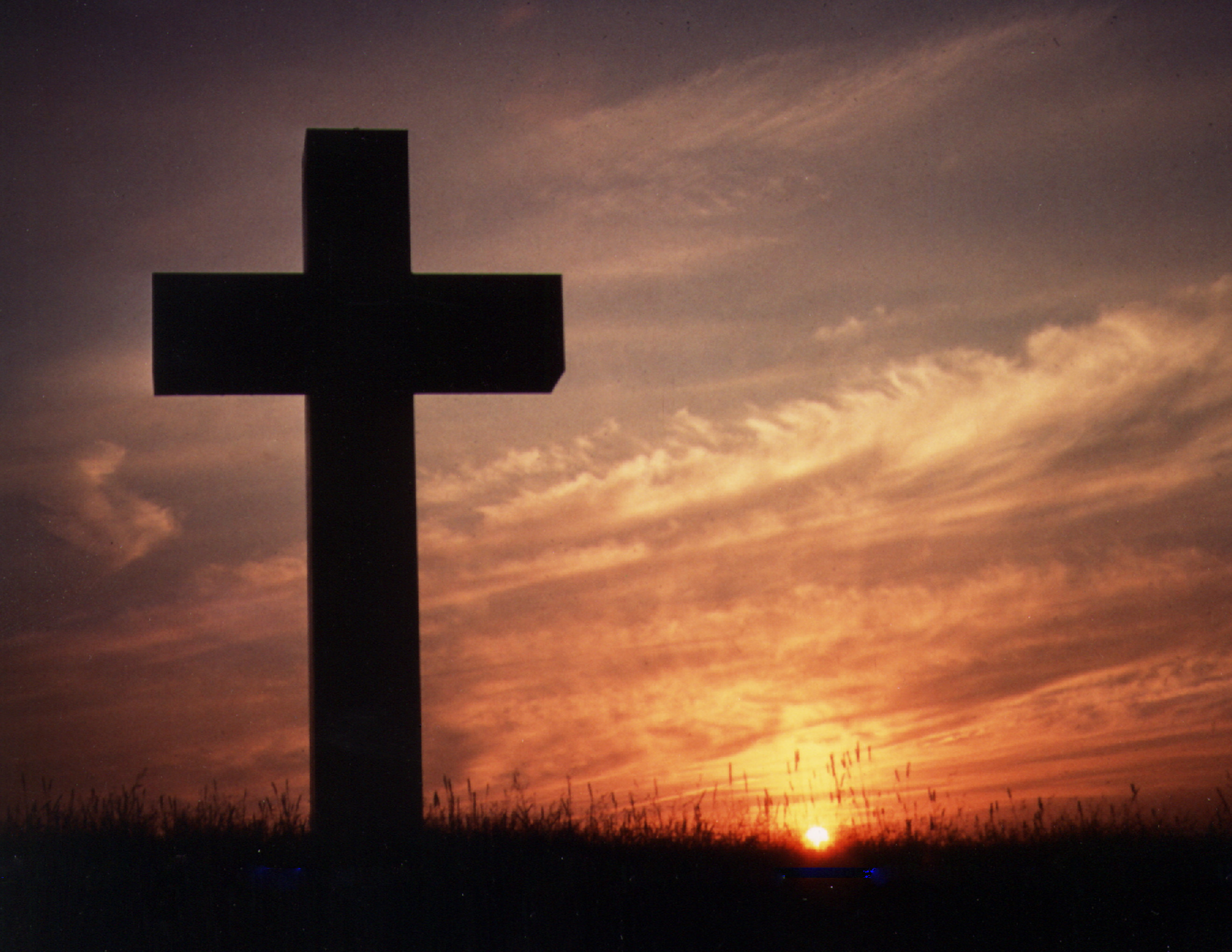
by Usama Awan
This murder case, one of a kind in history, is so emotionally charged and contentious that many people have made the victim a mythological figure, one that defies all laws of nature and biology. Some even re-enact the murder scene every year to commemorate his death. While on the other hand, many maintain that the execution didn’t even happen and that people are stuck in fables. Academics, throughout the years, have failed to give an intellectually and scientifically satisfying explanation of the crime. However, recently – in the last one hundred years – new evidence has surfaced necessitating another look at this unsolved mystery.
I am talking about Jesus of Nazareth. This may be a shock to some, but that’s because Jesus’s apparent execution is not normally perceived by Christians as a crime, but rather as a heroic act on the part of an innocent man/God to save all of humanity. But what evidence is there really for the execution of Jesus on the cross?
Let’s start with the perpetrators of the crime. The Jewish clergy were enraged by Jesus claiming to be the Messiah and demanding them to follow him. So they took him to Pilate (the Roman Governor) and tried to have him crucified. Pilate responded, “Take him yourselves and judge him by your own law” (John 18:31). Clearly Pilate did not want anything to do with Jesus but the Jews insisted, “But we have no right to execute anyone” (John 18:32). So, the Jews had already determined Jesus guilty of blasphemy punishable by death, but needed Roman approval to execute the punishment and so therefore they pressured Pilate into something he didn’t want to do. In many instances of the Bible, Pilate exclaims that he finds no fault in Jesus and believes him to be innocent (see Luke 23:14, 23 and John 19:4). However, the Jews are adamant and corner him by threatening to report him to Caesar (John 19:12). Helpless, Pilate finally hands over Jesus to the soldiers to crucify him. Essentially, Jesus was proven guilty before even a fair trial was conducted.
Now that we know who was responsible for the crucifixion let’s turn to the crime itself and the crime scene. After praying all night to have the cup of death removed from him in the garden of Gethsemane the Roman soldiers mock and beat Jesus before he is taken to the crucifixion site. There, they hang him on the cross along with two other thieves. Here is where things get interesting. After only been having put on the cross a mere four to six hours he is pronounced dead. Luke only declares him to be “dead” in passing, by saying that he “breathed his last” (Luke 23:46) after Jesus says, “Father, into your hands I commit my spirit.” And in John it only says that he, “bowed his head and gave up his spirit” (19:30). So as far we can tell, there is only superficial evidence that Jesus had died.
But how can we be really sure that he had died and gave up the “spirit” as John records? After all, even with all our modern technologies recording heart rhythms and measuring oxygen saturations we still hear of stories of people who were pronounced dead but later wake up in the freezer of the morgue [see NY daily news story on German woman from July 29, 2015]. You must be saying this is only one rare case, but actually a study in the 1980’s showed the high likelihood of getting it wrong. Of the 78 near-death experiences studied, in 80% of these cases, medical personnel were present either at the scene or were there immediately after. 41% of these people were wrongly pronounced dead [The Phenomenology of Near-Death Experiences, by Bruce Greyson M.D. and Ian Stevenson. M.D., A.M. Psychiatry 137:10, October 1980].
Like all mystery cases, the most important piece of evidence is the victim’s body. So let’s to turn to that for more clues. Usually, one can verify the death of an individual by confirming the dead body. However in the case of Jesus, his body is taken to a tomb and he is not seen by anyone other than his closest disciples until three days later. Instead of seeing a corpse however, they see a living, breathing, and even hungry Jesus. His disciples had thought that he had been executed and that a ghost had appeared, but Jesus shows them his wounds to prove to them he is very much flesh and blood (Luke 24:37).
Now, in any other situation we would say case closed, the apparent execution was never fulfilled and the victim survived the crucifixion. For some reason, when it comes to Jesus we must throw away everything we know from our experiences and the physical laws and imagine a scenario where he was dead for three days and three nights and yet came back to life miraculously.
What if the miracle wasn’t coming back to life? But rather it was coming back from a near-death experience, such as the Prophet Jonah who spent three days and three nights in the belly of a whale. Actually, this was prophesized by Jesus a similar event would happen to him as had happened to Jonah (Matthew 12:39). The example only works if both survive a near death experience, not that one of them dies and comes back to life, whereas the other lives the whole time.
Many reading to this point will probably not be convinced, so to lay the matter to rest, here are three quick facts that point to the fact that Jesus was brought down alive from the cross and then healed in the tomb and then afterwards went onto preach to other sheep of Israel.
1) His legs weren’t broken:
After Jesus apparently “died” on the cross, the Roman soldier didn’t break his legs because he thought he was already dead. This is considered the fulfillment of an Old Testament prophecy that John mentions was fulfilled (19:36) as it predicts, “A bone of his shall not be broken” (Psalms 34:20). This prophecy only makes sense if Jesus is alive. What is the point of breaking the legs of a dead corpse? Medically speaking, breaking the tibia (the major bone of our lower legs) would lead to massive internal bleeding and hypovolemic shock thereby quickening death by crucifixion which could take days and reducing it to a few minutes.
2) Blood and water gush out when his side is pierced:
In John 19:34 it is recorded that when one of the soldiers pierced Jesus’s side with a spear, “blood and water gushed out.” Again medically speaking, the word “gush” (or rush forth according to some translations) points to the fact that the heart is still beating indicating that he was still alive, just in a swoon when he was about to be taken down from the cross.
3) Aloe and Myrrh is applied to his body in the tomb:
After Jesus’s body is taken to the tomb by Joseph Arimethia and Nicodemus, the Gospel of John records that Nicodemus brought with him 75 pounds of Aloe and Myrrh to apply on Jesus’s body (John 19:39). Now, it is not a Jewish tradition to embalm the body of dead people so what were these herbs used for? Interestingly, these herbs were used in those times to heal wounds and Avicennia even records it in his classical medical textbook under the name of “Marhame Isa” or Ointment of Jesus.
The above points are just a glimpse of the plethora of evidence that points to the fact that Jesus survived the crucifixion. Interestingly, many sources claim that he migrated eastward towards India preaching to the lost tribes of Israel along the way. For more information read the book called “Jesus in India” by Mirza Ghulam Ahmad.
Now what about the new evidence that surfaced? Well, Mirza Ghulam Ahmad, the founder of the Ahmadiyya Muslim Community discovered Jesus’ grave in Kashmir, India. Analyzing this last bit of evidence would lay the matter to rest once and for all. And so the most notorious mystery case has now largely been solved, it’s just now up to people to look at the evidence subjectively and not deem the victim a dead-man without giving the research a fair review. After all, Jesus was already once sentenced to death without having his case reviewed. The question is, will you repeat history?
Previous Post

May 3, 2016
A Realistic Look at Islam- A Detailed Response to Father Schall
Next Post
May 8, 2016 Reality versus Fantasy: The Challenges Facing Modern Society
Browse Our Archives
Select a Category American-Muslims Economic Justice Interfaith Jesus Palestine Ramadan Uncategorized World Peace
Select a Month September 2025 August 2025 July 2025 June 2025 May 2025 April 2025 March 2025 January 2025 December 2024 November 2024 October 2024 November 2019 October 2019 September 2019 August 2019 November 2018 September 2018 August 2018 July 2018 May 2018 April 2018 February 2018 December 2017 October 2017 September 2017 August 2017 July 2017 June 2017 May 2017 April 2017 March 2017 February 2017 January 2017 December 2016 November 2016 October 2016 September 2016 August 2016 July 2016 June 2016 May 2016 April 2016 March 2016 February 2016 January 2016 December 2015 November 2015 October 2015 September 2015 August 2015 July 2015 June 2015 May 2015 April 2015 March 2015 February 2015 January 2015 December 2014
Follow Us!
TAKE THE
Religious Wisdom Quiz
Which northern king made golden calves for worship at Bethel and Dan?
Select your answer to see how you score.
Jehu Omri Ahab Jeroboam
Related posts from Ahmadiyya Muslim Youth Angle
Unity Is America’s Strength — Division Is Its...

Zohran Mamdani and New York’s Fight Against Islamophobia

What the Fourth of July Means to a...

Faith and Flag: A Muslim's Love
TRENDING AT PATHEOS Muslim

25 Years Later: How Much Has Changed for...
As we approach the 25th anniversary of September 11th, I’ve found myself...

Podcast: Third Spaces & The Rise of Yemeni...
In the latest episode of The Artistic Foodies Podcast, hosts Abbas...

HalalFest Picks: Best 60 Halal Spots for Super...
Back in 2016, I came up with a list of 29...

Unity Is America’s Strength — Division Is Its...
by Hidayatullah Ahsan When Valentina Gomez, a Republican candidate for Congress in...

Zohran Mamdani and New York’s Fight Against Islamophobia
This past June, against all odds, Zohran Mamdani won the Democratic primary...

What the Fourth of July Means to a...
As we mark another Fourth of July, millions of Americans will celebrate...
view all Muslim blogs
Ad-Free & Subscriber Log-In Subscription Support
- About Us
- 2026 Calendar
- Videos
- Podcasts
- Library of World Religions
- Faith In Media Tracker
- Advertise With Us
- Write for Us
- Privacy Policy
- Terms of Service
- Do Not Sell My Data
- Contact Us
- Radiant Digital
- Manage Newsletter Subscriptions
- Unsubscribe From Notifications
- Sitemap
Copyright 2008-2026, Patheos. All rights reserved.
Subscription Support Ad-Free & Subscriber Log-In
Follow Patheos