
BuddhistCatholicContemplativeEvangelicalGeneral ChristianHinduJewishLatter-day SaintMuslimNew VisionsProgressive Christian
Beliefs
- Buddhist
- Catholic
- Contemplative
- Evangelical
- General Christian
- Hindu
- Jewish
- Latter-day Saint
- More Voices
- Muslim
- New Visions
- Pagan
- Progressive Christian
Topics
- Religion News
- Food and Religion
- Sports and Religion
- Religious Art
- Religious Music and Entertainment
- Religious Events
- History and Religion
- Style and Religion
- Politics and Religion
- Women in Religion
- Recreation Outdoors and Religion
- Business Finance and Religion
- Careers Workplace and Religion
- Education and Religion
- Family Parenting and Religion
- Health Fitness and Religion
- Home and Religion
- Relationships and Religion
- Technology and Religion
- Travel and Religion
Columnists
- Buddhist Columnists
- Business Finance and Religion Columnists
- Careers Workplace and Religion Columnists
- Catholic Columnists
- Contemplative Columnists
- Education and Religion Columnists
- Evangelists Columnists
- Family Parenting and Religion Columnists
- General Christian Columnists
- Health Fitness and Religion Columnists
- Hindu Columnists
- History and Religion Columnists
- Home and Religion Columnists
- Jewish Columnists
- More Voices Columnists
- Latter Day Columnists
- Muslim Columnists
- New Visions Columnists
- Nonreligious Columnists
- Pagan Columnists
- Politics and Religion Columnists
- Progressive Columnists
- Recreation Outdoors and Religion Columnists
- Relationships and Religion Columnists
- Religion News Columnists
- Religious Art Columnists
- Religious Events Columnists
- Religious Music and Entertainment Columnists
- Sports and Religion Columnists
- Style and Religion Columnists
- Technology and Religion Columnists
- Travel and Religion Columnists
- Women in Religion Columnists
Resource Library
- 2026 Calendar
- Library of World Religions
- The 100 Most Holy Places on Earth
- Patheos Answers
- Podcasts
- Videos
- Faith Leaders Database
- Anglican Episcopalian
- Bahai
- Baptist
- Buddhism
- Christianity
- Confucianism
- Eastern Orthodoxy
- Hinduism
- Holiness and Pentecostal
- ISKCON
- Islam
- Judaism
- Lutheran
- Methodist
- The Church of Jesus Christ of Latter-day Saints
- New Age
- Paganism
- Presbytarian and Reformed
- Protestantism
- Religion Behind the Scenes
- Roman Catholic
- Scientology
- Shia Islam
- Sikhism
- Sufism
- Sunni Islam
- Taoism
- Zen
- See all religions
Research Tools
 Ad-Free & Subscriber Log-In Subscription Support
Ad-Free & Subscriber Log-In Subscription Support
Follow Patheos 

- Trending:
- Forgiveness
- |
- Marriage
- |
- Consciousness
- |
- Death Penalty
- |
- Election
- |
- Halloween

- Home
- Muslim
- Chattanooga Shooting: Islam does not Condone Violence
Chattanooga Shooting: Islam does not Condone Violence
Last updated on: July 22, 2015 at 10:07 am by Muslims Writers Guild of America
Chattanooga Shooting: Islam does not Condone Violence 2015-07-22T10:07:55-05:00 Muslims Writers Guild of America
Patheos Explore the world's faith through different perspectives on religion and spirituality! Patheos has the views of the prevalent religions and spiritualities of the world.
 By
By
Haris Raja
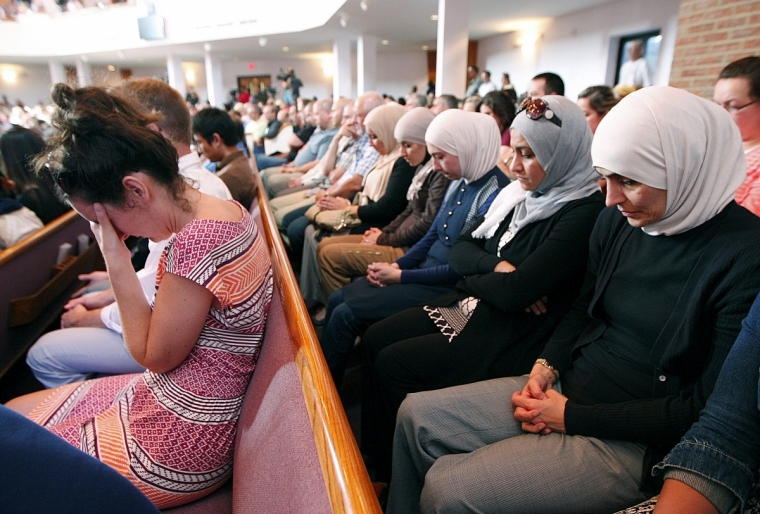
The recent Chattanooga shootings sparked the same debate that gets started every time the alleged perpetrator happens to be a Muslim. Islamophobes pounce on it like a drooling dog jumps on a bone. While the rest of the nation is deeply pained by such a horrible tragedy and is offering condolences to the afflicted families, Islamophobes are busy accusing Islam of violence and bloodshed. The notion that Muslim youth are being radicalized because of the violent teachings of Islam is lopsided. It is also absurd to suggest that Muslims who commit violence are the true representatives of Islam. An honest reflection on the Quran, the life of the Prophet Muhammad and the conduct of the majority of the Muslims in the world shows that Islam does not condone such violent actions.
Then why do we see violence committed by Muslims? The short answer is that committing violence is a human behavior that needs to be understood on a case-by-case basis, not on the basis of someone’s skin color, race or religion. There are numerous factors that determine the behavior of an individual and his or her tendency to be violent. According to Dr. Kathy Seifert, a forensic psychologist, “these factors include biological traits, family bonding, individual characteristics, intelligence and education, child development, peer relationships, cultural shaping and resiliency.”
I don’t intend to deliver a psychology lecture, though. I understand that perception is reality and that perception is too often shaped by a sensational rendition of world events. From this point of view it is only fair to expect questions such as ‘why is ISIS committing atrocities while calling themselves “Islamic.”?’ Or ‘why do we find verses in the Quran that enjoin Muslims to fight against the disbelievers and why did Muhammad take part in wars and order the execution of certain individuals?’ These questions bear answering.
How can an organization be called “Islamic” while the majority of its victims are Muslims? When Muslims were busy fasting and engaging in charitable giving during the month of Ramadan, ISIS was on its brutal rampage quite contrary to the “Islamic” purpose. Calling ISIS un-Islamic is a fact, not an excuse.
As for the Quran, it is a book of spiritual guidance for Muslims. In the very beginning of the Quran there is a disclaimer that it provides guidance only for those who are God fearing (2:3) meaning those who don’t take things out of context for their own ulterior motives. The Quran only allows fighting in self-defense. It is stated “permission to fight is given to those against whom war is made, because they have been wronged.” (22:40) Related verses in the Quran that speak about killing pertain to the conditions of the battlefield and must be understood in the right context. Such a defensive fight or killing is mentioned in 37 verses of the Quran, whereas there are over 300 verses that speak about God’s mercy and forgiveness.
Finally, one analytical mistake critics make when interpreting the actions of Muhammad is that they fail to acknowledge that he was not only a spiritual leader, but also a successful general and an astute statesman. He developed war strategies when it was waged against him and dealt with his adversaries by making treaties and pacts with prudence. He made a peaceful pact with all the tribes (including Jews) living in Medina upon his arrival and they all unanimously accepted him as their leader. Generally Muhammad’s mercy always dominated his decision-making. He pardoned the people of Mecca who persecuted him and his community for thirteen years. However, no head of state, in his or her right mind, will allow treasonous and disorderly behavior in society. When the overall peace of society was at stake Muhammad also took necessary actions as head of the state. “It is this unparalleled combination of secular and religious influence,” writes Michael Hart “which I feel entitled Muhammad to be considered the most influential single figure in human history.”
Painting Islam or for that matter 1.6 Billion Muslims with a broad brush as violent is a fallacy. It is the overall belief system of Islam, traditions of its founder, Muhammad, and the predominant practice of its adherents that characterizes Islam, not the outliers.
Follow Haris on twitter @harisaraja
Previous Post

July 18, 2015
Spread Happiness - The Real Message of Eid
Browse Our Archives
Select a Category American-Muslims Economic Justice Interfaith Jesus Palestine Ramadan Uncategorized World Peace
Select a Month September 2025 August 2025 July 2025 June 2025 May 2025 April 2025 March 2025 January 2025 December 2024 November 2024 October 2024 November 2019 October 2019 September 2019 August 2019 November 2018 September 2018 August 2018 July 2018 May 2018 April 2018 February 2018 December 2017 October 2017 September 2017 August 2017 July 2017 June 2017 May 2017 April 2017 March 2017 February 2017 January 2017 December 2016 November 2016 October 2016 September 2016 August 2016 July 2016 June 2016 May 2016 April 2016 March 2016 February 2016 January 2016 December 2015 November 2015 October 2015 September 2015 August 2015 July 2015 June 2015 May 2015 April 2015 March 2015 February 2015 January 2015 December 2014
Follow Us!
TAKE THE
Religious Wisdom Quiz
Who wrote most of the New Testament letters?
Select your answer to see how you score.
John James Peter Paul
Related posts from Ahmadiyya Muslim Youth Angle

Apostasy In Islam: Facts From Fiction
The Crucifixion Revisited: Jesus' Story in Islam
The Need to Escalate to Justice to De-Escalate...
TRENDING AT PATHEOS Muslim

25 Years Later: How Much Has Changed for...
As we approach the 25th anniversary of September 11th, I’ve found myself...

Podcast: Third Spaces & The Rise of Yemeni...
In the latest episode of The Artistic Foodies Podcast, hosts Abbas...

HalalFest Picks: Best 60 Halal Spots for Super...
Back in 2016, I came up with a list of 29...

Unity Is America’s Strength — Division Is Its...
by Hidayatullah Ahsan When Valentina Gomez, a Republican candidate for Congress in...

Zohran Mamdani and New York’s Fight Against Islamophobia
This past June, against all odds, Zohran Mamdani won the Democratic primary...

What the Fourth of July Means to a...
As we mark another Fourth of July, millions of Americans will celebrate...
view all Muslim blogs
Ad-Free & Subscriber Log-In Subscription Support
- About Us
- 2026 Calendar
- Videos
- Podcasts
- Library of World Religions
- Faith In Media Tracker
- Advertise With Us
- Write for Us
- Privacy Policy
- Terms of Service
- Do Not Sell My Data
- Contact Us
- Radiant Digital
- Manage Newsletter Subscriptions
- Unsubscribe From Notifications
- Sitemap
Copyright 2008-2026, Patheos. All rights reserved.
Subscription Support Ad-Free & Subscriber Log-In
Follow Patheos