
BuddhistCatholicContemplativeEvangelicalGeneral ChristianHinduJewishLatter-day SaintMuslimNew VisionsProgressive Christian
Beliefs
- Buddhist
- Catholic
- Contemplative
- Evangelical
- General Christian
- Hindu
- Jewish
- Latter-day Saint
- More Voices
- Muslim
- New Visions
- Pagan
- Progressive Christian
Topics
- Religion News
- Food and Religion
- Sports and Religion
- Religious Art
- Religious Music and Entertainment
- Religious Events
- History and Religion
- Style and Religion
- Politics and Religion
- Women in Religion
- Recreation Outdoors and Religion
- Business Finance and Religion
- Careers Workplace and Religion
- Education and Religion
- Family Parenting and Religion
- Health Fitness and Religion
- Home and Religion
- Relationships and Religion
- Technology and Religion
- Travel and Religion
Columnists
- Buddhist Columnists
- Business Finance and Religion Columnists
- Careers Workplace and Religion Columnists
- Catholic Columnists
- Contemplative Columnists
- Education and Religion Columnists
- Evangelists Columnists
- Family Parenting and Religion Columnists
- General Christian Columnists
- Health Fitness and Religion Columnists
- Hindu Columnists
- History and Religion Columnists
- Home and Religion Columnists
- Jewish Columnists
- More Voices Columnists
- Latter Day Columnists
- Muslim Columnists
- New Visions Columnists
- Nonreligious Columnists
- Pagan Columnists
- Politics and Religion Columnists
- Progressive Columnists
- Recreation Outdoors and Religion Columnists
- Relationships and Religion Columnists
- Religion News Columnists
- Religious Art Columnists
- Religious Events Columnists
- Religious Music and Entertainment Columnists
- Sports and Religion Columnists
- Style and Religion Columnists
- Technology and Religion Columnists
- Travel and Religion Columnists
- Women in Religion Columnists
Resource Library
- 2026 Calendar
- Library of World Religions
- The 100 Most Holy Places on Earth
- Patheos Answers
- Podcasts
- Videos
- Faith Leaders Database
- Anglican Episcopalian
- Bahai
- Baptist
- Buddhism
- Christianity
- Confucianism
- Eastern Orthodoxy
- Hinduism
- Holiness and Pentecostal
- ISKCON
- Islam
- Judaism
- Lutheran
- Methodist
- The Church of Jesus Christ of Latter-day Saints
- New Age
- Paganism
- Presbytarian and Reformed
- Protestantism
- Religion Behind the Scenes
- Roman Catholic
- Scientology
- Shia Islam
- Sikhism
- Sufism
- Sunni Islam
- Taoism
- Zen
- See all religions
Research Tools
 Ad-Free & Subscriber Log-In Subscription Support
Ad-Free & Subscriber Log-In Subscription Support
Follow Patheos 

- Trending:
- Forgiveness
- |
- Marriage
- |
- Consciousness
- |
- Death Penalty
- |
- Election
- |
- Halloween
 Irreverin
- Home
- Progressive Christian
- Let The Church Die: An Easter Manifesto
Let The Church Die: An Easter Manifesto
Last updated on: April 11, 2020 at 12:17 pm by Erin Wathen
Let The Church Die: An Easter Manifesto 2020-04-11T12:17:02-07:00 Erin Wathen
Patheos Explore the world's faith through different perspectives on religion and spirituality! Patheos has the views of the prevalent religions and spiritualities of the world.
Here it is, Saturday. And here we sit, waiting to see if he’s going to get up again.
“Sunday’s coming,” so they say. But this year, that doesn’t feel exactly, precisely true. At least not in the usual way.
Good Friday… now THAT felt real. Real as anything. Far too real for words. The death and the darkness were not figurative this year. We did not have to imagine ourselves into a place of grieving. The body count on the nightly news does that work for us.
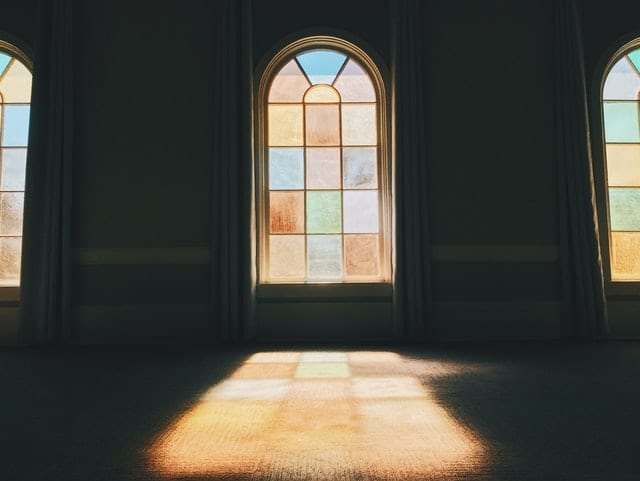
The liminal space of this Saturday seems fitting as well. We can easily place ourselves into this part of the story; indefinite waiting with no end date to mark on the calendar, and no clear picture of what “after” might even look like if we could name such a day? Sounds about right.
And yes, Sunday is coming. The sun will rise tomorrow. We will worship in our homes– much like the disciples on the first Easter who were still, three days after the violent death of their friend and teacher, afraid to stick their noses out for fear of their own lives. We will find small joys and celebrate that the gospel promise of resurrection still stands– with or without the brass band, the big crowd, or the bunny.
We are allowed to grieve these traditions. Even if they seem small in the grand scheme of things right now, and even if we know that “resurrection,” as such, can happen without them. The celebration is part of the story, and part of who we are as people of faith. Of course things feel different this year. There’s no need to pretend that the loss doesn’t leave a mark on us.
But here is the hard truth I’m sitting with today, in this liminal space of Saturday: we go through the motions, these rituals of remembrance, grief and celebration, every year. They are meaningful and they are important. But do they ever really change us?
That may be a complicated question, but I’m going to venture that for most of us, the short answer is: not really. Because to truly experience ‘resurrection,’ something has to die.
Maybe this year, what needs to die is the Church.
Or at least, Church as we’ve known it. And I say this as a person who loves the Church. Lord knows, it ain’t perfect, but I love it still. I love the energy of gathering before worship, and I love worship itself; I love fellowship time, whether it’s coffee hour, a full-on potluck, or an informal gathering in parking lot. I love youth group, and choir practice and even– I never in life thought I’d say this but EVEN– church meetings. Within reason. I mean, I don’t need to go to one every night. But having gone a few months without one, I miss even that. I love the complicated relationships; the often pieced-together but we-do-it-out-of-love mission projects; I dearly love a good church lady function. And I love all of the people who work so hard, all the time, to make all of this life happen.
So. Having established that I am a person who deeply loves the church, I hope I can say and it will be heard as coming from a place of love… maybe the Church needs to die. Maybe, in fact, that is the only way it can truly be resurrected after this crisis has passed.
We all know that once this is over and we can go back to “normal,” normal will not be what it was. That’s why the uncertainty of Saturday feels so heavy this year; we are living with it all the time now. We know that this experience will leave a mark on all of us, and on all of our institutions.
Which is why this crisis might truly be an opportunity– an invitation, even– to experience resurrection like we’ve never known it before. But first, we have to experience death. That death, in many ways, is being forced upon us in ways we didn’t ask for. Some individual congregations will not survive the financial strain of this season, and that will be a tragedy. But that kind of death what I’m talking about. I’m talking the death of “big C” Church. The institution itself. The thing that has been built by the empire; the creature so closely entwined with capitalism we can scarcely tell them apart sometimes; the thing that has benefitted from the silencing of women and minorities for generations; the monolith to white male power and authority that continues to do more harm than good in many of its expressions. These are things that need to die.
Some of our internal structures need to fall away too, because they were built out of secular, corporate expectations. Some of our policies and ideologies need to die because they were built on ancient assumptions that no longer serve us. Some of our institutional privileges need to die away because our desire to be dominant has trumped our desire to be faithful.
For those of us who love church, the scary thing is this: if we want to witness real resurrection, we may have to let some good things die too. This season of uncertainty and exile has reordered life as we know it; in many ways, that death is being forced upon us. Maybe the best thing people of faith can do is let go of all expectations about what our faith communities and practices will look like after this. If we can release our attachment to old ways, let go of expectations of success and normalcy, and let go all the old measurements of faithfulness… we might witness a miracle the likes of which we would not have let ourselves imagine before.
If we can do that– just let it all die– then there will be a season when we can rebuild the things that are worthy of resurrection. What might that look like? We don’t really know, and that’s the beauty of it. But maybe we make room at the table for people we wasted energy keeping out before. Maybe we rewrite the bylaws in a way that enables mission without burying us in minutiae. Maybe we can preach a bold gospel that calls out the evils of poverty and racism, instead of a comforting, inspirational piece that protects the powerful and the status quo.
Maybe we will get our hands in the dirt. Maybe we will invest more in the environment than the sound system. Maybe we’ll learn what it means to lose our lives to find it.
Maybe, as Wendell Berry says– we will “practice resurrection.”
The truth is, it’s going to be Saturday for a long time. Maybe “practicing” is all we can do right now. This particular resurrection is not going to run on our timeline, and it’s not going to show up tomorrow morning just because we get up and put on our nice clothes. We are in perpetual liminal space for now, waiting for new life to surprise us. If we do this right, we have the same opportunity as those first disciples– to build something new, create a new community with new practices and traditions, around no certainty but this single truth: Jesus died, but lived again.
Previous Post

April 10, 2020
Into Your Hands
Next Post

April 14, 2020 Guts, Grit, and Empathy: Why We Need Women Leaders Right Now
Browse Our Archives
Select a Category a good week for progress Advent and Christmas Being a Person desert life faith and community Good News for Progressives Lent and Easter Marriage and Family S*^! Jesus Says sabbatical road tripping Spirituality in Culture Talking to Strangers the "Best Stuff I Ever Ate" diet travel Uncategorized writing Writing Prompt Wednesday
Select a Month January 2021 December 2020 November 2020 September 2020 August 2020 July 2020 June 2020 May 2020 April 2020 March 2020 February 2020 January 2020 December 2019 November 2019 October 2019 September 2019 August 2019 July 2019 June 2019 May 2019 April 2019 March 2019 February 2019 January 2019 December 2018 November 2018 October 2018 September 2018 August 2018 July 2018 June 2018 May 2018 April 2018 March 2018 February 2018 January 2018 December 2017 November 2017 October 2017 September 2017 August 2017 July 2017 June 2017 May 2017 April 2017 March 2017 February 2017 January 2017 December 2016 November 2016 October 2016 September 2016 August 2016 July 2016 June 2016 May 2016 April 2016 March 2016 February 2016 January 2016 December 2015 November 2015 October 2015 September 2015 August 2015 July 2015 June 2015 May 2015 April 2015 March 2015 February 2015 January 2015 December 2014 November 2014 October 2014 September 2014 August 2014 July 2014 June 2014 May 2014 April 2014 March 2014 February 2014 January 2014 December 2013 November 2013 October 2013 September 2013 August 2013 July 2013 June 2013 May 2013 April 2013 March 2013 February 2013 January 2013 December 2012 November 2012 October 2012 September 2012 August 2012 July 2012 June 2012 May 2012 April 2012 March 2012 February 2012 January 2012 December 2011 November 2011 October 2011 September 2011 August 2011 July 2011 June 2011 May 2011 April 2011 February 2011 July 2010 May 2010 April 2010 March 2010 January 2010 December 2009 November 2009 October 2009 September 2009 August 2009
Follow Us!
TAKE THE
Religious Wisdom Quiz
This chapter in Psalms declares the blessed man who meditates on God's law day and night is like a tree planted by streams. What is its number?
Select your answer to see how you score.
Psalm 100 Psalm 119 Psalm 23 Psalm 1
Related posts from Irreverin

Hard Candy Christmas: And Other Songs You Need...


TRENDING AT PATHEOS Progressive Christian

Why Christians Have a Sacred Duty to Vote:...
The Bible offers strong support for the sacred duty to vote. Here...

What Being a Modern-Day Apostle Means to Me
In my last column, I discussed the ins and outs of modern-day...

Did Ancient China Once Worship the God of...
Across human history, a common thread weaves through the origins of the...

Love Your Neighbor – Including Earth-Kin: Lev. 19,...
God’s command to love your neighbor means acting in an ethical and...

Lead a Church Study of “Jesus and Lao...
Guest writer Jack Thomas (The Irreverent Reverend) reflects on leading his church...

Principles for Understanding the Apostolic Ministry Today
Whenever people discover that my formal ministry title is "apostle," as in...
view all Progressive Christian blogs
Ad-Free & Subscriber Log-In Subscription Support
- About Us
- 2026 Calendar
- Videos
- Podcasts
- Library of World Religions
- Faith In Media Tracker
- Advertise With Us
- Write for Us
- Privacy Policy
- Terms of Service
- Do Not Sell My Data
- Contact Us
- Radiant Digital
- Manage Newsletter Subscriptions
- Unsubscribe From Notifications
- Sitemap
Copyright 2008-2026, Patheos. All rights reserved.
Subscription Support Ad-Free & Subscriber Log-In
Follow Patheos