
BuddhistCatholicContemplativeEvangelicalGeneral ChristianHinduJewishLatter-day SaintMuslimNew VisionsProgressive Christian
Beliefs
- Buddhist
- Catholic
- Contemplative
- Evangelical
- General Christian
- Hindu
- Jewish
- Latter-day Saint
- More Voices
- Muslim
- New Visions
- Pagan
- Progressive Christian
Topics
- Religion News
- Food and Religion
- Sports and Religion
- Religious Art
- Religious Music and Entertainment
- Religious Events
- History and Religion
- Style and Religion
- Politics and Religion
- Women in Religion
- Recreation Outdoors and Religion
- Business Finance and Religion
- Careers Workplace and Religion
- Education and Religion
- Family Parenting and Religion
- Health Fitness and Religion
- Home and Religion
- Relationships and Religion
- Technology and Religion
- Travel and Religion
Columnists
- Buddhist Columnists
- Business Finance and Religion Columnists
- Careers Workplace and Religion Columnists
- Catholic Columnists
- Contemplative Columnists
- Education and Religion Columnists
- Evangelists Columnists
- Family Parenting and Religion Columnists
- General Christian Columnists
- Health Fitness and Religion Columnists
- Hindu Columnists
- History and Religion Columnists
- Home and Religion Columnists
- Jewish Columnists
- More Voices Columnists
- Latter Day Columnists
- Muslim Columnists
- New Visions Columnists
- Nonreligious Columnists
- Pagan Columnists
- Politics and Religion Columnists
- Progressive Columnists
- Recreation Outdoors and Religion Columnists
- Relationships and Religion Columnists
- Religion News Columnists
- Religious Art Columnists
- Religious Events Columnists
- Religious Music and Entertainment Columnists
- Sports and Religion Columnists
- Style and Religion Columnists
- Technology and Religion Columnists
- Travel and Religion Columnists
- Women in Religion Columnists
Resource Library
- 2026 Calendar
- Library of World Religions
- The 100 Most Holy Places on Earth
- Patheos Answers
- Podcasts
- Videos
- Faith Leaders Database
- Anglican Episcopalian
- Bahai
- Baptist
- Buddhism
- Christianity
- Confucianism
- Eastern Orthodoxy
- Hinduism
- Holiness and Pentecostal
- ISKCON
- Islam
- Judaism
- Lutheran
- Methodist
- The Church of Jesus Christ of Latter-day Saints
- New Age
- Paganism
- Presbytarian and Reformed
- Protestantism
- Religion Behind the Scenes
- Roman Catholic
- Scientology
- Shia Islam
- Sikhism
- Sufism
- Sunni Islam
- Taoism
- Zen
- See all religions
Research Tools
 Ad-Free & Subscriber Log-In Subscription Support
Ad-Free & Subscriber Log-In Subscription Support
Follow Patheos 

- Trending:
- Forgiveness
- |
- Marriage
- |
- Consciousness
- |
- Death Penalty
- |
- Election
- |
- Halloween
 Irreverin
- Home
- Progressive Christian
- The March for Evidence-Based Governance
The March for Evidence-Based Governance
Last updated on: October 17, 2018 at 1:26 pm by Erin Wathen
The March for Evidence-Based Governance 2018-10-17T13:26:01-07:00 Erin Wathen
Patheos Explore the world's faith through different perspectives on religion and spirituality! Patheos has the views of the prevalent religions and spiritualities of the world.
Guest post by Dr. Lisa R. Hale
Things moved fast for Brett Kavanaugh in that final week. Given the scope and gravity of a lifetime appointment, some would argue too quickly. But from others, there was angry lament of “unfair delay.” As we all know by now, that news cycle ended with a 50 to 48 Saturday vote, a prompt swearing-in via private ceremony, and much lauding by the White House in a public one (accompanied by the President’s strangely sweeping apology “on behalf of our nation.” That went over in the public about as well as you’d think). By Tuesday, our 114th Justice was at work on the bench. (By the way, if you somehow skillfully missed all this hullaballoo, you can catch up with a viewing of the HBO movie “Confirmation,” dramatizing the 1991 appointment controversy for Justice Clarence Thomas. Swap out specifics of the report, the eyeglasses, hairstyles and shoulder pads, and you’re good to go! Seriously. Not much else has changed).

Dr. Lisa Hale
Where were we?
Oh yeah … politicians are now busily congratulating or explaining themselves, while the rest of us are left to blearily trudge through the aftermath of all the heads exploding — an increasingly common occurrence for even the most apolitical among us.
To be clear, this was a mess made by both parties. Pausing only for their spotlighted theatrics, senators led Americans down a rabidly split path centered on one question: “Who do you believe?” Missing any hint of compromise or thoughtful evaluation of whether Judge Brett Kavanaugh reflected the temperament, character and nonpartisanship deemed necessary for an appointment to the Supreme Court. Some landed on a clear “yes” or “no,” but the truncated process left others with lingering questions about Kavanaugh, our elected officials, and the shell-game bluster of confirmation procedures (insert jaunty wave to Merrick Garland).
Returning to The Question that was thrust upon us, “Who do you believe?” I am trained in clinical research of human behavior, and the cautionary refrain throughout my career has been “feelings aren’t facts.” Decisions made from one’s gut, intuition or personal experiences, in isolation from objective data, are highly error-prone. No small irony that the information provided by Dr. Christine Blasey Ford, a research psychologist herself, was steamrolled without regard to best practices for evaluating reports of sexual assault or data established and used by the types of resources you’d typically imagine conservatives would be a fan of, like the International Association of Chiefs of Police (IACP). A narrative arose conflating the matter at hand — a job interview for a lifetime position — and the “presumption of innocence,” a principle of our criminal justice system. (But also scratching my head here, as this supposed bedrock is of course violated every single day in the places where it should actually count, as many from marginalized communities dealing with the legal system can tell you. And a few bonus hypocrisy points awarded in that some of the strongest “presumption of his innocence” outrage came from people who’ve been gleefully chanting “lock her up” for several years now. But again, I digress.)
Harmful to both the process and our country was the deliberate mischaracterization of “a lack of available evidence” with “false reporting”. We know from decades of research recorded by organizations like the National Sexual Violence Resource Center that estimated rates of false accusations are inflated, and many people inaccurately believe that false reports of sexual crimes are commonplace. A number of factors perpetuate this misinformation, including inadequate law enforcement training, inconsistent definitions and protocols, and weak public understanding about sexual violence. As a result, behavior typical for a sexual assault victim may be commonly misperceived as being contrived, inconsistent or untrue. Dr. Ford’s demeanor and the details she provided were consistent with information that would be viewed credible from a scientific and clinical perspective, including delayed reporting, trauma-related memory functioning, and fear of flying. As part of the aforementioned conflation of a job interview to a criminal trial, the committee was only able to “resolve” the situation by limiting the inquiry’s scope, while willfully ignoring that “a lack of available evidence” is not equivalent to either “false reports” or “proven innocent.” The position of the International Association of Chiefs of Police (IACP) is that a determination of a false report of sexual assault can only be made if “the evidence establishes that no crime was committed or attempted” (National Law Enforcement Policy Center, 2005, pp. 12-13). FBI and IACP guidelines also exclude certain factors, by themselves, from being labeled as a false report. These include:
- Insufficient evidence to proceed to prosecution
- Delayed reporting
- Victims deciding not to cooperate with investigators
- Inconsistencies in victim statement
Adding to the spread of misinformation is that classification of “unfounded reports” in the criminal justice system is often confused with false allegations, in part due to similar-sounding definitions. An unfounded report is a case that has been investigated and found to be either false or baseless:
- False report: A false report is a reported crime to a law enforcement agency that an investigation factually proves never occurred.
- Baseless report: A baseless report is one in which it is determined that the available evidence of the incident does not meet the legal elements of a prosecutable crime, but is presumed truthful.
Common characteristics of false reporting include their construction to match the public perceptions and myths surrounding sexual assault (e.g., dark alley, use of a weapon, an unknown assailant). While those types of crime do happen, the vast majority of sexual violence is perpetrated by someone known to the victim, and taking advantage of a power differential within an intimate or isolated setting. It is extremely rare in false accusations for a perpetrator to be identified by name. However, when that does happen, procedures of following where the evidence may lead almost always succeeds in disproving the false claim.
The senate accomplished appointing a new member to the Supreme Court at the high price of demonstrating that our government and society didn’t learn from and change anything after Anita Hill. And I hope we don’t have to explain to the next generation of young women why we didn’t learn from and change things after Christine Blasey Ford.
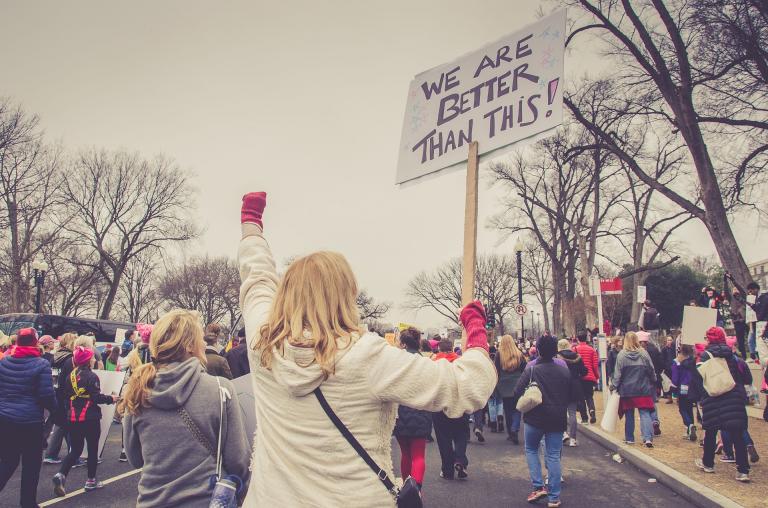
The preamble of our constitution indicates that the purpose of government is to “establish justice, insure domestic tranquility, provide for the common defense, promote the general welfare, and secure the Blessings of Liberty to ourselves and our posterity.” So I believe in the importance of marching to the polls and voting for bright, level-headed public servants who will do this, with reason and heart, in whatever party they can be found.
Lisa R. Hale holds a Ph.D. in clinical health psychology and is winding down a career focused on the research and treatment of anxiety disorders and promotion of evidence-based care. While online dating profiles had correctly classified her as “spiritual but not religious” or “agnostic,” she’s been happily married for almost a decade to the pro-justice/pro-science Rev. Brandon Gilvin, senior minister at First Christian Church in Chattanooga, Tenn. and blogger at The Long Road Home. Lisa spends time looking for hobbies and inspiration, battling humidity and mosquitoes, and attempting to avoid topics of religion, politics and the field of mental health. Unless circumstances are outrageous and/or friends like Erin ask.
We want to know what you think about the upcoming midterm elections. Vote in our poll below!
Previous Post

October 9, 2018
The Odds are Ever In Our Favor: The Gospel of The Hunger Games
Next Post

October 19, 2018 Creating a World Where the Vulnerable No Longer Live in Fear
Browse Our Archives
Select a Category a good week for progress Advent and Christmas Being a Person desert life faith and community Good News for Progressives Lent and Easter Marriage and Family S*^! Jesus Says sabbatical road tripping Spirituality in Culture Talking to Strangers the "Best Stuff I Ever Ate" diet travel Uncategorized writing Writing Prompt Wednesday
Select a Month January 2021 December 2020 November 2020 September 2020 August 2020 July 2020 June 2020 May 2020 April 2020 March 2020 February 2020 January 2020 December 2019 November 2019 October 2019 September 2019 August 2019 July 2019 June 2019 May 2019 April 2019 March 2019 February 2019 January 2019 December 2018 November 2018 October 2018 September 2018 August 2018 July 2018 June 2018 May 2018 April 2018 March 2018 February 2018 January 2018 December 2017 November 2017 October 2017 September 2017 August 2017 July 2017 June 2017 May 2017 April 2017 March 2017 February 2017 January 2017 December 2016 November 2016 October 2016 September 2016 August 2016 July 2016 June 2016 May 2016 April 2016 March 2016 February 2016 January 2016 December 2015 November 2015 October 2015 September 2015 August 2015 July 2015 June 2015 May 2015 April 2015 March 2015 February 2015 January 2015 December 2014 November 2014 October 2014 September 2014 August 2014 July 2014 June 2014 May 2014 April 2014 March 2014 February 2014 January 2014 December 2013 November 2013 October 2013 September 2013 August 2013 July 2013 June 2013 May 2013 April 2013 March 2013 February 2013 January 2013 December 2012 November 2012 October 2012 September 2012 August 2012 July 2012 June 2012 May 2012 April 2012 March 2012 February 2012 January 2012 December 2011 November 2011 October 2011 September 2011 August 2011 July 2011 June 2011 May 2011 April 2011 February 2011 July 2010 May 2010 April 2010 March 2010 January 2010 December 2009 November 2009 October 2009 September 2009 August 2009
Follow Us!
TAKE THE
Religious Wisdom Quiz
What does "Golgotha" literally mean?
Select your answer to see how you score.
Suffering ground Skull place Crucifixion hill Place of death
Related posts from Irreverin


Why The Patriarchy Lies About Reproductive Health: And...

The Human Cost of the Shutdown: And the...
TRENDING AT PATHEOS Progressive Christian

What Being a Modern-Day Apostle Means to Me
In my last column, I discussed the ins and outs of modern-day...

Did Ancient China Once Worship the God of...
Across human history, a common thread weaves through the origins of the...

Love Your Neighbor – Including Earth-Kin: Lev. 19,...
God’s command to love your neighbor means acting in an ethical and...

Lead a Church Study of “Jesus and Lao...
Guest writer Jack Thomas (The Irreverent Reverend) reflects on leading his church...

Pastoral Wisdom for Responding to Sermon Pushback
Getting sermon pushback on your social justice sermon? Learn practical, Proverbs-based strategies...

Principles for Understanding the Apostolic Ministry Today
Whenever people discover that my formal ministry title is "apostle," as in...
view all Progressive Christian blogs
Ad-Free & Subscriber Log-In Subscription Support
- About Us
- 2026 Calendar
- Videos
- Podcasts
- Library of World Religions
- Faith In Media Tracker
- Advertise With Us
- Write for Us
- Privacy Policy
- Terms of Service
- Do Not Sell My Data
- Contact Us
- Radiant Digital
- Manage Newsletter Subscriptions
- Unsubscribe From Notifications
- Sitemap
Copyright 2008-2026, Patheos. All rights reserved.
Subscription Support Ad-Free & Subscriber Log-In
Follow Patheos