
BuddhistCatholicContemplativeEvangelicalGeneral ChristianHinduJewishLatter-day SaintMuslimNew VisionsProgressive Christian
Beliefs
- Buddhist
- Catholic
- Contemplative
- Evangelical
- General Christian
- Hindu
- Jewish
- Latter-day Saint
- More Voices
- Muslim
- New Visions
- Pagan
- Progressive Christian
Topics
- Religion News
- Food and Religion
- Sports and Religion
- Religious Art
- Religious Music and Entertainment
- Religious Events
- History and Religion
- Style and Religion
- Politics and Religion
- Women in Religion
- Recreation Outdoors and Religion
- Business Finance and Religion
- Careers Workplace and Religion
- Education and Religion
- Family Parenting and Religion
- Health Fitness and Religion
- Home and Religion
- Relationships and Religion
- Technology and Religion
- Travel and Religion
Columnists
- Buddhist Columnists
- Business Finance and Religion Columnists
- Careers Workplace and Religion Columnists
- Catholic Columnists
- Contemplative Columnists
- Education and Religion Columnists
- Evangelists Columnists
- Family Parenting and Religion Columnists
- General Christian Columnists
- Health Fitness and Religion Columnists
- Hindu Columnists
- History and Religion Columnists
- Home and Religion Columnists
- Jewish Columnists
- More Voices Columnists
- Latter Day Columnists
- Muslim Columnists
- New Visions Columnists
- Nonreligious Columnists
- Pagan Columnists
- Politics and Religion Columnists
- Progressive Columnists
- Recreation Outdoors and Religion Columnists
- Relationships and Religion Columnists
- Religion News Columnists
- Religious Art Columnists
- Religious Events Columnists
- Religious Music and Entertainment Columnists
- Sports and Religion Columnists
- Style and Religion Columnists
- Technology and Religion Columnists
- Travel and Religion Columnists
- Women in Religion Columnists
Resource Library
- 2026 Calendar
- Library of World Religions
- The 100 Most Holy Places on Earth
- Patheos Answers
- Podcasts
- Videos
- Faith Leaders Database
- Anglican Episcopalian
- Bahai
- Baptist
- Buddhism
- Christianity
- Confucianism
- Eastern Orthodoxy
- Hinduism
- Holiness and Pentecostal
- ISKCON
- Islam
- Judaism
- Lutheran
- Methodist
- The Church of Jesus Christ of Latter-day Saints
- New Age
- Paganism
- Presbytarian and Reformed
- Protestantism
- Religion Behind the Scenes
- Roman Catholic
- Scientology
- Shia Islam
- Sikhism
- Sufism
- Sunni Islam
- Taoism
- Zen
- See all religions
Research Tools
 Ad-Free & Subscriber Log-In Subscription Support
Ad-Free & Subscriber Log-In Subscription Support
Follow Patheos 

- Trending:
- Forgiveness
- |
- Marriage
- |
- Consciousness
- |
- Death Penalty
- |
- Election
- |
- Halloween
 Irreverin
- Home
- Progressive Christian
- Prayer to an Unknown God
Prayer to an Unknown God
Last updated on: April 30, 2018 at 8:41 am by Erin Wathen
Prayer to an Unknown God 2018-04-30T08:41:39-07:00 Erin Wathen
Patheos Explore the world's faith through different perspectives on religion and spirituality! Patheos has the views of the prevalent religions and spiritualities of the world.
16 While Paul was waiting for them in Athens, he was deeply distressed to see that the city was full of idols. 17 So he argued in the synagogue with the Jews and the devout persons, and also in the marketplace[h] every day with those who happened to be there. 18 Also some Epicurean and Stoic philosophers debated with him. Some said, “What does this babbler want to say?” Others said, “He seems to be a proclaimer of foreign divinities.” (This was because he was telling the good news about Jesus and the resurrection.) 19 So they took him and brought him to the Areopagus and asked him, “May we know what this new teaching is that you are presenting? 20 It sounds rather strange to us, so we would like to know what it means.” 21 Now all the Athenians and the foreigners living there would spend their time in nothing but telling or hearing something new.
22 Then Paul stood in front of the Areopagus and said, “Athenians, I see how extremely religious you are in every way. 23 For as I went through the city and looked carefully at the objects of your worship, I found among them an altar with the inscription, ‘To an unknown god.’ What therefore you worship as unknown, this I proclaim to you. 24 The God who made the world and everything in it, he who is Lord of heaven and earth, does not live in shrines made by human hands, 25 nor is he served by human hands, as though he needed anything, since he himself gives to all mortals life and breath and all things. 26 From one ancestor[i] he made all nations to inhabit the whole earth, and he allotted the times of their existence and the boundaries of the places where they would live, 27 so that they would search for God[j] and perhaps grope for him and find him—though indeed he is not far from each one of us. 28 For ‘In him we live and move and have our being’; as even some of your own poets have said,
‘For we too are his offspring.’ —Acts 17:16-28
I don’t like to start a sermon with a litany of statistics. So pretend I’m reading this from the newspaper over a second cup of coffee. Maybe that takes the edge off a little.
In a study released this week from the Pew Research folks: 72 percent of mainline protestants, 69 percent of Catholics, and 91 percent of evangelicals say that they believe in God.
Which means that 28 percent of mainliners, 31 percent of catholics, and 9 percent of evangelicals don’t believe in God?
If you’ve got doubts, you’re in good company.
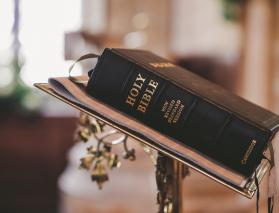 Some religious leaders lament these numbers. “How can people call themselves Christians if they don’t even believe in God?” or “This is the product of a permissive culture; we let people pick and choose whatever parts of faith they like.” Or “Why hang onto faith at all, if you doubt the most fundamental essence of our creed?” But maybe the nature of the researchers’ question is problematic. There’s an important nuance worth noting, because the actual study question was: “Do you believe in the God of the Bible?” Now people, I’m an ordained minister. I believe in God. I order my life around a sense of calling that, not for nothing, I don’t think I imagined. But if someone were to ask me, “Do you believe in the God of the Bible?”, my most immediate answer would be: “Which one?”
Because let’s be real. There are a few different, shall we say, VERSIONS of the Almighty in scripture. As literary characters go, God is about as complex as they come You’ve got your split-personality God in Genesis, who lovingly created the heavens and earth, gave humanity life and sacred breath and called us beloved; and then has a mood swing of epic proportions and wipes out the whole business with a killer flood. Do you mean that God? Or there’s the God of Exodus, who speaks from the mountaintop and performs miraculous signs and wonders to bring the people out of bondage. Closely followed by the God the prophets liked to talk about who, best as I can tell, is both a great king and a pyromaniac.
Or do they mean the New Testament God who is all mercy and compassion … until you get to that Revelation business, and then suddenly there seems to be a lot of fire again?
Trouble is … the images of God portrayed in scripture are as varied and complicated as the people who wrote it. Get a bunch of different people together and ask them to tell their story of faith, their accounting of history—and you’ll get just that: their accounting. Their understanding of how this divine/human relationship works. That adds up to a sacred text that presents some conflicting impressions. Say all you want that we’re a monotheistic people, but our Bible tells another story.
Many times when people say they don’t believe, that they are struggling with doubt, what’s really happening is that they are rejecting someone else’s understanding of God. They can’t quite accept the package in which the faith has been delivered to them. But that doesn’t mean there is no faith there. It means there is some search work to do.
In our text today, Paul journeys through Athens. He’s spending his days in deep theological discussion with people of devout faith, and with philosophers of great learning, and maybe with the local artist crowd—he seems to be pretty familiar with the poetry circles. This is a liberal college town—the most highly educated people he’s come across yet. They’re heady.
Then he comes across a worship space that is filled with idols, an altar devoted “To an unknown God.” He does a double take and realizes that, for all their great education and deep thoughts, maybe these Athenians don’t quite have it all figured out, after all.
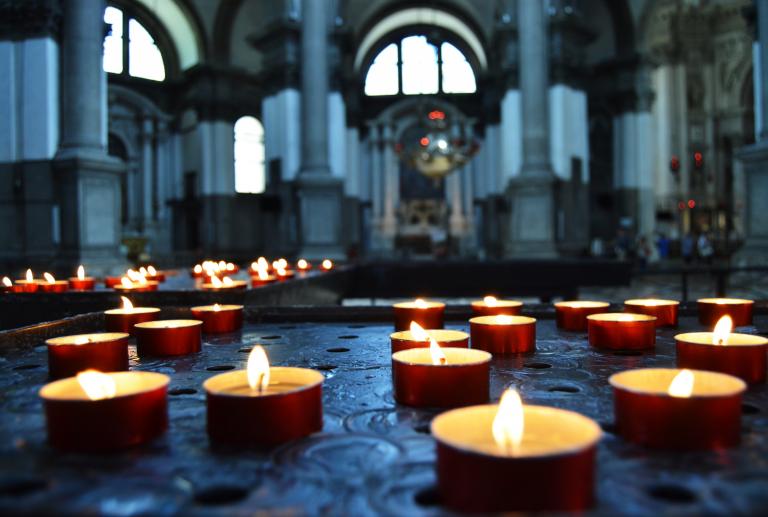
Like the rest of the Mediterranean world at that time, this was a polytheistic culture. It was not unusual for each household to have its own god, or for devotion to be aimed at multiple names and images. I picture a shrine-like table full of flea market trinkets, good luck charms and plastic Made-in-China icons to various deities. Think: a virgin Mary candle from the 7-11; some Mardi Gras beads; a small American flag; a tiny Buddha, just in case; and a giant foam finger from that one time when the Royals won the World Series. It’s like that. Like they don’t *quite* know which god is the right one, so they are covering all the bases, just in case.
Paul commends them for having faith in … something. “I see how extremely religious you are in every way,” he says. “A for effort!” But he wants them to understand God in a different way. The God that he’s on the road to talk about is the God made known in Christ. And that Holy One is not some far-off presence that needs to be made tangible by all this STUFF, but one in whom “we live and move and have our being.” This God is in us and with us, in all things.
And this is Paul’s window to tell his own story. To share his own experience of God—the God that knocked him off his horse, remember that? When blinded him with a great white light, so that he could see in a new way?
This God—made known in the resurrection of Christ—is one that we embody. Not one that has to be captured in icons, or even in words on a page. It is one “in whom we live and move and have our being.” In other words, a word made flesh. A faith that is given to us, and as well as we enact it in our lives, it is true. As well as we tell our own stories of encounter with the living Christ, it is true. As well as we know and love our neighbor, we know and love God.
That doesn’t mean there is nothing unknowable about God. We can’t make God real by way of plastic charms. So what is that we are praying to? What is behind that veil of mystery, and how can we know when our prayers have landed somewhere? For those Athenians, and for us modern-day heathens, sacred mystery is there waiting to be encountered in all things. The act of worship, and the daily practice of searching for something holy, is what shapes our faith. Even if we can’t see God, even as our understandings change over time.
Sometimes, when we don’t receive an answer right away, it may feel like our prayers are just words cast into the void. Maybe we need those beads to hang onto. And when our searching is an endless walk in the dark, maybe we do need that candle from the 7-11. A small flame on an altar of … something.
In those times when the searchlight is dim, we human-types seem to find other “idols” in which to place our faith. Laugh all we want about the absurdity of the Athenians’ “unknown God” worship … but we’ve got our own altars to nothing, our own ill-fated attempts at understanding who God is by putting our faith in things more tangible, things we can better see and understand.
Like money and our own success; like the vengeful god of the gun; or carefully selected scripture verses that prove and uphold our own prejudices; or beautiful celebrities who embody some surface image of how we think happiness and wholeness might look.
Or we stake our faith in the power of Empire … in politicians who are loud and hate-filled and promise to build up our nation as an idol to autonomy.
Pick your poison, the list goes on. But we manage to find gods that will answer us more quickly and tangibly than the God who cannot be seen. It’s no wonder a great many of us are hesitant to say we believe. Which one of those gods are we comfortable claiming? Whose version of the faith do we want to own up to?
One of the greatest theologians of our time, James Cone, passed away Saturday. Cone was known by many as the father of liberation theology, the idea that the gospel holds the power to free the enslaved and rid the world of injustice. He once said, “It is ironic that America, with its history of injustice to the poor, especially the black man and the Indian, prides itself on being a Christian nation.” In one of his iconic works “The Cross and the Lynching Tree,” he says, *“*In the “lynching era,” between 1880 to 1940, white Christians lynched nearly 5,000 black men and women in a manner with obvious echoes of the Roman crucifixion of Jesus. Yet these ‘Christians’ did not see the irony or contradiction in their actions.“
Do you believe in God? Well … which one?
The sometimes wonderful and sometimes terrible truth of our faith is this: the God we believe in becomes the the world we live in. We build systems and empires that reflect our understandings of divinity. And so often, the world we inhabit and the faith we claim are deeply at odds with each other. It’s no wonder we struggle with the packaging of faith. It’s no wonder we doubt, or turn to more accessible objects of worship.
But. That’s the work. Knowing that someone else’s faith story is never going to quite be enough for us—and hearing the call to find our own. To live it and tell it in transformative ways that embody the love of Christ, that build a world like the kingdom of God, and invite others to witness the life that is possible.
There is a transitional phrase in Acts 27 that gives so much promise … it says that God allotted the time and place in which each of us would live … So that we would search. As though everything about our lives, even down to when and where we are born, is designed so that we can go about this work of looking … So that we can note the particular brokenness of this world, and seek to embody the one who restores it. The unknown God is not unknowable, but is sought after and made known through our neighbor. Knowing God in that relational, transformational way can be uncomfortable and slow in coming. But the search itself is faithful. When we resist the impulse towards false idols and easy answers, we can embrace the kind of seeking that brings justice and liberation to the world.
Do you believe in God? Well … which one? Go find out. Then go tell it*. So that* others may believe is well. So that all might find new life.


Browse Our Archives
Select a Category a good week for progress Advent and Christmas Being a Person desert life faith and community Good News for Progressives Lent and Easter Marriage and Family S*^! Jesus Says sabbatical road tripping Spirituality in Culture Talking to Strangers the "Best Stuff I Ever Ate" diet travel Uncategorized writing Writing Prompt Wednesday
Select a Month January 2021 December 2020 November 2020 September 2020 August 2020 July 2020 June 2020 May 2020 April 2020 March 2020 February 2020 January 2020 December 2019 November 2019 October 2019 September 2019 August 2019 July 2019 June 2019 May 2019 April 2019 March 2019 February 2019 January 2019 December 2018 November 2018 October 2018 September 2018 August 2018 July 2018 June 2018 May 2018 April 2018 March 2018 February 2018 January 2018 December 2017 November 2017 October 2017 September 2017 August 2017 July 2017 June 2017 May 2017 April 2017 March 2017 February 2017 January 2017 December 2016 November 2016 October 2016 September 2016 August 2016 July 2016 June 2016 May 2016 April 2016 March 2016 February 2016 January 2016 December 2015 November 2015 October 2015 September 2015 August 2015 July 2015 June 2015 May 2015 April 2015 March 2015 February 2015 January 2015 December 2014 November 2014 October 2014 September 2014 August 2014 July 2014 June 2014 May 2014 April 2014 March 2014 February 2014 January 2014 December 2013 November 2013 October 2013 September 2013 August 2013 July 2013 June 2013 May 2013 April 2013 March 2013 February 2013 January 2013 December 2012 November 2012 October 2012 September 2012 August 2012 July 2012 June 2012 May 2012 April 2012 March 2012 February 2012 January 2012 December 2011 November 2011 October 2011 September 2011 August 2011 July 2011 June 2011 May 2011 April 2011 February 2011 July 2010 May 2010 April 2010 March 2010 January 2010 December 2009 November 2009 October 2009 September 2009 August 2009
Follow Us!
TAKE THE
Religious Wisdom Quiz
I am the vine; you are the branches. If you remain in me and I in you, you will bear much ____; apart from me you can do nothing.
Select your answer to see how you score.
Peace Fruit Faith Joy
Related posts from Irreverin


Hard Candy Christmas: And Other Songs You Need...


TRENDING AT PATHEOS Progressive Christian

What Being a Modern-Day Apostle Means to Me
In my last column, I discussed the ins and outs of modern-day...

Did Ancient China Once Worship the God of...
Across human history, a common thread weaves through the origins of the...

Love Your Neighbor – Including Earth-Kin: Lev. 19,...
God’s command to love your neighbor means acting in an ethical and...

Lead a Church Study of “Jesus and Lao...
Guest writer Jack Thomas (The Irreverent Reverend) reflects on leading his church...

Pastoral Wisdom for Responding to Sermon Pushback
Getting sermon pushback on your social justice sermon? Learn practical, Proverbs-based strategies...

Principles for Understanding the Apostolic Ministry Today
Whenever people discover that my formal ministry title is "apostle," as in...
view all Progressive Christian blogs
Ad-Free & Subscriber Log-In Subscription Support
- About Us
- 2026 Calendar
- Videos
- Podcasts
- Library of World Religions
- Faith In Media Tracker
- Advertise With Us
- Write for Us
- Privacy Policy
- Terms of Service
- Do Not Sell My Data
- Contact Us
- Radiant Digital
- Manage Newsletter Subscriptions
- Unsubscribe From Notifications
- Sitemap
Copyright 2008-2026, Patheos. All rights reserved.
Subscription Support Ad-Free & Subscriber Log-In
Follow Patheos