
BuddhistCatholicContemplativeEvangelicalGeneral ChristianHinduJewishLatter-day SaintMuslimNew VisionsProgressive Christian
Beliefs
- Buddhist
- Catholic
- Contemplative
- Evangelical
- General Christian
- Hindu
- Jewish
- Latter-day Saint
- More Voices
- Muslim
- New Visions
- Pagan
- Progressive Christian
Topics
- Religion News
- Food and Religion
- Sports and Religion
- Religious Art
- Religious Music and Entertainment
- Religious Events
- History and Religion
- Style and Religion
- Politics and Religion
- Women in Religion
- Recreation Outdoors and Religion
- Business Finance and Religion
- Careers Workplace and Religion
- Education and Religion
- Family Parenting and Religion
- Health Fitness and Religion
- Home and Religion
- Relationships and Religion
- Technology and Religion
- Travel and Religion
Columnists
- Buddhist Columnists
- Business Finance and Religion Columnists
- Careers Workplace and Religion Columnists
- Catholic Columnists
- Contemplative Columnists
- Education and Religion Columnists
- Evangelists Columnists
- Family Parenting and Religion Columnists
- General Christian Columnists
- Health Fitness and Religion Columnists
- Hindu Columnists
- History and Religion Columnists
- Home and Religion Columnists
- Jewish Columnists
- More Voices Columnists
- Latter Day Columnists
- Muslim Columnists
- New Visions Columnists
- Nonreligious Columnists
- Pagan Columnists
- Politics and Religion Columnists
- Progressive Columnists
- Recreation Outdoors and Religion Columnists
- Relationships and Religion Columnists
- Religion News Columnists
- Religious Art Columnists
- Religious Events Columnists
- Religious Music and Entertainment Columnists
- Sports and Religion Columnists
- Style and Religion Columnists
- Technology and Religion Columnists
- Travel and Religion Columnists
- Women in Religion Columnists
Resource Library
- 2026 Calendar
- Library of World Religions
- The 100 Most Holy Places on Earth
- Patheos Answers
- Podcasts
- Videos
- Faith Leaders Database
- Anglican Episcopalian
- Bahai
- Baptist
- Buddhism
- Christianity
- Confucianism
- Eastern Orthodoxy
- Hinduism
- Holiness and Pentecostal
- ISKCON
- Islam
- Judaism
- Lutheran
- Methodist
- The Church of Jesus Christ of Latter-day Saints
- New Age
- Paganism
- Presbytarian and Reformed
- Protestantism
- Religion Behind the Scenes
- Roman Catholic
- Scientology
- Shia Islam
- Sikhism
- Sufism
- Sunni Islam
- Taoism
- Zen
- See all religions
Research Tools
 Ad-Free & Subscriber Log-In Subscription Support
Ad-Free & Subscriber Log-In Subscription Support
Follow Patheos 

- Trending:
- Forgiveness
- |
- Marriage
- |
- Consciousness
- |
- Death Penalty
- |
- Election
- |
- Halloween
 Irreverin
- Home
- Progressive Christian
- Do Not Be Afraid: Calling All Angels
Do Not Be Afraid: Calling All Angels
Last updated on: December 19, 2016 at 4:38 pm by Erin Wathen
Do Not Be Afraid: Calling All Angels 2016-12-19T16:38:43-07:00 Erin Wathen
Patheos Explore the world's faith through different perspectives on religion and spirituality! Patheos has the views of the prevalent religions and spiritualities of the world.
Now the birth of Jesus the Messiah took place in this way. When his mother Mary had been engaged to Joseph, but before they lived together, she was found to be with child from the Holy Spirit. Her husband Joseph, being a righteous man and unwilling to expose her to public disgrace, planned to dismiss her quietly. But just when he had resolved to do this, an angel of the Lord appeared to him in a dream and said, “Joseph, son of David, do not be afraid to take Mary as your wife, for the child conceived in her is from the Holy Spirit. She will bear a son, and you are to name him Jesus, for he will save his people from their sins.” All this took place to fulfill what had been spoken by the Lord through the prophet:
“Look, the virgin shall conceive and bear a son,
and they shall name him Emmanuel,”
which means, “God is with us.” When Joseph awoke from sleep, he did as the angel of the Lord commanded him; he took her as his wife, but had no marital relations with her until she had borne a son; and he named him Jesus. Matthew 1:18-25
This is definitely not the illustrated children’s version of the Christmas story.
This is the ‘rated PG-13 for Adult Situations’ kind of Christmas story. We tend to gloss over this part in Sunday school, and rightfully so. This is not the Hallmark Channel Christmas rom-com, this moment when Joseph says, “I’m sorry, you’re WHAT?” and “With who, again?” And “His name is to be called WHAT ARE YOU TELLING ME RIGHT NOW?”
This is the scandal… The fall-out. The tabloid, real time rendition of what happens when the activity of an other-worldly God crosses into the realm of mortal, human relationships.
In 1st Century Jewish life, in Mary and Joseph’s world, this kind of news does not go down well. Different translations of scripture use different words to describe their relationship at that time; but whether they were “engaged,” “pledged,” or “espoused,” their arrangement was not just social and relational–it was contractual. Legally binding, every bit as much as an actual marriage. They had not yet set up housekeeping together, but as far as their family and community was concerned, they were as good as hitched.
So Mary turning up pregnant is, let’s say, awkward. Joseph knows that their marriage is not quite a marriage yet in at least one critical way, and so he is not the baby daddy. What’s a guy to do? Even nowadays, that kind of betrayal would be grounds for calling off the whole deal. Back then, it was an unspeakable crime. Joseph, the scriptures tell us, is a “righteous” man. Lest we think that the more righteous path would have been to just forgive her and roll with it… look to the world he’s coming from, and we find that the only two options available to him, in this particular situation, were to either “dismiss her quietly…” or a public stoning.
Suddenly that private breakup sounds like the nice-guy thing to do after all.
This is the world they lived in. This, in many ways, is the world that we still live in today–violent, misogynistic, unjust, and mistrustful of a miracle. So remind me again why in the world God would want to come down here and enter this mess?
Sometimes I wonder. And yet…
Into this impossible human situation, where the accepted norms of human culture would demand a human life in exchange for a perceived slight–into this moment of confusion and heartbreak –an angel appears, and speaks the magic words:
Do not be afraid.
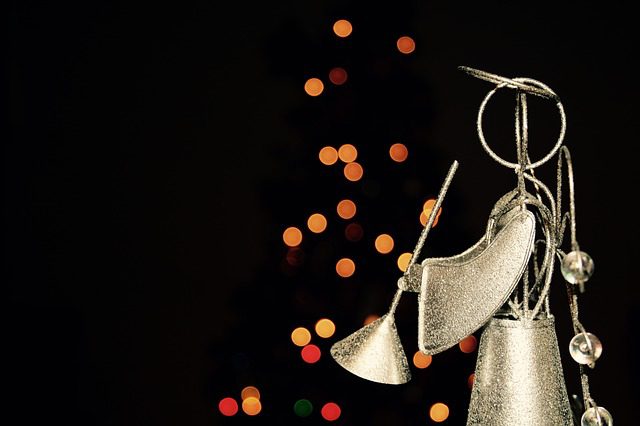
This is no small thing to ask. The angel is essentially telling Joseph to put aside everything he knows–about culture and custom, about love and fidelity, about family and gender roles and power. Not to mention his sense of hurt and betrayal. It seems like an impossible request.
As it turns out though, those 4 little words can accomplish alot. Do not be afraid.
So powerful is that phrase, we keep coming back to it in the stories leading up to Jesus’ birth. The angel Gabriel appears to Mary and tells her not to fear. An angel appears to a disbelieving Zecharaiah, father of John the Baptist, as he tries to comprehend the pregnancy of his aging wife, Elizabeth. “Don’t be afraid,” says that angel. And who calls to the shepherds in the field? A heavenly host tells those trembling watchmen to “fear not!”
And now, this. An angel tells Joseph to abandon all of his values and suck it up, and marry this woman anyway; this woman who is carrying a child who does not, in the strictest sense, belong to him. I’m sure we miss a whole bunch of stuff here, the part where Joseph wrestles with his deeply held beliefs in order to obey God. But however it came about, he awoke, and rose up, and took Mary as his wife.
That must have been some angel.
That must have been some powerful, heavenly being, who could speak so simple a directive and make a righteous man forget everything he knows about the way the world is supposed to work.
So here’s my question–where is our angel? Where is the heavenly host that will come down and speak peace to this warring, unjust world; and to this fractured country where shared culture and custom are just not cutting it any more? We need some otherworldly body to come down and call us out of our fear.
Because it is a mess around here. We look at the overt racism, misogyny, and greed that seems to be running the show right about now, and we are afraid. People we love are sick, and we are afraid. The world is on fire, and children are dying, and we fear for the future. The ice caps are melting, and earthquakes happen in places that should not feel so shaky, and natural disasters grow in frequency and intensity–and we are fearful. We wonder what will fall apart next, and we are afraid. What thing that used to make sense will suddenly be rearranged tomorrow?
We are apt to look around and wonder if maybe God has decided we aren’t worth the trouble after all. We wonder if the whole baby in a manger thing has been cancelled. Maybe we are all standing here just holding our candles and watching an empty sky.
Where is our angel?
There may be much that makes us afraid–both near and far away–but little else in the world right now seems as horrifying as the situation in Aleppo. Innocents dying; children cornered in hopeless places with no visible way out; unspeakable violence with no end in sight. We see these images on the news, and hear the stories of desperate final messages to the outside world, and we wonder… where is the angel?
Friends, the great and terrible news is this: We might be it. The greatest hope for that desperate and fragile place right now might rest in our own hands. Or, as blogger Glennon Melton wrote this week–we’re the ones we’ve been waiting for.
“I know how you feel when you read about the atrocities there and see the pictures (she says). It feels impossible. You feel paralyzed. I watch the reports and I think: Wait. Where are the world leaders? Where are the grown-ups? Aren’t there RULES about life and death and good and evil we’re all supposed to be TRYING to follow?? But, I have learned there is no Oz behind the curtain. And it’s scary. But that’s when we remember that WE ARE THE ONES WE’RE WAITING FOR. We stop waiting and start moving. We move from pity…To compassion.”
She’s right. It’s a scary moment, when we recognize that maybe no army is going to show up and stop it this time. And maybe no angel is going to come down in a blaze of light and speak a perfect word of peace. But in that realization, there might a measure of empowerment; an urgency to give and mobilize aid. And in all that flurry of generosity and activity, we give voice to these ancient words again: Do not be afraid. We speak peace into the void, and find that angels are not the dazzling, glittery, gold and white stuff of children’s books after all; but our own impulse to move as ambassadors of God’s love and mercy and peace.
Parker Palmer calls this the work of bringing Christmas back down to earth. It is the discipline of recognizing our own responsibility to transform our reality–to be peacemakers, to fight for equality, and seek justice for the poor. Even in the midst of our own fear and uncertainty.
We can be a powerful presence in impossible places.We speak peace by giving money; we activate through prayer, and advocate by showing up; and sometimes our strength is in having the courage to not look away.
So I wonder– if we can do all that, then might we also have the power to answer our own fears and anxieties? I wonder if we can approach our own broken relationships and uncertain futures with that simple mantra– do not be afraid. Can we deliver that good news to our own weary souls? Can we share it with a friend who’s hurting– push back against the darkness, just by saying “Don’t be afraid. I’m with you”
We can spend this season waiting for the fiery sky show that we see in scripture. But the truth is, we’re it. We are the voices God has called to speak peace in our time–to call each other out of fear and into active compassion.
Some days, we think that maybe God has abandoned us…left a crumbling world to its own devices. But let this story of Joseph’s courage in an impossible moment, remind us that Jesus does not come to a world where all is well; Jesus comes to a broken world, in the cold of winter. And he is not born to those who are perfect and whole; he is born to the poor, the weary, and the broken-hearted. He comes to the world as it is–real life, messy and frayed. He comes as love incarnate, bringing peace to all who will receive it, and all who will speak its birth.
Previous Post

December 13, 2016
Moana, the "Other" Princess: Thoughts on Identity and Belonging
Next Post

December 21, 2016 The End of Words: A Zechariah Advent
Browse Our Archives
Select a Category a good week for progress Advent and Christmas Being a Person desert life faith and community Good News for Progressives Lent and Easter Marriage and Family S*^! Jesus Says sabbatical road tripping Spirituality in Culture Talking to Strangers the "Best Stuff I Ever Ate" diet travel Uncategorized writing Writing Prompt Wednesday
Select a Month January 2021 December 2020 November 2020 September 2020 August 2020 July 2020 June 2020 May 2020 April 2020 March 2020 February 2020 January 2020 December 2019 November 2019 October 2019 September 2019 August 2019 July 2019 June 2019 May 2019 April 2019 March 2019 February 2019 January 2019 December 2018 November 2018 October 2018 September 2018 August 2018 July 2018 June 2018 May 2018 April 2018 March 2018 February 2018 January 2018 December 2017 November 2017 October 2017 September 2017 August 2017 July 2017 June 2017 May 2017 April 2017 March 2017 February 2017 January 2017 December 2016 November 2016 October 2016 September 2016 August 2016 July 2016 June 2016 May 2016 April 2016 March 2016 February 2016 January 2016 December 2015 November 2015 October 2015 September 2015 August 2015 July 2015 June 2015 May 2015 April 2015 March 2015 February 2015 January 2015 December 2014 November 2014 October 2014 September 2014 August 2014 July 2014 June 2014 May 2014 April 2014 March 2014 February 2014 January 2014 December 2013 November 2013 October 2013 September 2013 August 2013 July 2013 June 2013 May 2013 April 2013 March 2013 February 2013 January 2013 December 2012 November 2012 October 2012 September 2012 August 2012 July 2012 June 2012 May 2012 April 2012 March 2012 February 2012 January 2012 December 2011 November 2011 October 2011 September 2011 August 2011 July 2011 June 2011 May 2011 April 2011 February 2011 July 2010 May 2010 April 2010 March 2010 January 2010 December 2009 November 2009 October 2009 September 2009 August 2009
Follow Us!
TAKE THE
Religious Wisdom Quiz
Who saw a vision of four beasts coming out of the sea?
Select your answer to see how you score.
Joel Ezekiel Amos Daniel
Related posts from Irreverin


Hard Candy Christmas: And Other Songs You Need...

TRENDING AT PATHEOS Progressive Christian

Why Christians Have a Sacred Duty to Vote:...
The Bible offers strong support for the sacred duty to vote. Here...

What Being a Modern-Day Apostle Means to Me
In my last column, I discussed the ins and outs of modern-day...

Did Ancient China Once Worship the God of...
Across human history, a common thread weaves through the origins of the...

Love Your Neighbor – Including Earth-Kin: Lev. 19,...
God’s command to love your neighbor means acting in an ethical and...

Lead a Church Study of “Jesus and Lao...
Guest writer Jack Thomas (The Irreverent Reverend) reflects on leading his church...

Principles for Understanding the Apostolic Ministry Today
Whenever people discover that my formal ministry title is "apostle," as in...
view all Progressive Christian blogs
Ad-Free & Subscriber Log-In Subscription Support
- About Us
- 2026 Calendar
- Videos
- Podcasts
- Library of World Religions
- Faith In Media Tracker
- Advertise With Us
- Write for Us
- Privacy Policy
- Terms of Service
- Do Not Sell My Data
- Contact Us
- Radiant Digital
- Manage Newsletter Subscriptions
- Unsubscribe From Notifications
- Sitemap
Copyright 2008-2026, Patheos. All rights reserved.
Subscription Support Ad-Free & Subscriber Log-In
Follow Patheos