
BuddhistCatholicContemplativeEvangelicalGeneral ChristianHinduJewishLatter-day SaintMuslimNew VisionsProgressive Christian
Beliefs
- Buddhist
- Catholic
- Contemplative
- Evangelical
- General Christian
- Hindu
- Jewish
- Latter-day Saint
- More Voices
- Muslim
- New Visions
- Pagan
- Progressive Christian
Topics
- Religion News
- Food and Religion
- Sports and Religion
- Religious Art
- Religious Music and Entertainment
- Religious Events
- History and Religion
- Style and Religion
- Politics and Religion
- Women in Religion
- Recreation Outdoors and Religion
- Business Finance and Religion
- Careers Workplace and Religion
- Education and Religion
- Family Parenting and Religion
- Health Fitness and Religion
- Home and Religion
- Relationships and Religion
- Technology and Religion
- Travel and Religion
Columnists
- Buddhist Columnists
- Business Finance and Religion Columnists
- Careers Workplace and Religion Columnists
- Catholic Columnists
- Contemplative Columnists
- Education and Religion Columnists
- Evangelists Columnists
- Family Parenting and Religion Columnists
- General Christian Columnists
- Health Fitness and Religion Columnists
- Hindu Columnists
- History and Religion Columnists
- Home and Religion Columnists
- Jewish Columnists
- More Voices Columnists
- Latter Day Columnists
- Muslim Columnists
- New Visions Columnists
- Nonreligious Columnists
- Pagan Columnists
- Politics and Religion Columnists
- Progressive Columnists
- Recreation Outdoors and Religion Columnists
- Relationships and Religion Columnists
- Religion News Columnists
- Religious Art Columnists
- Religious Events Columnists
- Religious Music and Entertainment Columnists
- Sports and Religion Columnists
- Style and Religion Columnists
- Technology and Religion Columnists
- Travel and Religion Columnists
- Women in Religion Columnists
Resource Library
- 2026 Calendar
- Library of World Religions
- The 100 Most Holy Places on Earth
- Patheos Answers
- Podcasts
- Videos
- Faith Leaders Database
- Anglican Episcopalian
- Bahai
- Baptist
- Buddhism
- Christianity
- Confucianism
- Eastern Orthodoxy
- Hinduism
- Holiness and Pentecostal
- ISKCON
- Islam
- Judaism
- Lutheran
- Methodist
- The Church of Jesus Christ of Latter-day Saints
- New Age
- Paganism
- Presbytarian and Reformed
- Protestantism
- Religion Behind the Scenes
- Roman Catholic
- Scientology
- Shia Islam
- Sikhism
- Sufism
- Sunni Islam
- Taoism
- Zen
- See all religions
Research Tools
 Ad-Free & Subscriber Log-In Subscription Support
Ad-Free & Subscriber Log-In Subscription Support
Follow Patheos 

- Trending:
- Forgiveness
- |
- Marriage
- |
- Consciousness
- |
- Death Penalty
- |
- Election
- |
- Halloween
 Irreverin
- Home
- Progressive Christian
- Water and Ash
Water and Ash
Last updated on: February 18, 2015 at 4:11 pm by Erin Wathen
Water and Ash 2015-02-18T16:11:22-07:00 Erin Wathen
Patheos Explore the world's faith through different perspectives on religion and spirituality! Patheos has the views of the prevalent religions and spiritualities of the world.
From dust you were born. And to dust, you will return.
Is that a threat, or a promise? On the darkest days, we sense death hovering in our vicinity, like a grey cloud. It feels chilly. It sounds like slow, dirge-y organ music in a minor key. It smells like ash and feels abrasive against our skin—like burlap.
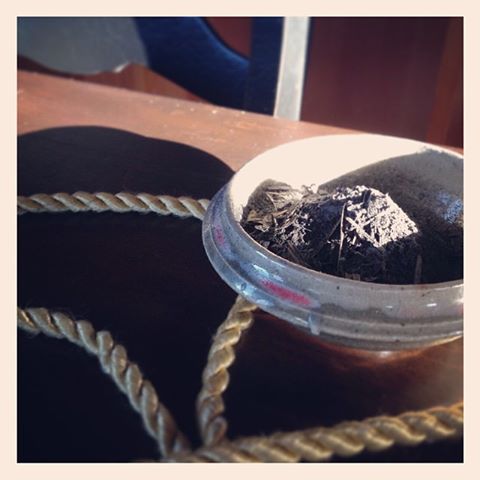
Sack cloth and ashes… That’s what we could be about today.
Or.
We can choose to hear those words as blessing and benediction. From dust you were born. To dust, you will return.
“What happens when people die?” my kids ask. “They go to be with God,” I’ve told them often.
“Where was I before I was born?” they want to know, all the time. “You were with God,” I tell them.
Then the other day, I heard it repeated back to me. I was talking about somewhere I went, a long time ago. “Where was I?” the boy wanted to know. “You weren’t born yet.” I saw little wheels turning. “So, I was still with God,” he said. Like it was the most obvious truth in the world. Like a thing he remembers, a story he tells often.
It wasn’t intentional… But I think I’ve taught my kids is that death and “not born yet” are the same thing. Like these states of non-being take up the same kind of time and space. And the more they believe that… the more I think it’s probably true.
From dust you were born. To dust, you will return.
Writer and theologian Marcus Borg passed away recently. Patheos ran a series of reflections from writers who were remembering him and honoring his work. One of the featured pieces was written by Borg himself—just a few months before he died. In it, he talks about the recent and dramatic cultural changes in how developed countries deal with death. As modern medicine has evolved and increased life expectancy, death has quickly moved from the realm of home and church to the domain of the hospital, the funeral home… and other institutions that we assume are more equipped to “Deal with” the end of life; and the physical remains thereafter. We no longer hope for the Victorian ideal of a “good death,” surrounded by family and friends, with spoken liturgy, confession and song. In many ways, we’ve come to view death instead as the ultimate failure, the final punishment. It is to be avoided as long as possible, and grieved for as little time as our loved ones can manage…
In some of the last words he wrote, in an extraordinary life of scholarship—Borg alluded to the spiritual practice of “remembering our death.” He says that our faith calls us to remember our death, often… And that failing to do so keeps us from living as fully and vitally as we might.
Remember your death… He says it just like we might say, ‘remember your baptism,’ or ‘remember what your mother told you.’ Remember your death… In a narrative sense, doesn’t that sound backwards? Like there’s a verb tense out of whack somewhere? How can we possibly remember something that hasn’t happened yet?
But maybe… maybe we think about time all wrong. Maybe our birth and death are not two fixed points on a straight line—with a clear beginning and end point—but parts of our whole being that just ‘are.’ We assume that we have not yet died; and yet, our death is an inevitable truth, as certain in eventuality as our birthday is, in actuality. Death is as much a part of our story as the present moment. And while we assume that we have already been born; doesn’t our faith assure us that new life awaits us when we leave our physical frame?
From dust you arose—and you will become dust again.
During Lent, we journey with Jesus… From the wilderness to Nazareth to Jerusalem. From ministry and miracle to betrayal and suffering death. We will move through that same story this year; but instead of the traditional gospel texts, we’re going to sit with some scriptures that challenge how we think about time. From our daily hurried and worried anxiousness, to our fears about death, to the vast expanse of God’s creative universe—how we think of time affects how we think about life itself. Shifting our relationship with time will change how we move through the season, and ultimately, how we approach Jesus’ last days.
With the prayers and practices of this season, we echo the Psalmist’s desire for a clean heart. We confess that we do not always live as people who have been called and claimed by a holy God. We look at the expanse of our days, and see that some of them are sorely misspent—in worry; in anger and resentment; in self-absorbtion, short-sightedness, and the fearful myth of scarcity.
In broken bread, and the imposition of ashes, we are invited to tell a different story. We ask God that this wilderness season might bring a new rhythm to our days, and a deeper understanding of how we are called to fill them. We began tonight with a water blessing, and a remembrance of the Spirit with us at our baptism. We’ll leave with the mark of ashes on our skin—a physical reminder that everything we can taste, touch, see, smell or hear, will pass away. For 40 days, we will try to remember.
Every time we turn the page, it is there. It is all right there. No mistake of syntax, no grammatical oversight: just the good and simple truth of our birth, our death, and the holy time between. We remember that death is already part of our story, already carved into who we are. But it may not be the end that we think it is.
We make choices every day, to turn toward or turn away from the God of our being. Those choices affect the world around us; to transform or destroy. How we spend our precious time here matters… But what we have been, and what we will be, is the same for all eternity. Before we were born, we were with God; known by God, called and named, shaped and molded for a life journey of joy and heartbreak and service.
And when we die, we will return to the dust.
That is not a threat. After all, every good thing was dust once. Swirling chaos, shapeless void.
But then came light. And water. And us.
From dust you were born. You will be dust again, some day.
It’s a promise. It is breath itself. The highest benediction.
“Ashes to ashes, water and rust,
we are but dust on the sunbeam You hold in Your hand.” ~Andra Moran
Previous Post

February 16, 2015
Around the (Messy) Table: The Christian Church (Disciples of Christ)
Next Post
February 19, 2015 Those Who Do Not Learn From History...
Browse Our Archives
Select a Category a good week for progress Advent and Christmas Being a Person desert life faith and community Good News for Progressives Lent and Easter Marriage and Family S*^! Jesus Says sabbatical road tripping Spirituality in Culture Talking to Strangers the "Best Stuff I Ever Ate" diet travel Uncategorized writing Writing Prompt Wednesday
Select a Month January 2021 December 2020 November 2020 September 2020 August 2020 July 2020 June 2020 May 2020 April 2020 March 2020 February 2020 January 2020 December 2019 November 2019 October 2019 September 2019 August 2019 July 2019 June 2019 May 2019 April 2019 March 2019 February 2019 January 2019 December 2018 November 2018 October 2018 September 2018 August 2018 July 2018 June 2018 May 2018 April 2018 March 2018 February 2018 January 2018 December 2017 November 2017 October 2017 September 2017 August 2017 July 2017 June 2017 May 2017 April 2017 March 2017 February 2017 January 2017 December 2016 November 2016 October 2016 September 2016 August 2016 July 2016 June 2016 May 2016 April 2016 March 2016 February 2016 January 2016 December 2015 November 2015 October 2015 September 2015 August 2015 July 2015 June 2015 May 2015 April 2015 March 2015 February 2015 January 2015 December 2014 November 2014 October 2014 September 2014 August 2014 July 2014 June 2014 May 2014 April 2014 March 2014 February 2014 January 2014 December 2013 November 2013 October 2013 September 2013 August 2013 July 2013 June 2013 May 2013 April 2013 March 2013 February 2013 January 2013 December 2012 November 2012 October 2012 September 2012 August 2012 July 2012 June 2012 May 2012 April 2012 March 2012 February 2012 January 2012 December 2011 November 2011 October 2011 September 2011 August 2011 July 2011 June 2011 May 2011 April 2011 February 2011 July 2010 May 2010 April 2010 March 2010 January 2010 December 2009 November 2009 October 2009 September 2009 August 2009
Follow Us!
TAKE THE
Religious Wisdom Quiz
What city’s walls fell after the Israelites marched around them?
Select your answer to see how you score.
Jericho Nineveh Jerusalem Babylon
Related posts from Irreverin


Hard Candy Christmas: And Other Songs You Need...

TRENDING AT PATHEOS Progressive Christian

Why Christians Have a Sacred Duty to Vote:...
The Bible offers strong support for the sacred duty to vote. Here...

What Being a Modern-Day Apostle Means to Me
In my last column, I discussed the ins and outs of modern-day...

Did Ancient China Once Worship the God of...
Across human history, a common thread weaves through the origins of the...

Love Your Neighbor – Including Earth-Kin: Lev. 19,...
God’s command to love your neighbor means acting in an ethical and...

Lead a Church Study of “Jesus and Lao...
Guest writer Jack Thomas (The Irreverent Reverend) reflects on leading his church...

Principles for Understanding the Apostolic Ministry Today
Whenever people discover that my formal ministry title is "apostle," as in...
view all Progressive Christian blogs
Ad-Free & Subscriber Log-In Subscription Support
- About Us
- 2026 Calendar
- Videos
- Podcasts
- Library of World Religions
- Faith In Media Tracker
- Advertise With Us
- Write for Us
- Privacy Policy
- Terms of Service
- Do Not Sell My Data
- Contact Us
- Radiant Digital
- Manage Newsletter Subscriptions
- Unsubscribe From Notifications
- Sitemap
Copyright 2008-2026, Patheos. All rights reserved.
Subscription Support Ad-Free & Subscriber Log-In
Follow Patheos