
BuddhistCatholicContemplativeEvangelicalGeneral ChristianHinduJewishLatter-day SaintMuslimNew VisionsProgressive Christian
Beliefs
- Buddhist
- Catholic
- Contemplative
- Evangelical
- General Christian
- Hindu
- Jewish
- Latter-day Saint
- More Voices
- Muslim
- New Visions
- Pagan
- Progressive Christian
Topics
- Religion News
- Food and Religion
- Sports and Religion
- Religious Art
- Religious Music and Entertainment
- Religious Events
- History and Religion
- Style and Religion
- Politics and Religion
- Women in Religion
- Recreation Outdoors and Religion
- Business Finance and Religion
- Careers Workplace and Religion
- Education and Religion
- Family Parenting and Religion
- Health Fitness and Religion
- Home and Religion
- Relationships and Religion
- Technology and Religion
- Travel and Religion
Columnists
- Buddhist Columnists
- Business Finance and Religion Columnists
- Careers Workplace and Religion Columnists
- Catholic Columnists
- Contemplative Columnists
- Education and Religion Columnists
- Evangelists Columnists
- Family Parenting and Religion Columnists
- General Christian Columnists
- Health Fitness and Religion Columnists
- Hindu Columnists
- History and Religion Columnists
- Home and Religion Columnists
- Jewish Columnists
- More Voices Columnists
- Latter Day Columnists
- Muslim Columnists
- New Visions Columnists
- Nonreligious Columnists
- Pagan Columnists
- Politics and Religion Columnists
- Progressive Columnists
- Recreation Outdoors and Religion Columnists
- Relationships and Religion Columnists
- Religion News Columnists
- Religious Art Columnists
- Religious Events Columnists
- Religious Music and Entertainment Columnists
- Sports and Religion Columnists
- Style and Religion Columnists
- Technology and Religion Columnists
- Travel and Religion Columnists
- Women in Religion Columnists
Resource Library
- 2026 Calendar
- Library of World Religions
- The 100 Most Holy Places on Earth
- Patheos Answers
- Podcasts
- Videos
- Faith Leaders Database
- Anglican Episcopalian
- Bahai
- Baptist
- Buddhism
- Christianity
- Confucianism
- Eastern Orthodoxy
- Hinduism
- Holiness and Pentecostal
- ISKCON
- Islam
- Judaism
- Lutheran
- Methodist
- The Church of Jesus Christ of Latter-day Saints
- New Age
- Paganism
- Presbytarian and Reformed
- Protestantism
- Religion Behind the Scenes
- Roman Catholic
- Scientology
- Shia Islam
- Sikhism
- Sufism
- Sunni Islam
- Taoism
- Zen
- See all religions
Research Tools
 Ad-Free & Subscriber Log-In Subscription Support
Ad-Free & Subscriber Log-In Subscription Support
Follow Patheos 

- Trending:
- Forgiveness
- |
- Marriage
- |
- Consciousness
- |
- Death Penalty
- |
- Election
- |
- Halloween
 Into the Nations
- Home
- Evangelical
- History and Religion
- Fact-Checking Jesus: Can Luke’s Gospel Withstand Scrutiny?
Fact-Checking Jesus: Can Luke’s Gospel Withstand Scrutiny?
Last updated on: October 16, 2024 at 10:43 am by Don Myers
Fact-Checking Jesus: Can Luke’s Gospel Withstand Scrutiny? 2024-10-16T10:43:11-05:00 Don Myers
Patheos Explore the world's faith through different perspectives on religion and spirituality! Patheos has the views of the prevalent religions and spiritualities of the world.
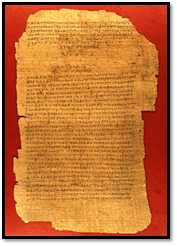
Oldest Fragment of the Gospel of Luke (175 – 225 A.D.)
Imagine, for a moment, Theophilus (a high ranking Roman official) getting home from the office one evening and asking his wife if anything interesting had happened that day. What if she had said, “Well, you received a package through the mail from your doctor friend, Luke.” Theophilus opens the package and discovers the Gospel of Luke and*/*or the Book of Acts. After supper, the couple sits by a fire, and Theophilus reads through the document aloud and within earshot of his wife.
Theophilus’s Curiosity and Decision
As Theophilus closes the document, he looks at his wife and asks, “Could you make a couple of pones of that great cornbread you made tonight?”
“Sure,” she answers, “but why tonight?”
“I am going to take some time off from work and investigate the claims Luke makes about this Jesus of Nazareth.
“I mean, I like Luke, but if he expects me to dedicate my life to this man, Jesus, believing He’s the Son of God who does miracles, died on a cross, got buried, rose again, and went up to sit at God’s right hand in heaven, well, I need to check if his tales about Jesus are legitimate or not before I buy in.”
Mrs. Theophilus might have asked, “But, how would you verify if his stories are true or false?”
Thinking about her question, Theophilus responds,”Well, Luke has actually kind of weaved into the story of Jesus’ miracles where they were supposed to have happened, who the miracles were performed on, and when they were supposed to have happened. So, I’ll have all the info I need to figure out if they’re true or false.”
Investigating the Miracles
Theophilus would have read about the Capernaum Roman nobleman begging Jesus to come and heal his dying son, and then marveled that the Lord healed his son without moving from that spot. Imagine the number of eyewitnesses that came to believe in Jesus as the Son of God as a result of this miracle—especially Theophilus himself! Although Theophilus did not personally witness the miracle, Luke provided him with all the historical facts (who, where, & when) so he could conduct his own personal interviews with eyewitnesses in a trip to Capernaum.
Similar to Theophilus, though we didn’t witness the miracle firsthand, the circulation of these accounts among others who could have refuted them stands as compelling evidence. Even skeptics and non-believers of that era were unable to deny the historical occurrence of Jesus’ miracles. The fact is, our faith in Jesus as the Son of God has unshakable foundations.
Further Investigations
Now, Theophilus ventures to the town of Nain. Here, as Luke recounts, Jesus intervened in a funeral procession en route to the cemetery. With a touch, he brings the widow’s only son back from the grip of death! Once again, Luke (the physician and historian) provided all the information for Theophilus to travel to Nain and interview the widow, her resurrected son, and the amazed residents of that town.
The manuscript of the Gospel of Luke, rather than being hidden away in a clay pot for centuries, was instead written and shared during the same period. It circulated among people who had firsthand experiences of the events described. These contemporaries had the opportunity to challenge or confirm the account through personal investigations and conversations. As a result, countless individuals, both in the First Century and across history, have embraced faith based on these authentic and verified historical records.
Since many have undertaken to compile an account of the things accomplished among us, just as they were handed down to us by those who from the beginning were eyewitnesses and servants of the word, it seemed fitting to me as well, having investigated everything carefully from the beginning, to write it out for you in an orderly sequence, most excellent Theophilus; so that you may know the exact truth about the things you have been taught (Luke 1:1-4).
From Skeptic to Believer
Theophilus, compelled by Luke’s meticulous account, embarks on a journey of discovery, retracing the steps of Jesus and verifying the miracles firsthand. His quest for truth mirrors our own. We, too, have access to these historical records, meticulously preserved and passed down through generations through the Bible and the endless texts, podcasts, and articles that are all meant to lead us to understanding. Like Theophilus, we can examine the evidence, engage with the accounts, and ultimately, arrive at a conclusion about the truth of Jesus.
The Gospel of Luke, penned by a meticulous historian and physician, offers more than just stories; it provides a roadmap to faith. It invites us, as it invited Theophilus, to move beyond blind acceptance and embrace belief grounded in historical accuracy and eyewitness testimony. But like anyone seeking understanding, we must first stop and read to understand. The very existence and resilience of these accounts, challenged yet unrefuted, stand as a testament to their authenticity.
Just as Theophilus likely found his faith solidified through investigation, so too can we find our own convictions strengthened by engaging with the historical evidence woven into the narrative of the Gospel.
Previous Post

June 22, 2024
Atheists: Foolish Geniuses
Next Post
August 26, 2024 Δικαιοσύνη, for Heaven's Sake
Browse Our Archives
Select a Category apologetics atheism church history eucharist miracles Uncategorized
Select a Month May 2025 March 2025 November 2024 August 2024 July 2024 June 2024
Follow Us!
TAKE THE
Religious Wisdom Quiz
What does the Greek word 'Ekklesia' mean?
Select your answer to see how you score.
Righteousness Salvation Resurrection Church
Related posts from Into the Nations

Jacob's Wrestling Match: From Trickster to Prince of...
Hope Amid Wildfires: Finding God's Hope in the...
Paul's Rebuke: Divisions and the Lord’s Supper in...
Δικαιοσύνη, for Heaven's Sake
TRENDING AT PATHEOS Evangelical

The REST of Your Life: A Creative Wrestles...
This week I had a conversation with a good friend from church....

How the author of the world's best hymn...
I've been working with John Newton for a while now. This makes...

Long before this Lectio Divina, Psalm 130 - the song - started...

What About the Trees? Another Living Parable
After I finished writing the last article about falling leaves as a...

Why Classical Education Is a Conversation, Not a...
Come and Read: Joy in Classical Education When I was a little...

Cornell University has received a great deal of negative publicity and intense...
view all Evangelical blogs
Ad-Free & Subscriber Log-In Subscription Support
- About Us
- 2026 Calendar
- Videos
- Podcasts
- Library of World Religions
- Faith In Media Tracker
- Advertise With Us
- Write for Us
- Privacy Policy
- Terms of Service
- Do Not Sell My Data
- Contact Us
- Radiant Digital
- Manage Newsletter Subscriptions
- Unsubscribe From Notifications
- Sitemap
Copyright 2008-2026, Patheos. All rights reserved.
Subscription Support Ad-Free & Subscriber Log-In
Follow Patheos