
BuddhistCatholicContemplativeEvangelicalGeneral ChristianHinduJewishLatter-day SaintMuslimNew VisionsProgressive Christian
Beliefs
- Buddhist
- Catholic
- Contemplative
- Evangelical
- General Christian
- Hindu
- Jewish
- Latter-day Saint
- More Voices
- Muslim
- New Visions
- Pagan
- Progressive Christian
Topics
- Religion News
- Food and Religion
- Sports and Religion
- Religious Art
- Religious Music and Entertainment
- Religious Events
- History and Religion
- Style and Religion
- Politics and Religion
- Women in Religion
- Recreation Outdoors and Religion
- Business Finance and Religion
- Careers Workplace and Religion
- Education and Religion
- Family Parenting and Religion
- Health Fitness and Religion
- Home and Religion
- Relationships and Religion
- Technology and Religion
- Travel and Religion
Columnists
- Buddhist Columnists
- Business Finance and Religion Columnists
- Careers Workplace and Religion Columnists
- Catholic Columnists
- Contemplative Columnists
- Education and Religion Columnists
- Evangelists Columnists
- Family Parenting and Religion Columnists
- General Christian Columnists
- Health Fitness and Religion Columnists
- Hindu Columnists
- History and Religion Columnists
- Home and Religion Columnists
- Jewish Columnists
- More Voices Columnists
- Latter Day Columnists
- Muslim Columnists
- New Visions Columnists
- Nonreligious Columnists
- Pagan Columnists
- Politics and Religion Columnists
- Progressive Columnists
- Recreation Outdoors and Religion Columnists
- Relationships and Religion Columnists
- Religion News Columnists
- Religious Art Columnists
- Religious Events Columnists
- Religious Music and Entertainment Columnists
- Sports and Religion Columnists
- Style and Religion Columnists
- Technology and Religion Columnists
- Travel and Religion Columnists
- Women in Religion Columnists
Resource Library
- 2026 Calendar
- Library of World Religions
- The 100 Most Holy Places on Earth
- Patheos Answers
- Podcasts
- Videos
- Faith Leaders Database
- Anglican Episcopalian
- Bahai
- Baptist
- Buddhism
- Christianity
- Confucianism
- Eastern Orthodoxy
- Hinduism
- Holiness and Pentecostal
- ISKCON
- Islam
- Judaism
- Lutheran
- Methodist
- The Church of Jesus Christ of Latter-day Saints
- New Age
- Paganism
- Presbytarian and Reformed
- Protestantism
- Religion Behind the Scenes
- Roman Catholic
- Scientology
- Shia Islam
- Sikhism
- Sufism
- Sunni Islam
- Taoism
- Zen
- See all religions
Research Tools
 Ad-Free & Subscriber Log-In Subscription Support
Ad-Free & Subscriber Log-In Subscription Support
Follow Patheos 

- Trending:
- Forgiveness
- |
- Marriage
- |
- Consciousness
- |
- Death Penalty
- |
- Election
- |
- Halloween
 Interspirituality for the Modern Day Seeker
- Home
- New Visions
- Faith: Beyond Reason
Faith: Beyond Reason
Last updated on: December 9, 2022 at 2:10 pm by Gudjon Bergmann
Faith: Beyond Reason 2022-12-09T14:10:55+00:00 Gudjon Bergmann
Patheos Explore the world's faith through different perspectives on religion and spirituality! Patheos has the views of the prevalent religions and spiritualities of the world.
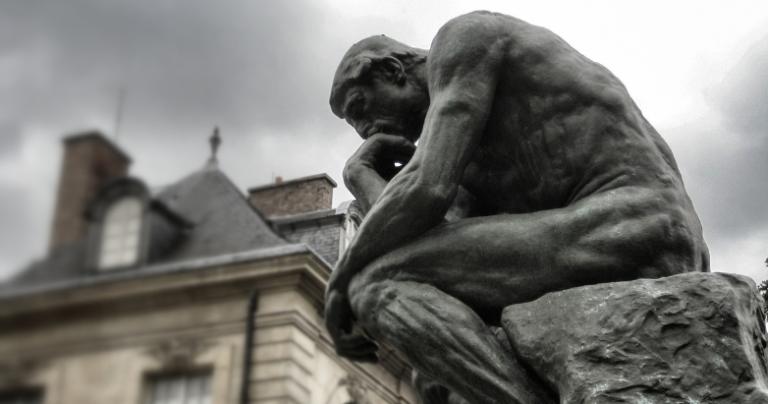
“Faith consists in believing when it is beyond the power of reason to believe.”
M. de Voltaire (1694-1778)
French Writer, Historian and Philosopher
In my mind, this quote is widely misunderstood and often used to portray reason as limiting, something we should abandon on our faith journey. As I read it, however, the quote is consistent with my belief that reason should be exhausted before we resort to faith.
Intellect and the Spiritual Search
In the mid-nineties, I started frequenting antique bookstores in search of intellectual texts on spirituality. It wasn’t hard. During the early part of the twentieth century and well into the sixties, well-educated people showed great interest in Eastern mysticism and approached the topic from an intellectual standpoint. Writers like Paul Brunton, Madame Blavatsky, Swami Vivekananda, Aldous Huxley, Krishnamurti and Christopher Isherwood used their higher-than-usual IQs to peer into the unknown.
Reaching Their Limits
Naturally, all of these writers reached their limits in one way or another, but the intellectual struggle with spiritual concepts seemed vital to their journey.
My problem was that the New Age was rampant in the 90s. Most of the people around me had fallen in love with the less rigorous chant of “let go of your mind and come to your senses,” but I saw great value in the intellectual pursuit, even though I was aware of its limits.
The Yoga of Intellect
In Gnana Yoga, I found refuge. Using the mind to transcend the mind was an appealing concept. I pictured the mind like a ladder, knowing I had to be willing to let go of the ladder when I reached my destination.
Integral Theory
As I have documented well in this publication, my intellectual spiritual search—which I do not consider an oxymoron—led me to Ken Wilber’s integral model in the early 2000s. In Wilbers approach, the intellect is celebrated while also being put in its place. His concept of transcending and including allowed me to embrace a transrational approach to spirituality where the intellect is transcended and included.
Strong Anti-Intellectual Sentiments
Sadly, I find strong anti-intellectual sentiments in both religious and spiritual-but-not-religious circles. It seems like leaders in both have embraced either emotional or sensual approaches to spirituality (sometimes both) and left the intellect out in the cold.
From studying human psychology and yogic classifications, I understand that human beings have different tendencies when it comes to spirituality. I have no problem with emotional and sensual approaches. My problem is the anti-intellectual stance. Instead of saying that the intellectual approach is one of many, some have demonized the intellect to such a degree that those with intellectual tendencies either have to keep their mouth shut or leave the group they belong to.
There Are Also Anti-Spiritual Sentiments
Granted, many of the intellectual people I know also have anti-spiritual sentiments, and they think that I am a little crazy for being intellectual and spiritual at the same time. Some even say that I am fooling myself. But, as Voltaire’s quote surmises, the intellect has limits. What people do when they reach their limits is up to them. I have chosen to stay open to possibilities.
Going Beyond Reason
Exhausting the resources of reason is a difficult task. It is not for everyone. I have probably probed and examined more spiritual concepts in my lifetime than most. And I’ll admit, sometimes I’ve been frustrated with the intellect and wished to believe in the same way as those who have abandoned reason in the spiritual realm. But I cannot go against my instincts. I am prone to thinking deeply about things, asking difficult questions, and investigating before investing my time and energy in any spiritual endeavor. Before I can go beyond it, I must use reason.
That is what I think Voltaire meant when he wrote those words.
Faith is beyond reason, not without reason.
Gudjon Bergmann
Author, Coach, and Mindfulness Teacher
Amazon Author Profile
Recommended books:
- Monk of All Faiths: Inspired by The Prophet (fiction)
- Spiritual in My Own Way (memoir)
- Co-Human Harmony: Using Our Shared Humanity to Bridge Divides (nonfiction)
- Experifaith: At the Heart of Every Religion (nonfiction)
- Premature Holiness: Five Weeks at the Ashram (novel)
- The Meditating Psychiatrist Who Tried to Kill Himself (novel)
Picture: CC0 License
Next Post
December 12, 2022 All or Nothing Thinking May Be Limiting Your Interspiritual Journey
Browse Our Archives
Select a Category Beliefs and Values Change Compassion Contemplation Creating Moments of Peace Cultural Division Culture Wars Current Events Environmental Protection Experifaith Forgiveness Global Warming Golden Rule Gratitude Gun Debate Gun Safety Integral Theory Interfaith Interfaith Dialogue Interfaith Quotes Interspirituality Islam Language Meditation Mindfulness Morality mysticism Nonduality Parenthood Pluralism Poetry Prayer Quotes Religion Religion and Politics Science and Religion Self-Care Social Harmony Spiritual Practice Spirituality Stress Uncategorized Yoga
Select a Month September 2023 August 2023 June 2023 February 2023 January 2023 December 2022 November 2022 October 2022 September 2022 August 2022 July 2022 June 2022 May 2022 September 2018 August 2018 July 2018 June 2018 May 2018 April 2018 March 2018 February 2018 January 2018 December 2017 November 2017 October 2017 September 2017
Follow Us!
TAKE THE
Religious Wisdom Quiz
Who said, "The fear of the Lord is the beginning of knowledge"?
Select your answer to see how you score.
Paul Job Solomon Moses
Related posts from Interspirituality for the Modern Day Seeker

Practical Spirituality: Key Questions
Interspirituality for the Modern Day Seeker

Conscious Spiritual Homeostasis
Interspirituality for the Modern Day Seeker

Can Nonduality Be Life-Affirming?
Interspirituality for the Modern Day Seeker

The Easiest Way to Give Meaning to Emotional...
Interspirituality for the Modern Day Seeker
TRENDING AT PATHEOS New Visions

Did Prayer Cure His Cancer? Or Was It...
At 4 AM one morning, Joshua W. Brown’s wife awoke to a...

8 Ways a Near-Death Experience Rewires the Soul
Does Consciousness Survive Physical Death? After 50 Years of Research, Dr. Raymond...

Holy Longing: What Our Restlessness Is Telling Us
“One can find so many pains when the rain is falling.” -John...

What this is NOT about. This blog is definitely not about...

Who said the Israelites were God’s chosen? That’s right, they did. Who...

The Spirit World Is the Real World: God...
A Monk’s Wisdom on Body and Spirit I sit with Brother Martin...
view all New Visions blogs
Ad-Free & Subscriber Log-In Subscription Support
- About Us
- 2026 Calendar
- Videos
- Podcasts
- Library of World Religions
- Faith In Media Tracker
- Advertise With Us
- Write for Us
- Privacy Policy
- Terms of Service
- Do Not Sell My Data
- Contact Us
- Radiant Digital
- Manage Newsletter Subscriptions
- Unsubscribe From Notifications
- Sitemap
Copyright 2008-2026, Patheos. All rights reserved.
Subscription Support Ad-Free & Subscriber Log-In
Follow Patheos