
BuddhistCatholicContemplativeEvangelicalGeneral ChristianHinduJewishLatter-day SaintMuslimNew VisionsProgressive Christian
Beliefs
- Buddhist
- Catholic
- Contemplative
- Evangelical
- General Christian
- Hindu
- Jewish
- Latter-day Saint
- More Voices
- Muslim
- New Visions
- Pagan
- Progressive Christian
Topics
- Religion News
- Food and Religion
- Sports and Religion
- Religious Art
- Religious Music and Entertainment
- Religious Events
- History and Religion
- Style and Religion
- Politics and Religion
- Women in Religion
- Recreation Outdoors and Religion
- Business Finance and Religion
- Careers Workplace and Religion
- Education and Religion
- Family Parenting and Religion
- Health Fitness and Religion
- Home and Religion
- Relationships and Religion
- Technology and Religion
- Travel and Religion
Columnists
- Buddhist Columnists
- Business Finance and Religion Columnists
- Careers Workplace and Religion Columnists
- Catholic Columnists
- Contemplative Columnists
- Education and Religion Columnists
- Evangelists Columnists
- Family Parenting and Religion Columnists
- General Christian Columnists
- Health Fitness and Religion Columnists
- Hindu Columnists
- History and Religion Columnists
- Home and Religion Columnists
- Jewish Columnists
- More Voices Columnists
- Latter Day Columnists
- Muslim Columnists
- New Visions Columnists
- Nonreligious Columnists
- Pagan Columnists
- Politics and Religion Columnists
- Progressive Columnists
- Recreation Outdoors and Religion Columnists
- Relationships and Religion Columnists
- Religion News Columnists
- Religious Art Columnists
- Religious Events Columnists
- Religious Music and Entertainment Columnists
- Sports and Religion Columnists
- Style and Religion Columnists
- Technology and Religion Columnists
- Travel and Religion Columnists
- Women in Religion Columnists
Resource Library
- 2026 Calendar
- Library of World Religions
- The 100 Most Holy Places on Earth
- Patheos Answers
- Podcasts
- Videos
- Faith Leaders Database
- Anglican Episcopalian
- Bahai
- Baptist
- Buddhism
- Christianity
- Confucianism
- Eastern Orthodoxy
- Hinduism
- Holiness and Pentecostal
- ISKCON
- Islam
- Judaism
- Lutheran
- Methodist
- The Church of Jesus Christ of Latter-day Saints
- New Age
- Paganism
- Presbytarian and Reformed
- Protestantism
- Religion Behind the Scenes
- Roman Catholic
- Scientology
- Shia Islam
- Sikhism
- Sufism
- Sunni Islam
- Taoism
- Zen
- See all religions
Research Tools
 Ad-Free & Subscriber Log-In Subscription Support
Ad-Free & Subscriber Log-In Subscription Support
Follow Patheos 

- Trending:
- Forgiveness
- |
- Marriage
- |
- Consciousness
- |
- Death Penalty
- |
- Election
- |
- Halloween
 Interspirituality for the Modern Day Seeker
- Home
- New Visions
- Why We Need Both Altruism and Puritanism
Why We Need Both Altruism and Puritanism
Last updated on: November 6, 2022 at 12:43 am by Gudjon Bergmann
Why We Need Both Altruism and Puritanism 2022-11-06T00:43:50+00:00 Gudjon Bergmann
Patheos Explore the world's faith through different perspectives on religion and spirituality! Patheos has the views of the prevalent religions and spiritualities of the world.
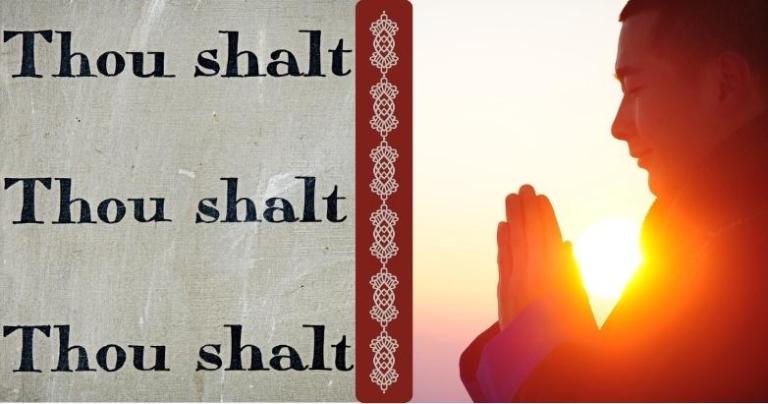
Both altruism and puritanism attempt to achieve goodness, but the outcomes are wildly different. One leads to wide-ranging restrictions. The other sparks an internal flame that burns for goodness. Does the end justify the means? Do we need both? Why are they so different?
Puritanism = Restrictions
Puritanism attempts to rein in our animal nature. All the world’s wisdom traditions include some form of restrictions. Even secular nations have restrictive laws. Religious scholar, Huston Smith, explained it this way:
“Jealousies, hatreds, and revenge can lead to violence that, unless checked, rips communities to pieces. Murder instigates blood feuds that drag on indefinitely. Sex, if it violates certain restraints, can rouse passions so intense as to destroy entire communities. Similarly with theft and prevarication. We can imagine societies in which people do exactly as they please on these counts, but none have been found and anthropologists have now covered the globe. Apparently, if total permissiveness has ever been tried, its inventors have not survived for anthropologists to study.”
No one has tried total permissiveness.
If they have, it hasn’t worked.
Nevertheless, it’s important to understand that puritanism is the morality of NO. The message is, “Don’t do this, don’t do that,” or “Thou shalt not.” Exalted puritans don’t allow themselves any sensual (sensory) pleasure.
When restrictive morality goes too far, some feel like rejecting restrictions altogether. But—at the risk of sounding like a broken record—history has shown us that it doesn’t work. If you doubt it, do this little thought experiment. Think about your life and your society. What would it look like without any restrictions?
Altruism = Aspirations
Altruism comes from a different belief: that we have seeds of goodness within us that need nurturing to bloom. This belief is also found in all the wisdom traditions. The key is to nurture the seeds.
Think of it this way. If the mind is like a garden, it can be overtaken by weeds without attention, care and vigilance. We must nurture the seeds of love, compassion, care, and selflessness for them to grow. Once attained, they need to be maintained.
The possible outcome is enticing. According to the Buddha:
“As a well-trained horse needs no whip, a well-trained mind needs no prodding from the world to be good.”
This means there is no need for external restrictions if altruism is achieved.
Sadly, some people get ahead of themselves and remove restrictions before the state of altruism is attained. It is a way of thinking that pops up in everything from religion and politics to education and child-rearing.
Easy to Go to Extremes
The possibilities of extremes are evident to any observer. Puritanism can become too restrictive and altruism too permissive. Historically, the wisdom traditions put more of an emphasis on restrictions. Still, there is an attempt to strike a balance, even in early guidelines, such as the Yamas and Niyamas in Hinduism and the Ten Commandments in Christianity and Judaism.
The five Yamas urge restrictions such as nonviolence, non-stealing, non-greed, and non-excess, whereas the Niyamas urge aspirations such as purity, contentment, self-discipline, self-study, and surrender.
In comparison, the Ten Commandments are primarily restrictive. They tell us not to have other gods or make graven images, not murder, not commit adultery, not steal, not bear false witness, and not covet other people’s possessions, but they also include two aspirational values; honoring your parents and keeping the Sabbath holy.
Delicate Balance
Today, people want to focus more on aspirational values than restrictive rules. Future guidelines may look more altruistic than ancient ones. Yet, the wisdom traditions have taught us that both are needed. If we are able to avoid extremes, we need to create a delicate balance between the two and maintain it.
Gudjon Bergmann
Author and Mindfulness Teacher
Amazon Author Profile
Recommended books:
- Monk of All Faiths: Inspired by The Prophet (fiction)
- Spiritual in My Own Way (memoir)
- Co-Human Harmony: Using Our Shared Humanity to Bridge Divides (nonfiction)
- Experifaith: At the Heart of Every Religion (nonfiction)
- Premature Holiness: Five Weeks at the Ashram (novel)
- The Meditating Psychiatrist Who Tried to Kill Himself (novel)
Picture: CC0 License
Previous Post

August 25, 2022
What Deceased Spiritual Teachers Cannot Teach Us
Next Post

September 1, 2022 Rumi: Before You Seek Fame
Browse Our Archives
Select a Category Beliefs and Values Change Compassion Contemplation Creating Moments of Peace Cultural Division Culture Wars Current Events Environmental Protection Experifaith Forgiveness Global Warming Golden Rule Gratitude Gun Debate Gun Safety Integral Theory Interfaith Interfaith Dialogue Interfaith Quotes Interspirituality Islam Language Meditation Mindfulness Morality mysticism Nonduality Parenthood Pluralism Poetry Prayer Quotes Religion Religion and Politics Science and Religion Self-Care Social Harmony Spiritual Practice Spirituality Stress Uncategorized Yoga
Select a Month September 2023 August 2023 June 2023 February 2023 January 2023 December 2022 November 2022 October 2022 September 2022 August 2022 July 2022 June 2022 May 2022 September 2018 August 2018 July 2018 June 2018 May 2018 April 2018 March 2018 February 2018 January 2018 December 2017 November 2017 October 2017 September 2017
Follow Us!
TAKE THE
Religious Wisdom Quiz
How many "I AM" statements does Jesus make in the book of John?
Select your answer to see how you score.
5 10 3 7
Related posts from Interspirituality for the Modern Day Seeker

The Experiential Path of Goodness
Interspirituality for the Modern Day Seeker

Be Informed by Your Faith or Spiritual Tradition,...
Interspirituality for the Modern Day Seeker

Interspirituality for the Modern Day Seeker

Interspirituality for the Modern Day Seeker
TRENDING AT PATHEOS New Visions

Did Prayer Cure His Cancer? Or Was It...
At 4 AM one morning, Joshua W. Brown’s wife awoke to a...

8 Ways a Near-Death Experience Rewires the Soul
Does Consciousness Survive Physical Death? After 50 Years of Research, Dr. Raymond...

Holy Longing: What Our Restlessness Is Telling Us
“One can find so many pains when the rain is falling.” -John...

What this is NOT about. This blog is definitely not about...

Who said the Israelites were God’s chosen? That’s right, they did. Who...

The Spirit World Is the Real World: God...
A Monk’s Wisdom on Body and Spirit I sit with Brother Martin...
view all New Visions blogs
Ad-Free & Subscriber Log-In Subscription Support
- About Us
- 2026 Calendar
- Videos
- Podcasts
- Library of World Religions
- Faith In Media Tracker
- Advertise With Us
- Write for Us
- Privacy Policy
- Terms of Service
- Do Not Sell My Data
- Contact Us
- Radiant Digital
- Manage Newsletter Subscriptions
- Unsubscribe From Notifications
- Sitemap
Copyright 2008-2026, Patheos. All rights reserved.
Subscription Support Ad-Free & Subscriber Log-In
Follow Patheos