
BuddhistCatholicContemplativeEvangelicalGeneral ChristianHinduJewishLatter-day SaintMuslimNew VisionsProgressive Christian
Beliefs
- Buddhist
- Catholic
- Contemplative
- Evangelical
- General Christian
- Hindu
- Jewish
- Latter-day Saint
- More Voices
- Muslim
- New Visions
- Pagan
- Progressive Christian
Topics
- Religion News
- Food and Religion
- Sports and Religion
- Religious Art
- Religious Music and Entertainment
- Religious Events
- History and Religion
- Style and Religion
- Politics and Religion
- Women in Religion
- Recreation Outdoors and Religion
- Business Finance and Religion
- Careers Workplace and Religion
- Education and Religion
- Family Parenting and Religion
- Health Fitness and Religion
- Home and Religion
- Relationships and Religion
- Technology and Religion
- Travel and Religion
Columnists
- Buddhist Columnists
- Business Finance and Religion Columnists
- Careers Workplace and Religion Columnists
- Catholic Columnists
- Contemplative Columnists
- Education and Religion Columnists
- Evangelists Columnists
- Family Parenting and Religion Columnists
- General Christian Columnists
- Health Fitness and Religion Columnists
- Hindu Columnists
- History and Religion Columnists
- Home and Religion Columnists
- Jewish Columnists
- More Voices Columnists
- Latter Day Columnists
- Muslim Columnists
- New Visions Columnists
- Nonreligious Columnists
- Pagan Columnists
- Politics and Religion Columnists
- Progressive Columnists
- Recreation Outdoors and Religion Columnists
- Relationships and Religion Columnists
- Religion News Columnists
- Religious Art Columnists
- Religious Events Columnists
- Religious Music and Entertainment Columnists
- Sports and Religion Columnists
- Style and Religion Columnists
- Technology and Religion Columnists
- Travel and Religion Columnists
- Women in Religion Columnists
Resource Library
- 2026 Calendar
- Library of World Religions
- The 100 Most Holy Places on Earth
- Patheos Answers
- Podcasts
- Videos
- Faith Leaders Database
- Anglican Episcopalian
- Bahai
- Baptist
- Buddhism
- Christianity
- Confucianism
- Eastern Orthodoxy
- Hinduism
- Holiness and Pentecostal
- ISKCON
- Islam
- Judaism
- Lutheran
- Methodist
- The Church of Jesus Christ of Latter-day Saints
- New Age
- Paganism
- Presbytarian and Reformed
- Protestantism
- Religion Behind the Scenes
- Roman Catholic
- Scientology
- Shia Islam
- Sikhism
- Sufism
- Sunni Islam
- Taoism
- Zen
- See all religions
Research Tools
 Ad-Free & Subscriber Log-In Subscription Support
Ad-Free & Subscriber Log-In Subscription Support
Follow Patheos 

- Trending:
- Forgiveness
- |
- Marriage
- |
- Consciousness
- |
- Death Penalty
- |
- Election
- |
- Halloween
 Interspirituality for the Modern Day Seeker
- Home
- New Visions
- You Are Probably Wrong About Meditation
You Are Probably Wrong About Meditation
Last updated on: February 9, 2018 at 3:51 pm by Gudjon Bergmann
You Are Probably Wrong About Meditation 2018-02-09T15:51:08+00:00 Gudjon Bergmann
Patheos Explore the world's faith through different perspectives on religion and spirituality! Patheos has the views of the prevalent religions and spiritualities of the world.
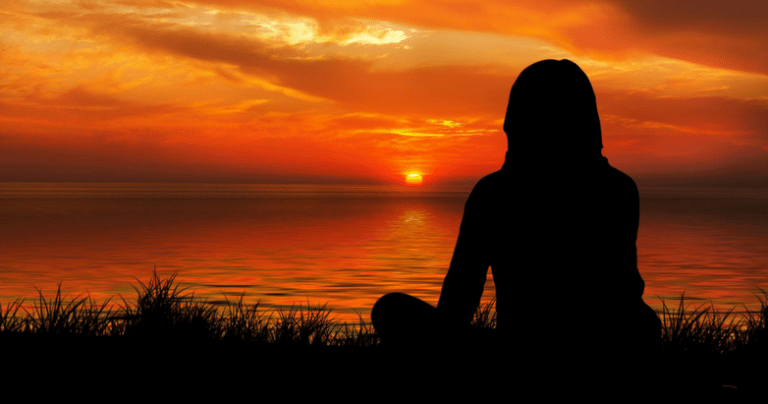
There was a great ad, that ran in Yoga Journal for years, with the heading, Meditation Is Not What You Think.
In addition to meaning that meditation is not the same as thinking, the heading also suggested that most people have erroneous presumptions about meditation, as in, meditation is not what you think it is.
As the title of this column suggests, I agree.
Most people have misconceptions about meditation, ideas that I’ve had to repeatedly address in my workshops and private sessions.
And it’s not just the beginners.
No, I’ve had to clear up many a misunderstanding with people who have told me that they’ve been meditating for years.
What is Meditation?
In its purest form, the term meditation means two things; (1) the state of meditation, which resembles deep dreamless sleep while awake, and, (2) the practices that lead to the state, usually a combination of relaxation and concentration techniques.
In short, concentration and relaxation techniques are used to create the right circumstances for the meditative state, in the same way that you lie down and close your eyes to create the right circumstances for sleep. In both cases, the state change happens when the circumstances are right.
Why Are People So Confused?
1. Confusing the Practices with the State
Many people confuse the practices with the state. They think that meditation is the doing part (sitting in a certain way, focusing on the breath, repeating a mantra) when in reality, meditation is a natural state that is uncovered when the right circumstances have been created.
There are many preparation techniques but only one meditative state, if we define it as the fourth state, similar to deep dreamless sleep while awake.
2. Confusing Thoughts and Images with Meditation
Another explanation is that people confuse mental and emotional states, byproducts of the practices, with the real meditative state. They think that experiencing heightened emotions and seeing visions, such as lights and sounds, are in fact the meditative state they are looking for. But these byproducts are not the meditative state, rather veils that need to be removed or transcended.
3. Confusing the Philosophy or Religion with Meditation
Finally, people often confuse the philosophy that has been linked to meditative practices with the meditative state. They think that they need to follow a guru, believe in certain gods or goddesses or completely change their religious or philosophical outlook.
This is probably the most common misunderstanding.
In reality, meditation is a natural state that each and every person can uncover, regardless of philosophical or religious outlook.
People Will Continue To Be Confused—But You Don’t Have To Be
This short article will not clear up the misunderstanding in general. There are too many people peddling too many variations of meditation for me to rectify these misconceptions. But, just because other people are confused doesn’t mean that you have to be.
To avoid misconceptions allow the following two concepts to guide you.
One, remember that meditation is a state. You cannot do meditation, you can only create the right circumstances and then you will transition from one state to another. Knowing that meditation is in many ways like sleep will help you.
Two, know what you are looking for. The meditation state is like deep dreamless sleep while awake. This means that while you maintain physical alertness your mind goes into a state similar to the deep dream state. By default, this also means that emotions and mental images are not the same as meditation.
Gudjon Bergmann
Interfaith Minister & Author
p.s. If you are still confused, read my book Baby Steps to Meditation. It only takes 30 minutes to read and contains a lifetime of understanding in a simplified but undiluted form.
Follow me on Facebook and Twitter
Picture: Pixabay.com CC0 License
Previous Post

February 7, 2018
Quotes About Interfaith and Interspirituality
Next Post

February 11, 2018 Personal Image of God
Browse Our Archives
Select a Category Beliefs and Values Change Compassion Contemplation Creating Moments of Peace Cultural Division Culture Wars Current Events Environmental Protection Experifaith Forgiveness Global Warming Golden Rule Gratitude Gun Debate Gun Safety Integral Theory Interfaith Interfaith Dialogue Interfaith Quotes Interspirituality Islam Language Meditation Mindfulness Morality mysticism Nonduality Parenthood Pluralism Poetry Prayer Quotes Religion Religion and Politics Science and Religion Self-Care Social Harmony Spiritual Practice Spirituality Stress Uncategorized Yoga
Select a Month September 2023 August 2023 June 2023 February 2023 January 2023 December 2022 November 2022 October 2022 September 2022 August 2022 July 2022 June 2022 May 2022 September 2018 August 2018 July 2018 June 2018 May 2018 April 2018 March 2018 February 2018 January 2018 December 2017 November 2017 October 2017 September 2017
Follow Us!
TAKE THE
Religious Wisdom Quiz
Who said, "If anyone is in Christ, he is a new creation"?
Select your answer to see how you score.
Peter John Paul James
Related posts from Interspirituality for the Modern Day Seeker

Practical Spirituality: Key Questions
Interspirituality for the Modern Day Seeker

Conscious Spiritual Homeostasis
Interspirituality for the Modern Day Seeker

Can Nonduality Be Life-Affirming?
Interspirituality for the Modern Day Seeker
The Easiest Way to Give Meaning to Emotional...
Interspirituality for the Modern Day Seeker
TRENDING AT PATHEOS New Visions

Did Prayer Cure His Cancer? Or Was It...
At 4 AM one morning, Joshua W. Brown’s wife awoke to a...

8 Ways a Near-Death Experience Rewires the Soul
Does Consciousness Survive Physical Death? After 50 Years of Research, Dr. Raymond...

Holy Longing: What Our Restlessness Is Telling Us
“One can find so many pains when the rain is falling.” -John...

What this is NOT about. This blog is definitely not about...

Who said the Israelites were God’s chosen? That’s right, they did. Who...

The Spirit World Is the Real World: God...
A Monk’s Wisdom on Body and Spirit I sit with Brother Martin...
view all New Visions blogs
Ad-Free & Subscriber Log-In Subscription Support
- About Us
- 2026 Calendar
- Videos
- Podcasts
- Library of World Religions
- Faith In Media Tracker
- Advertise With Us
- Write for Us
- Privacy Policy
- Terms of Service
- Do Not Sell My Data
- Contact Us
- Radiant Digital
- Manage Newsletter Subscriptions
- Unsubscribe From Notifications
- Sitemap
Copyright 2008-2026, Patheos. All rights reserved.
Subscription Support Ad-Free & Subscriber Log-In
Follow Patheos