
BuddhistCatholicContemplativeEvangelicalGeneral ChristianHinduJewishLatter-day SaintMuslimNew VisionsProgressive Christian
Beliefs
- Buddhist
- Catholic
- Contemplative
- Evangelical
- General Christian
- Hindu
- Jewish
- Latter-day Saint
- More Voices
- Muslim
- New Visions
- Pagan
- Progressive Christian
Topics
- Religion News
- Food and Religion
- Sports and Religion
- Religious Art
- Religious Music and Entertainment
- Religious Events
- History and Religion
- Style and Religion
- Politics and Religion
- Women in Religion
- Recreation Outdoors and Religion
- Business Finance and Religion
- Careers Workplace and Religion
- Education and Religion
- Family Parenting and Religion
- Health Fitness and Religion
- Home and Religion
- Relationships and Religion
- Technology and Religion
- Travel and Religion
Columnists
- Buddhist Columnists
- Business Finance and Religion Columnists
- Careers Workplace and Religion Columnists
- Catholic Columnists
- Contemplative Columnists
- Education and Religion Columnists
- Evangelists Columnists
- Family Parenting and Religion Columnists
- General Christian Columnists
- Health Fitness and Religion Columnists
- Hindu Columnists
- History and Religion Columnists
- Home and Religion Columnists
- Jewish Columnists
- More Voices Columnists
- Latter Day Columnists
- Muslim Columnists
- New Visions Columnists
- Nonreligious Columnists
- Pagan Columnists
- Politics and Religion Columnists
- Progressive Columnists
- Recreation Outdoors and Religion Columnists
- Relationships and Religion Columnists
- Religion News Columnists
- Religious Art Columnists
- Religious Events Columnists
- Religious Music and Entertainment Columnists
- Sports and Religion Columnists
- Style and Religion Columnists
- Technology and Religion Columnists
- Travel and Religion Columnists
- Women in Religion Columnists
Resource Library
- 2026 Calendar
- Library of World Religions
- The 100 Most Holy Places on Earth
- Patheos Answers
- Podcasts
- Videos
- Faith Leaders Database
- Anglican Episcopalian
- Bahai
- Baptist
- Buddhism
- Christianity
- Confucianism
- Eastern Orthodoxy
- Hinduism
- Holiness and Pentecostal
- ISKCON
- Islam
- Judaism
- Lutheran
- Methodist
- The Church of Jesus Christ of Latter-day Saints
- New Age
- Paganism
- Presbytarian and Reformed
- Protestantism
- Religion Behind the Scenes
- Roman Catholic
- Scientology
- Shia Islam
- Sikhism
- Sufism
- Sunni Islam
- Taoism
- Zen
- See all religions
Research Tools
 Ad-Free & Subscriber Log-In Subscription Support
Ad-Free & Subscriber Log-In Subscription Support
Follow Patheos 

- Trending:
- Forgiveness
- |
- Marriage
- |
- Consciousness
- |
- Death Penalty
- |
- Election
- |
- Halloween
 Interspirituality for the Modern Day Seeker
- Home
- New Visions
- Missing from the Gun Debate
Missing from the Gun Debate
Last updated on: February 22, 2018 at 6:27 pm by Gudjon Bergmann
Missing from the Gun Debate 2018-02-22T18:27:17+00:00 Gudjon Bergmann
Patheos Explore the world's faith through different perspectives on religion and spirituality! Patheos has the views of the prevalent religions and spiritualities of the world.
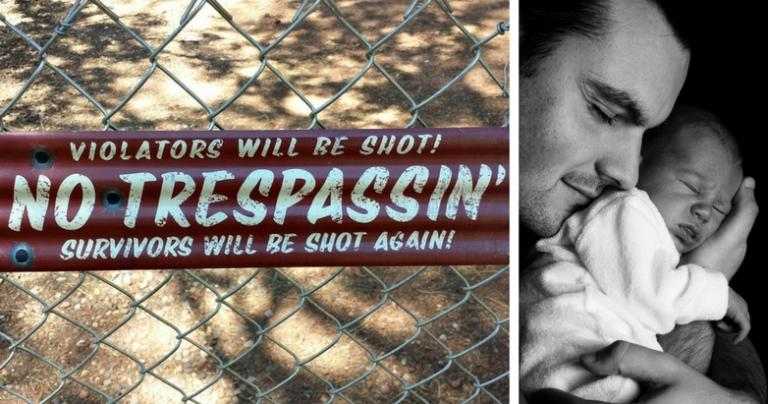
This column is not about gun regulations. Rather, I am offering cultural observations about two elements that are missing from the current debate, both of which are antithetical to spiritual wellbeing and may contribute to gun violence in subtle ways.
I am referring to (1) the casual threat of deadly force that seems to have become synonymous with parts of American culture and (2) toxic/hyper-masculinity, which represents a spiritual wound that needs to be healed.
Both are relevant to the gun debate—each in its own way.
Now, before you read the rest of my column, I want you to know that I love living in America. I became a US citizen in 2013 and am committed to raising my family here, to being a part of the community. I am engaging in this debate because I care.
The Casual Threat of Deadly Force
As I have written about before, gun ownership is very high in my home country of Iceland. About 60% of the population owns guns. Granted, these are mostly shotguns and rifles—as handguns and semi-automatic weapons are off limits to the public—but, nevertheless, there are a lot of guns in Iceland. However, people generally don’t use their gun ownership to casually threaten other people.
That’s a stark difference between Iceland and parts of American culture. Here, many people casually threaten deadly force, sometimes without even thinking about it.
For example, in my neighborhood, there were a few burglaries last year. In response, several people printed stickers that read “protected by the 2nd Amendment” and placed them in their windows.
If we take a moment to think about the implications, people are saying that burglary is punishable by death. I doubt that any courtroom in America would agree with that sentence. It would be considered disproportionately harsh. And yet, the culture has become such that it is considered okay to shoot to kill in response to minor infractions of personal privacy.
To some, this may seem innocuous. They will even claim that the threat of such a harsh penalty generally discourages crime, but my point is that from a spiritual perspective—and this is in line with the teachings of most of the world’s religions—a threat of violence should be a last resort, not a first response.
If we raise our children to believe that deadly force is something that we should casually threaten, I think that represents a much bigger spiritual failure than allowing them to watch violence on TV, for example. I think we should instill in them a deep respect for human life. Reaching for a gun should be their last option, not their first instinct.
Toxic/Hyper-Masculinity
Most mass shooters are men. In fact, most violent crimes are committed by men. It’s a hard fact. In the extreme, testosterone has two instincts; to have sex with it or kill it. Fortunately, testosterone isn’t the only hormone coursing through men’s bodies as they also produce oxytocin (the caring hormone). Through socialization, men can be taught and trained to harness the positive aspects of their masculinity and reduce the potential harm they can cause.
This kind of training usually comes from *caring men—*the kinds of men that can show a balance between firmness and compassion.
The problem is that a lot of little boys and young men are never exposed to caring men.
Let me give you an example.
In the nineties, I worked at a daycare center for nine months. During that time, I was lucky enough to be invited to a conference about men in the education system. The speaker, whose name I have unfortunately forgotten, pointed out that boys with single mothers could go through the school system, from the time they entered daycare until they entered either middle school or high school, without ever being exposed to men.
“What kind of effect does that have on the boys?” he asked.
His initial assumption had been that boys surrounded by women every day would become feminine, but then he showed us data that pointed in the opposite direction. Boys without caring male role models either looked to hyper-masculine stereotypes in movies, comic books, and video games, or, saw how women behaved, and tried to be the exact opposite of that.
This can also be true of boys who’ve had absent fathers, as numerous writings about the so-called “father wound” have demonstrated.
Recently, I have been reading about men in prison and the people who work with them. Most of the men come from abusive or broken families—either single mothers or no parents—and have never been exposed to a caring male role model. That doesn’t excuse their crimes, but it does provide a compassionate viewpoint that is worth considering.
Parts of a Larger Puzzle
If boys were exposed to more caring men and people stopped threatening deadly force so casually, that wouldn’t be enough to stop gun violence in this country. However, I believe that these are important pieces, parts of a much larger puzzle, that need to be addressed in some way, in addition to addressing things like mental health, restricted access to assault weapons, and general security for our children.
There are many people adding their voices to the gun debate these days. All I wanted to do was offer a spiritual perspective about two elements that are not being discussed. If this column has empowered one man to become more caring, encouraged him to be a role model for both his sons and other boys around him, or, has gotten one person to rethink how the casual threat of deadly force affects the children in his or her vicinity, then it was worth writing.
Gudjon Bergmann
Interfaith Minister, Author, and Speaker
Founder of Harmony Interfaith Initiative
Follow me on Facebook and Twitter
Pictures: Pixabay.com CC0 License
Previous Post

February 21, 2018
The Black Panther Paradox
Next Post

February 26, 2018 A Simple Tweak to Interfaith Dialogue
Browse Our Archives
Select a Category Beliefs and Values Change Compassion Contemplation Creating Moments of Peace Cultural Division Culture Wars Current Events Environmental Protection Experifaith Forgiveness Global Warming Golden Rule Gratitude Gun Debate Gun Safety Integral Theory Interfaith Interfaith Dialogue Interfaith Quotes Interspirituality Islam Language Meditation Mindfulness Morality mysticism Nonduality Parenthood Pluralism Poetry Prayer Quotes Religion Religion and Politics Science and Religion Self-Care Social Harmony Spiritual Practice Spirituality Stress Uncategorized Yoga
Select a Month September 2023 August 2023 June 2023 February 2023 January 2023 December 2022 November 2022 October 2022 September 2022 August 2022 July 2022 June 2022 May 2022 September 2018 August 2018 July 2018 June 2018 May 2018 April 2018 March 2018 February 2018 January 2018 December 2017 November 2017 October 2017 September 2017
Follow Us!
TAKE THE
Religious Wisdom Quiz
Who was the first person murdered?
Select your answer to see how you score.
Jeremiah Abel Isaiah Elijah
Related posts from Interspirituality for the Modern Day Seeker

Practical Spirituality: Key Questions
Interspirituality for the Modern Day Seeker

Conscious Spiritual Homeostasis
Interspirituality for the Modern Day Seeker

Why the Spiritual-But-Not-Religious Movement Will Ultimately Fail
Interspirituality for the Modern Day Seeker

The Spiritual Act of Fatherhood
Interspirituality for the Modern Day Seeker
TRENDING AT PATHEOS New Visions

Did Prayer Cure His Cancer? Or Was It...
At 4 AM one morning, Joshua W. Brown’s wife awoke to a...

8 Ways a Near-Death Experience Rewires the Soul
Does Consciousness Survive Physical Death? After 50 Years of Research, Dr. Raymond...

Holy Longing: What Our Restlessness Is Telling Us
“One can find so many pains when the rain is falling.” -John...

What this is NOT about. This blog is definitely not about...

Who said the Israelites were God’s chosen? That’s right, they did. Who...

The Spirit World Is the Real World: God...
A Monk’s Wisdom on Body and Spirit I sit with Brother Martin...
view all New Visions blogs
Ad-Free & Subscriber Log-In Subscription Support
- About Us
- 2026 Calendar
- Videos
- Podcasts
- Library of World Religions
- Faith In Media Tracker
- Advertise With Us
- Write for Us
- Privacy Policy
- Terms of Service
- Do Not Sell My Data
- Contact Us
- Radiant Digital
- Manage Newsletter Subscriptions
- Unsubscribe From Notifications
- Sitemap
Copyright 2008-2026, Patheos. All rights reserved.
Subscription Support Ad-Free & Subscriber Log-In
Follow Patheos