
BuddhistCatholicContemplativeEvangelicalGeneral ChristianHinduJewishLatter-day SaintMuslimNew VisionsProgressive Christian
Beliefs
- Buddhist
- Catholic
- Contemplative
- Evangelical
- General Christian
- Hindu
- Jewish
- Latter-day Saint
- More Voices
- Muslim
- New Visions
- Pagan
- Progressive Christian
Topics
- Religion News
- Food and Religion
- Sports and Religion
- Religious Art
- Religious Music and Entertainment
- Religious Events
- History and Religion
- Style and Religion
- Politics and Religion
- Women in Religion
- Recreation Outdoors and Religion
- Business Finance and Religion
- Careers Workplace and Religion
- Education and Religion
- Family Parenting and Religion
- Health Fitness and Religion
- Home and Religion
- Relationships and Religion
- Technology and Religion
- Travel and Religion
Columnists
- Buddhist Columnists
- Business Finance and Religion Columnists
- Careers Workplace and Religion Columnists
- Catholic Columnists
- Contemplative Columnists
- Education and Religion Columnists
- Evangelists Columnists
- Family Parenting and Religion Columnists
- General Christian Columnists
- Health Fitness and Religion Columnists
- Hindu Columnists
- History and Religion Columnists
- Home and Religion Columnists
- Jewish Columnists
- More Voices Columnists
- Latter Day Columnists
- Muslim Columnists
- New Visions Columnists
- Nonreligious Columnists
- Pagan Columnists
- Politics and Religion Columnists
- Progressive Columnists
- Recreation Outdoors and Religion Columnists
- Relationships and Religion Columnists
- Religion News Columnists
- Religious Art Columnists
- Religious Events Columnists
- Religious Music and Entertainment Columnists
- Sports and Religion Columnists
- Style and Religion Columnists
- Technology and Religion Columnists
- Travel and Religion Columnists
- Women in Religion Columnists
Resource Library
- 2026 Calendar
- Library of World Religions
- The 100 Most Holy Places on Earth
- Patheos Answers
- Podcasts
- Videos
- Faith Leaders Database
- Anglican Episcopalian
- Bahai
- Baptist
- Buddhism
- Christianity
- Confucianism
- Eastern Orthodoxy
- Hinduism
- Holiness and Pentecostal
- ISKCON
- Islam
- Judaism
- Lutheran
- Methodist
- The Church of Jesus Christ of Latter-day Saints
- New Age
- Paganism
- Presbytarian and Reformed
- Protestantism
- Religion Behind the Scenes
- Roman Catholic
- Scientology
- Shia Islam
- Sikhism
- Sufism
- Sunni Islam
- Taoism
- Zen
- See all religions
Research Tools
 Ad-Free & Subscriber Log-In Subscription Support
Ad-Free & Subscriber Log-In Subscription Support
Follow Patheos 

- Trending:
- Forgiveness
- |
- Marriage
- |
- Consciousness
- |
- Death Penalty
- |
- Election
- |
- Halloween
 Interspirituality for the Modern Day Seeker
- Home
- New Visions
- Solitude: A Reflection
Solitude: A Reflection
Last updated on: December 6, 2017 at 10:32 pm by Gudjon Bergmann
Solitude: A Reflection 2017-12-06T22:32:53+00:00 Gudjon Bergmann
Patheos Explore the world's faith through different perspectives on religion and spirituality! Patheos has the views of the prevalent religions and spiritualities of the world.

What is the difference between loneliness and aloneness? Why is solitude a refuge for some but a punishment for others? Those were two of the many questions that came up during a Red Bench event, a monthly interfaith conversation in Austin run by Interfaith Action of Central Texas.
At my table, we quickly came to the understanding that there is a great deal of difference between aloneness and loneliness or purposeful solitude and a fearful disconnect.
A graduating student of Austin Presbyterian Theological Seminary—our host for the evening—summarized the difference well when he said:
“I see great wealth in voluntary solitude and great poverty in involuntary solitude.”
While I appreciate voluntary solitude, I find that there is something magical that happens during conversations like the one we had at this event; a deepening of understanding that only comes through viewing the same topic from several different perspectives.
Three Types of Valuable Solitude
During our conversation, I realized that there are at least three types of solitude that I value greatly in my life. The first two are active while the third is passive but not exactly inactive. Allow me to explain.
1. Digestive Solitude
The first type of active solitude is digestive. I turn off all external stimuli and allow my mind to wander, digest, and reflect; to churn through all the information and sensations I have been exposed to.
During this time, my body can be either completely passive or engaged in some menial task, such as walking, bathing, cooking, cleaning, yard work, yoga, weight lifting, etc.
Without regular digestive periods I get overwhelmed, just like a stomach would get overloaded if it were continually stuffed with food.
2. Intentional Thinking
The second type of active solitude is intentional. As a writer, I consistently use intentional thinking in solitude.
For example, I will come up with a title, write a short outline, and then go for a walk or take a bath. During that period of solitude I will focus one pointedly on the topic and get most of my thinking done. When I come back from such an active period of solitude, I find that many of my articles/book passages practically write themselves.
Clear writing equals clear thinking.
Solitude gives me clarity, just like a lake will reflect mirror images of its surroundings when waves subside.
I also use this type of intentional solitude while problem solving and goal setting. Free of distractions, I find that the act of thinking deliberately in solitude always returns the investment of time manifold.
3. Conscious Being
The opposite of active is inactive or passive, which is why those were the first words that popped into my head when I was making these distinctions. But the kind of passive solitude that I experience when I meditate, for example, is not just sitting around and doing nothing or a state of laziness, but a conscious state of being that radiates peace.
I find this type of meditative solitude to be of utmost importance. It has physiological, emotional, mental, and spiritual benefits too numerous to count, and yet it is unassuming. There is nowhere to go, nothing to do. It is a state of pure being.
Value in All Three
Whether my solitude is digestive, intentional, or one of conscious being, I find value in the practice of being alone. I am a social animal by nature and would never dream of moving away to a monastery or living in a cave, but I cannot go many days without having some time to myself, a time of conscious or reflective solitude.
A Few Words About the Red Bench
I am a staunch supporter of the work that iACT does in Central Texas. In an era when people often talk at each other rather to each other, I find that the Red Bench program, where small groups of people have respectful and safe discussions, has the potential to expand our minds and remind us of each others humanity, even when we disagree ideologically. If you are in Central Texas, I urge you to join one of their monthly discussions. You will likely meet me there.
Gudjon Bergmann
Author & Interfaith Minister
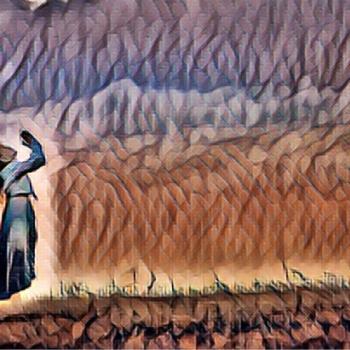
Picture: Pexels.com CC0 License
Previous Post

December 4, 2017
The Moral Aspect of Taxes
Next Post

December 11, 2017 Does Religion Equal Division?
Browse Our Archives
Select a Category Beliefs and Values Change Compassion Contemplation Creating Moments of Peace Cultural Division Culture Wars Current Events Environmental Protection Experifaith Forgiveness Global Warming Golden Rule Gratitude Gun Debate Gun Safety Integral Theory Interfaith Interfaith Dialogue Interfaith Quotes Interspirituality Islam Language Meditation Mindfulness Morality mysticism Nonduality Parenthood Pluralism Poetry Prayer Quotes Religion Religion and Politics Science and Religion Self-Care Social Harmony Spiritual Practice Spirituality Stress Uncategorized Yoga
Select a Month September 2023 August 2023 June 2023 February 2023 January 2023 December 2022 November 2022 October 2022 September 2022 August 2022 July 2022 June 2022 May 2022 September 2018 August 2018 July 2018 June 2018 May 2018 April 2018 March 2018 February 2018 January 2018 December 2017 November 2017 October 2017 September 2017
Follow Us!
TAKE THE
Religious Wisdom Quiz
What did God tell Moses from the burning bush?
Select your answer to see how you score.
That he would build the temple That he would lead Israel out of Egypt That he would become Pharaoh That he would be king of Israel
Related posts from Interspirituality for the Modern Day Seeker

Two Reasons Why Some People Fear Interfaith Relations
Interspirituality for the Modern Day Seeker

The Ten Most Read Articles of 2022: Interspirituality...
Interspirituality for the Modern Day Seeker
Interfaith Quotes about Belief, Prayer and Seeking
Interspirituality for the Modern Day Seeker

Interspirituality for the Modern Day Seeker
TRENDING AT PATHEOS New Visions

Did Prayer Cure His Cancer? Or Was It...
At 4 AM one morning, Joshua W. Brown’s wife awoke to a...

8 Ways a Near-Death Experience Rewires the Soul
Does Consciousness Survive Physical Death? After 50 Years of Research, Dr. Raymond...

Holy Longing: What Our Restlessness Is Telling Us
“One can find so many pains when the rain is falling.” -John...

What this is NOT about. This blog is definitely not about...

Who said the Israelites were God’s chosen? That’s right, they did. Who...

The Spirit World Is the Real World: God...
A Monk’s Wisdom on Body and Spirit I sit with Brother Martin...
view all New Visions blogs
Ad-Free & Subscriber Log-In Subscription Support
- About Us
- 2026 Calendar
- Videos
- Podcasts
- Library of World Religions
- Faith In Media Tracker
- Advertise With Us
- Write for Us
- Privacy Policy
- Terms of Service
- Do Not Sell My Data
- Contact Us
- Radiant Digital
- Manage Newsletter Subscriptions
- Unsubscribe From Notifications
- Sitemap
Copyright 2008-2026, Patheos. All rights reserved.
Subscription Support Ad-Free & Subscriber Log-In
Follow Patheos