
BuddhistCatholicContemplativeEvangelicalGeneral ChristianHinduJewishLatter-day SaintMuslimNew VisionsProgressive Christian
Beliefs
- Buddhist
- Catholic
- Contemplative
- Evangelical
- General Christian
- Hindu
- Jewish
- Latter-day Saint
- More Voices
- Muslim
- New Visions
- Pagan
- Progressive Christian
Topics
- Religion News
- Food and Religion
- Sports and Religion
- Religious Art
- Religious Music and Entertainment
- Religious Events
- History and Religion
- Style and Religion
- Politics and Religion
- Women in Religion
- Recreation Outdoors and Religion
- Business Finance and Religion
- Careers Workplace and Religion
- Education and Religion
- Family Parenting and Religion
- Health Fitness and Religion
- Home and Religion
- Relationships and Religion
- Technology and Religion
- Travel and Religion
Columnists
- Buddhist Columnists
- Business Finance and Religion Columnists
- Careers Workplace and Religion Columnists
- Catholic Columnists
- Contemplative Columnists
- Education and Religion Columnists
- Evangelists Columnists
- Family Parenting and Religion Columnists
- General Christian Columnists
- Health Fitness and Religion Columnists
- Hindu Columnists
- History and Religion Columnists
- Home and Religion Columnists
- Jewish Columnists
- More Voices Columnists
- Latter Day Columnists
- Muslim Columnists
- New Visions Columnists
- Nonreligious Columnists
- Pagan Columnists
- Politics and Religion Columnists
- Progressive Columnists
- Recreation Outdoors and Religion Columnists
- Relationships and Religion Columnists
- Religion News Columnists
- Religious Art Columnists
- Religious Events Columnists
- Religious Music and Entertainment Columnists
- Sports and Religion Columnists
- Style and Religion Columnists
- Technology and Religion Columnists
- Travel and Religion Columnists
- Women in Religion Columnists
Resource Library
- 2026 Calendar
- Library of World Religions
- The 100 Most Holy Places on Earth
- Patheos Answers
- Podcasts
- Videos
- Faith Leaders Database
- Anglican Episcopalian
- Bahai
- Baptist
- Buddhism
- Christianity
- Confucianism
- Eastern Orthodoxy
- Hinduism
- Holiness and Pentecostal
- ISKCON
- Islam
- Judaism
- Lutheran
- Methodist
- The Church of Jesus Christ of Latter-day Saints
- New Age
- Paganism
- Presbytarian and Reformed
- Protestantism
- Religion Behind the Scenes
- Roman Catholic
- Scientology
- Shia Islam
- Sikhism
- Sufism
- Sunni Islam
- Taoism
- Zen
- See all religions
Research Tools
 Ad-Free & Subscriber Log-In Subscription Support
Ad-Free & Subscriber Log-In Subscription Support
Follow Patheos 

- Trending:
- Forgiveness
- |
- Marriage
- |
- Consciousness
- |
- Death Penalty
- |
- Election
- |
- Halloween
 Interspirituality for the Modern Day Seeker
- Home
- New Visions
- From Body to Mind to Spirit
From Body to Mind to Spirit
Last updated on: January 5, 2018 at 4:09 pm by Gudjon Bergmann
From Body to Mind to Spirit 2018-01-05T16:09:23+00:00 Gudjon Bergmann
Patheos Explore the world's faith through different perspectives on religion and spirituality! Patheos has the views of the prevalent religions and spiritualities of the world.
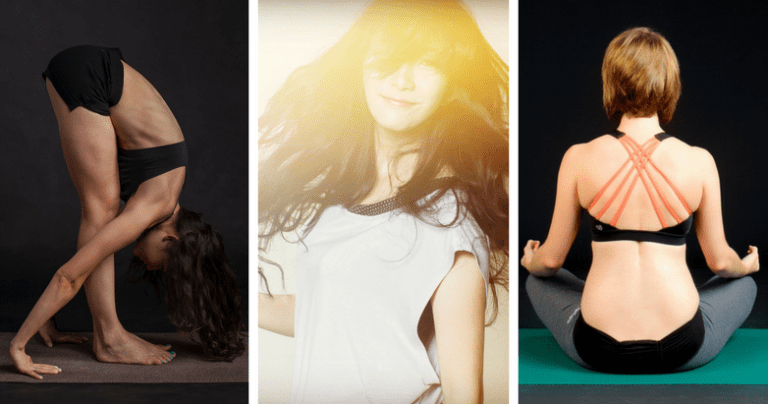
In my life, I have tried all kinds of spiritual practices, including Native American sweat lodges, tribal dancing, Gestalt therapy, light-body work, visualizations, fasting, praying, and a variety of meditation techniques.
In this article, I will draw a comparison between several of those spiritual practices, most of which fall into one of three categories. My main focus will be on whether or not they help the practitioner achieve the transcendental state, beyond body and mind.
The Physical–Energetic–Emotional Category
First, let’s look at a group of spiritual practices that fall into what I call the physical–energetic–emotional category. These practices have several things in common. They typically create physically strenuous circumstances, heighten sensitivity, and have an emotionally cathartic component, which means that they release stored emotions.
I can give you two personal examples from this category, attending sweat lodges and engaging in tribal dancing (both based on shamanic traditions).
The sweat lodges I’ve attended have been performed in small, dark tents, which created strenuous circumstances. During the ceremonies, water was poured on hot stones, and participants sang, cried, and pushed their bodies to the limits, which added to the physical sensations and emotional release (common among these types of spiritual practices).
I emerged feeling radically different, my skin tingling from the heat, my eyes cried out—truly cathartic—and my body exhausted.
Likewise, the tribal dances I engaged in were performed with a steady, increasing drumbeat. We sang loudly and danced until we collapsed.
The theory behind these practices is that at the point of exhaustion, there is said to be a brief opening for transcendental spiritual experiences (marathon runners and hot yoga practitioners have also reported this kind of temporary spiritual high from physical exhaustion, some call it being in the zone).
Deliberately pushing oneself to exhaustion is said to produce (on occasion) a state of extreme clarity and peace, halting mental chatter and transcending bodily sensations. This, according to the originators, creates space for non-dual awareness.
Here is what I experienced.
The emotional release was certainly a positive feature of these practices. I got the most out of them when I was feeling lost, lonely, and vulnerable, but when I was feeling physically and emotionally well, the practices seemed to exaggerate those feelings of wellness.
That is one reason why the physical-energetic-emotional practices are so appealing because they do create a rush of endorphins and lead to an emotionally heightened state.
As such, I experienced both the exhaustive physical effects and the emotional highs, but I never experienced the moments of peace as promised.
That does not mean that these rather extreme practices never create a state beyond mind and body, but when they do, the peace comes at a price. Regular people cannot perform these practices on an everyday basis without it resulting in severe physical side effects.
My conclusion is that extreme physical–energetic–emotional practices can be done safely several times a year. However, they are not well suited for a regular spiritual practice as they don’t predictably provide an experience of the spiritual state beyond senses, emotions, and body, and the physical toll is too great to endure on a regular basis.
The Mental–Emotional Category
Next, let’s look at spiritual practices that fall into what I call the mental-emotional category. It includes practices such as visualizations (a.k.a. guided meditations), light-body work, emotional check-ins, forms of mindfulness, and other similar techniques.
All are mental exercises in which participants envision positive states of wellbeing. They are well suited for elevating emotional states, inducing relaxation, and generating physical healing effects. They also have an emotionally cathartic component, are non-exhaustive, and are pleasant to engage in.
However, because of their intrinsic nature, which is the production of images in the mind, these practices rarely bring about a state in which the mind becomes quiet. Their primary focus is to create and sustain positive thoughts in the mind.
The exception is when simple visualization techniques are used to quiet the mind, in which case the mental flow of images is presented in decreasing complexity that results in stillness (such as imagining a beam of light that becomes smaller and smaller until it is a mere point or imagining light that becomes all-consuming until there is nothing but light).
Most of the visualizations and guided meditations I participated in were feel-good mental-emotional adventures (making them slightly addictive, similar to the spiritual highs experienced during the shamanic practices), but none of them led to the subtler and much-deeper nondual spiritual states that I have experienced during meditation.
My conclusion, when it comes to complex visualizations, is that they certainly offer physical, mental, and emotional benefits, but the practices do not consistently help the practitioner transcend the body and mind.
The Transcendental Category
That brings us to meditation, which falls into what I call the transcendental category. There is a caveat because many of the above-mentioned mental-emotional practices are also called meditation, but, upon closer inspection, do not achieve the meditative state, and should therefore more accurately be called visualizations.
In comparison to the previous practices, meditation is both simple and non-exhaustive. The practice is to sit motionlessly, relax, and concentrate, to gently struggle with the mind until it becomes still. At the point when the mind becomes still, meditation stops being a practice and becomes a state that can be likened to deep, dreamless sleep while awake.
When understood and practiced correctly, meditation gives a direct experience of transcending the body and mind. It probably won’t happen every time you sit down—especially not to begin with—but with time, the state will be revealed often enough that the practitioner will begin to reconsider his or her perceptions about reality and the underlying truth.
Meditation is a repeatable practice with few, if any, negative side effects, but plenty of positive ones—from the reduction of tension and anxiety to increased focus and creativity—so there are several practical reasons to meditate.
The secret, which most of the institutions that need followers conveniently forget to unveil, is that we have all experienced the meditative state at one time or another.
We call those experiences moments of peace and overlook them as unimportant.
The meditative state is available to all of us at all times but we cannot experience it unless we slow down.
My conclusion is that meditation is the practice that most predictably leads to the transcendence of the body and mind with the fewest number of possible side effects.
Gudjon Bergmann
Author & Interfaith Minister
This column was adapted from my book, Trans-Rational Spirituality.
Pictures: Pexels.com CC0 License
Previous Post

October 31, 2017
See Me As Spiritual!
Next Post

November 3, 2017 Forgiving Your Religion
Browse Our Archives
Select a Category Beliefs and Values Change Compassion Contemplation Creating Moments of Peace Cultural Division Culture Wars Current Events Environmental Protection Experifaith Forgiveness Global Warming Golden Rule Gratitude Gun Debate Gun Safety Integral Theory Interfaith Interfaith Dialogue Interfaith Quotes Interspirituality Islam Language Meditation Mindfulness Morality mysticism Nonduality Parenthood Pluralism Poetry Prayer Quotes Religion Religion and Politics Science and Religion Self-Care Social Harmony Spiritual Practice Spirituality Stress Uncategorized Yoga
Select a Month September 2023 August 2023 June 2023 February 2023 January 2023 December 2022 November 2022 October 2022 September 2022 August 2022 July 2022 June 2022 May 2022 September 2018 August 2018 July 2018 June 2018 May 2018 April 2018 March 2018 February 2018 January 2018 December 2017 November 2017 October 2017 September 2017
Follow Us!
TAKE THE
Religious Wisdom Quiz
What small part of the body does James say is a restless evil, full of deadly poison?
Select your answer to see how you score.
The heart The hand The tongue The eye
Related posts from Interspirituality for the Modern Day Seeker

Practical Spirituality: Key Questions
Interspirituality for the Modern Day Seeker

Conscious Spiritual Homeostasis
Interspirituality for the Modern Day Seeker

Can Nonduality Be Life-Affirming?
Interspirituality for the Modern Day Seeker

The Easiest Way to Give Meaning to Emotional...
Interspirituality for the Modern Day Seeker
TRENDING AT PATHEOS New Visions

Did Prayer Cure His Cancer? Or Was It...
At 4 AM one morning, Joshua W. Brown’s wife awoke to a...

8 Ways a Near-Death Experience Rewires the Soul
Does Consciousness Survive Physical Death? After 50 Years of Research, Dr. Raymond...

Holy Longing: What Our Restlessness Is Telling Us
“One can find so many pains when the rain is falling.” -John...

What this is NOT about. This blog is definitely not about...

Who said the Israelites were God’s chosen? That’s right, they did. Who...

The Spirit World Is the Real World: God...
A Monk’s Wisdom on Body and Spirit I sit with Brother Martin...
view all New Visions blogs
Ad-Free & Subscriber Log-In Subscription Support
- About Us
- 2026 Calendar
- Videos
- Podcasts
- Library of World Religions
- Faith In Media Tracker
- Advertise With Us
- Write for Us
- Privacy Policy
- Terms of Service
- Do Not Sell My Data
- Contact Us
- Radiant Digital
- Manage Newsletter Subscriptions
- Unsubscribe From Notifications
- Sitemap
Copyright 2008-2026, Patheos. All rights reserved.
Subscription Support Ad-Free & Subscriber Log-In
Follow Patheos