
BuddhistCatholicContemplativeEvangelicalGeneral ChristianHinduJewishLatter-day SaintMuslimNew VisionsProgressive Christian
Beliefs
- Buddhist
- Catholic
- Contemplative
- Evangelical
- General Christian
- Hindu
- Jewish
- Latter-day Saint
- More Voices
- Muslim
- New Visions
- Pagan
- Progressive Christian
Topics
- Religion News
- Food and Religion
- Sports and Religion
- Religious Art
- Religious Music and Entertainment
- Religious Events
- History and Religion
- Style and Religion
- Politics and Religion
- Women in Religion
- Recreation Outdoors and Religion
- Business Finance and Religion
- Careers Workplace and Religion
- Education and Religion
- Family Parenting and Religion
- Health Fitness and Religion
- Home and Religion
- Relationships and Religion
- Technology and Religion
- Travel and Religion
Columnists
- Buddhist Columnists
- Business Finance and Religion Columnists
- Careers Workplace and Religion Columnists
- Catholic Columnists
- Contemplative Columnists
- Education and Religion Columnists
- Evangelists Columnists
- Family Parenting and Religion Columnists
- General Christian Columnists
- Health Fitness and Religion Columnists
- Hindu Columnists
- History and Religion Columnists
- Home and Religion Columnists
- Jewish Columnists
- More Voices Columnists
- Latter Day Columnists
- Muslim Columnists
- New Visions Columnists
- Nonreligious Columnists
- Pagan Columnists
- Politics and Religion Columnists
- Progressive Columnists
- Recreation Outdoors and Religion Columnists
- Relationships and Religion Columnists
- Religion News Columnists
- Religious Art Columnists
- Religious Events Columnists
- Religious Music and Entertainment Columnists
- Sports and Religion Columnists
- Style and Religion Columnists
- Technology and Religion Columnists
- Travel and Religion Columnists
- Women in Religion Columnists
Resource Library
- 2026 Calendar
- Library of World Religions
- The 100 Most Holy Places on Earth
- Patheos Answers
- Podcasts
- Videos
- Faith Leaders Database
- Anglican Episcopalian
- Bahai
- Baptist
- Buddhism
- Christianity
- Confucianism
- Eastern Orthodoxy
- Hinduism
- Holiness and Pentecostal
- ISKCON
- Islam
- Judaism
- Lutheran
- Methodist
- The Church of Jesus Christ of Latter-day Saints
- New Age
- Paganism
- Presbytarian and Reformed
- Protestantism
- Religion Behind the Scenes
- Roman Catholic
- Scientology
- Shia Islam
- Sikhism
- Sufism
- Sunni Islam
- Taoism
- Zen
- See all religions
Research Tools
 Ad-Free & Subscriber Log-In Subscription Support
Ad-Free & Subscriber Log-In Subscription Support
Follow Patheos 

- Trending:
- Forgiveness
- |
- Marriage
- |
- Consciousness
- |
- Death Penalty
- |
- Election
- |
- Halloween
 At the Intersection of Faith and Food
- Home
- General Christian
- Food and Religion
- How To Organize A Community Food Pantry At Your Church
How To Organize A Community Food Pantry At Your Church
Last updated on: September 3, 2023 at 1:51 pm by Sarah Leadon
How To Organize A Community Food Pantry At Your Church 2023-09-03T13:51:02-04:00 Sarah Leadon
Patheos Explore the world's faith through different perspectives on religion and spirituality! Patheos has the views of the prevalent religions and spiritualities of the world.
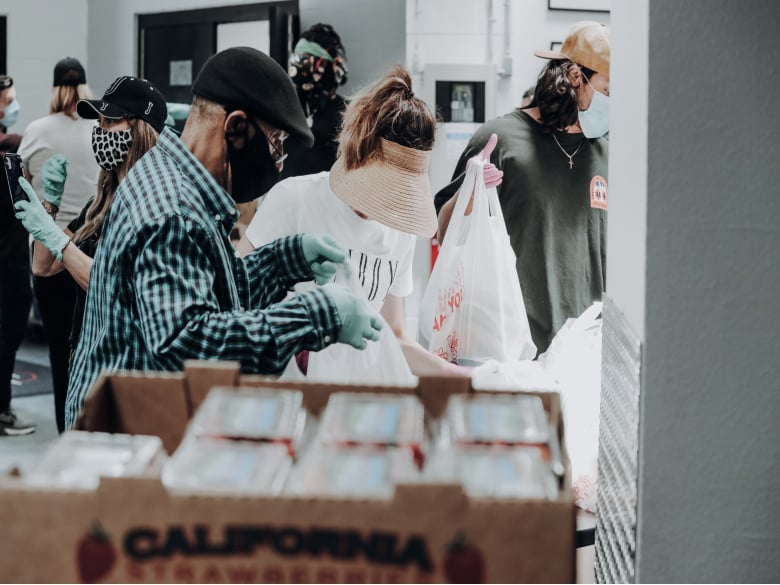
Joel Muniz/Unsplash Food Pantry
Starting a food pantry is not easy, but it is necessary. A food pantry is an essential part of a community. The sad truth is that there will always be people in need. Life happens, and we all fall on hard times, making setting up a community food pantry in your church much more important.
If you want to start a food pantry, this guide will help you plan and execute your goal in 6 simple steps.
What Is A Food Pantry
A food pantry is a site where individuals in need can receive food. Food pantries can be in permanent locations such as churches or delivered to those in need.
It is also the only place where they can get seasonal food boxes, such as a Thanksgiving box, including staples like turkey so they can feed their families or back-to-school supplies for their children. Food pantries can also distribute clothing as well as hygiene products.
How To Organize A Community Food Pantry At Your Church
You can just say you are organizing a food pantry and hope it goes well. Setting up a food pantry involves some planning. Here is everything you need to know to create a successful food pantry at your church.
Research
You must research the people in your community to provide them with the service. You have to answer 2 main questions. Who will the pantry serve, and how often can you help them?
You have to know the community you are serving. Do you want to serve families or single parents, widows, senior citizens with limited incomes, low-income families, unemployed, college students in need, or a mixture of everyone? You can create a survey and distribute it to people in your community. You can also ask local food banks, other food pantries, or local government agencies to provide you with some statistics to find out who needs the most help.
How often you can serve your community depends on the community’s needs and your resources. Decide whether you will open the pantry daily, once or twice a month, or once or twice a week.
The pantry functions off of donations and church funds. It’s easy to say yes all the time. However, if you constantly say yes, you will find yourself digging into your personal funds to provide resources to support the food pantry. So, look at your resources and decide how often you can help people.
The Space
Next, you’ve got to decide where your pantry will be located. You can create a pantry in a portion of your church or church hall. Wherever you choose to place the pantry, make sure it is easily accessible. Ideally, you want to choose an area that does not have too many stairs, away from important items such as pews. If there are too many stairs, there is a chance that individuals may trip and spill their food. If the pantry is too close to important items, the food may spill and damage these items.
Funding
As I mentioned above, you will need funding for your pantry. You can fund your pantry through donations. Ask your church members, local colleges, and government agencies for donations. You can also ask food banks for donations. Sometimes, they have excess food that you may be able to purchase.
You also organize a food drive at your church. You can set up boxes for people to drop their donations off in your church or certain locations around town.
To ensure you get the most donations for your food drive, spread the word. Tell your church members. Contact local schools, grocery stores, businesses, and other churches to inform them about your drive. Hang flyers around your area and share a few posts on social media to get more people to donate.
Additionally, specify which items you can and cannot accept. Dry goods such as pasta, cereal, and pasta are the most common donations at food pantries. If you are asking for perishable food like meat, make sure you have a fridge and freezer to store these items.
Keep in mind that there won’t always be donations. Eventually, you will have to buy groceries for your food pantry. Ask your pastor to put aside a small portion of the tithes or money from your fundraisers for your pantry. You can set a budget and use the money to replenish items in your food pantry.
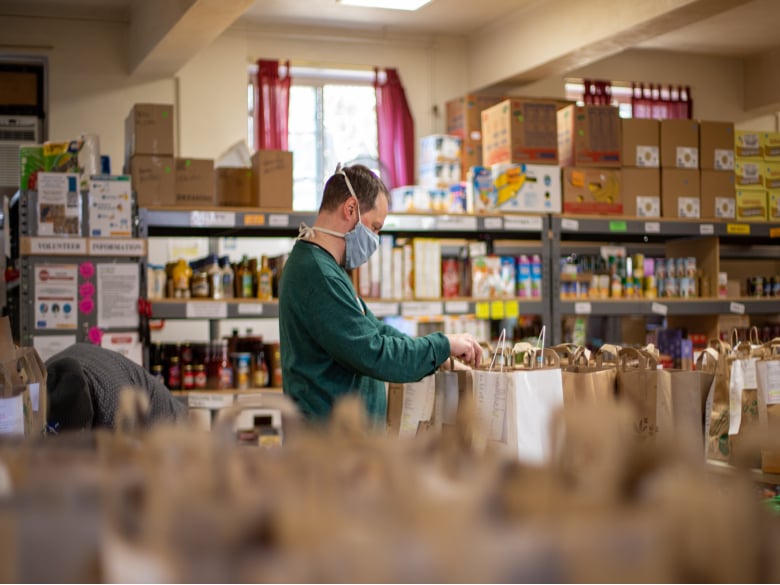
Aaron Doucett/Unsplash Food Pantry
Recruit Volunteers
You will need a committee of people to ensure your food pantry launches without a hitch and can be maintained for years to come. These are the people who will supervise policies and appoint people who manage the day-to-day of the food pantry. You will need a president, an accountant, and a manager to run your food pantry.
President
You will need a president. This individual will run the show. They will handle executive decisions, such as whether the food pantry is up to par. They can also network and look for opportunities to collaborate with local organizations and businesses to get more donations.
Accountant
You will also need to put someone in charge of the pantry’s finances. This person will track money and donations coming in and out of the pantry. This information is very important, as some states have specific financial regulations that must be followed to have a food pantry. Make sure you research these regulations before you start your pantry so you are not caught off guard.
Manager
You will also need a manager. This person will handle daily or weekly operations. For example, they may be in charge of unlocking the pantry, handing out food, or recording important information items that need to be replaced. They may also listen to those in need and provide encouraging words.
These are just some of the people who can help you run the pantry. You can add more people as you see fit.
Do not force anyone to help with the food pantry. Let volunteers come to you. Even if they do not come to you, high school and some college students have to complete community service hours. They can help you with daily operations such as handing out food since it is designed to serve the community.
Stock Your Pantry Shelves
Now that you have set up a committee and received donations, it is time to stock your pantry. Divide your pantry into different sections. Use pantry food storage bins to divide your pantry into different sections. Sort the items into canned goods, boxes, perishable foods, dried goods, and breakfast items.
If you serve individuals with dietary restrictions such as gluten-free, vegan, dairy-free, or sugar-free, store these items separately. Let these individuals inspect the items to ensure they can eat them before you give them to them. Some foods, like oats, may come into contact with gluten. If a gluten-intolerant person eats these oats, they may end up sick.
Additionally, check and record the expiration dates of all food to ensure you provide individuals with fresh food.
If you are distributing food boxes, assemble them the day before you give them out. Be aware of the number of persons the food has to feed. You do not want to give less food than they need.
You can only add nonperishable items such as pasta or cereal, fruits, and vegetables to the box the day before. However, if you plan to give away perishable foods, including meat and dairy products, you can divide the items into portions and store them in the fridge or freezer. As the people come to collect their boxes, you can add these perishable items to the box before handing it to them.
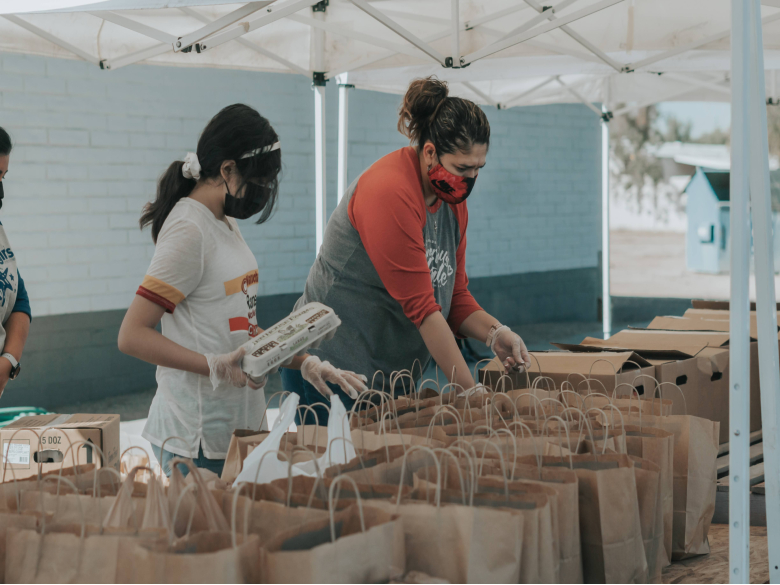
Ismael Paramo/Unsplash Food Pantry
Advertise
You must tell people about your pantry, or else you cannot serve them. You can advertise your food pantry like you would market a church event.
You can start with members of your church who may be experiencing hard times. You can also let your church members know so they can spread the word. Send an announcement to your email list and share a few posts on social media.
Visit churches in low-income neighborhoods or get referrals from local government agencies or food banks.
Whether you use one or all of these marketing strategies, make sure you let people know your hours of operation so they can collect their food. You do not want people to show up when the pantry is closed.
Everyone needs a helping hand at some point in their life. This is why food pantries are important to the community. They serve those in our communities who deal with those who may not know where their next meal is coming from. While it will not be easy, these tips will help you build a successful food pantry that benefits your community for years to come.
General Christian
Progressive Christian
Food and Religion
Previous Post

August 27, 2023
How To Market Your Church Event
Next Post

September 7, 2023 Easy To Make Scrumptious Fall Recipes Perfect For Faith Socials
Recent Comments
Browse Our Archives
Select a Category Business And Religion Faith Food Food And Faith Health And Fitness Home Home And Faith Religion Religion And Relationships Religious events Uncategorized
Select a Month November 2023 October 2023 September 2023 August 2023 July 2023 June 2023 May 2023 March 2023
Follow Us!
TAKE THE
Religious Wisdom Quiz
How long was the wedding celebrations length in Biblical times?
Select your answer to see how you score.
10 days 3 days 5 days 7 days
Related posts from At the Intersection of Faith and Food

8 Fun Church Event Ideas To Boost Church...
At the Intersection of Faith and Food

How To Get Teenagers And Millennials To Become...
At the Intersection of Faith and Food

Easy To Make Scrumptious Fall Recipes Perfect For...
At the Intersection of Faith and Food

How To Market Your Church Event
At the Intersection of Faith and Food
TRENDING AT PATHEOS Food and Religion

Celebrating Light and Love On Diwali
Welcome back to my blog, Hope and Joy In Life. May peace...

Celebrating National Dashi Day
A Taste of Simplicity and Tradition Welcome back to Hope and Joy...

Religion and a Plant-Based Diet
Religion and a Plant-Based Diet Religion and a plant-based diet are intricately...

The Keys to Solving World Hunger
How I Would Solve World Hunger The keys to solving world hunger...

8 Fun Church Event Ideas To Boost Church...
Church event ideas that worked 20 years ago just don't work any...

How To Get Teenagers And Millennials To Become...
Over the years, teenagers and millennials church attendance has decreased. A research...
view all Food and Religion blogs
Ad-Free & Subscriber Log-In Subscription Support
- About Us
- 2026 Calendar
- Videos
- Podcasts
- Library of World Religions
- Faith In Media Tracker
- Advertise With Us
- Write for Us
- Privacy Policy
- Terms of Service
- Do Not Sell My Data
- Contact Us
- Radiant Digital
- Manage Newsletter Subscriptions
- Unsubscribe From Notifications
- Sitemap
Copyright 2008-2026, Patheos. All rights reserved.
Subscription Support Ad-Free & Subscriber Log-In
Follow Patheos