
BuddhistCatholicContemplativeEvangelicalGeneral ChristianHinduJewishLatter-day SaintMuslimNew VisionsProgressive Christian
Beliefs
- Buddhist
- Catholic
- Contemplative
- Evangelical
- General Christian
- Hindu
- Jewish
- Latter-day Saint
- More Voices
- Muslim
- New Visions
- Pagan
- Progressive Christian
Topics
- Religion News
- Food and Religion
- Sports and Religion
- Religious Art
- Religious Music and Entertainment
- Religious Events
- History and Religion
- Style and Religion
- Politics and Religion
- Women in Religion
- Recreation Outdoors and Religion
- Business Finance and Religion
- Careers Workplace and Religion
- Education and Religion
- Family Parenting and Religion
- Health Fitness and Religion
- Home and Religion
- Relationships and Religion
- Technology and Religion
- Travel and Religion
Columnists
- Buddhist Columnists
- Business Finance and Religion Columnists
- Careers Workplace and Religion Columnists
- Catholic Columnists
- Contemplative Columnists
- Education and Religion Columnists
- Evangelists Columnists
- Family Parenting and Religion Columnists
- General Christian Columnists
- Health Fitness and Religion Columnists
- Hindu Columnists
- History and Religion Columnists
- Home and Religion Columnists
- Jewish Columnists
- More Voices Columnists
- Latter Day Columnists
- Muslim Columnists
- New Visions Columnists
- Nonreligious Columnists
- Pagan Columnists
- Politics and Religion Columnists
- Progressive Columnists
- Recreation Outdoors and Religion Columnists
- Relationships and Religion Columnists
- Religion News Columnists
- Religious Art Columnists
- Religious Events Columnists
- Religious Music and Entertainment Columnists
- Sports and Religion Columnists
- Style and Religion Columnists
- Technology and Religion Columnists
- Travel and Religion Columnists
- Women in Religion Columnists
Resource Library
- 2026 Calendar
- Library of World Religions
- The 100 Most Holy Places on Earth
- Patheos Answers
- Podcasts
- Videos
- Faith Leaders Database
- Anglican Episcopalian
- Bahai
- Baptist
- Buddhism
- Christianity
- Confucianism
- Eastern Orthodoxy
- Hinduism
- Holiness and Pentecostal
- ISKCON
- Islam
- Judaism
- Lutheran
- Methodist
- The Church of Jesus Christ of Latter-day Saints
- New Age
- Paganism
- Presbytarian and Reformed
- Protestantism
- Religion Behind the Scenes
- Roman Catholic
- Scientology
- Shia Islam
- Sikhism
- Sufism
- Sunni Islam
- Taoism
- Zen
- See all religions
Research Tools
 Ad-Free & Subscriber Log-In Subscription Support
Ad-Free & Subscriber Log-In Subscription Support
Follow Patheos 

- Trending:
- Forgiveness
- |
- Marriage
- |
- Consciousness
- |
- Death Penalty
- |
- Election
- |
- Halloween

- Home
- Nonreligious
- Careers, Workplace and Religion
- Embracing the New Era of Flexible Work
Embracing the New Era of Flexible Work
Last updated on: May 6, 2025 at 11:47 am by Gleb Tsipursky
Embracing the New Era of Flexible Work 2025-05-06T11:47:54-04:00 Gleb Tsipursky
Patheos Explore the world's faith through different perspectives on religion and spirituality! Patheos has the views of the prevalent religions and spiritualities of the world.

The landscape of flexible work is rapidly evolving, reshaping how organizations approach employee wellbeing, productivity, and engagement. Insights from Valerie Garrett, VP & Director of Design at Fifth Third Bank, Rosemary R. Sheehan, Former CHRO at Mass General Brigham Hospital, and Dr. Gale LaRoche, Senior Human Resources Consultant at ADK Consulting & Executive Search offer a comprehensive view of this transformation. Their collective experiences highlight both the opportunities and challenges that flexible work presents in today’s corporate world.
Unveiling the Benefits: A Holistic View
The concept of flexible work has transcended being a mere trend and is now a pivotal element in modern organizational strategies. Sheehan and Garrett focus on the improved work-life balance that flexible work offers, a critical factor in today’s fast-paced and often high-stress business environment. This balance isn’t just about having more time for personal pursuits; it’s about giving employees control over their schedules, empowering them to work at times when they are most productive and balanced. This empowerment leads to reduced burnout and a more sustainable work model.
Furthermore, they emphasize mental wellness as a direct benefit of this balance. Mental wellness in the workplace goes beyond avoiding stress; it’s about cultivating an environment where employees feel valued, understood, and supported. This aspect of flexible work can lead to improved overall job satisfaction, reduced absenteeism, and a more engaged and motivated workforce.
Garrett highlights another key benefit: enhanced communication between leaders and team members. Flexible work arrangements necessitate and foster open and frequent communication, breaking down traditional hierarchical barriers. This improvement in communication can lead to better understanding and alignment of goals, increased innovation, and a more cohesive team dynamic.
In a flexible work environment, communication often becomes more intentional, with an emphasis on clarity and purpose. This shift can lead to more effective team collaboration, as assumptions and misunderstandings are minimized, and everyone is aligned on objectives and expectations.
Dr. LaRoche adds a practical perspective, focusing on the tangible benefits of reduced commuting. This aspect of flexible work is not just about saving time that would otherwise be spent traveling to and from the workplace. It encompasses a significant financial saving for employees, who spend less on fuel, public transportation, and vehicle maintenance. This financial aspect can have a substantial impact on an employee’s disposable income and overall quality of life.
Beyond the financial savings, LaRoche points out the reduction in stress and anxiety associated with commuting. Long commutes, especially in high-traffic areas, are often a source of daily frustration and can lead to chronic stress and associated health issues. By eliminating or reducing the commute, flexible work can contribute significantly to an employee’s physical and mental health.
A critical, though sometimes overlooked, benefit that LaRoche identifies is the goodwill and positive sentiment generated towards employers who offer flexible work arrangements. When employees feel that their company cares about their wellbeing and respects their time, it fosters a sense of loyalty and appreciation. This sentiment can lead to higher employee retention rates, a willingness to go above and beyond in their roles, and a positive workplace culture.
Addressing the Challenges: Diverse Perspectives
The journey toward embracing flexible work, while laden with benefits, presents a complex array of challenges. Sheehan’s insights into the intricacies of managing hybrid teams highlight a significant challenge in the flexible work paradigm. The crux of this challenge lies in coordinating between those who work remotely and those who must work in the workplace. Ensuring that both sets of employees feel equally involved and valued requires a delicate balance. Teams must be managed in such a way that physical distance does not translate into professional distance.
Moreover, Sheehan emphasizes the importance of making office time meaningful. In a flexible work environment, the purpose of coming to the office shifts from routine work to more collaborative and interactive activities. This shift necessitates a rethinking of office space as a place for innovation, team-building, and problem-solving, rather than merely a location for individual work.
Garrett underscores the pivotal role of leadership and communication in the successful implementation of flexible work arrangements. Leaders must not only adapt to managing teams that are not physically present but also need to cultivate a culture of trust and accountability. This situation calls for a new set of leadership skills focused on remote team management, empathy, and effective digital communication.
In addition, communication in a flexible work environment becomes more critical than ever. Clear, concise, and frequent communication can bridge the gap caused by physical distance, ensuring that all team members are aligned with the organization’s goals and objectives. This approach requires an intentional effort to stay connected, using various communication tools and strategies to foster a sense of community and shared purpose.
LaRoche highlights the challenge of fairness in flexible work arrangements. In roles that cannot accommodate remote work, such as operational tasks or customer-facing positions, there is a risk of creating a perceived divide within the workforce. Addressing this issue requires thoughtful policy-making that acknowledges and compensates for these differences in a manner that is perceived as equitable.
Isolation is another significant challenge in a remote work setting. The lack of face-to-face interaction can lead to feelings of loneliness and detachment from the organization. This isolation can affect an employee’s engagement and productivity, and over time, it can impact team cohesion and organizational culture. Creating opportunities for in-person interactions, virtual team-building activities, and fostering a strong online community can mitigate these effects.
LaRoche also points out the difficulty in building solid work relationships in a remote environment. The spontaneous interactions and informal conversations that occur in an office setting play a crucial role in relationship-building. In a remote setting, these interactions need to be consciously recreated through virtual coffee breaks, informal check-ins, and online social events.
Additionally, the challenge of creating a sense of belonging and camaraderie in a remote team calls for innovative team engagement strategies. These might include regular team retreats, collaborative online projects, or team-based challenges that can help in building a sense of unity and shared purpose.
Crafting Solutions: Leadership, Communication, and Culture
The task of effectively implementing flexible work arrangements requires a nuanced approach that addresses the various challenges highlighted by these leaders.
Sheehan focused on empowering leaders to craft team-specific strategies. This approach recognizes that each team has its unique dynamics, challenges, and needs. By enabling leaders to tailor their management style and strategies to their specific team, the organization ensures that flexibility does not come at the cost of productivity or team cohesion. This might involve training leaders in remote management techniques, providing them with tools to track and measure team productivity, or encouraging them to experiment with different communication and collaboration tools to see what works best for their team.
Garrett underscores the importance of leadership development in fostering a culture where flexibility and productivity coexist. This focus on leadership development is crucial in ensuring that managers are equipped to handle the complexities of a flexible work environment. Training programs might include modules on effective remote communication, building trust in a virtual environment, conflict resolution from a distance, and methods to motivate and engage remote teams. By investing in their leaders, Fifth Third Bank is creating a cadre of professionals who can navigate the challenges of flexible work while maintaining a high-performance culture.
LaRoche brings attention to the perception of unfairness that can arise in flexible work arrangements. To address this, LaRoche advocates for compensatory measures for those who cannot work remotely. This could include covering commuting costs, providing on-site amenities like gyms or relaxation areas, or even offering additional paid time off or flexible scheduling for in-office staff. These measures can help balance the scales and demonstrate the organization’s commitment to fairness and employee wellbeing.
All three leaders emphasize the critical role of clear communication in the success of flexible work arrangements. Effective communication becomes the glue that holds teams together in the absence of physical proximity. This might involve regular team meetings, one-on-one check-ins, and open forums for feedback and discussion. The use of collaborative tools and platforms can facilitate this ongoing communication.
In addition to digital communication, they also highlighted the importance of opportunities for in-person interaction. Regular in-person meetings, retreats, or team-building activities can strengthen relationships and foster a sense of belonging and team identity. These interactions are crucial in building a strong organizational culture and ensuring that remote or hybrid team members feel connected to the larger organization.
Leveraging Resources: Internal and External Synergies
The effective implementation of flexible work arrangements involves strategic resource utilization, blending internal strengths with external expertise.
Sheehan and Garrett emphasize the development of internal leadership capabilities. They actively engage in nurturing the skills of their existing staff to lead in a flexible work environment. This approach includes organizing leadership workshops, mentorship programs, and training sessions on managing remote teams. By investing in their leaders, Sheehan and Garrett ensure a robust foundation for flexible work, rooted in the company’s culture and values.
Both Sheehan and Garrett also recognize the importance of external expertise in enriching their internal efforts. They actively seek out consultants specializing in remote work strategies and technology solutions, as well as experts in organizational psychology. These external resources bring in fresh perspectives and specialized knowledge, enhancing the internal capabilities at Mass General Brigham and Fifth Third Bank.
Dr. Gale LaRoche of ADK Consulting advocates for a mix of internal management and external consultation, particularly relevant for organizations with varying resource levels. She focuses on maximizing the potential of existing staff while filling gaps with external support. This might involve collaborating with HR consultants for policy development, technology experts for remote collaboration tools, or wellness professionals for employee wellbeing initiatives. LaRoche’s approach highlights the importance of external partnerships in providing expertise and support necessary for a successful transition to a flexible work environment.
Having served as an external consultant for over two dozen organizations in helping them figure out their hybrid work models, I applaud the efforts of internal experts. They work tirelessly to use evidence to implement effective hybrid strategies. However, they often lack access to the best practices of other organizations, frequently resulting in choosing suboptimal paths and making the same mistakes that plenty of other organizations have made and regretted. With access to external expertise, they can avoid these unnecessary headaches.
Envisioning the Future: A Flexible Work Landscape
The future of work, as seen through the lens of these leaders, is unequivocally flexible. Sheehan, Garrett, and LaRoche agree that the traditional office-bound work model is evolving. The COVID-19 pandemic has accelerated this transition, with many organizations discovering the feasibility and benefits of flexible work arrangements. This shift is not a temporary response but a long-term redefinition of how work integrates with life.
The insights from Sheehan, Garrett, and LaRoche paint a comprehensive picture of the evolving nature of work. The benefits of flexible work are clear, yet the challenges it poses require thoughtful leadership, open communication, and a commitment to culture-building. As organizations navigate this new landscape, the lessons from Mass General Brigham, Fifth Third Bank, and ADK Consulting offer valuable guidance on embracing change while prioritizing the wellbeing and productivity of the workforce. The future of work is flexible, and its successful implementation hinges on a holistic approach that considers the diverse needs of the modern employee.
Key Take-Away
Flexible work is a strategic shift, enhancing work-life balance, communication, and wellbeing, while requiring strong leadership, fairness, and intentional strategies to manage hybrid teams and foster employee engagement…>Click to tweet
Image credit: Polina Tankilevitch/pexels
Dr. Gleb Tsipursky was named “Office Whisperer” by The New York Times for helping leaders overcome frustrations with hybrid work and Generative AI. He serves as the CEO of the future-of-work consultancy Disaster Avoidance Experts. Dr. Gleb wrote seven best-selling books, and his two most recent ones are Returning to the Office and Leading Hybrid and Remote Teams and ChatGPT for Thought Leaders and Content Creators: Unlocking the Potential of Generative AI for Innovative and Effective Content Creation. His cutting-edge thought leadership was featured in over 650 articles and 550 interviews in Harvard Business Review, Inc. Magazine, USA Today, CBS News, Fox News, Time, Business Insider, Fortune, The New York Times, and elsewhere. His writing was translated into Chinese, Spanish, Russian, Polish, Korean, French, Vietnamese, German, and other languages. His expertise comes from over 20 years of consulting, coaching, and speaking and training for Fortune 500 companies from Aflac to Xerox. It also comes from over 15 years in academia as a behavioral scientist, with 8 years as a lecturer at UNC-Chapel Hill and 7 years as a professor at Ohio State. A proud Ukrainian American, Dr. Gleb lives in Columbus, Ohio.
New Visions
Business, Finance and Religion
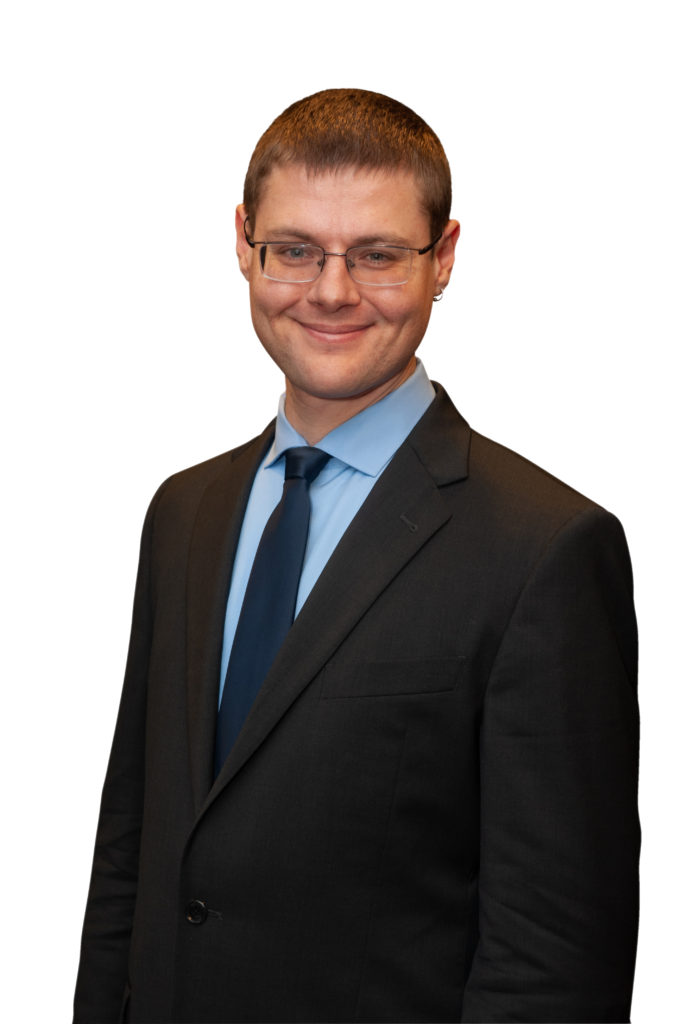
About Dr. Gleb Tsipursky
Known as the Disaster Avoidance Expert, Dr. Gleb Tsipursky is on a mission to protect leaders from dangerous judgment errors known as cognitive biases, which devastate bottom lines and bring down high-flying careers. His expertise and passion is developing the most effective and profitable decision-making strategies, based on pragmatic business experience and cutting-edge behavioral economics and cognitive neuroscience, to empower leaders to avoid business disasters and maximize their bottom lines. You can learn more here https://disasteravoidanceexperts.com/glebtsipursky/ The bestselling author of several books, Dr. Tsipursky is best known for his national bestseller on avoiding disasters and achieving success in business and other life areas, The Truth Seeker’s Handbook: A Science-Based Guide. His next book, Never Go With Your Gut: How Pioneering Leaders Make the Best Decisions and Avoid Business Disasters, is forthcoming with Career Press in November 2019. It’s the first book to focus on cognitive biases in business leadership and reveal how leaders can overcome these dangerous judgment errors effectively. After that he’s publishing The Blindspots Between Us: How to Overcome Unconscious Cognitive Bias and Build Better Relationships with New Harbinger in April 2020, the first book to focus on cognitive biases in professional and personal relationships and illustrate how we can defeat these dangerous judgment errors in our relationships. See more information here https://disasteravoidanceexperts.com/author-page/ Dr. Tsipursky’s cutting-edge thought leadership was featured in over 400 articles he published and over 350 interviews he gave to popular venues that include Fast Company, CBS News, Time, Scientific American, Psychology Today, The Conversation, Business Insider, Government Executive, The Chronicle of Philanthropy, Inc. Magazine, and many others, as you can see here https://disasteravoidanceexperts.com/media/ Dr. Tsipursky's expertise comes from over 20 years of consulting, coaching, speaking, and training for businesses and nonprofits. He serves as the CEO of the boutique consulting, coaching, and training firm Disaster Avoidance Experts, which uses a proprietary methodology based on groundbreaking research to help leaders and organizations maximize their bottom lines by addressing potential threats, seizing unexpected opportunities, and resolving persistent personnel problems. His clients include Aflac, Balance Employment Assistance Provider, Edison Welding Institute, Fifth Third Bank, Honda, IBM, International Coaches Federation, Ohio Hospitals Association, National Association of Women Business Owners, Sentinel Real Estate, The Society for Human Resource Management, RealManage, The Columbus Foundation, Vistage, Wells Fargo, the World Wildlife Fund, and over a hundred others who achieve outstanding client results. You can learn more about that here: https://disasteravoidanceexperts.com/about Dr. Tsipursky also has a strong research and teaching background in behavioral economics and cognitive neuroscience with over 15 years in academia, including 7 years as a professor at the Ohio State University and before that a Fellow at the University of North Carolina-Chapel Hill. His dozens of peer-reviewed academic publications include journals such as Behavior and Social Issues, Journal of Social and Political Psychology, and International Journal of Existential Psychology and Psychotherapy. His civic service includes over 4 years as the Chair of the Board of Directors of Intentional Insights, an educational nonprofit advocating for research-based decision-making in all life areas. He also co-founded the Pro-Truth Pledge, a civic project to promote truthfulness and integrity for individual professionals and leaders in the same way that the Better Business Bureau serves as a commitment for businesses. He serves on the Advisory Board of Canonical Debate Lab and Planet Purpose, and is on the Editorial Board of the peer-reviewed journal Behavior and Social Issues. A highly in-demand international speaker, Dr. Tsipursky has over two decades of professional speaking experience across North America, Europe, and Australia. He gets top marks from audiences for his highly facilitative, interactive, and humor-filled speaking style and the way he thoroughly customizes speeches for diverse audiences. Meeting planners describe Dr. Tsipursky as "very relatable," as "a snap to work with," and as someone who "does everything that you would want a speaker to do." Drawing on best practices in adult learning, his programs address the wide spectrum of diverse learning styles, as attested by enthusiastic client testimonials and references. He regularly shares the stage with prominent leaders, for example recently speaking on a roundtable panel with the President of the European Commission Ursula von der Leyen, Secretary General of the International Federation of Red Cross and Red Crescent Societies Elhadj As Sy, Chancellor of Austria Brigitte Bierlein, CEO of Penguin Random House Markus Dohle, and billionaire philanthropist and Chair of the Bertelsmann Management Company Liz Mohn. You can learn more about his speaking and see videos here: https://disasteravoidanceexperts.com/speaking/ Dr. Tsipursky earned his PhD in the History of Behavioral Science at the University of North Carolina at Chapel Hill in 2011, his M.A. at Harvard University in 2004, and his B.A. at New York University in 2002. He lives in and travels from Columbus, OH. In his free time, he enjoys tennis, hiking, and playing with his two cats, and most importantly, he makes sure to spend abundant quality time with his wife to avoid disasters in his personal life. Learn more about him at https://DisasterAvoidanceExperts.com/GlebTsipursky, contact him at Gleb[at]DisasterAvoidanceExperts[dot]com, follow him on Instagram @dr_gleb_tsipursky and Twitter @gleb_tsipursky. Most importantly, help yourself avoid disasters and maximize success, and get a free copy of the “Assessment on Dangerous Judgment Errors in the Workplace,” by signing up for his free Wise Decision Maker Course at https:// DisasterAvoidanceExperts.com/Subscribe You can read more about the author here.
Previous Post

December 12, 2024
Hybrid Work Needs Employee Buy-In on Office Purpose
Next Post

December 16, 2024 The Danger of Generative AI for Online Fraud
Recent Comments
"really good read .the point about static training being a check box exercise rings so ..."
Feedback-Driven Training Could Save Your Gen ..."
"Thanks for sharing this detailed post. I have one question: do you think this method ..."
Microlearning Offers A Flexible Approach to ..."
"Thanks for sharing this detailed post. I have one question: do you think this method ..."
Trust Your Workers When They Work Remotely
"Hey .."
Gen AI Demands We Keep Learning ..."
Browse Our Archives
Select a Category Alternative Facts Behavioral Science Cognitive Bias Debates Deception Decision Making Donald Trump Effective giving Fake news Leadership Meaning and Purpose Personal Politics Post-Truth Pro-Truth Pro-Truth Pledge Psychology Rationality Secular Spirituality Uncategorized Wise decision Making
Select a Month September 2026 August 2026 July 2026 June 2026 May 2026 April 2026 March 2026 February 2026 January 2026 December 2025 November 2025 October 2025 August 2025 July 2025 June 2025 May 2025 April 2025 March 2025 February 2025 January 2025 December 2024 November 2024 October 2024 September 2024 June 2024 May 2024 April 2024 March 2024 February 2024 January 2024 December 2023 November 2023 October 2023 September 2023 August 2023 July 2023 June 2023 May 2023 April 2023 March 2023 January 2023 December 2022 October 2022 September 2022 August 2022 July 2022 June 2022 May 2022 April 2022 March 2022 January 2022 December 2021 November 2021 October 2021 September 2021 August 2021 July 2021 June 2021 May 2021 April 2021 March 2021 February 2021 January 2021 December 2020 November 2020 October 2020 September 2020 August 2020 July 2020 June 2020 May 2020 April 2020 March 2020 February 2020 January 2020 December 2019 November 2019 October 2019 September 2019 September 2018 August 2018 July 2018 January 2018 December 2017 November 2017 October 2017 September 2017 August 2017 July 2017 June 2017 May 2017 April 2017 March 2017
Follow Us!
TAKE THE
Religious Wisdom Quiz
How many visions does the book of Revelation contain?
Select your answer to see how you score.
5 7 12 10
Related posts from Intentional Insights

AI Job Diffusion Is Outrunning Every Tech Wave...

Why Most Organizations Are Getting AI Adoption Wrong

AI Adoption Looks Widespread Until You Measure It

AI-Ready Regions And Teams Are Redefining Tech Strategy
TRENDING AT PATHEOS Nonreligious

Pope Leo Celebrates Mass for Nurses & Docs...
I don't have any idea how he did it, but Pope Leo...

The Sermon on the Mount, Part I: Matthew...
The Sermon on the Mount, Part I (Matthew 4:12-5:12) St. Matthew moves...

What's up from Crossway: Reviewing some of their latest A few weeks...

Janie Learns the Way of the Cross: A...
Teaching children about Jesus' Passion can be challenging. Many parents and educators...

Looking For Good Catholic Writing - October 2026
He alone extends the heavens, and he walks upon the waves of...

In "Irreplaceable," our book on vocation and technology, Trevor Sutton and I...
view all Nonreligious blogs
What Are Your Thoughts?leave a comment
Ad-Free & Subscriber Log-In Subscription Support
- About Us
- 2026 Calendar
- Videos
- Podcasts
- Library of World Religions
- Faith In Media Tracker
- Advertise With Us
- Write for Us
- Privacy Policy
- Terms of Service
- Do Not Sell My Data
- Contact Us
- Radiant Digital
- Manage Newsletter Subscriptions
- Unsubscribe From Notifications
- Sitemap
Copyright 2008-2026, Patheos. All rights reserved.
Subscription Support Ad-Free & Subscriber Log-In
Follow Patheos