
BuddhistCatholicContemplativeEvangelicalGeneral ChristianHinduJewishLatter-day SaintMuslimNew VisionsProgressive Christian
Beliefs
- Buddhist
- Catholic
- Contemplative
- Evangelical
- General Christian
- Hindu
- Jewish
- Latter-day Saint
- More Voices
- Muslim
- New Visions
- Pagan
- Progressive Christian
Topics
- Religion News
- Food and Religion
- Sports and Religion
- Religious Art
- Religious Music and Entertainment
- Religious Events
- History and Religion
- Style and Religion
- Politics and Religion
- Women in Religion
- Recreation Outdoors and Religion
- Business Finance and Religion
- Careers Workplace and Religion
- Education and Religion
- Family Parenting and Religion
- Health Fitness and Religion
- Home and Religion
- Relationships and Religion
- Technology and Religion
- Travel and Religion
Columnists
- Buddhist Columnists
- Business Finance and Religion Columnists
- Careers Workplace and Religion Columnists
- Catholic Columnists
- Contemplative Columnists
- Education and Religion Columnists
- Evangelists Columnists
- Family Parenting and Religion Columnists
- General Christian Columnists
- Health Fitness and Religion Columnists
- Hindu Columnists
- History and Religion Columnists
- Home and Religion Columnists
- Jewish Columnists
- More Voices Columnists
- Latter Day Columnists
- Muslim Columnists
- New Visions Columnists
- Nonreligious Columnists
- Pagan Columnists
- Politics and Religion Columnists
- Progressive Columnists
- Recreation Outdoors and Religion Columnists
- Relationships and Religion Columnists
- Religion News Columnists
- Religious Art Columnists
- Religious Events Columnists
- Religious Music and Entertainment Columnists
- Sports and Religion Columnists
- Style and Religion Columnists
- Technology and Religion Columnists
- Travel and Religion Columnists
- Women in Religion Columnists
Resource Library
- 2026 Calendar
- Library of World Religions
- The 100 Most Holy Places on Earth
- Patheos Answers
- Podcasts
- Videos
- Faith Leaders Database
- Anglican Episcopalian
- Bahai
- Baptist
- Buddhism
- Christianity
- Confucianism
- Eastern Orthodoxy
- Hinduism
- Holiness and Pentecostal
- ISKCON
- Islam
- Judaism
- Lutheran
- Methodist
- The Church of Jesus Christ of Latter-day Saints
- New Age
- Paganism
- Presbytarian and Reformed
- Protestantism
- Religion Behind the Scenes
- Roman Catholic
- Scientology
- Shia Islam
- Sikhism
- Sufism
- Sunni Islam
- Taoism
- Zen
- See all religions
Research Tools
 Ad-Free & Subscriber Log-In Subscription Support
Follow Patheos 

- Trending:
- Advent
- |
- Forgiveness
- |
- Thanksgiving
- |
- Election
- |
- Seasonal Holidays
- |
- Marriage

- Home
- Nonreligious
- Careers, Workplace and Religion
- Suburbia’s Renaissance in the Age of Flexible Work
Suburbia’s Renaissance in the Age of Flexible Work
Last updated on: July 19, 2023 at 6:10 am by Gleb Tsipursky
Suburbia’s Renaissance in the Age of Flexible Work 2023-07-19T06:10:04-04:00 Gleb Tsipursky
Patheos Explore the world's faith through different perspectives on religion and spirituality! Patheos has the views of the prevalent religions and spiritualities of the world.

In the grand game of real estate, there’s a new king on the board. The suburbs are not just surviving, they’re thriving, and it’s all thanks to the game-changer that is flexible work. Who needs a skyscraper view when your office is your living room, and your commute, a mere amble from bed to desk?
“We expect the ability to WFH to remain an incentive for young families to seek out more remote suburban and rural markets where housing may be more affordable,” a recent Bank of America report suggests. It’s like swapping a sardine-can city apartment for a comfortable, spacious home. It’s not rocket science; it’s simply the art of making work work for you.
The five-day office week, like the dodo, is heading for extinction. Lawrence Yun, chief economist at the National Association of Realtors, says, “A little bit of a longer commute is not a hindrance” if you’re not in the office M-F 9-5. Not when you’ve got the flexibility to decide where and when you work. Why endure the daily urban rat race when you can occasionally roll with the relaxed suburban pace instead?
Millennials: Not So Urban After All
Remember when we thought millennials were city slickers, with their Uber rides and brunch habits? Turns out, they’re embracing the suburban dream as eagerly as a kid pouncing on the last slice of pizza.
Hyojung Lee, a professor of housing and property management at Virginia Tech, humorously notes, “We’ve always talked about millennials as urban people… But it turns out they’re not that cool anymore.” Indeed, some 45% of millennials now plan to buy homes in the suburbs, according to a recent Bank of America survey. Perhaps it’s not about being ‘cool’ anymore but about being ‘smart’.
The Gourmet Exodus: A Culinary Revolution in Suburbia
This new suburban migration is not just about homes and workplaces. It’s also transforming the gastronomic landscape. Urban retail vacancies surpassed suburban ones in 2022, for the first time since 2013, according to the Wall Street Journal. Like ants to a picnic, restaurants and retailers are flocking to these thriving town centers.
Consider the salad chain, Sweetgreen. Once a downtown staple, it’s now making the suburbs its main stage with 50% of its locations nestled there. And it’s not just salad – even big-name chefs are choosing suburban towns for their next culinary adventures. It’s as if suburbia has become the new Manhattan for the restaurant world.
The face of suburbia is changing, too. Long associated with homogeneity, suburbs are now outpacing the national average for racial diversity, according to a Brookings Institution analysis. The stereotype of the white picket fence is slowly giving way to a vibrant mosaic of cultural diversity.
The City Still Stands: A Reality Check
Despite this suburban boom, downtowns aren’t ready to throw in the towel just yet. Yun reminds us that people are returning to city centers, even in the hybrid work era. And while suburbs close to cities are flourishing, demand in the far-out ‘burbs has dropped significantly since the pandemic’s peak.
So, in this grand game of real estate, it’s not about cities losing or suburbs winning. It’s about recognizing that the playing field is changing. As we embrace the flexibility that technology affords us, our living preferences are evolving in turn. As I tell my clients whom I helped figure out their return to office and hybrid work plans, you need to go where your employees are, rather than simply trying to impose a top-down command-control structure on them – at least, if you want to retain your top talent.
Cognitive Biases: Unseen Forces Shaping Our Choices
Underneath our decision-making processes, cognitive biases often run the show. They’re like puppeteers, subtly influencing our choices and judgements. Two key biases that might be influencing this suburban migration are the status quo bias and the anchoring bias.
First, let’s consider the status quo bias. This is our tendency to prefer things to stay the same by doing nothing or maintaining our current or previous decision. With the onset of the pandemic, the status quo was disrupted, forcing us to adapt to a new ‘normal’ – working from home.
For many, this temporary change has transformed into a comfortable routine. The novelty has worn off, replaced by the status quo bias. We’ve become accustomed to the convenience, freedom, and flexibility of remote work. The prospect of returning to our previous lifestyle – the daily commute, the rigid office hours – seems more daunting than sticking to the new status quo.
The anchoring bias, on the other hand, refers to our tendency to rely too heavily on the first piece of information we encounter (the “anchor”) when making decisions. When the pandemic hit, the ‘anchor’ for many was the vision of a lifestyle free from daily commuting and office constraints. This initial impression has strongly influenced subsequent decisions about work and living arrangements.
Moreover, as we have seen suburban life flourish – with burgeoning retail spaces, diverse communities, and the promise of a more balanced lifestyle – these positive first impressions have only been reinforced. The anchor has been cast, and it’s landed firmly in suburban territory.
By understanding these cognitive biases, we can make more informed decisions about our work and lifestyle choices. As we navigate this era of change, it’s crucial to challenge our biases, question our assumptions, and remain open to all possibilities. Only then can we truly make the most of the opportunities that the future of work presents.
Conclusion
In the end, whether it’s the city’s siren call or the suburb’s sweet serenade that wins your heart, it’s clear that flexible work has forever changed the way we live. It’s reshaped not just our working lives, but our homes, our communities, and our landscapes. The suburbs are having their moment in the sun, not as a retreat from the city, but as a compelling alternative.
Key Take-Away
The rise of flexible work has led to a suburban renaissance, with millennials embracing suburbs, culinary scenes thriving, and cognitive biases influencing our choices…>Click to tweet
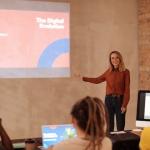
Image credit: MART PRODUCTION/Pexels
Originally published in Disaster Avoidance Experts on May 2, 2023
Dr. Gleb Tsipursky was lauded as “Office Whisperer” and “Hybrid Expert” by The New York Times for helping leaders use hybrid work to improve retention and productivity while cutting costs. He serves as the CEO of the boutique future-of-work consultancy Disaster Avoidance Experts. Dr. Gleb wrote the first book on returning to the office and leading hybrid teams after the pandemic, his best-seller Returning to the Office and Leading Hybrid and Remote Teams: A Manual on Benchmarking to Best Practices for Competitive Advantage (Intentional Insights, 2021). He authored seven books in total, and is best know for his global bestseller, Never Go With Your Gut: How Pioneering Leaders Make the Best Decisions and Avoid Business Disasters (Career Press, 2019). His cutting-edge thought leadership was featured in over 650 articles and 550 interviews in Harvard Business Review, Forbes, Inc. Magazine, USA Today, CBS News, Fox News, Time, Business Insider, Fortune, and elsewhere. His writing was translated into Chinese, Korean, German, Russian, Polish, Spanish, French, and other languages. His expertise comes from over 20 years of consulting, coaching, and speaking and training for Fortune 500 companies from Aflac to Xerox. It also comes from over 15 years in academia as a behavioral scientist, with 8 years as a lecturer at UNC-Chapel Hill and 7 years as a professor at Ohio State. A proud Ukrainian American, Dr. Gleb lives in Columbus, Ohio. In his free time, he makes sure to spend abundant quality time with his wife to avoid his personal life turning into a disaster. Contact him at Gleb[at]DisasterAvoidanceExperts[dot]com, follow him on LinkedIn @dr-gleb-tsipursky, Twitter @gleb_tsipursky, Instagram @dr_gleb_tsipursky, Facebook @DrGlebTsipursky, Medium @dr_gleb_tsipursky, YouTube, and RSS, and get a free copy of the Assessment on Dangerous Judgment Errors in the Workplace by signing up for the free Wise Decision Maker Course at https://disasteravoidanceexperts.com/newsletter/.
Business, Finance and Religion
Previous Post
July 15, 2023
The Bright Future of Speakers Bureaus in the Post-COVID World
Next Post

July 20, 2023 Communication Is Key to Being a Remote-Friendly Company
Recent Comments
"really good read .the point about static training being a check box exercise rings so ..."
Feedback-Driven Training Could Save Your Gen ..."
"Thanks for sharing this detailed post. I have one question: do you think this method ..."
Microlearning Offers A Flexible Approach to ..."
"Thanks for sharing this detailed post. I have one question: do you think this method ..."
Trust Your Workers When They Work Remotely
"Hey .."
Gen AI Demands We Keep Learning ..."
Browse Our Archives
Select a Category Alternative Facts Behavioral Science Cognitive Bias Debates Deception Decision Making Donald Trump Effective giving Fake news Leadership Meaning and Purpose Personal Politics Post-Truth Pro-Truth Pro-Truth Pledge Psychology Rationality Secular Spirituality Uncategorized Wise decision Making
Select a Month November 2026 October 2026 September 2026 August 2026 July 2026 June 2026 May 2026 April 2026 March 2026 February 2026 January 2026 December 2025 November 2025 October 2025 August 2025 July 2025 June 2025 May 2025 April 2025 March 2025 February 2025 January 2025 December 2024 November 2024 October 2024 September 2024 June 2024 May 2024 April 2024 March 2024 February 2024 January 2024 December 2023 November 2023 October 2023 September 2023 August 2023 July 2023 June 2023 May 2023 April 2023 March 2023 January 2023 December 2022 October 2022 September 2022 August 2022 July 2022 June 2022 May 2022 April 2022 March 2022 January 2022 December 2021 November 2021 October 2021 September 2021 August 2021 July 2021 June 2021 May 2021 April 2021 March 2021 February 2021 January 2021 December 2020 November 2020 October 2020 September 2020 August 2020 July 2020 June 2020 May 2020 April 2020 March 2020 February 2020 January 2020 December 2019 November 2019 October 2019 September 2019 September 2018 August 2018 July 2018 January 2018 December 2017 November 2017 October 2017 September 2017 August 2017 July 2017 June 2017 May 2017 April 2017 March 2017
Follow Us!
TAKE THE
Religious Wisdom Quiz
What did Jesus do for His disciples at the Last Supper?
Select your answer to see how you score.
Washed their feet Sent them away Gave them money Fed them fish
Related posts from Intentional Insights

Unleashing Gen AI Success Through Team Collaboration

The Key Competitive Advantage of Gen AI Experimentation

AI Skills Are Quietly Becoming the New Office...

America’s AI Lead Is Really a Management Story
TRENDING AT PATHEOS Nonreligious

Are You a Scrooge or an Ebenezer?
A Call to Remember As the Christmas season begins, will we remember...

Noah’s Ark Archaeologists: Gopher Wood or Should We...
Ancient wood, a boat-shaped formation and dates that invite a second look:...

Smart people saying smart things (11.24.26)
Please take time to listen to Perry Bacon, Sarah Posner, Adam Serwer,...

The Contingency of Our Technology
Last week we were hit with a raft of massive technology outages....

In 1939, President Franklin D. Roosevelt moved Thanksgiving from November 30 to...

Reasons for Restraint: Ricardo Gonzalez, Florida and Dec...
The Morning of January 3 I begin with the dead. On the...
view all Nonreligious blogs
What Are Your Thoughts?leave a comment
Ad-Free & Subscriber Log-In Subscription Support
- About Us
- 2026 Calendar
- Videos
- Podcasts
- Library of World Religions
- Faith In Media Tracker
- Advertise With Us
- Write for Us
- Privacy Policy
- Terms of Service
- Do Not Sell My Data
- Contact Us
- Radiant Digital
- Manage Newsletter Subscriptions
- Unsubscribe From Notifications
- Sitemap
Copyright 2008-2026, Patheos, part of the Radiant Digital network of media brands. All rights reserved.
Subscription Support Ad-Free & Subscriber Log-In
Follow Patheos