
BuddhistCatholicContemplativeEvangelicalGeneral ChristianHinduJewishLatter-day SaintMuslimNew VisionsProgressive Christian
Beliefs
- Buddhist
- Catholic
- Contemplative
- Evangelical
- General Christian
- Hindu
- Jewish
- Latter-day Saint
- More Voices
- Muslim
- New Visions
- Pagan
- Progressive Christian
Topics
- Religion News
- Food and Religion
- Sports and Religion
- Religious Art
- Religious Music and Entertainment
- Religious Events
- History and Religion
- Style and Religion
- Politics and Religion
- Women in Religion
- Recreation Outdoors and Religion
- Business Finance and Religion
- Careers Workplace and Religion
- Education and Religion
- Family Parenting and Religion
- Health Fitness and Religion
- Home and Religion
- Relationships and Religion
- Technology and Religion
- Travel and Religion
Columnists
- Buddhist Columnists
- Business Finance and Religion Columnists
- Careers Workplace and Religion Columnists
- Catholic Columnists
- Contemplative Columnists
- Education and Religion Columnists
- Evangelists Columnists
- Family Parenting and Religion Columnists
- General Christian Columnists
- Health Fitness and Religion Columnists
- Hindu Columnists
- History and Religion Columnists
- Home and Religion Columnists
- Jewish Columnists
- More Voices Columnists
- Latter Day Columnists
- Muslim Columnists
- New Visions Columnists
- Nonreligious Columnists
- Pagan Columnists
- Politics and Religion Columnists
- Progressive Columnists
- Recreation Outdoors and Religion Columnists
- Relationships and Religion Columnists
- Religion News Columnists
- Religious Art Columnists
- Religious Events Columnists
- Religious Music and Entertainment Columnists
- Sports and Religion Columnists
- Style and Religion Columnists
- Technology and Religion Columnists
- Travel and Religion Columnists
- Women in Religion Columnists
Resource Library
- 2026 Calendar
- Library of World Religions
- The 100 Most Holy Places on Earth
- Patheos Answers
- Podcasts
- Videos
- Faith Leaders Database
- Anglican Episcopalian
- Bahai
- Baptist
- Buddhism
- Christianity
- Confucianism
- Eastern Orthodoxy
- Hinduism
- Holiness and Pentecostal
- ISKCON
- Islam
- Judaism
- Lutheran
- Methodist
- The Church of Jesus Christ of Latter-day Saints
- New Age
- Paganism
- Presbytarian and Reformed
- Protestantism
- Religion Behind the Scenes
- Roman Catholic
- Scientology
- Shia Islam
- Sikhism
- Sufism
- Sunni Islam
- Taoism
- Zen
- See all religions
Research Tools
 Ad-Free & Subscriber Log-In Subscription Support
Ad-Free & Subscriber Log-In Subscription Support
Follow Patheos 

- Trending:
- Forgiveness
- |
- Marriage
- |
- Consciousness
- |
- Death Penalty
- |
- Election
- |
- Halloween

- Home
- Nonreligious
- Careers, Workplace and Religion
- (Video & Podcast) Remote Training and Virtual Mentoring for Hybrid and Remote Teams
(Video & Podcast) Remote Training and Virtual Mentoring for Hybrid and Remote Teams
Last updated on: January 17, 2022 at 1:01 pm by Gleb Tsipursky
(Video & Podcast) Remote Training and Virtual Mentoring for Hybrid and Remote Teams 2022-01-17T13:01:11-04:00 Gleb Tsipursky
Patheos Explore the world's faith through different perspectives on religion and spirituality! Patheos has the views of the prevalent religions and spiritualities of the world.
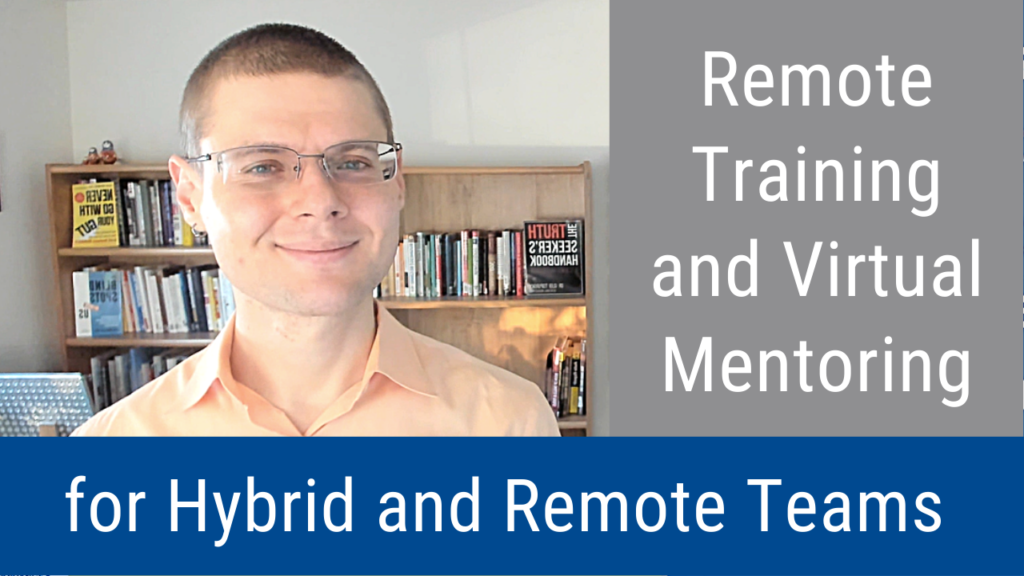
Organizations need to adopt best practices for providing excellent mentorship to remote employees hired during the pandemic and integrating them successfully into the team. That’s the key take-away message of this episode of the Wise Decision Maker Show, which describes evidence-based approaches for remote training and virtual mentoring for hybrid and remote teams.
Video: “Remote Training and Virtual Mentoring for Hybrid and Remote Teams”
Podcast: “Remote Training and Virtual Mentoring for Hybrid and Remote Teams”
Links Mentioned in Videocast and Podcast
- Here is the article: Remote Training and Virtual Mentoring for Hybrid and Remote Teams
- The book Returning to the Office and Leading Hybrid and Remote Teams: A Manual on Benchmarking to Best Practices for Competitive Advantage is available here.
- You are welcome to register for the free Wise Decision Maker Course
Transcript
Hello, everyone, and welcome to another episode of the wise decision maker show where we help you make the wisest and most profitable decisions. And today will help you make the most wise and profitable decisions about remote trading and virtual mentoring during. So when you’re thinking about the future of work, the future of work is overwhelmingly hybrid and remote. That’s the reality. But many leaders are really worried about this. Many leaders are really worried about having a hybrid schedule of one to two days a week for employees full time, especially worried about full time remote employees who are full time remote. That’s because they worry that it undermines collaboration, and specifically collaboration around how do you integrate new employees into the team into the organizational culture? How do you provide them with on the job training that mentoring helps them understand what’s actually going on, and answering their questions immediately in the moments there are no obstacles and hesitations, and they can learn all those immediate little tasks components of each task that they need to be a fully functioning effective employee. It also impedes cross functional collaboration from their perspective, because when you look at the research of the surveys, people are less connected, especially to people from outside of their teams, and their organizational culture suffers. Again, when you’re looking at the surveys, overall, people are less connected to their organizational culture, when they’re in hybrid remote settings than when they’re in full time in person settings. So leaders often pursue full time office returns for these reasons. But that’s a very big problem from the perspective of what employees want and the retention and of course, recruitment that’s necessary in today’s tight labor market. And we’re dealing with the talent wars. And the talent wars means that if you’re not winning, you’re losing, you’re losing really talented employees. leaders do understand, they really do. I mean, when I’ve been talking to them, I’ve helped 17 companies and nonprofits transition, mostly companies transitioning to the future of work to hybrid and remote teams. And they understand that most employees want either full time, remote work or hybrid scheduled most want a hybrid schedule, most do want to see their coworkers sometimes, so maybe they want to come in maybe a day, a week, maybe two days a week, some once a month, something like that, but some want to fully remote schedule. So when you look at the surveys, broadly speaking, a quarter to a third one full time remote, something like maybe over a half, two thirds, one hybrid schedule, and really smallish numbers under a quarter want full time in person. So that is what you’re facing. That’s what leaders are facing. And they’re making pretty bad decisions, they are failing to adapt well, to these needs of remote work to integration of new team members to on the job training for new junior team members, that’s a problem. Because they don’t adapt best practices, they don’t adapt those best practices on how to collaborate effectively, in remote settings and in hybrid settings. So that causes a lot of these challenges and integration on the job: learning, collaboration, organizational culture, you’re facing a lot of challenges with these leaders who are not adapting strategically to the hybrid and remote future of work. And they’re not doing so because of cognitive biases, these dangerous judgment errors that stem from how our minds are wired. And they lead us to making poor decisions, strategic decisions, financial decisions, human resources, decisions. And so leaders fail to adapt innovative best practices on how to lead in the future of work, they’re trying to go back to the past of work, that will not work. Because January 2020 will never be around again, people have fundamentally changed as a result of the pandemic, the many, many, many months over a year of the pandemic and these new variants on all of these problems. People have fundamentally changed their values, what they value, they value flexibility a lot more, as you can understand from those surveys that show how much people want hybrid or full time remote work. They favor the schedule of these individual employees, but leaders really want to do what’s comfortable for them. And they don’t want to do what’s in the organization’s best interest without realizing it. It’s not like they’re consciously saying, I’m going to undermine the organization. That’s not what’s happening. But they’re not realizing how their own intuitions and desires and feelings about what’s right for the workplace are causing them to make seriously bad decisions. And these bad decisions are cognitive biases. The way that our mind specifically is mis wired in the modern environment that goes wrong in many ways are called cognitive biases. And there are two big ones around on the job training around integration of junior team members and one of those is called functional fixedness functional fixedness. You might have heard of this as the hammered snail syndrome when You have a hammer, everything looks like a nail. That’s what functional fixedness is about when we learn one way of doing something, whether it’s hammering something, fixing something, or whether it’s collaborating, we tend to impose that same methodology in all other settings, we become fixed in the way that we do things. And that’s a big problem, because people tend to not accept new practices for how to collaborate effectively, despite the context change, you know, so they try to fit a square peg into a round hole. That’s a big, big problem. So leaders are failing fundamentally, when they’re trying to transition to hybrid and remote work, but are still trying to adapt their previous in office ways of collaborating. And then they’re wondering why they’re not succeeding, and they’re pushing for a full time in office return. And then another issue that’s related to functional fixedness is called the not invented here syndrome. That’s where people in leadership roles don’t like practices that are invented outside of their organizations. And so they reject them. It’s called the not invented here syndrome. It’s not amended here, therefore, it’s bad. So even if these practices might work better for their contexts, they tend to not become adaptive. So that’s a big problem. Now, when you think about what are the actual best practices for the future of work, you want to focus on the hybrid model of work where most people come in one to two days, and a substantial minority are full -time. That’s what helps optimize collaboration and your attention. And of course, if you play your cards right, and adopt best practices, integration of junior team members, and on the job learning for them. Now a specific best practice for doing so is called Digital coworker, digital co working remote co working, it’s basically where you co work together, but not in the same place, you co work at the same time in a shared virtual setting on a video conference call. So a good way to do it is to employ daily for an hour or two, I suggest starting about an hour. If you have a lot of commitments for your team, you can start it at one hour a week, and then ram it up. So one day a week for an hour and then ramp up to do it daily every day for a hybrid team that’s not in the office. And then every day for a remote team. That’s the ideal timing for this digital cowork. So what you do is you get everyone together on the video conference call you dial in, and you plan to work on your individual tasks. This is not for collaborative tasks. This is for your own individual tasks. So members start the time briefly going around each takes 15 to 30 seconds to share what they plan to work on. Then you turn off your microphones, and you’re leaving your speakers on, you can choose to leave your video on or not. And everyone works on their individual tasks. And of course, because your speakers are off, you’re not Bob, your microphones are off, you’re not bothered by other people’s sounds unless they deliberately choose to turn on their microphones which they do if they have a question. And that’s especially useful for junior team members who have a lot of questions and they want that on the job learning. Because on the job learning what is that about? Well, that’s about immediately being able to ask quick questions and get quick feedback. So it allows experienced staff to help with that on the job learning and shows them junior team members how to do these tasks. And virtually it’s quite helpful if they do it virtually because they can do screen sharing which is harder to do in person remote in in person settings. The benefits of digital co working replicates the experience of working in close quarters, no shared cubicle spaces, with a cute quick resolution of problems. You collaborate, you’re sharing expertise, you can do things that you can’t do in those cubicles, like screen sharing, it’s not very easy to do. It allows people to bond to socialize, integrate into the team. And it’s not draining like the typical Zoom meeting. Because you don’t have to engage with other people, you just answer questions when they have them. So this is very helpful. Let’s be digital covered. Now another tool is mentoring and hybrid and remote settings. What you want to do is you want to pair junior staff and junior staff I mean, someone who’s been there for less than three years with senior colleagues, ideally not senior colleagues who are in direct supervisory role, but senior colleagues, senior colleagues in the same team who are not supervisors, and then senior colleagues and other teams who are not supervisors. So a senior staff member from the junior team members team and then two members from outside the team, one from the same business unit and another from a different business unit. And you get different benefits from each one. So the member of the same team helps provide insights into the team culture and helps with on the job learning of those daily tasks. That’s very helpful. From outside the team you help address how does junior team members integrate into the broader team culture of the organization, the broader organizational culture itself and then make connections outside of their team because one of the things that we do find is a big problem for hybrid remote teams is a loss of connections across the organization, people just don’t spend as much time with each other and making those unexpected connections when they go into the same building. This helps address that. Because of the people from outside the team, a critical goal of their mentoring is specifically helping these junior team members get connected to people from outside of their teams. So that really facilitates cross functional collaboration, which is so necessary for contemporary organizations to succeed. So that is the goal. You want to assign regular co working sessions between the mentor and the mentees. That’s a really good activity, as well as just once a month meeting between the mentor and the mentee is to talk about growth, professional growth, what they can help them with. And again, regular digital co working is so intended again, that’s called time to work on your individual tasks. But of course, the mentee can ask the mentor for questions that address those challenges of loss of intra team collaboration, those connections within the team, and especially inter team connections collaborations between the team. So that is how you can address the challenges with integrating junior team members and providing that on the job learning that was lost in some many contexts throughout the pandemic, by leaders who didn’t adopt best practices. And here’s some best practices for you to adopt that digital, co working and that hybrid and remote mentoring. Alright, everyone, I hope this episode has been helpful to you. Please make sure to subscribe to the wise decision maker show wherever you check out the show. If you check it out in podcast form on Amazon or app or iTunes. Check us out on YouTube and video cast form we have both so check that out in the show notes. The show also notes much more information about digital co-working and remote mentoring. So make sure to check that out. And if you have any questions about any of these topics, just have feedback or comments, email me at Gleb at disaster avoidance experts.com That’s Gleb GL EB at disaster avoidance experts.com Alright everyone, I look forward to seeing you on the next episode of the wise decision maker show. And in the meantime, the wisest and most profitable decisions to you, my friends.
Transcribed by https://otter.ai
Originally Published at Disaster Avoidance Experts on December 7, 2021.
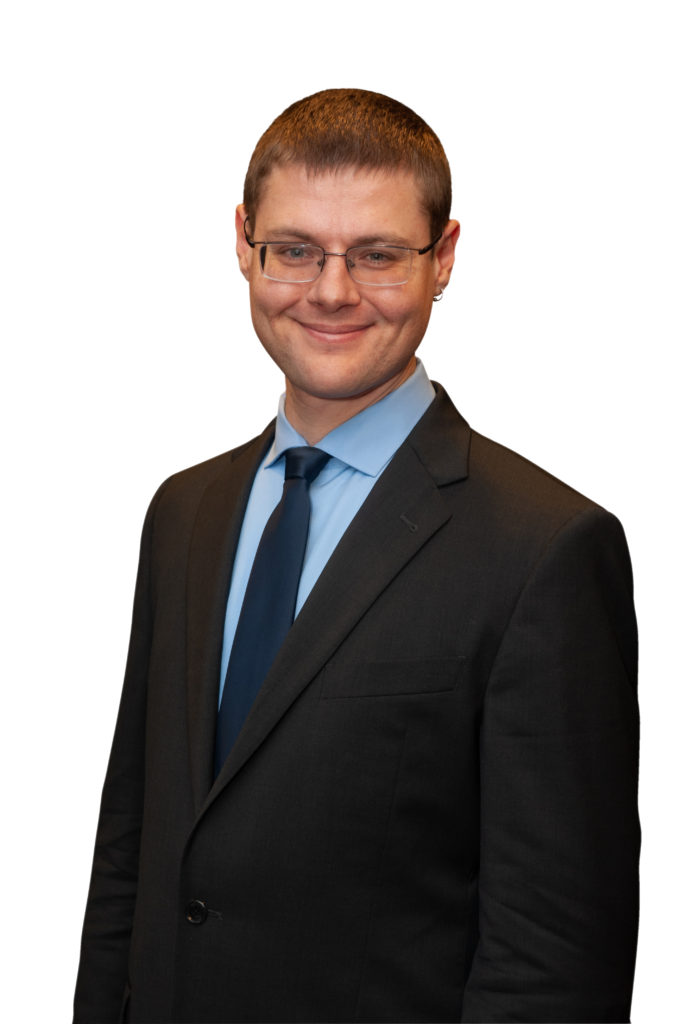
Bio: Dr. Gleb Tsipursky is an internationally-renowned thought leader in future-proofing and cognitive bias risk management. He serves as the CEO of the boutique future-proofing consultancy Disaster Avoidance Experts, which specializes in helping forward-looking leaders avoid dangerous threats and missed opportunities. A best-selling author, he wrote Never Go With Your Gut: How Pioneering Leaders Make the Best Decisions and Avoid Business Disasters (Career Press, 2019), The Blindspots Between Us: How to Overcome Unconscious Cognitive Bias and Build Better Relationships (New Harbinger, 2020), and Returning to the Office and Leading Hybrid and Remote Teams: A Manual on Benchmarking to Best Practices for Competitive Advantage (Intentional Insights, 2021). His writing was translated into Chinese, Korean, German, Russian, Polish, and other languages. He was featured in over 550 articles and 450 interviews in prominent venues. These include Fortune, USA Today, Inc. Magazine, CBS News, Business Insider, Government Executive, The Chronicle of Philanthropy, Time, Fast Company, and elsewhere. His expertise comes from over 20 years of consulting, coaching, and speaking and training for mid-size and large organizations ranging from Aflac to Xerox. It also comes from over 15 years in academia as a behavioral scientist, including 7 as a professor at Ohio State University. You can contact him at Gleb[at]DisasterAvoidanceExperts[dot]com, LinkedIn, Twitter @gleb_tsipursky, Instagram @dr_gleb_tsipursky, Medium @dr_gleb_tsipursky, and gain free access to his “Assessment on Dangerous Judgment Errors in the Workplace” and his “Wise Decision Maker Course” with 8 video-based modules.
About Dr. Gleb Tsipursky
Known as the Disaster Avoidance Expert, Dr. Gleb Tsipursky is on a mission to protect leaders from dangerous judgment errors known as cognitive biases, which devastate bottom lines and bring down high-flying careers. His expertise and passion is developing the most effective and profitable decision-making strategies, based on pragmatic business experience and cutting-edge behavioral economics and cognitive neuroscience, to empower leaders to avoid business disasters and maximize their bottom lines. You can learn more here https://disasteravoidanceexperts.com/glebtsipursky/ The bestselling author of several books, Dr. Tsipursky is best known for his national bestseller on avoiding disasters and achieving success in business and other life areas, The Truth Seeker’s Handbook: A Science-Based Guide. His next book, Never Go With Your Gut: How Pioneering Leaders Make the Best Decisions and Avoid Business Disasters, is forthcoming with Career Press in November 2019. It’s the first book to focus on cognitive biases in business leadership and reveal how leaders can overcome these dangerous judgment errors effectively. After that he’s publishing The Blindspots Between Us: How to Overcome Unconscious Cognitive Bias and Build Better Relationships with New Harbinger in April 2020, the first book to focus on cognitive biases in professional and personal relationships and illustrate how we can defeat these dangerous judgment errors in our relationships. See more information here https://disasteravoidanceexperts.com/author-page/ Dr. Tsipursky’s cutting-edge thought leadership was featured in over 400 articles he published and over 350 interviews he gave to popular venues that include Fast Company, CBS News, Time, Scientific American, Psychology Today, The Conversation, Business Insider, Government Executive, The Chronicle of Philanthropy, Inc. Magazine, and many others, as you can see here https://disasteravoidanceexperts.com/media/ Dr. Tsipursky's expertise comes from over 20 years of consulting, coaching, speaking, and training for businesses and nonprofits. He serves as the CEO of the boutique consulting, coaching, and training firm Disaster Avoidance Experts, which uses a proprietary methodology based on groundbreaking research to help leaders and organizations maximize their bottom lines by addressing potential threats, seizing unexpected opportunities, and resolving persistent personnel problems. His clients include Aflac, Balance Employment Assistance Provider, Edison Welding Institute, Fifth Third Bank, Honda, IBM, International Coaches Federation, Ohio Hospitals Association, National Association of Women Business Owners, Sentinel Real Estate, The Society for Human Resource Management, RealManage, The Columbus Foundation, Vistage, Wells Fargo, the World Wildlife Fund, and over a hundred others who achieve outstanding client results. You can learn more about that here: https://disasteravoidanceexperts.com/about Dr. Tsipursky also has a strong research and teaching background in behavioral economics and cognitive neuroscience with over 15 years in academia, including 7 years as a professor at the Ohio State University and before that a Fellow at the University of North Carolina-Chapel Hill. His dozens of peer-reviewed academic publications include journals such as Behavior and Social Issues, Journal of Social and Political Psychology, and International Journal of Existential Psychology and Psychotherapy. His civic service includes over 4 years as the Chair of the Board of Directors of Intentional Insights, an educational nonprofit advocating for research-based decision-making in all life areas. He also co-founded the Pro-Truth Pledge, a civic project to promote truthfulness and integrity for individual professionals and leaders in the same way that the Better Business Bureau serves as a commitment for businesses. He serves on the Advisory Board of Canonical Debate Lab and Planet Purpose, and is on the Editorial Board of the peer-reviewed journal Behavior and Social Issues. A highly in-demand international speaker, Dr. Tsipursky has over two decades of professional speaking experience across North America, Europe, and Australia. He gets top marks from audiences for his highly facilitative, interactive, and humor-filled speaking style and the way he thoroughly customizes speeches for diverse audiences. Meeting planners describe Dr. Tsipursky as "very relatable," as "a snap to work with," and as someone who "does everything that you would want a speaker to do." Drawing on best practices in adult learning, his programs address the wide spectrum of diverse learning styles, as attested by enthusiastic client testimonials and references. He regularly shares the stage with prominent leaders, for example recently speaking on a roundtable panel with the President of the European Commission Ursula von der Leyen, Secretary General of the International Federation of Red Cross and Red Crescent Societies Elhadj As Sy, Chancellor of Austria Brigitte Bierlein, CEO of Penguin Random House Markus Dohle, and billionaire philanthropist and Chair of the Bertelsmann Management Company Liz Mohn. You can learn more about his speaking and see videos here: https://disasteravoidanceexperts.com/speaking/ Dr. Tsipursky earned his PhD in the History of Behavioral Science at the University of North Carolina at Chapel Hill in 2011, his M.A. at Harvard University in 2004, and his B.A. at New York University in 2002. He lives in and travels from Columbus, OH. In his free time, he enjoys tennis, hiking, and playing with his two cats, and most importantly, he makes sure to spend abundant quality time with his wife to avoid disasters in his personal life. Learn more about him at https://DisasterAvoidanceExperts.com/GlebTsipursky, contact him at Gleb[at]DisasterAvoidanceExperts[dot]com, follow him on Instagram @dr_gleb_tsipursky and Twitter @gleb_tsipursky. Most importantly, help yourself avoid disasters and maximize success, and get a free copy of the “Assessment on Dangerous Judgment Errors in the Workplace,” by signing up for his free Wise Decision Maker Course at https:// DisasterAvoidanceExperts.com/Subscribe You can read more about the author here.
Next Post

March 28, 2022 10 Tips to Protect Your Romantic Relationships From Disaster
Browse Our Archives
Select a Category Alternative Facts Behavioral Science Cognitive Bias Debates Deception Decision Making Donald Trump Effective giving Fake news Leadership Meaning and Purpose Personal Politics Post-Truth Pro-Truth Pro-Truth Pledge Psychology Rationality Secular Spirituality Uncategorized Wise decision Making
Select a Month September 2026 August 2026 July 2026 June 2026 May 2026 April 2026 March 2026 February 2026 January 2026 December 2025 November 2025 October 2025 August 2025 July 2025 June 2025 May 2025 April 2025 March 2025 February 2025 January 2025 December 2024 November 2024 October 2024 September 2024 June 2024 May 2024 April 2024 March 2024 February 2024 January 2024 December 2023 November 2023 October 2023 September 2023 August 2023 July 2023 June 2023 May 2023 April 2023 March 2023 January 2023 December 2022 October 2022 September 2022 August 2022 July 2022 June 2022 May 2022 April 2022 March 2022 January 2022 December 2021 November 2021 October 2021 September 2021 August 2021 July 2021 June 2021 May 2021 April 2021 March 2021 February 2021 January 2021 December 2020 November 2020 October 2020 September 2020 August 2020 July 2020 June 2020 May 2020 April 2020 March 2020 February 2020 January 2020 December 2019 November 2019 October 2019 September 2019 September 2018 August 2018 July 2018 January 2018 December 2017 November 2017 October 2017 September 2017 August 2017 July 2017 June 2017 May 2017 April 2017 March 2017
Follow Us!
TAKE THE
Religious Wisdom Quiz
Who interpreted a dream about a tree that reached heaven?
Select your answer to see how you score.
Joel Ezekiel Amos Daniel
Related posts from Intentional Insights

AI Job Diffusion Is Outrunning Every Tech Wave...

Why Most Organizations Are Getting AI Adoption Wrong

AI Adoption Looks Widespread Until You Measure It

AI-Ready Regions And Teams Are Redefining Tech Strategy
TRENDING AT PATHEOS Nonreligious

Swimfan: Forgotten Aughts Pleasures
This is a recovery effort. In 2002, My Big Fat Greek Wedding...

Top Three Anti-Catholic Lies About Catholicism
This is my initial transcript for the video, "THE 3 WORST...

Pope Leo Celebrates Mass for Nurses & Docs...
I don't have any idea how he did it, but Pope Leo...

The Sermon on the Mount, Part I: Matthew...
The Sermon on the Mount, Part I (Matthew 4:12-5:12) St. Matthew moves...

What's up from Crossway: Reviewing some of their latest A few weeks...

Janie Learns the Way of the Cross: A...
Teaching children about Jesus' Passion can be challenging. Many parents and educators...
view all Nonreligious blogs
Ad-Free & Subscriber Log-In Subscription Support
- About Us
- 2026 Calendar
- Videos
- Podcasts
- Library of World Religions
- Faith In Media Tracker
- Advertise With Us
- Write for Us
- Privacy Policy
- Terms of Service
- Do Not Sell My Data
- Contact Us
- Radiant Digital
- Manage Newsletter Subscriptions
- Unsubscribe From Notifications
- Sitemap
Copyright 2008-2026, Patheos. All rights reserved.
Subscription Support Ad-Free & Subscriber Log-In
Follow Patheos