
BuddhistCatholicContemplativeEvangelicalGeneral ChristianHinduJewishLatter-day SaintMuslimNew VisionsProgressive Christian
Beliefs
- Buddhist
- Catholic
- Contemplative
- Evangelical
- General Christian
- Hindu
- Jewish
- Latter-day Saint
- More Voices
- Muslim
- New Visions
- Pagan
- Progressive Christian
Topics
- Religion News
- Food and Religion
- Sports and Religion
- Religious Art
- Religious Music and Entertainment
- Religious Events
- History and Religion
- Style and Religion
- Politics and Religion
- Women in Religion
- Recreation Outdoors and Religion
- Business Finance and Religion
- Careers Workplace and Religion
- Education and Religion
- Family Parenting and Religion
- Health Fitness and Religion
- Home and Religion
- Relationships and Religion
- Technology and Religion
- Travel and Religion
Columnists
- Buddhist Columnists
- Business Finance and Religion Columnists
- Careers Workplace and Religion Columnists
- Catholic Columnists
- Contemplative Columnists
- Education and Religion Columnists
- Evangelists Columnists
- Family Parenting and Religion Columnists
- General Christian Columnists
- Health Fitness and Religion Columnists
- Hindu Columnists
- History and Religion Columnists
- Home and Religion Columnists
- Jewish Columnists
- More Voices Columnists
- Latter Day Columnists
- Muslim Columnists
- New Visions Columnists
- Nonreligious Columnists
- Pagan Columnists
- Politics and Religion Columnists
- Progressive Columnists
- Recreation Outdoors and Religion Columnists
- Relationships and Religion Columnists
- Religion News Columnists
- Religious Art Columnists
- Religious Events Columnists
- Religious Music and Entertainment Columnists
- Sports and Religion Columnists
- Style and Religion Columnists
- Technology and Religion Columnists
- Travel and Religion Columnists
- Women in Religion Columnists
Resource Library
- 2026 Calendar
- Library of World Religions
- The 100 Most Holy Places on Earth
- Patheos Answers
- Podcasts
- Videos
- Faith Leaders Database
- Anglican Episcopalian
- Bahai
- Baptist
- Buddhism
- Christianity
- Confucianism
- Eastern Orthodoxy
- Hinduism
- Holiness and Pentecostal
- ISKCON
- Islam
- Judaism
- Lutheran
- Methodist
- The Church of Jesus Christ of Latter-day Saints
- New Age
- Paganism
- Presbytarian and Reformed
- Protestantism
- Religion Behind the Scenes
- Roman Catholic
- Scientology
- Shia Islam
- Sikhism
- Sufism
- Sunni Islam
- Taoism
- Zen
- See all religions
Research Tools
 Ad-Free & Subscriber Log-In Subscription Support
Ad-Free & Subscriber Log-In Subscription Support
Follow Patheos 

- Trending:
- Forgiveness
- |
- Marriage
- |
- Consciousness
- |
- Death Penalty
- |
- Election
- |
- Halloween

- Home
- Nonreligious
- Careers, Workplace and Religion
- How Can You Thrive During This Pandemic?
How Can You Thrive During This Pandemic?
Last updated on: October 6, 2020 at 2:59 am by Gleb Tsipursky
How Can You Thrive During This Pandemic? 2020-10-06T02:59:42-04:00 Gleb Tsipursky
Patheos Explore the world's faith through different perspectives on religion and spirituality! Patheos has the views of the prevalent religions and spiritualities of the world.

The COVID-19 pandemic has upended our routines and lifestyles. While being shut mostly in your home or observing infection prevention guidelines when leaving the house, chances are you might be finding it difficult to adapt to the changes of the past few months. And yet, we all have to find a way to survive and thrive in the pandemic.
Liz, a coaching client of mine, had a difficult time adjusting to the COVID-19 reality. As an executive in the insurance industry, she thrived in her fast-paced but very organized work schedule and equally full social life. Her weekdays were spent mostly at her office, and her weekends were spent catching up on errands and attending professional networking events. Since she was also an avid traveller, she would take time off periodically to avoid work burnout.
All of this came to a grinding halt when the pandemic hit, or at least this was how Liz viewed it. Stuck alone at home during the lockdown, she found it difficult to adjust to life working from home and felt that her long-term personal and career goals had been put on hold as well.
Liz asked me for guidance as she grappled with bouts of boredom, loneliness, and low work productivity. She felt that she was not adapting well to the situations surrounding the pandemic and had also started to feel that she was not in control of her life. Liz told me that she wanted to feel enthusiastic about life again despite the circumstances, and the sooner, the better. She was willing to put in the work so that she can thrive in this new abnormal, as she previously did pre-pandemic.
Knowing and Facing This New Abnormal
When I met with Liz over Zoom – by this time I had already moved my previously hybrid in-person and virtual coaching to all virtual – I told her that there were some essential points that she needed to understand in order to adjust to the new COVID-19 reality.
First and foremost, we won’t get anywhere if we don’t face the facts. We need to acknowledge that COVID-19 fundamentally disrupted our world, turning it upside down in a few short weeks in February and March 2020. We have to move past the discomfort of the normalcy bias and our intuitive feeling that the novel coronavirus “one day, it’s like a miracle, it will disappear,” to quote Donald Trump’s words from a February 28 press conference.
Regrettably, it will not disappear; believing that it will helped get us mired so deep in this mess, making the US outbreak the worst in the world in terms of the number of deaths. The normalcy bias is one of over a hundred dangerous judgment errors that scholars in cognitive neuroscience, psychology, and behavioral economics like myself call cognitive biases. They result from a combination of our evolutionary background and specific structural features in how our brains are wired.
Instead, we need to adapt to the long haul of battling COVID-19, at least until we create an effective vaccine, mass produce and distribute it, and actually vaccinate people. Optimistically, that will be in early 2022; more realistically, 2024-25; pessimistically, we’d never get an effective vaccine, for instance making do with weak versions that prevent 50% of all infections. If you think that’s too cynical, you may not realize that, despite facing the flu for over a century, our vaccine for it is still only about 50% effective.
Prior to a vaccine, we will be coping with COVID-19 through extreme measures such as thorough lockdowns and extensive social distancing in areas with outbreaks that don’t have the capacity and/or the political will to do the public health work that enables less extraordinary measures. That public health work involves not only providing the equipment, medications, and personnel needed to treat a surge of patients during outbreaks: that’s necessary, but not sufficient.
To relax extreme measures requires the public health work of quickly testing those with flu-like symptoms, isolating anyone who tests positive for COVID-19, contact tracing anyone they interacted with and asking those people to self-quarantine for 2 weeks, and using antibody testing to certify those who recovered from COVID-19 and are at least temporarily protected from re-infection to work in exposed areas. It also requires public education work of getting people to comply with social distancing, wear masks, minimize unnecessary social contacts, impose social peer pressure on noncompliers, and more broadly follow public health guidelines and support health workers.
Given that reality, you can anticipate that what will happen will be as follows: 1) Extreme lockdowns and social distancing to bring COVID-19 under control in a given area; 2) In a few weeks, a gradual loosening of some restrictions after COVID-19 cases fall to a minimal number; 3) After a few weeks or – if you’re lucky – a few months, COVID-19 cases will start to grow and the regional government will impose another round of extreme measures. Such whack-a-mole waves of loosening and tightening restrictions will continue until we find a vaccine.
Thrive During the Pandemic
While you’re in a new abnormal, your underlying needs and wants remain the same. You just need to figure out different ways toward satisfying them. These ways should rely much less on interacting in-person with people who aren’t part of your immediate household and much more with those who are; they should also rely much less on travel, whether in your local area or around the globe, and much more on staying at home.
You might have heard of Abraham Maslow’s theory of human motivation and the pyramid of needs based on his work. More recent research, summarized in Scott Barry Kaufman’s excellent book Transcend: The New Science of Self-Actualization, revises this model to show that our fundamental needs consist of safety, connection, and self-esteem, and we will feel deprived without them.
We also have needs that help us achieve our full potential through personal growth, what Maslow called “self-actualization” and what Kaufman more clearly defined as exploration, love, and purpose. A good approach to adapting to the new abnormal is by evaluating your life through the lens of these needs and ensuring that you can still satisfy them.
In order to guide her back to a thriving mindset, Liz and I focused on self-actualization during our coaching sessions.
Exploration
Exploration in this sense is driven not by fear and anxiety – such as the watching of daily news briefings on the pandemic – but by the thrill of discovery and curiosity about the novel, the challenging, the unknown. Exploration requires going outside your comfort zone and experiencing the growth associated with doing so.
While you’re restricted by being at home, you have a universe of information available for exploration through the internet. Decide on an area of discovery that you will pursue, something genuinely challenging.
You might take this time for an exploration of a different culture. Take the time to learn about, say, the daily life of people in the Philippines, and connect with some of them on Facebook to have conversations about their experiences and beliefs. Having done so myself, I can attest it’s a difficult experience of personal growth to grasp how similar they are to me, yet how different at the same time.
Perhaps you can take some time to explore volunteering virtually for a good cause, experiencing personal growth in doing so. For instance, during this pandemic many people – especially older adults – experience even more social isolation than they did before. A number of nonprofits provide an opportunity for you to connect with them through phone calls and video chats, giving them a sense of companionship.
You can also work on mastering new skills or further developing existing ones. Being at home offers a great opportunity to learn an instrument, pick up coding skills, or try to make a viral Youtube video.
After one of our coaching sessions, Liz decided to face her loneliness head on by exploring readily available technologies and online activities. This meant shifting most, if not all, of her personal interactions to a virtual mode. She scheduled more video calls with her friends and family, and also decided to reconnect with old friends.
This eventually led to rediscovering an old book club she used to participate in actively when she was younger. As she reconnected with the old members, they decided to revive and expand the book club, with Liz taking the lead due to her vast network and excellent organizational skills. Liz and the core group members made it a point to invite other friends who were also spending the lockdown period alone.
These actions led to a much more thriving social life for Liz, which helped her ward off loneliness, especially during the weekends, when she wasn’t working. With the online book club going really well, the members even decided to physically meet up once it was safe to do so, whenever that may be.
Love
Exploration also contributes to the second aspect of self-actualization highlighted by Kaufman: expressing love toward others, by which he means making a positive impact on their lives. By volunteering virtually to provide companionship to lonely elder adult strangers, you satisfy your need to make that positive impact.
Of course, you can also bring that love toward your existing relationships, such as to your family, partner, friends, and even your pets. Besides simply maintaining your connections – a fundamental need – you can also, without any expectations in return, devote your energy toward improving the lives of those with whom you have relationships. Perhaps you can lead the way in organizing virtual parties or game nights. Maybe you can send some healthy fruit to a friend’s house, just because. Surprise your romantic partner with an unexpected date night.
Let’s go back to Liz, who decided that the lockdown period would be the perfect time to adopt a pet. While she had cats growing up and had always wanted to adopt one again, she never had the time to do so previously due to her busy schedule.
After she realized that the new abnormal meant that she would have to spend more time at home – and in some aspects, she had already begun to feel more comfortable working mostly from home – she immediately headed to her community’s local animal shelter to look for a cat to adopt.
That day, she went home with not just one, but three cats – the first she adopted, while the other two she agreed to foster for a short period. The animal shelter was grateful for her help as they were understaffed due to the pandemic, and had been looking for people who can temporarily foster unadopted pets until operations were fully up and running again.
Liz felt immense happiness at having companions again, and also for having been able to help out in the community in her own way.
Purpose
The other critical aspect of self-actualization involves developing, refining, and pursuing your sense of meaning and purpose, a topic I explore in much more depth in my Find Your Purpose Using Science. In the context of the pandemic, it’s even more important to seek proactively a sense that you are contributing to something you’re passionate about that’s bigger than yourself, a personal mission of service that offers you fulfillment and contentment.
Some might find their sense of purpose in raising their kids and otherwise taking care of their friends and family, and that’s fine. You might focus on improving your local community, such as encouraging others to stay at home during the pandemic through blogging about your fun at-home adventures, and that’s fine as well.
Others (including myself) may emphasize serving their society through spreading valuable messages about how to adapt to and survive and thrive during the pandemic. Or maybe you might continue addressing issues you focused on before the pandemic, for instance accountants who volunteered to do taxes for low-income people continuing to do so, except via virtual means. Whatever you do, evaluate how much it contributes to your sense of purpose, and revise your activities to help further develop that sense within yourself.
Going back to Liz, the strengthened relationships and self-confidence brought about by her new virtual lifestyle has renewed her enthusiasm not just in her personal life, but also in the way she viewed and approached her profession. As she began to feel optimistic, she felt more willing to open up and participate in company-wide initiatives.
Liz signed up to mentor junior female executives. With her life and career goals coming into focus again, she wanted to take part in giving guidance and direction to younger women who were charting a similar career path. This proved to be a wise and fulfilling move, as not only did she prove to be effective at mentoring, she also felt more excited about each day despite the limits brought about by the pandemic. Moreover, through mentoring them virtually, she was able to breach geographic divides effectively.
Conclusion
When I last spoke with Liz, she had been extremely satisfied with the results of the steps she took during the first few months of the pandemic. She told me that she would be fine with going back to the office once it was safe to do so (or working from home for a longer period if needed), but she could see herself maintaining most of the changes she made as it ultimately added to her sense of purpose.
While the new abnormal ushered in by the COVID-19 pandemic has brought unprecedented changes to our lives, there’s no reason you can’t thrive in the new abnormal while we wait for a vaccine. You just need to identify and address your self-actualization needs for exploration, love, and purpose.
Key Takeaway
The journey to self-actualization is also your path to thriving in this pandemic. Evaluate your life through the lens of exploration, love, and purpose and ensure that you satisfy these needs…> Click to tweet
Questions to Consider (please share your answers below)
- How may pursuing self-actualization be helpful for you?
- Where might you do a better job of satisfying your needs during this pandemic?
- Which next steps will you take based on reading this article?
Image credit: Pixabay
Originally Published at Disaster Avoidance Experts on September 1, 2020.
Bio: An internationally-recognized thought leader known as the Disaster Avoidance Expert, Dr. Gleb Tsipursky is on a mission to protect leaders from dangerous judgment errors known as cognitive biases by developing the most effective decision-making strategies. A best-selling author, he is best known for Never Go With Your Gut: How Pioneering Leaders Make the Best Decisions and Avoid Business Disasters (Career Press, 2019), The Blindspots Between Us: How to Overcome Unconscious Cognitive Bias and Build Better Relationships (New Harbinger, 2020), and Resilience: Adapt and Plan for the New Abnormal of the COVID-19 Coronavirus Pandemic (Changemakers Books, 2020). He published over 550 articles and gave more than 450 interviews to prominent venues such as Inc. Magazine, Entrepreneur, CBS News, Time, Business Insider, Government Executive, The Chronicle of Philanthropy, Fast Company, and elsewhere. His expertise comes from over 20 years of consulting, coaching, and speaking and training as the CEO of Disaster Avoidance Experts. It also stems from over 15 years in academia as a behavioral economist and cognitive neuroscientist. Contact him at Gleb[at]DisasterAvoidanceExperts[dot]com, Twitter @gleb_tsipursky, Instagram @dr_gleb_tsipursky, LinkedIn, and register for his free Wise Decision Maker Course.
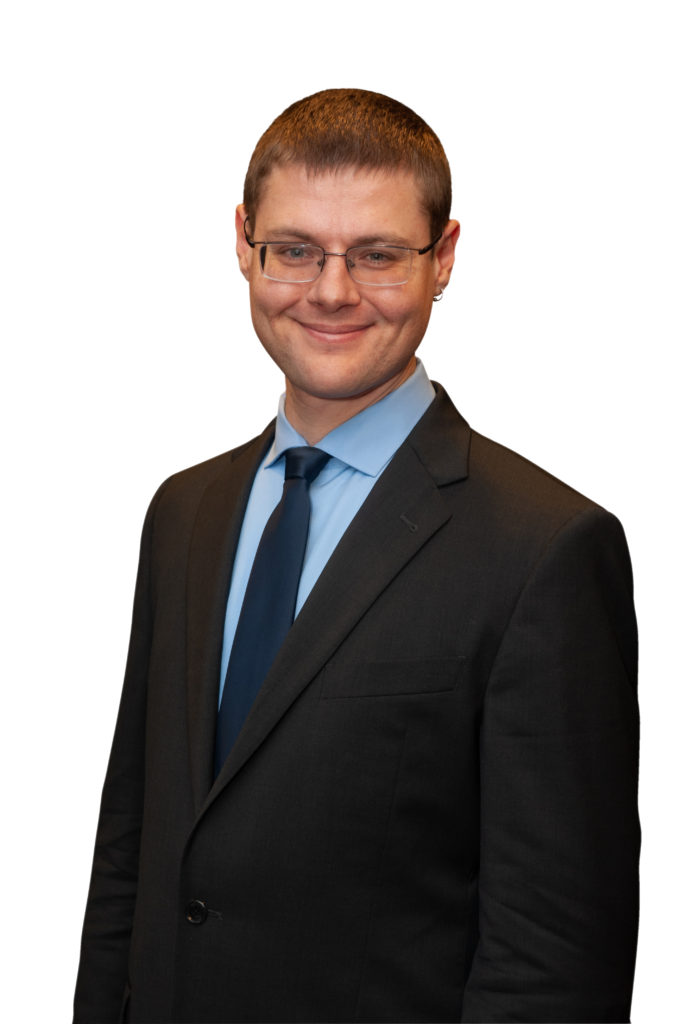
About Dr. Gleb Tsipursky
Known as the Disaster Avoidance Expert, Dr. Gleb Tsipursky is on a mission to protect leaders from dangerous judgment errors known as cognitive biases, which devastate bottom lines and bring down high-flying careers. His expertise and passion is developing the most effective and profitable decision-making strategies, based on pragmatic business experience and cutting-edge behavioral economics and cognitive neuroscience, to empower leaders to avoid business disasters and maximize their bottom lines. You can learn more here https://disasteravoidanceexperts.com/glebtsipursky/ The bestselling author of several books, Dr. Tsipursky is best known for his national bestseller on avoiding disasters and achieving success in business and other life areas, The Truth Seeker’s Handbook: A Science-Based Guide. His next book, Never Go With Your Gut: How Pioneering Leaders Make the Best Decisions and Avoid Business Disasters, is forthcoming with Career Press in November 2019. It’s the first book to focus on cognitive biases in business leadership and reveal how leaders can overcome these dangerous judgment errors effectively. After that he’s publishing The Blindspots Between Us: How to Overcome Unconscious Cognitive Bias and Build Better Relationships with New Harbinger in April 2020, the first book to focus on cognitive biases in professional and personal relationships and illustrate how we can defeat these dangerous judgment errors in our relationships. See more information here https://disasteravoidanceexperts.com/author-page/ Dr. Tsipursky’s cutting-edge thought leadership was featured in over 400 articles he published and over 350 interviews he gave to popular venues that include Fast Company, CBS News, Time, Scientific American, Psychology Today, The Conversation, Business Insider, Government Executive, The Chronicle of Philanthropy, Inc. Magazine, and many others, as you can see here https://disasteravoidanceexperts.com/media/ Dr. Tsipursky's expertise comes from over 20 years of consulting, coaching, speaking, and training for businesses and nonprofits. He serves as the CEO of the boutique consulting, coaching, and training firm Disaster Avoidance Experts, which uses a proprietary methodology based on groundbreaking research to help leaders and organizations maximize their bottom lines by addressing potential threats, seizing unexpected opportunities, and resolving persistent personnel problems. His clients include Aflac, Balance Employment Assistance Provider, Edison Welding Institute, Fifth Third Bank, Honda, IBM, International Coaches Federation, Ohio Hospitals Association, National Association of Women Business Owners, Sentinel Real Estate, The Society for Human Resource Management, RealManage, The Columbus Foundation, Vistage, Wells Fargo, the World Wildlife Fund, and over a hundred others who achieve outstanding client results. You can learn more about that here: https://disasteravoidanceexperts.com/about Dr. Tsipursky also has a strong research and teaching background in behavioral economics and cognitive neuroscience with over 15 years in academia, including 7 years as a professor at the Ohio State University and before that a Fellow at the University of North Carolina-Chapel Hill. His dozens of peer-reviewed academic publications include journals such as Behavior and Social Issues, Journal of Social and Political Psychology, and International Journal of Existential Psychology and Psychotherapy. His civic service includes over 4 years as the Chair of the Board of Directors of Intentional Insights, an educational nonprofit advocating for research-based decision-making in all life areas. He also co-founded the Pro-Truth Pledge, a civic project to promote truthfulness and integrity for individual professionals and leaders in the same way that the Better Business Bureau serves as a commitment for businesses. He serves on the Advisory Board of Canonical Debate Lab and Planet Purpose, and is on the Editorial Board of the peer-reviewed journal Behavior and Social Issues. A highly in-demand international speaker, Dr. Tsipursky has over two decades of professional speaking experience across North America, Europe, and Australia. He gets top marks from audiences for his highly facilitative, interactive, and humor-filled speaking style and the way he thoroughly customizes speeches for diverse audiences. Meeting planners describe Dr. Tsipursky as "very relatable," as "a snap to work with," and as someone who "does everything that you would want a speaker to do." Drawing on best practices in adult learning, his programs address the wide spectrum of diverse learning styles, as attested by enthusiastic client testimonials and references. He regularly shares the stage with prominent leaders, for example recently speaking on a roundtable panel with the President of the European Commission Ursula von der Leyen, Secretary General of the International Federation of Red Cross and Red Crescent Societies Elhadj As Sy, Chancellor of Austria Brigitte Bierlein, CEO of Penguin Random House Markus Dohle, and billionaire philanthropist and Chair of the Bertelsmann Management Company Liz Mohn. You can learn more about his speaking and see videos here: https://disasteravoidanceexperts.com/speaking/ Dr. Tsipursky earned his PhD in the History of Behavioral Science at the University of North Carolina at Chapel Hill in 2011, his M.A. at Harvard University in 2004, and his B.A. at New York University in 2002. He lives in and travels from Columbus, OH. In his free time, he enjoys tennis, hiking, and playing with his two cats, and most importantly, he makes sure to spend abundant quality time with his wife to avoid disasters in his personal life. Learn more about him at https://DisasterAvoidanceExperts.com/GlebTsipursky, contact him at Gleb[at]DisasterAvoidanceExperts[dot]com, follow him on Instagram @dr_gleb_tsipursky and Twitter @gleb_tsipursky. Most importantly, help yourself avoid disasters and maximize success, and get a free copy of the “Assessment on Dangerous Judgment Errors in the Workplace,” by signing up for his free Wise Decision Maker Course at https:// DisasterAvoidanceExperts.com/Subscribe You can read more about the author here.
Previous Post

September 29, 2020
New Survey Gives Insight On Your Shopping Choices
Browse Our Archives
Select a Category Alternative Facts Behavioral Science Cognitive Bias Debates Deception Decision Making Donald Trump Effective giving Fake news Leadership Meaning and Purpose Personal Politics Post-Truth Pro-Truth Pro-Truth Pledge Psychology Rationality Secular Spirituality Uncategorized Wise decision Making
Select a Month October 2026 September 2026 August 2026 July 2026 June 2026 May 2026 April 2026 March 2026 February 2026 January 2026 December 2025 November 2025 October 2025 August 2025 July 2025 June 2025 May 2025 April 2025 March 2025 February 2025 January 2025 December 2024 November 2024 October 2024 September 2024 June 2024 May 2024 April 2024 March 2024 February 2024 January 2024 December 2023 November 2023 October 2023 September 2023 August 2023 July 2023 June 2023 May 2023 April 2023 March 2023 January 2023 December 2022 October 2022 September 2022 August 2022 July 2022 June 2022 May 2022 April 2022 March 2022 January 2022 December 2021 November 2021 October 2021 September 2021 August 2021 July 2021 June 2021 May 2021 April 2021 March 2021 February 2021 January 2021 December 2020 November 2020 October 2020 September 2020 August 2020 July 2020 June 2020 May 2020 April 2020 March 2020 February 2020 January 2020 December 2019 November 2019 October 2019 September 2019 September 2018 August 2018 July 2018 January 2018 December 2017 November 2017 October 2017 September 2017 August 2017 July 2017 June 2017 May 2017 April 2017 March 2017
Follow Us!
TAKE THE
Religious Wisdom Quiz
True or False: Nehemiah rebuilt the walls of Jerusalem in 52 days.
Select your answer to see how you score.
FALSE TRUE
Related posts from Intentional Insights

The Real AI Story Is Adoption Without Trust

AI Job Diffusion Is Outrunning Every Tech Wave...

Why Most Organizations Are Getting AI Adoption Wrong

AI Adoption Looks Widespread Until You Measure It
TRENDING AT PATHEOS Nonreligious

When Halloween Unmasks Married Hearts
Written by Dr. David K. Ewen from Eternal Truth Bible College Behind...

Aristotle. He’s been called the father of logic, the father of the...

Methodist Central Hall and Westminster Abbey
Situated on the same square is Methodist Central Hall and Westminster Abbey. ...

57th Dove Awards Honor Dolly Parton, Crown New...
On gospel music’s biggest night, the 57th annual GMA Dove Awards honored...

The First Eucharistic Controversy: Christ’s Real Presence
For Catholics, the Eucharist is the source and summit of the Christian...

What a Stop Sign Can Teach Us About...
How to Make a Decision When You Can't Hear God Main point:...
view all Nonreligious blogs
Ad-Free & Subscriber Log-In Subscription Support
- About Us
- 2026 Calendar
- Videos
- Podcasts
- Library of World Religions
- Faith In Media Tracker
- Advertise With Us
- Write for Us
- Privacy Policy
- Terms of Service
- Do Not Sell My Data
- Contact Us
- Radiant Digital
- Manage Newsletter Subscriptions
- Unsubscribe From Notifications
- Sitemap
Copyright 2008-2026, Patheos. All rights reserved.
Subscription Support Ad-Free & Subscriber Log-In
Follow Patheos