
BuddhistCatholicContemplativeEvangelicalGeneral ChristianHinduJewishLatter-day SaintMuslimNew VisionsProgressive Christian
Beliefs
- Buddhist
- Catholic
- Contemplative
- Evangelical
- General Christian
- Hindu
- Jewish
- Latter-day Saint
- More Voices
- Muslim
- New Visions
- Pagan
- Progressive Christian
Topics
- Religion News
- Food and Religion
- Sports and Religion
- Religious Art
- Religious Music and Entertainment
- Religious Events
- History and Religion
- Style and Religion
- Politics and Religion
- Women in Religion
- Recreation Outdoors and Religion
- Business Finance and Religion
- Careers Workplace and Religion
- Education and Religion
- Family Parenting and Religion
- Health Fitness and Religion
- Home and Religion
- Relationships and Religion
- Technology and Religion
- Travel and Religion
Columnists
- Buddhist Columnists
- Business Finance and Religion Columnists
- Careers Workplace and Religion Columnists
- Catholic Columnists
- Contemplative Columnists
- Education and Religion Columnists
- Evangelists Columnists
- Family Parenting and Religion Columnists
- General Christian Columnists
- Health Fitness and Religion Columnists
- Hindu Columnists
- History and Religion Columnists
- Home and Religion Columnists
- Jewish Columnists
- More Voices Columnists
- Latter Day Columnists
- Muslim Columnists
- New Visions Columnists
- Nonreligious Columnists
- Pagan Columnists
- Politics and Religion Columnists
- Progressive Columnists
- Recreation Outdoors and Religion Columnists
- Relationships and Religion Columnists
- Religion News Columnists
- Religious Art Columnists
- Religious Events Columnists
- Religious Music and Entertainment Columnists
- Sports and Religion Columnists
- Style and Religion Columnists
- Technology and Religion Columnists
- Travel and Religion Columnists
- Women in Religion Columnists
Resource Library
- 2026 Calendar
- Library of World Religions
- The 100 Most Holy Places on Earth
- Patheos Answers
- Podcasts
- Videos
- Faith Leaders Database
- Anglican Episcopalian
- Bahai
- Baptist
- Buddhism
- Christianity
- Confucianism
- Eastern Orthodoxy
- Hinduism
- Holiness and Pentecostal
- ISKCON
- Islam
- Judaism
- Lutheran
- Methodist
- The Church of Jesus Christ of Latter-day Saints
- New Age
- Paganism
- Presbytarian and Reformed
- Protestantism
- Religion Behind the Scenes
- Roman Catholic
- Scientology
- Shia Islam
- Sikhism
- Sufism
- Sunni Islam
- Taoism
- Zen
- See all religions
Research Tools
 Ad-Free & Subscriber Log-In Subscription Support
Ad-Free & Subscriber Log-In Subscription Support
Follow Patheos 

- Trending:
- Forgiveness
- |
- Marriage
- |
- Consciousness
- |
- Death Penalty
- |
- Election
- |
- Halloween

- Home
- Nonreligious
- Careers, Workplace and Religion
- Celebrations, Rituals, and Constructing Meaning in Life
Celebrations, Rituals, and Constructing Meaning in Life
Last updated on: November 8, 2017 at 9:28 am by Gleb Tsipursky
Celebrations, Rituals, and Constructing Meaning in Life 2017-11-08T09:28:28-04:00 Gleb Tsipursky
Patheos Explore the world's faith through different perspectives on religion and spirituality! Patheos has the views of the prevalent religions and spiritualities of the world.
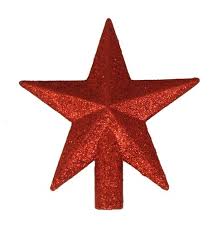
My family emigrated from the former Soviet Union to the US when I was 10, and our cultural heritage of ritual celebrations comes from that background. The most important Soviet celebration was New Year’s Eve, a combination of Thanksgiving and Christmas rolled into one. A few hours before midnight, close family and friends gathered together. There was always a big New Year’s tree with a bright red star on top, and a huge dinner table piled with delicious food. We socialized with each other, toasted to the old year, and had a great time. The last half hour before midnight was a time of rising anticipation and excitement, which built up until the last minute of the old year. Then, the conversations quieted down and everyone started counting off the seconds out loud – 60, 59, 58. The counting grew louder as the new year approached – 10, 9, 8 – until everyone was shouting – 3, 2, 1, Happy New Year! We popped the champagne bottles and ate delicious Slavic candies. It was a great time, and one that was very meaningful to me.
When I moved out of my parents’ place, I also left behind our family ritual traditions. The one I missed most was New Year’s Eve. So did my wife and fellow Co-founder, Vice President, and Chief Empowerment Officer of Intentional Insights, Agnes Vishnevkin, whose family also emigrated from the former Soviet Union when she was 12. Thus, when we finally established a permanent household in Columbus, OH, in 2012 we decided to try to create our own family ritual for New Year’s Eve. We thought of what we felt as most important from our cultural heritage of celebrating New Year’s Eve, and concluded that what we really wanted was to be with people to whom we felt close. Therefore, we decided to throw a party at our place for the new circle of friends we made in Columbus. We also incorporated some elements from our Slavic heritage, such as Soviet champagne and candies. We even created a fun game, where party participants competed for who could popular the champagne cork the furthest up the staircase at our place. Although that game led to some wall and ceiling damage, the entertainment value was worth it.
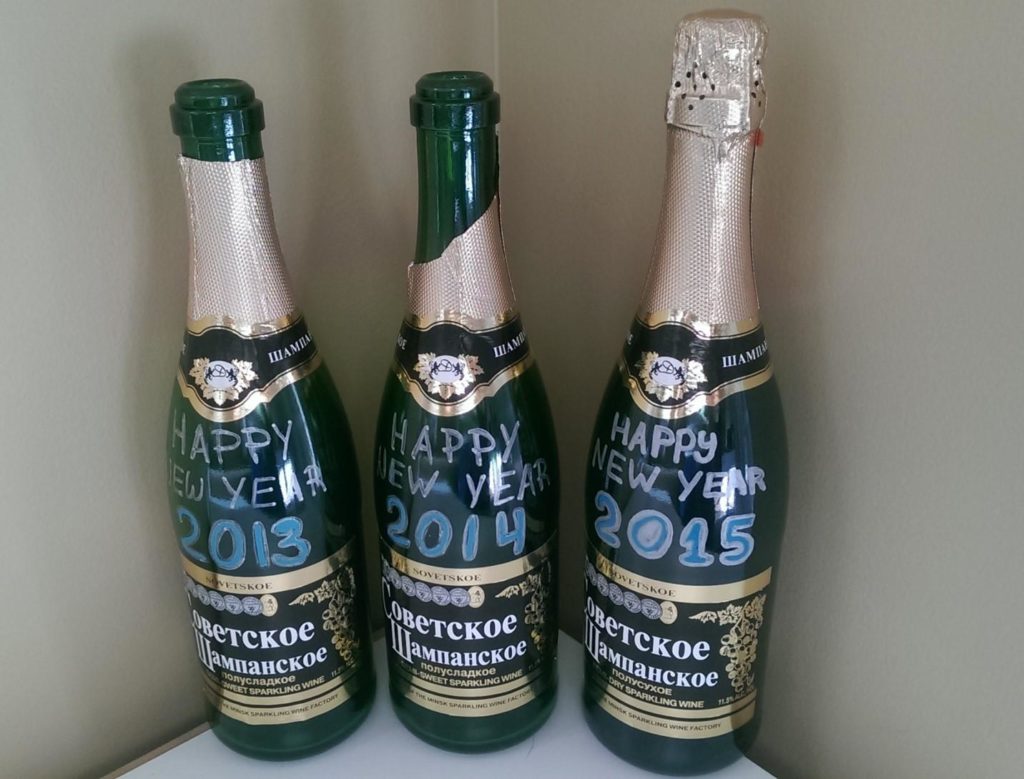
Photo from the personal archive of Gleb Tsipursky
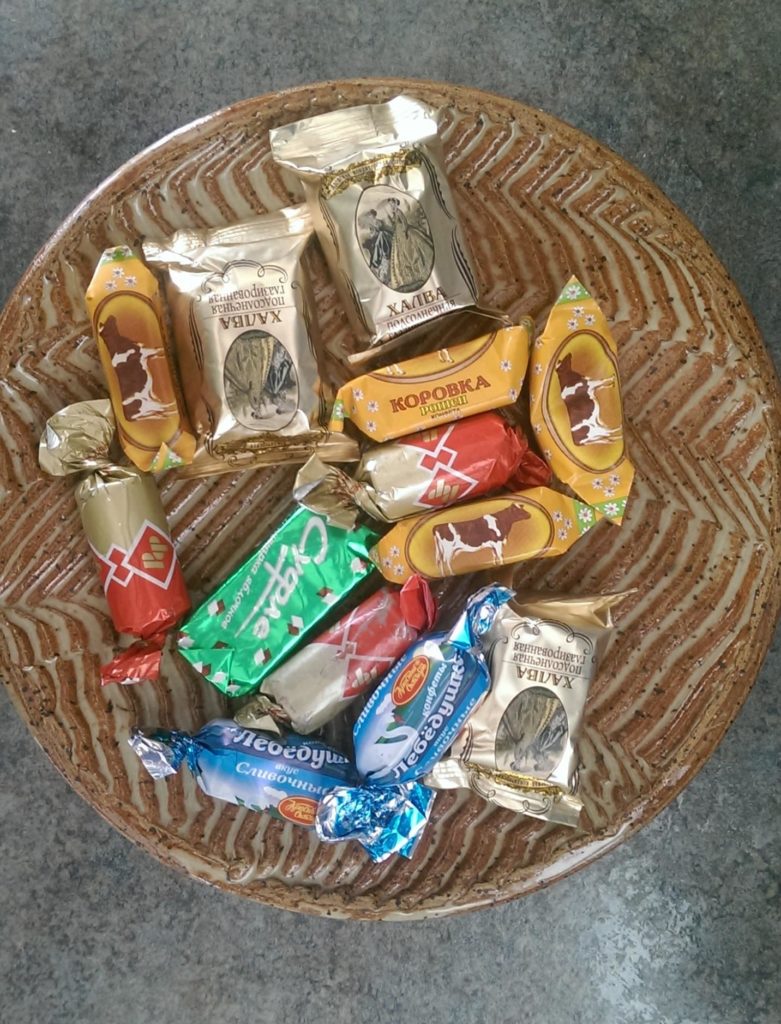
Photo from the personal archive of Gleb Tsipursky
This constructed ritual celebration carried a great deal of meaning for my wife and I. It speaks to the broader relevance of rituals and celebrations for gaining a sense of meaning and purpose. Research on rituals shows their importance in maintaining and transmitting cultural values, including what a specific culture perceives as the key elements of meaning and purpose. Scholars also highlight how rituals serve as a vital contributor to social bonding and community belonging, a key element of gaining a sense of meaning and purpose.
Religion has been one of the most common sources of ritual experiences, especially in the United States. This helps explain why religion is so deeply associated with meaning and purpose in the US. Yet religion does not have to be the main source of rituals, by far. My research on the Soviet Union, as this brief Youtube video indicates, describes how the government reconstructed traditional ritual celebrations along new lines after the 1917 Revolution. These rituals both served to help people enjoy themselves and find meaning and purpose, and also to further the government’s political agenda. Research by others on the Soviet Union and other authoritarian countries supports my findings.
Reconstruction of ritual traditions happened in capitalist states as well. For example, in the United States, the capitalist marketplace has been gradually commercializing traditional religious holidays such as Valentine’s Day and Christmas. Consumerism has increasingly displacing the religious rituals involved, and Americans have grown more and more prone to celebrating Christmas and other holidays in a secularized fashion.
As you see, rituals are not fixed – they are constructed and reconstructed over time, to fit people’s needs. So why not take matters into your own hands and gain greater agency by choosing rituals that help you achieve your own goals, including attaining a deeper sense of meaning and purpose? Think about what are the most meaningful elements of rituals for you. Then, consider constructing your own ritual tradition for yourself and others close to you, as Agnes and I did with New Year’s Eve. In another example from my personal life, my closest friend circle constructed our own ritual celebration of the Winter Solstice, called SolstApocalypse since we first celebrated it in 2012 when there was a widespread concern over Mayan Calendar’s prediction of an apocalypse. At SolstApocalypse, we affirm and celebrate each others accomplishments and growth over this past year.
Besides constructing your own rituals, you can also choose to join a community that has ritual celebrations that meet your personal goals. Currently, religious communities provide the large majority of ritual celebrations, but secular folks have more and more opportunities in local secular communities. Right here in Columbus, OH, the Humanist Community of Central Ohio offers secular celebrations of the Summer Solstice, the Winter Solstice, and other secular holidays. The First Unitarian Universalist Church of Columbus provides a welcoming space for both believers and non-believers to celebrate secularized rituals from a variety of faith traditions. Over the last few years, secular folks have been organizing major national events, most prominently the New York Winter Solstice, but also events such as Darwin Day and a whole host of other secular holidays with ritual elements. If your own local secular community does not currently host such holidays, I would encourage you to show initiative and agency to organize such celebrations, on the basis of resources provided in the links given above.
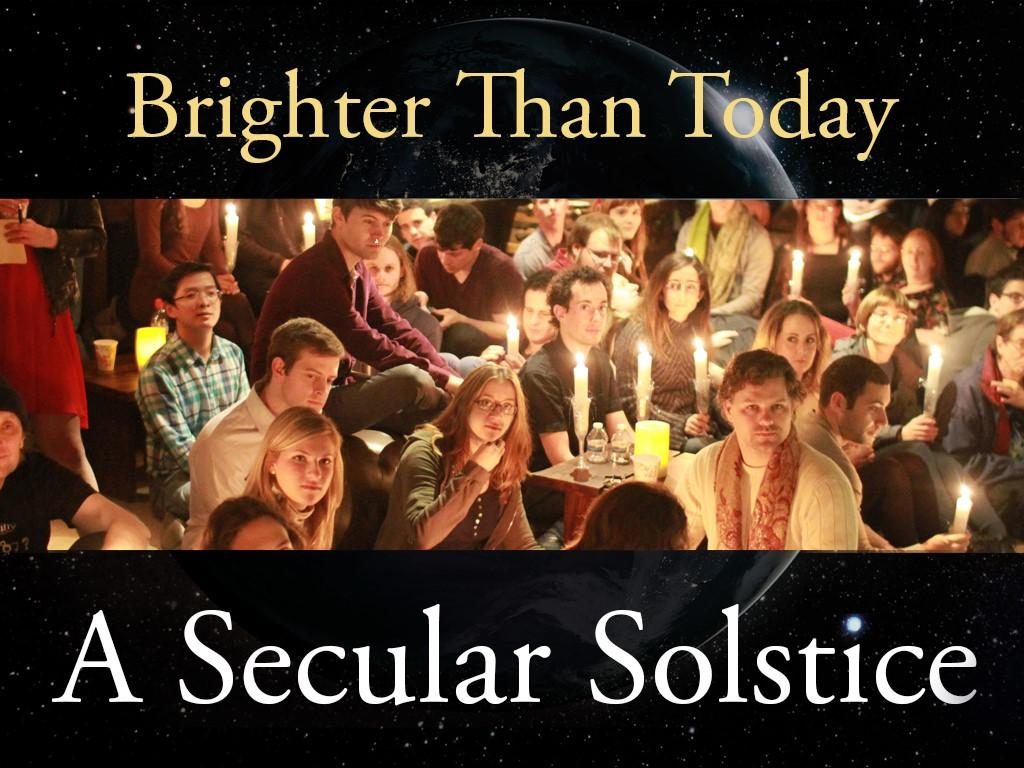
Image credit of Adam Lee’s “Daylight Activism” blog post
- What kind of benefits, if any, did you get from rituals in your own background and cultural heritage?
- Do you think you can gain a deeper sense of meaning and purpose from reassessing and revising your current rituals and celebrations?
- If so, what steps can you take to achieve your goals? How can you engage your social circle and local communities in this endeavor?
P.S. For additional resources, check out this workbook with exercises on finding meaning and purpose using science-based strategies; this free science-based web app to evaluate your current sense of meaning and purpose; this free online class on finding meaning and purpose using science; and the wide variety of other resources on meaning and purpose available at Intentional Insights.
__________________________________________________________________
Connect with Dr. Gleb Tsipursky on Twitter, on Facebook, and on LinkedIn, and follow his RSS feed and newsletter.

Next Post

November 16, 2017 Roy Moore's Systemic Danger to Our Democracy
Browse Our Archives
Select a Category Alternative Facts Behavioral Science Cognitive Bias Debates Deception Decision Making Donald Trump Effective giving Fake news Leadership Meaning and Purpose Personal Politics Post-Truth Pro-Truth Pro-Truth Pledge Psychology Rationality Secular Spirituality Uncategorized Wise decision Making
Select a Month October 2026 September 2026 August 2026 July 2026 June 2026 May 2026 April 2026 March 2026 February 2026 January 2026 December 2025 November 2025 October 2025 August 2025 July 2025 June 2025 May 2025 April 2025 March 2025 February 2025 January 2025 December 2024 November 2024 October 2024 September 2024 June 2024 May 2024 April 2024 March 2024 February 2024 January 2024 December 2023 November 2023 October 2023 September 2023 August 2023 July 2023 June 2023 May 2023 April 2023 March 2023 January 2023 December 2022 October 2022 September 2022 August 2022 July 2022 June 2022 May 2022 April 2022 March 2022 January 2022 December 2021 November 2021 October 2021 September 2021 August 2021 July 2021 June 2021 May 2021 April 2021 March 2021 February 2021 January 2021 December 2020 November 2020 October 2020 September 2020 August 2020 July 2020 June 2020 May 2020 April 2020 March 2020 February 2020 January 2020 December 2019 November 2019 October 2019 September 2019 September 2018 August 2018 July 2018 January 2018 December 2017 November 2017 October 2017 September 2017 August 2017 July 2017 June 2017 May 2017 April 2017 March 2017
Follow Us!
TAKE THE
Religious Wisdom Quiz
What does James say shows someone their faith by?
Select your answer to see how you score.
Their words Their worship Their knowledge Their deeds (works)
Related posts from Intentional Insights

Hybrid Work Policies: The Future Of The Modern...
The Pro-Truth Pledge prompts truthful behavior, according to...

How to Talk to a Science Denier without...
Which Politicians Should We Trust in the November...
TRENDING AT PATHEOS Nonreligious

Letters on Living the Faith by C.S. Lewis
Most of us met C.S. Lewis as a public intellectual. Mere Christianity....

When Halloween Unmasks Married Hearts
Written by Dr. David K. Ewen from Eternal Truth Bible College Behind...

Aristotle. He’s been called the father of logic, the father of the...

Methodist Central Hall and Westminster Abbey
Situated on the same square is Methodist Central Hall and Westminster Abbey. ...

57th Dove Awards Honor Dolly Parton, Crown New...
On gospel music’s biggest night, the 57th annual GMA Dove Awards honored...

The First Eucharistic Controversy: Christ’s Real Presence
For Catholics, the Eucharist is the source and summit of the Christian...
view all Nonreligious blogs
Ad-Free & Subscriber Log-In Subscription Support
- About Us
- 2026 Calendar
- Videos
- Podcasts
- Library of World Religions
- Faith In Media Tracker
- Advertise With Us
- Write for Us
- Privacy Policy
- Terms of Service
- Do Not Sell My Data
- Contact Us
- Radiant Digital
- Manage Newsletter Subscriptions
- Unsubscribe From Notifications
- Sitemap
Copyright 2008-2026, Patheos. All rights reserved.
Subscription Support Ad-Free & Subscriber Log-In
Follow Patheos