
BuddhistCatholicContemplativeEvangelicalGeneral ChristianHinduJewishLatter-day SaintMuslimNew VisionsProgressive Christian
Beliefs
- Buddhist
- Catholic
- Contemplative
- Evangelical
- General Christian
- Hindu
- Jewish
- Latter-day Saint
- More Voices
- Muslim
- New Visions
- Pagan
- Progressive Christian
Topics
- Religion News
- Food and Religion
- Sports and Religion
- Religious Art
- Religious Music and Entertainment
- Religious Events
- History and Religion
- Style and Religion
- Politics and Religion
- Women in Religion
- Recreation Outdoors and Religion
- Business Finance and Religion
- Careers Workplace and Religion
- Education and Religion
- Family Parenting and Religion
- Health Fitness and Religion
- Home and Religion
- Relationships and Religion
- Technology and Religion
- Travel and Religion
Columnists
- Buddhist Columnists
- Business Finance and Religion Columnists
- Careers Workplace and Religion Columnists
- Catholic Columnists
- Contemplative Columnists
- Education and Religion Columnists
- Evangelists Columnists
- Family Parenting and Religion Columnists
- General Christian Columnists
- Health Fitness and Religion Columnists
- Hindu Columnists
- History and Religion Columnists
- Home and Religion Columnists
- Jewish Columnists
- More Voices Columnists
- Latter Day Columnists
- Muslim Columnists
- New Visions Columnists
- Nonreligious Columnists
- Pagan Columnists
- Politics and Religion Columnists
- Progressive Columnists
- Recreation Outdoors and Religion Columnists
- Relationships and Religion Columnists
- Religion News Columnists
- Religious Art Columnists
- Religious Events Columnists
- Religious Music and Entertainment Columnists
- Sports and Religion Columnists
- Style and Religion Columnists
- Technology and Religion Columnists
- Travel and Religion Columnists
- Women in Religion Columnists
Resource Library
- 2026 Calendar
- Library of World Religions
- The 100 Most Holy Places on Earth
- Patheos Answers
- Podcasts
- Videos
- Faith Leaders Database
- Anglican Episcopalian
- Bahai
- Baptist
- Buddhism
- Christianity
- Confucianism
- Eastern Orthodoxy
- Hinduism
- Holiness and Pentecostal
- ISKCON
- Islam
- Judaism
- Lutheran
- Methodist
- The Church of Jesus Christ of Latter-day Saints
- New Age
- Paganism
- Presbytarian and Reformed
- Protestantism
- Religion Behind the Scenes
- Roman Catholic
- Scientology
- Shia Islam
- Sikhism
- Sufism
- Sunni Islam
- Taoism
- Zen
- See all religions
Research Tools
 Ad-Free & Subscriber Log-In Subscription Support
Ad-Free & Subscriber Log-In Subscription Support
Follow Patheos 

- Trending:
- Forgiveness
- |
- Marriage
- |
- Consciousness
- |
- Death Penalty
- |
- Election
- |
- Halloween

- Home
- Nonreligious
- Careers, Workplace and Religion
- Which Politicians Should We Trust in the November 7 Election: The Pro-Truth Pledge
Which Politicians Should We Trust in the November 7 Election: The Pro-Truth Pledge
Last updated on: November 2, 2017 at 7:40 am by Gleb Tsipursky
Which Politicians Should We Trust in the November 7 Election: The Pro-Truth Pledge 2017-11-02T07:40:11-04:00 Gleb Tsipursky
Patheos Explore the world's faith through different perspectives on religion and spirituality! Patheos has the views of the prevalent religions and spiritualities of the world.
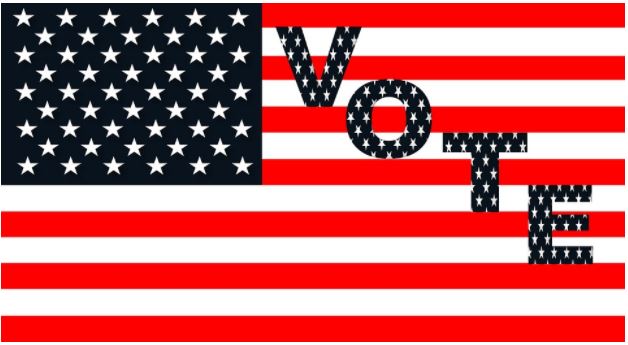
Caption: Image of US flag with “Vote” written on it (ZIPNON/Pixabay)
__________________________________________________________________
In these dark days of “fake news” and “alternative facts,” it’s hard to trust any politicians. How can we tell apart the ones who spout bald-faced lies from those who actually tell the truth, the whole truth, and nothing but the truth? Fortunately, we now have a science-based tool for telling which politicians are comfortable committing to the truth, and which are not: the Pro-Truth Pledge.
Let’s get the myths out of the way: we can’t trust our gut on who is telling the truth. Extensive research in psychology shows that our minds tend to search for and interpret information in ways that align with our previous beliefs, a phenomenon known as “confirmation bias.” In other words, we’ll tend to believe whoever tells us what we want to hear, whether or not what they’re saying is true. No wonder that a study showed that most Americans who see fake news believe it.
Traditionally, mainstream media had the role of separating the wheat of truth from the chaff of deception. However, trust in the mainstream media is at an all-time low, with a majority of citizens across the political spectrum believing it publishes a lot of fake news. Thus, politicians who want to cover up their corrupt and unethical activities are now using the label of “fake news” to attack reporters trying to uncover their misdoings. As a result, mainstream media are not in a good position to separate the liars from the truth-tellers.
To address this problem, a group of scientists and concerned citizens came up with a way to get politicians to commit to the truth: the Pro-Truth Pledge at ProTruthPledge.org. The pledge asks signers to commit to 12 behaviors that research shows correlate with truthfulness. This includes fact-checking before sharing information, citing one’s sources, and retracting incorrect statements.
Pledge-takers include private citizens who want to promote truthfulness in our society, and public figures who want to do the same and also commit themselves to being held accountable for truthful behavior. The pledge works based on crowdsourcing. Private citizens who signed the pledge evaluate the statements of public figures who signed the pledge, holding the latter accountable for any misinformation. The mechanism works: a number of politicians have already retracted or clarified statements they have made. This same accountability mechanism rewards public figures who take and stick to the pledge with a positive reputation boost. Since they are being constantly evaluated, we know we can place more trust in the truthfulness of their statements.
This pledge is a tool that is grassroots-based and does not come from any traditional institution: it relies on people who care about the truth to make it work. It may sound like a pipe dream, but so did Wikipedia when it got started. If people can make Wikipedia work through crowd-sourcing factual information, we can make the Pro-Truth Pledge work as well.
The pledge has a meaningful impact only when at least some candidates for office take it, and having candidates take it depends on having private citizens take it and promote it. Over 250 citizens in the city where I live – Columbus, OH – took the pledge, and called on their elected officials to do so. By now, about 15 Columbus area politicians have taken the pledge. For example, in the November 7 Columbus City Council election, two out of six candidates (Jasmine Ayres and Will Petrik) and have taken the pledge. So did three out of six candidates for the Columbus Board of Education (Erin Upchurch, Amy Harkins, and Abby Vaile).
Why have they taken the pledge? According to Petrik: “I think we need to be honest about our challenges in order to build a better future. That’s a commitment every public servant should be ready to make.” In turn, Ayres said: “I think politicians should be accountable for the claims they make. City Council members should be giving weekly press conferences, and the city’s website should be more transparent.”
All of these candidates are endorsed by Yes We Can Columbus, a political organization that backs progressive Democrats for local Columbus elections. The Yes We Can leadership team has committed to the Pro-Truth Pledge for this and future elections. Colleen Dempsey from the communications team said “We know that it is difficult to follow local elections and to find accurate information. We hope to grow our grassroots base by staying authentic, transparent and honest. We know politics has become a dirty word for many people, and we want to change that.”
The other candidates for City Council and Board of Education had a number of opportunities to take the pledge through being personally approached by volunteers for the pledge project. They were shown the signatures and names of hundreds of their constituents who wanted them to sign the pledge. They also learned that a number of other candidates for the same office signed the pledge. Yet, these other candidates have chosen to avoid taking the pledge. Voters in this election will have a real choice between candidates who have committed themselves to being accountable for truthful behavior, and those who have not.
While the pledge originated in Columbus, it has by now spread throughout the US and even abroad. Over 150 public figures have taken the pledge, including globally-known thinkers such as Peter Singer, Jonathan Haidt, and Steven Pinker who support this movement and are comfortable being held accountable to the facts. Over 50 politicians from the Republican, Democratic, and minor political parties have taken the pledge in more than a dozen US states. A number of them are on the ballot for the November 7 election, including in Ohio outside of Columbus, Kelly Cruse, Tristan Rader, and Joe Begeny; in Washington State, Randy Grein, Allen Miller, and Chelsea Rusted; in Utah, Sophia Hawes-Tingey, Adam Thompson, Emily Hase, Tali Bruce, Hyrum Matthews, and Brendan Phillips. There are others as well, and thus on November 7 a number of citizens across the US will have a chance to identify and reward truth-tellers.
You can make a difference by taking the pledge yourself, and calling on your elected representatives and candidates for office to take it as well. They can still do so before the November 7 election, giving you a chance to separate the wheat from the chaff before you decide for whom to vote and hold them accountable for sticking to the facts. If you can take it, why can’t they?
P.S. To learn more about truth-seeking strategies in politics and other life areas, check out the article author’s forthcoming book, The Truth-Seeker’s Handbook: A Science-Based Guide.
__________________________________________________________________
Connect with Dr. Gleb Tsipursky on Twitter, on Facebook, and on LinkedIn, and follow his RSS feed and newsletter.
Next Post

November 8, 2017 Celebrations, Rituals, and Constructing Meaning in Life
Browse Our Archives
Select a Category Alternative Facts Behavioral Science Cognitive Bias Debates Deception Decision Making Donald Trump Effective giving Fake news Leadership Meaning and Purpose Personal Politics Post-Truth Pro-Truth Pro-Truth Pledge Psychology Rationality Secular Spirituality Uncategorized Wise decision Making
Select a Month October 2026 September 2026 August 2026 July 2026 June 2026 May 2026 April 2026 March 2026 February 2026 January 2026 December 2025 November 2025 October 2025 August 2025 July 2025 June 2025 May 2025 April 2025 March 2025 February 2025 January 2025 December 2024 November 2024 October 2024 September 2024 June 2024 May 2024 April 2024 March 2024 February 2024 January 2024 December 2023 November 2023 October 2023 September 2023 August 2023 July 2023 June 2023 May 2023 April 2023 March 2023 January 2023 December 2022 October 2022 September 2022 August 2022 July 2022 June 2022 May 2022 April 2022 March 2022 January 2022 December 2021 November 2021 October 2021 September 2021 August 2021 July 2021 June 2021 May 2021 April 2021 March 2021 February 2021 January 2021 December 2020 November 2020 October 2020 September 2020 August 2020 July 2020 June 2020 May 2020 April 2020 March 2020 February 2020 January 2020 December 2019 November 2019 October 2019 September 2019 September 2018 August 2018 July 2018 January 2018 December 2017 November 2017 October 2017 September 2017 August 2017 July 2017 June 2017 May 2017 April 2017 March 2017
Follow Us!
TAKE THE
Religious Wisdom Quiz
I'm a number that marks the beast, feared by many throughout history. Triple digits, all the same. What number am I?
Select your answer to see how you score.
999 777 333 666
Related posts from Intentional Insights

How Generative AI is Revolutionizing Marketing Efficiency

Navigating the Technology Transformation Through Brain Training

Discovering the Formula for Hybrid Work

Saving Your Relationships From the COVID-19 Coronavirus Pandemic
TRENDING AT PATHEOS Nonreligious

Letters on Living the Faith by C.S. Lewis
Most of us met C.S. Lewis as a public intellectual. Mere Christianity....

When Halloween Unmasks Married Hearts
Written by Dr. David K. Ewen from Eternal Truth Bible College Behind...

Aristotle. He’s been called the father of logic, the father of the...

Methodist Central Hall and Westminster Abbey
Situated on the same square is Methodist Central Hall and Westminster Abbey. ...

57th Dove Awards Honor Dolly Parton, Crown New...
On gospel music’s biggest night, the 57th annual GMA Dove Awards honored...

The First Eucharistic Controversy: Christ’s Real Presence
For Catholics, the Eucharist is the source and summit of the Christian...
view all Nonreligious blogs
Ad-Free & Subscriber Log-In Subscription Support
- About Us
- 2026 Calendar
- Videos
- Podcasts
- Library of World Religions
- Faith In Media Tracker
- Advertise With Us
- Write for Us
- Privacy Policy
- Terms of Service
- Do Not Sell My Data
- Contact Us
- Radiant Digital
- Manage Newsletter Subscriptions
- Unsubscribe From Notifications
- Sitemap
Copyright 2008-2026, Patheos. All rights reserved.
Subscription Support Ad-Free & Subscriber Log-In
Follow Patheos