
BuddhistCatholicContemplativeEvangelicalGeneral ChristianHinduJewishLatter-day SaintMuslimNew VisionsProgressive Christian
Beliefs
- Buddhist
- Catholic
- Contemplative
- Evangelical
- General Christian
- Hindu
- Jewish
- Latter-day Saint
- More Voices
- Muslim
- New Visions
- Pagan
- Progressive Christian
Topics
- Religion News
- Food and Religion
- Sports and Religion
- Religious Art
- Religious Music and Entertainment
- Religious Events
- History and Religion
- Style and Religion
- Politics and Religion
- Women in Religion
- Recreation Outdoors and Religion
- Business Finance and Religion
- Careers Workplace and Religion
- Education and Religion
- Family Parenting and Religion
- Health Fitness and Religion
- Home and Religion
- Relationships and Religion
- Technology and Religion
- Travel and Religion
Columnists
- Buddhist Columnists
- Business Finance and Religion Columnists
- Careers Workplace and Religion Columnists
- Catholic Columnists
- Contemplative Columnists
- Education and Religion Columnists
- Evangelists Columnists
- Family Parenting and Religion Columnists
- General Christian Columnists
- Health Fitness and Religion Columnists
- Hindu Columnists
- History and Religion Columnists
- Home and Religion Columnists
- Jewish Columnists
- More Voices Columnists
- Latter Day Columnists
- Muslim Columnists
- New Visions Columnists
- Nonreligious Columnists
- Pagan Columnists
- Politics and Religion Columnists
- Progressive Columnists
- Recreation Outdoors and Religion Columnists
- Relationships and Religion Columnists
- Religion News Columnists
- Religious Art Columnists
- Religious Events Columnists
- Religious Music and Entertainment Columnists
- Sports and Religion Columnists
- Style and Religion Columnists
- Technology and Religion Columnists
- Travel and Religion Columnists
- Women in Religion Columnists
Resource Library
- 2026 Calendar
- Library of World Religions
- The 100 Most Holy Places on Earth
- Patheos Answers
- Podcasts
- Videos
- Faith Leaders Database
- Anglican Episcopalian
- Bahai
- Baptist
- Buddhism
- Christianity
- Confucianism
- Eastern Orthodoxy
- Hinduism
- Holiness and Pentecostal
- ISKCON
- Islam
- Judaism
- Lutheran
- Methodist
- The Church of Jesus Christ of Latter-day Saints
- New Age
- Paganism
- Presbytarian and Reformed
- Protestantism
- Religion Behind the Scenes
- Roman Catholic
- Scientology
- Shia Islam
- Sikhism
- Sufism
- Sunni Islam
- Taoism
- Zen
- See all religions
Research Tools
 Ad-Free & Subscriber Log-In Subscription Support
Ad-Free & Subscriber Log-In Subscription Support
Follow Patheos 

- Trending:
- Forgiveness
- |
- Marriage
- |
- Consciousness
- |
- Death Penalty
- |
- Election
- |
- Halloween

- Home
- History and Religion
- What Is Messianic Poetry? Lessons From David’s Psalms
What Is Messianic Poetry? Lessons From David’s Psalms
Last updated on: October 2, 2026 at 2:57 pm by Tonia Renee Lee
What Is Messianic Poetry? Lessons From David’s Psalms 2026-10-02T14:57:44-05:00 Tonia Renee Lee
Patheos Explore the world's faith through different perspectives on religion and spirituality! Patheos has the views of the prevalent religions and spiritualities of the world.
Messianic Poetry
What is Messianic Poetry? Today, we take a glimpse into the world of Messianic Poetry. What is it? Can it be defined? Dictionary.com defines it in the following way: “Messianic Poetry in the Bible as a poetic passage or song -such as a Messianic Psalm -that uses imagery, emotion, and metaphor to look forward to the coming of a Messiah.”
Expressions of Love
It has been said that Messianic poetry expresses our love for God and love for the Messiah. Messianic poetry can strengthen our relationship with God by combining faith, experiences, and belief. In the Bible, poetry does more than present information. It provides believers words for contemplation, sorrow, repentance, trust, love, praise, and rejoicing.
David’s Poetry
There are many examples of David’s poetry in the Psalms. Key scriptures I found relevant to our discussion include Psalm 2, Psalm 22, and Psalm 110. Messianic poetry has been used to prove Jesus’s divine Kingship, explain His suffering, and confirm His Resurrection. Poetry helps faith become personal for us. Images of God as our comforter and keeper allow us to see His divine care. Poetry becomes a language of prayer.
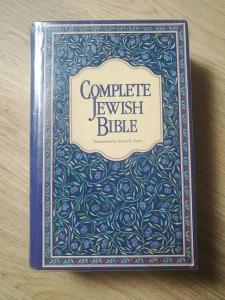
The Complete Jewish Bible/Wikimedia Commons
David and the Psalms
David expresses his love for God in the Psalms. His expressions would certainly be considered poetic. David praises God’s character, reflects on God’s promises, recalls God’s acts, sought God’s presence, and showed obedience to God. We see and hear David rejoice, lament, ask God tough questions, admit guilt, and plead for mercy. David’s psalms show us that love for God can include tears and repentance as well as joy and celebration.
A Personal Touch
Messianic poetry builds trust by connecting present struggles with God’s larger promises. In my poem “My Prayer” which appears in my book “Comforting Thoughts.” I cry out in wonderment to God.
My Prayer
Yeshua,
My Adonai!
My Elohim!
My prayers shall never cease, and your love will never end.
Oh, my Adonai,
Oh, my Elohim.
It is a privilege to call your name.
Without you it is not the same.
Your sheep is calling, and you hear because you know your sheep by name.
Amen.
Hebrew Poetry
What is Messianic poetry? A review of the literature revealed that Hebrew poetry usually does not depend on rhyme in the manner most English poetry does. In contrast, it more often uses parallelism, repetition, imagery, metaphor, contrasts, and voice change. David often used these elements in the Psalms.
Messianic Poetry Revelation
Davidic poetry has an immediate setting in David’s life and a glimpse into Christian interpretation. A Psalm for instance may refer to Israel’s King with language later applied to Christ. David’s suffering while great, is not as great as the suffering Christ endured. Christians see Yeshua’s suffering fulfilled more completely in Him rather than David. David is still important, but his personal prayers are part of a larger biblical story. David’s words unite individual devotion, God’s people worshipping Him, and hope for God’s deliverer.
Observations
Messianic poetry deepens our relationship with God by teaching us to see, feel, think, remember, act, and respond. Mediation on the Messiah is invited. David shows us a loving God who is concerned with the whole person. The whole person’s concept includes mind, body, and spirit.
Contemplation and Summation
Moving forward may we seek a deeper meaning of Yeshua through Messianic poetry. Am I advocating we just read Messianic poetry? Of course not! However, I think it will provide an even more intimate relationship with Yeshua. In closing, I end with another poem from my latest poetry collection entitled “Comforting Thoughts.”
Yeshua, My Savior
Yeshua, my Lord and Savior,
Counting the ways to thank you endlessly…
Your love is priceless!
Why do you love me even in my sin?
Why do you uphold me when I want to give up?
Why do you forgive me again?
Could it be because I am yours?

About Dr. Tonia Renee Lee
Dr. Tonia Renee Lee is President of the Lawton Ft. Sill Graduate School of Theology, located in Lawton, Oklahoma. She has a certificate in Pastoral Counseling from Liberty University, a B.A. from the University of Central Oklahoma, an M.P.A. from the University of Southern California, an Ed.S. from Liberty University, and a D.Min. from the Minnesota Graduate School of Theology. Dr. Lee is the author of Live Inspired, Not Bound! For Such a Time as This, Reflective Quotes: Perspectives of Life, Common Sayings, & Colloquialisms, Tonia: The Best Poems of Tonia Renee Lee, and Solo 2010: A Collection of Poetry & Quotables. Dr. Lee also hosts a podcast, “The Inquisitor,” which focuses on Religion & Spirituality, Society & Culture, and Business. You can read more about the author here.
Previous Post

August 11, 2026
Yeshua, Spirituality, and Counseling
Browse Our Archives
Select a Category Uncategorized
Select a Month September 2026 August 2026 June 2026 May 2026 March 2026 January 2026 November 2025 October 2025 September 2025 July 2025 June 2025 May 2025 April 2025 March 2025 January 2025 December 2024 November 2024 October 2024 September 2024 August 2024 July 2024 June 2024
Follow Us!
TAKE THE
Religious Wisdom Quiz
According to Hebrews, what two things cannot be shaken?
Select your answer to see how you score.
A kingdom that cannot be shaken Heaven and earth Faith and love The word and Spirit
Related posts from In Search of Yeshua

Family
Yeshua, Spirituality, and Counseling

Family
Do not Give Up and Do not Give...
Family
What Buried Bowls Reveal About Ancient Belief in...

Family
What Purim Means to Messianic Believers
TRENDING AT PATHEOS History and Religion

The Iron Gates and the Lion of the...
Yesterday, I didn't finish my report about, well, yesterday. So I'll...

Dolly Parton’s Last Song Wins Dove Award with...
Bluegrass band The Grascals, speaking on the red carpet at the 57th...

The Image: On the Horror of Capitalism and...
The Image Then went the Pharisees, and took counsel how they might...

We are approaching the date of our new American national holiday: October...

Letters on Living the Faith by C.S. Lewis
Most of us met C.S. Lewis as a public intellectual. Mere Christianity....

When Halloween Unmasks Married Hearts
Written by Dr. David K. Ewen from Eternal Truth Bible College Behind...
view all History and Religion blogs
Ad-Free & Subscriber Log-In Subscription Support
- About Us
- 2026 Calendar
- Videos
- Podcasts
- Library of World Religions
- Faith In Media Tracker
- Advertise With Us
- Write for Us
- Privacy Policy
- Terms of Service
- Do Not Sell My Data
- Contact Us
- Radiant Digital
- Manage Newsletter Subscriptions
- Unsubscribe From Notifications
- Sitemap
Copyright 2008-2026, Patheos. All rights reserved.
Subscription Support Ad-Free & Subscriber Log-In
Follow Patheos