
BuddhistCatholicContemplativeEvangelicalGeneral ChristianHinduJewishLatter-day SaintMuslimNew VisionsProgressive Christian
Beliefs
- Buddhist
- Catholic
- Contemplative
- Evangelical
- General Christian
- Hindu
- Jewish
- Latter-day Saint
- More Voices
- Muslim
- New Visions
- Pagan
- Progressive Christian
Topics
- Religion News
- Food and Religion
- Sports and Religion
- Religious Art
- Religious Music and Entertainment
- Religious Events
- History and Religion
- Style and Religion
- Politics and Religion
- Women in Religion
- Recreation Outdoors and Religion
- Business Finance and Religion
- Careers Workplace and Religion
- Education and Religion
- Family Parenting and Religion
- Health Fitness and Religion
- Home and Religion
- Relationships and Religion
- Technology and Religion
- Travel and Religion
Columnists
- Buddhist Columnists
- Business Finance and Religion Columnists
- Careers Workplace and Religion Columnists
- Catholic Columnists
- Contemplative Columnists
- Education and Religion Columnists
- Evangelists Columnists
- Family Parenting and Religion Columnists
- General Christian Columnists
- Health Fitness and Religion Columnists
- Hindu Columnists
- History and Religion Columnists
- Home and Religion Columnists
- Jewish Columnists
- More Voices Columnists
- Latter Day Columnists
- Muslim Columnists
- New Visions Columnists
- Nonreligious Columnists
- Pagan Columnists
- Politics and Religion Columnists
- Progressive Columnists
- Recreation Outdoors and Religion Columnists
- Relationships and Religion Columnists
- Religion News Columnists
- Religious Art Columnists
- Religious Events Columnists
- Religious Music and Entertainment Columnists
- Sports and Religion Columnists
- Style and Religion Columnists
- Technology and Religion Columnists
- Travel and Religion Columnists
- Women in Religion Columnists
Resource Library
- 2026 Calendar
- Library of World Religions
- The 100 Most Holy Places on Earth
- Patheos Answers
- Podcasts
- Videos
- Faith Leaders Database
- Anglican Episcopalian
- Bahai
- Baptist
- Buddhism
- Christianity
- Confucianism
- Eastern Orthodoxy
- Hinduism
- Holiness and Pentecostal
- ISKCON
- Islam
- Judaism
- Lutheran
- Methodist
- The Church of Jesus Christ of Latter-day Saints
- New Age
- Paganism
- Presbytarian and Reformed
- Protestantism
- Religion Behind the Scenes
- Roman Catholic
- Scientology
- Shia Islam
- Sikhism
- Sufism
- Sunni Islam
- Taoism
- Zen
- See all religions
Research Tools
 Ad-Free & Subscriber Log-In Subscription Support
Ad-Free & Subscriber Log-In Subscription Support
Follow Patheos 

- Trending:
- Forgiveness
- |
- Marriage
- |
- Consciousness
- |
- Death Penalty
- |
- Election
- |
- Halloween
 Samuel D. James
- Home
- Evangelical
- The Trouble With Facebook
The Trouble With Facebook
Last updated on: September 16, 2015 at 8:33 am by Samuel James
The Trouble With Facebook 2015-09-16T08:33:50-04:00 Samuel James
Patheos Explore the world's faith through different perspectives on religion and spirituality! Patheos has the views of the prevalent religions and spiritualities of the world.
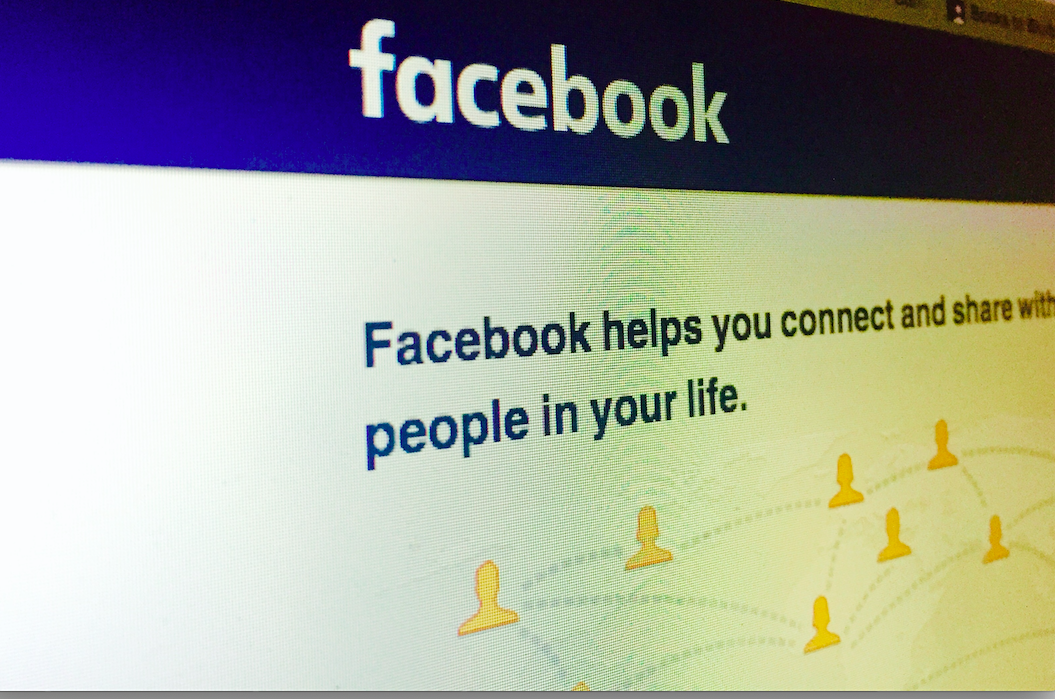 The other day I remarked to Emily that Facebook has become useful for essentially only two things: Seeing other people’s photos, and sharing links. It seems that every time I log into Facebook, at least for the past couple years, what I get can almost totally be classified as either a photo or a link to something off Facebook. Sometimes those links are of a personal nature, but most of the time they’re not. Pictures I would classify as probably 60% family/baby pictures, 30% “activity” pictures (“here’s what I’m eating/doing/reading right now”) 10% miscellanea.
The reason this is interesting to me is that I’ve now been on Facebook for 8 years (minus about a year off the site from 2010-2011), and I’ve been able to watch as, progressively, it has become less and less of an actual “social network” and more of a kind of digital bazaar. I realized that not only am I not more connected to more classmates, coworkers, and friends for having had Facebook for 8 years–I’m actually less connected than I might be, had I not farmed out many of my casual relationships to Facebook.
Around 2009 or 2010 probably marks the zenith of my use of Facebook. I used the site seriously every day, to the point that it often became a problematic distraction in my daily life (this was before iPhone, so checking Facebook required a computer and a chair). The reason I used it so seriously was that I was, in a very real sense, conducting an entirely separate genre of relationships through it. I talked regularly to “friends” whose families I’d never met and whose birthdays I only knew because of Facebook’s helpful reminders. I had intimate personal conversations with people I’d not physically shared a space with in months or years. And none of that was especially disappointing because the Facebook relationship matrix was a self-contained one. Getting a “like” from someone, or “liking” their status or photo, was its own kind of social currency. A wall post (this was when Facebook still had walls, and not the ridiculous “timeline”) was much better than a “Like” because it was personal and not as mindless; the other person had to single me out to do it.
I’m sure that part of this was the immaturity of those years and the combination of various personal chaoses that made me vulnerable to impersonal-yet-emotional relationships. But here’s the thing: While I was in the middle of the Facebook relationship matrix, I was perfectly content to live without the serious stuff of live, interpersonal friendship. I didn’t need to really know anybody; I only needed to know their Facebook. The success of Facebook depends, as the film The Social Network makes clear, on selling users on the idea of a “digital self,” a cyber-identity that digitizes personality. But this cyber self is created and cultivated through real actions; ergo, Facebook’s usefulness is more or less dependent on how much time you’re willing to give it. If you post a lot of updates, you’ll get more feedback. If you take time to add filters and flattering angles to your photos, you’ll get more “Likes.” And if you constrain your investment in the lives of others to social media, you’ll feel “closer” to them online.
And yet, 5 years after becoming a certified pro in Facebook, many of those friends whom I felt closest to online have fallen out of contact altogether. Life has pushed aside social media, and with it, both the motivation and mechanisms of friendship. Thing is, I’m not lonely; I’ve been married for 3 1/2 months, been a member of a new church for 8 months, and have lots of family and friends close by. But that’s actually what worries me. The kind of loss of “friendship” that I’ve had with Facebook friends hasn’t felt lonely at all. How can losing touch with people to whom I shared many deep conversations and memorable life experiences feel like not much loss at all?
I’m afraid that’s how Facebook works. The digital self can feel intensely real at times, but in the end it is still a digital self. And that’s the trouble with Facebook. It’s become a useful place to share links and funny images, to be sure. But there is certainly a part of me that wonders if too many hours to count were wasted putting coins into its relational claw machine game, trying to get something that sticks. If I could travel back in time, I’d stop on my way to the American Revolution in 2009, and tell myself to log off and go have a coffee.
Previous Post

September 15, 2015
The Screwtape Secrets to Planned Parenthood P.R.
Next Post

September 16, 2015 Going to Church, Skipping Donald Trump
Browse Our Archives
Select a Category abortion bible books Christianity Current events DVD of the Week education Essays Ethics Fun Liberal Christianity life Mailbag Monday media Movies My Essential Movies philosophy Politics pop culture Quotes religion Southern Baptist Convention sports theology Uncategorized video Weekend Roundup
Select a Month October 2015 September 2015 August 2015 July 2015 June 2015 May 2015 April 2015 March 2015 February 2015 January 2015 December 2014 November 2014 October 2014 September 2014 August 2014 July 2014 June 2014 May 2014 April 2014 March 2014 February 2014 November 2013
Follow Us!
TAKE THE
Religious Wisdom Quiz
Who built the temple in Jerusalem?
Select your answer to see how you score.
Solomon David Abraham Moses
Related posts from Samuel D. James

Loving Our Movies Well In the Golden Age...

Wanted: Journalists Not Beholden to Planned Parenthood


The Phantom Females of Ashley Madison
TRENDING AT PATHEOS Evangelical

How the author of the world's best hymn...
I've been working with John Newton for a while now. This makes...

Long before this Lectio Divina, Psalm 130 - the song - started...

What About the Trees? Another Living Parable
After I finished writing the last article about falling leaves as a...

Why Classical Education Is a Conversation, Not a...
Come and Read: Joy in Classical Education When I was a little...

Falling Leaves: A Living Parable on Letting Go
I’ve spent the vast majority of my life in the southeast corner...

Cornell University has received a great deal of negative publicity and intense...
view all Evangelical blogs
Ad-Free & Subscriber Log-In Subscription Support
- About Us
- 2026 Calendar
- Videos
- Podcasts
- Library of World Religions
- Faith In Media Tracker
- Advertise With Us
- Write for Us
- Privacy Policy
- Terms of Service
- Do Not Sell My Data
- Contact Us
- Radiant Digital
- Manage Newsletter Subscriptions
- Unsubscribe From Notifications
- Sitemap
Copyright 2008-2026, Patheos. All rights reserved.
Subscription Support Ad-Free & Subscriber Log-In
Follow Patheos