
BuddhistCatholicContemplativeEvangelicalGeneral ChristianHinduJewishLatter-day SaintMuslimNew VisionsProgressive Christian
Beliefs
- Buddhist
- Catholic
- Contemplative
- Evangelical
- General Christian
- Hindu
- Jewish
- Latter-day Saint
- More Voices
- Muslim
- New Visions
- Pagan
- Progressive Christian
Topics
- Religion News
- Food and Religion
- Sports and Religion
- Religious Art
- Religious Music and Entertainment
- Religious Events
- History and Religion
- Style and Religion
- Politics and Religion
- Women in Religion
- Recreation Outdoors and Religion
- Business Finance and Religion
- Careers Workplace and Religion
- Education and Religion
- Family Parenting and Religion
- Health Fitness and Religion
- Home and Religion
- Relationships and Religion
- Technology and Religion
- Travel and Religion
Columnists
- Buddhist Columnists
- Business Finance and Religion Columnists
- Careers Workplace and Religion Columnists
- Catholic Columnists
- Contemplative Columnists
- Education and Religion Columnists
- Evangelists Columnists
- Family Parenting and Religion Columnists
- General Christian Columnists
- Health Fitness and Religion Columnists
- Hindu Columnists
- History and Religion Columnists
- Home and Religion Columnists
- Jewish Columnists
- More Voices Columnists
- Latter Day Columnists
- Muslim Columnists
- New Visions Columnists
- Nonreligious Columnists
- Pagan Columnists
- Politics and Religion Columnists
- Progressive Columnists
- Recreation Outdoors and Religion Columnists
- Relationships and Religion Columnists
- Religion News Columnists
- Religious Art Columnists
- Religious Events Columnists
- Religious Music and Entertainment Columnists
- Sports and Religion Columnists
- Style and Religion Columnists
- Technology and Religion Columnists
- Travel and Religion Columnists
- Women in Religion Columnists
Resource Library
- 2026 Calendar
- Library of World Religions
- The 100 Most Holy Places on Earth
- Patheos Answers
- Podcasts
- Videos
- Faith Leaders Database
- Anglican Episcopalian
- Bahai
- Baptist
- Buddhism
- Christianity
- Confucianism
- Eastern Orthodoxy
- Hinduism
- Holiness and Pentecostal
- ISKCON
- Islam
- Judaism
- Lutheran
- Methodist
- The Church of Jesus Christ of Latter-day Saints
- New Age
- Paganism
- Presbytarian and Reformed
- Protestantism
- Religion Behind the Scenes
- Roman Catholic
- Scientology
- Shia Islam
- Sikhism
- Sufism
- Sunni Islam
- Taoism
- Zen
- See all religions
Research Tools
 Ad-Free & Subscriber Log-In Subscription Support
Ad-Free & Subscriber Log-In Subscription Support
Follow Patheos 

- Trending:
- Forgiveness
- |
- Marriage
- |
- Consciousness
- |
- Death Penalty
- |
- Election
- |
- Halloween
 Samuel D. James
- Home
- Evangelical
- The Problem of “Problematic”
The Problem of “Problematic”
Last updated on: September 14, 2015 at 3:46 pm by Samuel James
The Problem of “Problematic” 2015-09-14T15:46:13-04:00 Samuel James
Patheos Explore the world's faith through different perspectives on religion and spirituality! Patheos has the views of the prevalent religions and spiritualities of the world.

Public Domain
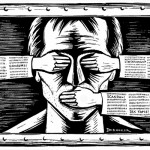
This month’s issue of The Atlantic came with a provocative cover story, entitled “The Coddling of the American Mind.” It is an incisive look at a contemporary trend, particularly within higher education, to insulate young millennials from ideas and behavior they might be personally offended by. This trend, which has been thoroughly documented and analyzed elsewhere, goes far, far beyond the boundaries of politeness and sensitivity. In many cases it has led to a quasi-religious liturgy of personal offense. An excerpt from Greg Lukianoff and Jonathan Haidt’s piece:
Two terms have risen quickly from obscurity into common campus parlance. Microaggressions are small actions or word choices that seem on their face to have no malicious intent but that are thought of as a kind of violence nonetheless. For example, by some campus guidelines, it is a microaggression to ask an Asian American or Latino American “Where were you born?,” because this implies that he or she is not a real American. Trigger warnings are alerts that professors are expected to issue if something in a course might cause a strong emotional response. For example, some students have called for warnings that Chinua Achebe’s Things Fall Apart describes racial violence and that F. Scott Fitzgerald’sThe Great Gatsby portrays misogyny and physical abuse, so that students who have been previously victimized by racism or domestic violence can choose to avoid these works, which they believe might “trigger” a recurrence of past trauma.
You can see already the pitfalls. The desire to keep people away from things that might cause emotional pain is a good desire, so long as those things are both 1) unnecessary to personal formation or 2) reasonably accommodating to the lives of others. After all, we don’t listen to teenagers when they complain that household chores are devastating their emotional psyches. Likewise I don’t think I would admire parents who rebuked others at McDonalds for swearing while their kids were in the store. I understand the motivations, but there is a sense in which our moral scruples can be used to quarantine ourselves rather than to better ourselves. What Haidt and Lukianoff are seeing is a thoroughly contemporary code of niceties that is undermining the interpersonal and intellectual flourishing it claims to be preserving. The authors contrast this trend with the rise of “political correctness” in previous decades. While the two look similar, the age of the “microaggression” is a far more infantile one:
The current movement is largely about emotional well-being… it presumes an extraordinary fragility of the collegiate psyche, and therefore elevates the goal of protecting students from psychological harm. The ultimate aim, it seems, is to turn campuses into “safe spaces” where young adults are shielded from words and ideas that make some uncomfortable. And more than the last [political correctness movement], this movement seeks to punish anyone who interferes with that aim, even accidentally. You might call this impulse vindictive protectiveness. It is creating a culture in which everyone must think twice before speaking up, lest they face charges of insensitivity, aggression, or worse.
That’s precisely what the new buzzword “problematic” is about. There’s an invisible authority, an unseen vehicle of justice, that all things labeled “problematic” are appealed to. If a person’s unwittingly insensitive comment is “problematic,” it’s not just rude, it’s a problem–something that needs to be fixed, and quick. And for many, the “fix” required by these “problems” is some sort of authoritarian intervention.
For a case study, consider this piece from Conor Friedersdorf. It’s a predictable anecdote; college student A sends off a generic sounding email to student B, which apparently causes unwitting offense. That’s a pretty common everyday, real-world situation. The disturbing cultural trends show up when student B decides to immediately go public with the exchange. The student quickly abandoned the one-on-one conversation in order to, in Friedersdorf’s words, “provoke sympathy and antagonism toward the emailer by advertising her status as an aggrieved party.” In other words, for student B, being known as a victim of offense was more important than working out the situation through dialogue.
Now, it’s possible that all this is just claptrap, an unfortunate fad for the millennial generation that lacks serious import outside college classrooms and trendy coffee shops. But even if it is little more than a cultural moment, there is cause to be concerned. For one thing, social media technology is seeing its own cultural moment of aggravated self-righteousness engorge into a job-killing, reputation-soiling shame culture. The superficiality of Twitter shame culture is disturbingly similar to that of the world described by Haidt and Lukianoff. When easy offense meets the global outrage market of social media, only bad things will come about.
It seems to me that the millennial generation is one that is desperately seeking some sort of transcendent moral realities, but only realities that come packaged in self-autonomy and postmodernism. Like a foreigner trying to recite poetry without learning the poet’s language, millennials lack the elementary vocabulary of Christianity but still try to articulate its eschatological justice and self-sacrificial love of neighbor. This is a recipe for frustration. When you’ve farmed out the essential components of your worldview to secularism and the Sexual Revolution, the only substitute for neighbor-love is self-righteous moralism. And that is something truly problematic.
Previous Post
August 28, 2015
Looking for Abortion Truth in Big Media
Next Post

September 15, 2015 Wanted: Journalists Not Beholden to Planned Parenthood
Browse Our Archives
Select a Category abortion bible books Christianity Current events DVD of the Week education Essays Ethics Fun Liberal Christianity life Mailbag Monday media Movies My Essential Movies philosophy Politics pop culture Quotes religion Southern Baptist Convention sports theology Uncategorized video Weekend Roundup
Select a Month October 2015 September 2015 August 2015 July 2015 June 2015 May 2015 April 2015 March 2015 February 2015 January 2015 December 2014 November 2014 October 2014 September 2014 August 2014 July 2014 June 2014 May 2014 April 2014 March 2014 February 2014 November 2013
Follow Us!
TAKE THE
Religious Wisdom Quiz
What does "Messiah" mean in both Hebrew and Greek?
Select your answer to see how you score.
Sacrifice Beloved Chosen Anointed one
Related posts from Samuel D. James

Loving Our Movies Well In the Golden Age...

Wanted: Journalists Not Beholden to Planned Parenthood

The Phantom Females of Ashley Madison
TRENDING AT PATHEOS Evangelical

The REST of Your Life: A Creative Wrestles...
This week I had a conversation with a good friend from church....

How the author of the world's best hymn...
I've been working with John Newton for a while now. This makes...

Long before this Lectio Divina, Psalm 130 - the song - started...

What About the Trees? Another Living Parable
After I finished writing the last article about falling leaves as a...

Why Classical Education Is a Conversation, Not a...
Come and Read: Joy in Classical Education When I was a little...

Cornell University has received a great deal of negative publicity and intense...
view all Evangelical blogs
Ad-Free & Subscriber Log-In Subscription Support
- About Us
- 2026 Calendar
- Videos
- Podcasts
- Library of World Religions
- Faith In Media Tracker
- Advertise With Us
- Write for Us
- Privacy Policy
- Terms of Service
- Do Not Sell My Data
- Contact Us
- Radiant Digital
- Manage Newsletter Subscriptions
- Unsubscribe From Notifications
- Sitemap
Copyright 2008-2026, Patheos. All rights reserved.
Subscription Support Ad-Free & Subscriber Log-In
Follow Patheos