
BuddhistCatholicContemplativeEvangelicalGeneral ChristianHinduJewishLatter-day SaintMuslimNew VisionsProgressive Christian
Beliefs
- Buddhist
- Catholic
- Contemplative
- Evangelical
- General Christian
- Hindu
- Jewish
- Latter-day Saint
- More Voices
- Muslim
- New Visions
- Pagan
- Progressive Christian
Topics
- Religion News
- Food and Religion
- Sports and Religion
- Religious Art
- Religious Music and Entertainment
- Religious Events
- History and Religion
- Style and Religion
- Politics and Religion
- Women in Religion
- Recreation Outdoors and Religion
- Business Finance and Religion
- Careers Workplace and Religion
- Education and Religion
- Family Parenting and Religion
- Health Fitness and Religion
- Home and Religion
- Relationships and Religion
- Technology and Religion
- Travel and Religion
Columnists
- Buddhist Columnists
- Business Finance and Religion Columnists
- Careers Workplace and Religion Columnists
- Catholic Columnists
- Contemplative Columnists
- Education and Religion Columnists
- Evangelists Columnists
- Family Parenting and Religion Columnists
- General Christian Columnists
- Health Fitness and Religion Columnists
- Hindu Columnists
- History and Religion Columnists
- Home and Religion Columnists
- Jewish Columnists
- More Voices Columnists
- Latter Day Columnists
- Muslim Columnists
- New Visions Columnists
- Nonreligious Columnists
- Pagan Columnists
- Politics and Religion Columnists
- Progressive Columnists
- Recreation Outdoors and Religion Columnists
- Relationships and Religion Columnists
- Religion News Columnists
- Religious Art Columnists
- Religious Events Columnists
- Religious Music and Entertainment Columnists
- Sports and Religion Columnists
- Style and Religion Columnists
- Technology and Religion Columnists
- Travel and Religion Columnists
- Women in Religion Columnists
Resource Library
- 2026 Calendar
- Library of World Religions
- The 100 Most Holy Places on Earth
- Patheos Answers
- Podcasts
- Videos
- Faith Leaders Database
- Anglican Episcopalian
- Bahai
- Baptist
- Buddhism
- Christianity
- Confucianism
- Eastern Orthodoxy
- Hinduism
- Holiness and Pentecostal
- ISKCON
- Islam
- Judaism
- Lutheran
- Methodist
- The Church of Jesus Christ of Latter-day Saints
- New Age
- Paganism
- Presbytarian and Reformed
- Protestantism
- Religion Behind the Scenes
- Roman Catholic
- Scientology
- Shia Islam
- Sikhism
- Sufism
- Sunni Islam
- Taoism
- Zen
- See all religions
Research Tools
 Ad-Free & Subscriber Log-In Subscription Support
Follow Patheos 

- Trending:
- Advent
- |
- Forgiveness
- |
- Thanksgiving
- |
- Election
- |
- Seasonal Holidays
- |
- Marriage
 Samuel D. James
- Home
- Evangelical
- 4 Responses a Non-Scientist Christian Can Give to Science-Based Atheism
4 Responses a Non-Scientist Christian Can Give to Science-Based Atheism
Last updated on: March 2, 2015 at 9:42 am by Samuel James
4 Responses a Non-Scientist Christian Can Give to Science-Based Atheism 2015-03-02T09:42:41-04:00 Samuel James
Patheos Explore the world's faith through different perspectives on religion and spirituality! Patheos has the views of the prevalent religions and spiritualities of the world.
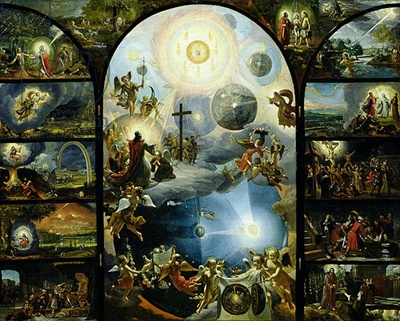
Lack of scientific knowledge can leave Christians feeling vulnerable when talking to unbelieving friends about why faith is superior to skepticism. Many college students discover atheism through science classes; students who enter university as Christians have their faith fiercely tested by their studies, and too many give up the fight merely because they assume that a biology professor must be correct about whether God exists. When a little bit of childlike faith meets a lot of studied atheism, fear can take control.
That’s unnecessary. You don’t have to have a degree in science to have something to say to those with scientific objections to faith. Here are four simple responses to those who say that science has either disproved God or has made belief in God unnecessary:
1) We cannot know from science if science itself is the best source of knowledge.
There are two possibilities when it comes to human knowledge through science. The first possibility is that everything that is real is actually reducible to scientific principles. Everything–from the universe, to human emotion, to spiritual experiences–is explainable through scientific research. The other option is simple: Not all existence can be explained through science.
Here’s why this question matters. If the first option is true, then logically, science absolutely is the supreme mode of knowledge, and everything we believe about anything must be in submission to it. The problem though is that whether or not all of reality is utlimately explainable through scientific concepts is not itself a scientifically provable theory. It is a philosophical premise, not a scientific conclusion. The only way to definitively prove that science explains everything would be to have exhaustive knowledge of all reality, and then be able to explain (using only scientific data) what all reality is and what it means. Such a feat is impossible. Therefore, the belief that science is the best source of knowledge must be accepted on faith, for it cannot be verified through testing.
2) Scientific consensus can and frequently does change. This limits its epistemological authority.
The progressive nature of scientific inquiry is essential to its value. Done rightly, science can correct its own errors. But this presupposes that science can make errors in the first place. And if that’s true, then the question is: How do we know what could be a current error in scientific consensus, and what do we know is absolutely true?
This is a very important question to ask religious skeptics who appeal to science. A likely response is that science may be wrong on almost everything it says, but it almost certainly isn’t wrong about what it doesn’t say; ie, if science hasn’t revealed God by now, it’s not rational to think it will. But this objection misses the point. One does not wait on science to exhaustively explain something before believing it. If that were so then 99% of human beings on the planet would not believe in the most basic realities of existence, or would be irrational in believing without having exhaustive scientific knowledge. If current scientific consensus points away from the existence of God (a highly disputable point, by the way), then who is to say that consensus cannot change? If it can, then science’s intellectual authority is limited, and the expectation that it will continue to oppose religious belief is more a matter of faith.
3) Only supernatural theism provides a rational justification of scientific work.
The wording of this point is very important. If we left out the word “rational,” then the statement would actually be false and quite easy to shoot down. You don’t need supernatural theism to be curious, or to want to explore the natural world. But you do need supernatural theism to have a rational justification of science. What does the word rational mean there? It means that scientific inquiry done on the assumption that there is no higher intelligence than evolved human intelligence is making a value judgment that it has no right to make.
Why is knowledge better than ignorance? The atheist would respond that ignorance has less survival value than truth; after all, if you believe wrong things or do not know enough about your environment, you’re less likely to survive and flourish. But this explanation only applies to a very small amount of scientific knowledge. There is little survival value in knowing, for example, the complicated workings of time–space theory, or the genus of certain insects, or the distance of Jupiter from Mars. All of these facts are pursued by scientists as being intrinsically valuable, yet they offer very little information that can help guarantee a species’ continued existence on the planet.
The real explanation is that scientists pursue these facts because there is intrinsic value in knowing what is true about the world, regardless of how much help it gives us. Human beings believe that knowing is better than ignorance because they believe that truth is better than falsity, and light is better than darkness. But where does such a conclusion come from? It does not come from scientific principles. Science itself offers no self-evident account for why it should be pursued. You cannot study science hard enough to understand why you should study science at all. To study science presupposes a valuing of truth that must be experienced outside of scientific study. It is only rational to pursue scientific knowledge that doesn’t offer immediate survival value if there is some external, transcendent value in knowing truth. Theism offers an explanation for why knowing truth is valuable. Scientific atheism does not.
4) Only supernatural theism gives us assurance that real scientific knowledge is possible.
Philosopher Alvin Plantinga is famous for articulating what he calls the “evolutionary argument against naturalism.” The argument is
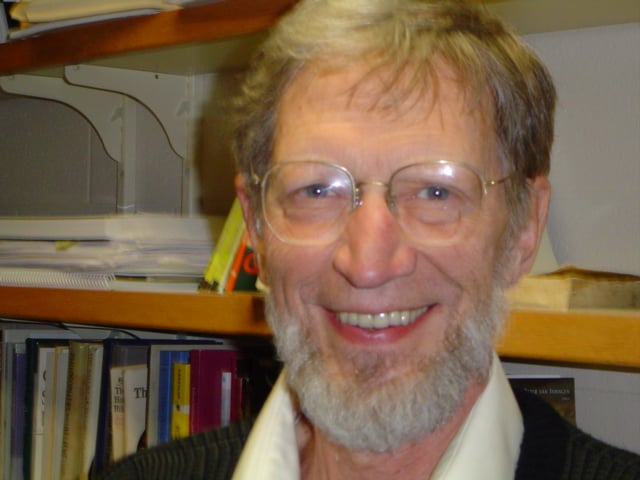
Alvin Plantinga
complicated in detail but simple in premise. Plantinga begins by putting two facts alongside each other that nearly all atheists agree on. First, the theory of evolution is true, and humans have descended from lower life forms over time. Secondly, humans are rational beings in a higher degree and superior way to lesser evolved creatures. Plantinga then points our attention towards a tension between these two facts. If human beings are a more evolved species of primate, then our cognitive faculties (ie, the parts of our body and mind that allow us to be rational creatures) have evolved out of lesser cognitive faculties. But, Plantinga says, if God does not exist, then the only factors that affected human evolution are time and chance. Based on time and chance alone, why should we be confident that our rational minds–which are merely the sum of lesser evolved minds plus time and chance–are actually rational at all? What basis do we have to believe our own conclusions? How do we know we are actually capable of knowing truth more than a primate? If the only players in our existence are lesser creatures, time, and chance, how do we know we are even highly evolved at all?
This astute observation was echoed by Thomas Nagel in his recent book Mind and Cosmos. Nagel, an agnostic philosopher from New York University, argues that human comprehension of the universe cannot be explained merely by atheistic evolutionary processes. It makes no sense to assume that humans can really make sense of their world on a conceptual level if human consciousness arose out of the very world it responds to. Nagel agrees with Plantinga that atheistic naturalism cannot explain why human beings can be rational creatures and do rational things that should be trusted.
Scientific knowledge is only possible if things unprovable by science are actually true. If Carl Sagan is correct and the material universe is all there was, is, and ever will be, then science itself is nothing more than a shot in the dark. If, however, human beings are the products of an infinitely greater Mind, then we have justification for believing that true and false are realities and not merely the shadow puppets of our ancestors.
Previous Post

February 27, 2015
The Ugly Legalism of Sports Worship
Next Post
March 6, 2015 In Addiction, But Not Of It
Browse Our Archives
Select a Category abortion bible books Christianity Current events DVD of the Week education Essays Ethics Fun Liberal Christianity life Mailbag Monday media Movies My Essential Movies philosophy Politics pop culture Quotes religion Southern Baptist Convention sports theology Uncategorized video Weekend Roundup
Select a Month October 2015 September 2015 August 2015 July 2015 June 2015 May 2015 April 2015 March 2015 February 2015 January 2015 December 2014 November 2014 October 2014 September 2014 August 2014 July 2014 June 2014 May 2014 April 2014 March 2014 February 2014 November 2013
Follow Us!
TAKE THE
Religious Wisdom Quiz
What Christian holiday celebrates Jesus’ birth?
Select your answer to see how you score.
Easter Christmas Pentecost Good Friday
Related posts from Samuel D. James

Russell Moore on Evangelicals and Donald Trump


Tinder Mercies--Or, How Porn Destroyed Sex

TRENDING AT PATHEOS Evangelical

When you hear the word riches, what comes to mind? For most...

Don’t Miss the Parents: A Creative Christmas Meditation
As we enter the Advent Season, I see many people trying to...

Making Stones Into Bread: Choosing the “Right” Work
I was on my online arts ministry Zoom meeting with the International...

Ukraine’s exhausted Christians face fifth winter of war
By Julian Lukins The full-scale war in Ukraine is taking “a serious...

Russell Brand's Conviction is not anti-Christian Persecution
How do we shed the reputation that the Church is OK with...

Have you ever caught yourself saying, “I’ll do it tomorrow,” or “Now...
view all Evangelical blogs
Ad-Free & Subscriber Log-In Subscription Support
- About Us
- 2026 Calendar
- Videos
- Podcasts
- Library of World Religions
- Faith In Media Tracker
- Advertise With Us
- Write for Us
- Privacy Policy
- Terms of Service
- Do Not Sell My Data
- Contact Us
- Radiant Digital
- Manage Newsletter Subscriptions
- Unsubscribe From Notifications
- Sitemap
Copyright 2008-2026, Patheos, part of the Radiant Digital network of media brands. All rights reserved.
Subscription Support Ad-Free & Subscriber Log-In
Follow Patheos