
BuddhistCatholicContemplativeEvangelicalGeneral ChristianHinduJewishLatter-day SaintMuslimNew VisionsProgressive Christian
Beliefs
- Buddhist
- Catholic
- Contemplative
- Evangelical
- General Christian
- Hindu
- Jewish
- Latter-day Saint
- More Voices
- Muslim
- New Visions
- Pagan
- Progressive Christian
Topics
- Religion News
- Food and Religion
- Sports and Religion
- Religious Art
- Religious Music and Entertainment
- Religious Events
- History and Religion
- Style and Religion
- Politics and Religion
- Women in Religion
- Recreation Outdoors and Religion
- Business Finance and Religion
- Careers Workplace and Religion
- Education and Religion
- Family Parenting and Religion
- Health Fitness and Religion
- Home and Religion
- Relationships and Religion
- Technology and Religion
- Travel and Religion
Columnists
- Buddhist Columnists
- Business Finance and Religion Columnists
- Careers Workplace and Religion Columnists
- Catholic Columnists
- Contemplative Columnists
- Education and Religion Columnists
- Evangelists Columnists
- Family Parenting and Religion Columnists
- General Christian Columnists
- Health Fitness and Religion Columnists
- Hindu Columnists
- History and Religion Columnists
- Home and Religion Columnists
- Jewish Columnists
- More Voices Columnists
- Latter Day Columnists
- Muslim Columnists
- New Visions Columnists
- Nonreligious Columnists
- Pagan Columnists
- Politics and Religion Columnists
- Progressive Columnists
- Recreation Outdoors and Religion Columnists
- Relationships and Religion Columnists
- Religion News Columnists
- Religious Art Columnists
- Religious Events Columnists
- Religious Music and Entertainment Columnists
- Sports and Religion Columnists
- Style and Religion Columnists
- Technology and Religion Columnists
- Travel and Religion Columnists
- Women in Religion Columnists
Resource Library
- 2026 Calendar
- Library of World Religions
- The 100 Most Holy Places on Earth
- Patheos Answers
- Podcasts
- Videos
- Faith Leaders Database
- Anglican Episcopalian
- Bahai
- Baptist
- Buddhism
- Christianity
- Confucianism
- Eastern Orthodoxy
- Hinduism
- Holiness and Pentecostal
- ISKCON
- Islam
- Judaism
- Lutheran
- Methodist
- The Church of Jesus Christ of Latter-day Saints
- New Age
- Paganism
- Presbytarian and Reformed
- Protestantism
- Religion Behind the Scenes
- Roman Catholic
- Scientology
- Shia Islam
- Sikhism
- Sufism
- Sunni Islam
- Taoism
- Zen
- See all religions
Research Tools
 Ad-Free & Subscriber Log-In Subscription Support
Ad-Free & Subscriber Log-In Subscription Support
Follow Patheos 

- Trending:
- Forgiveness
- |
- Marriage
- |
- Consciousness
- |
- Death Penalty
- |
- Election
- |
- Halloween
 Samuel D. James
- Home
- Evangelical
- How to Watch TV Like a Christian
How to Watch TV Like a Christian
Last updated on: February 19, 2015 at 1:01 am by Samuel James
How to Watch TV Like a Christian 2015-02-19T01:01:10-04:00 Samuel James
Patheos Explore the world's faith through different perspectives on religion and spirituality! Patheos has the views of the prevalent religions and spiritualities of the world.
Source: https://jwwartick.files.wordpress.com/2014/09/swt-cosper.jpg

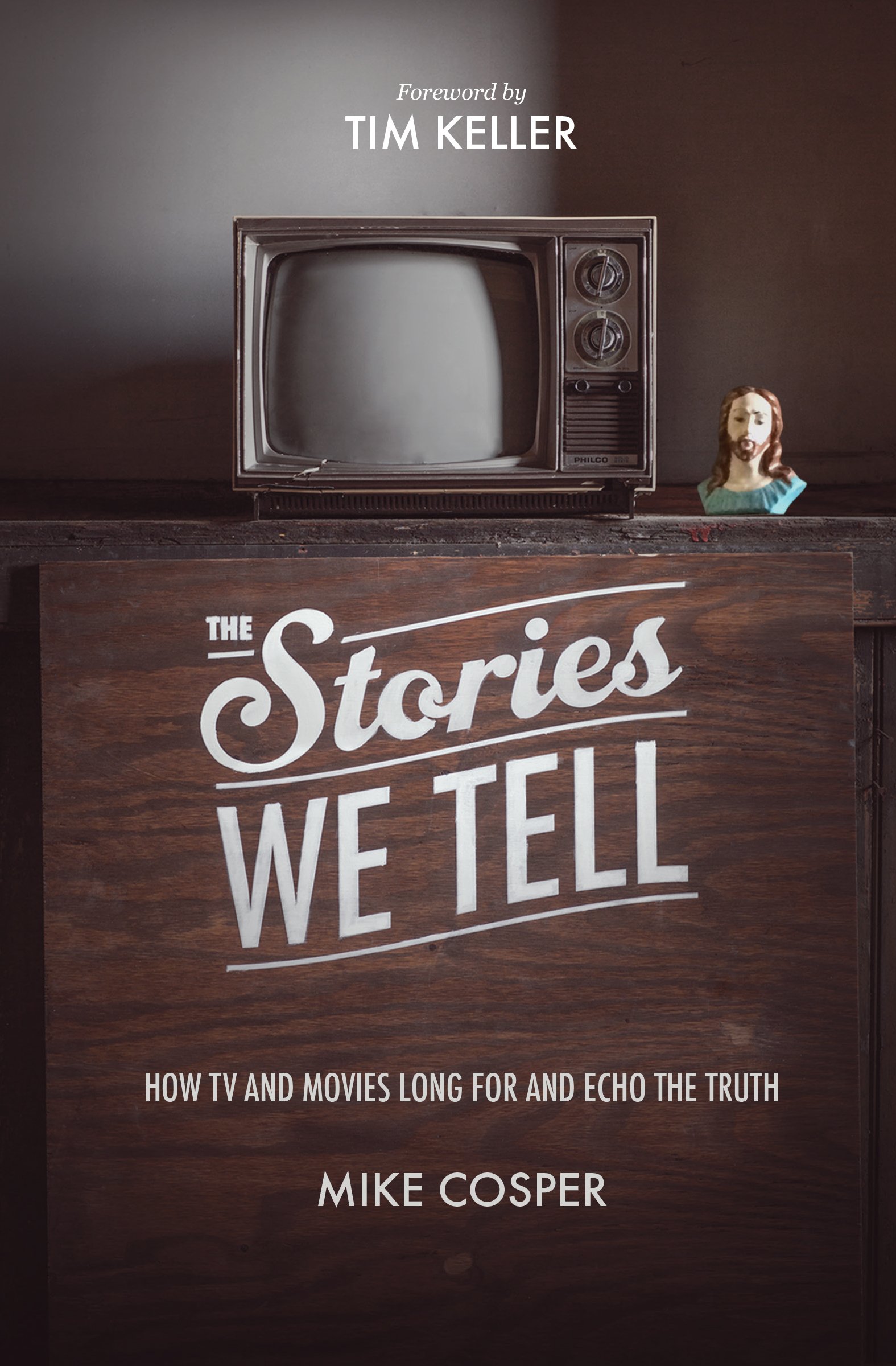
Last week I wrote a review for The Gospel Coalition of a helpful new book called The Stories We Tell: How TV and Movies Long For and Echo the Truth. Author Mike Cosper is a pastor here in Louisville, but he writes more like your smartest moviegoing friend who also happens to have a degree in theology. I think the more Christians–especially evangelicals–who read this book, the better and more fully Christian our conversations about pop culture (which is much, much more important than you think) will be.
Here’s a portion of my review:
You don’t need a philosophy degree or a robust knowledge of sociology to understand the power of stories, however. The Bible itself is one Story, a true tall tale with the triune God for its Author. The story of redemption is not just a story, but the story, as Cosper makes clear:
At the heart of our faith is the bold claim that in a world full of stories, with a world’s worth of heroes, villains, comedies, tragedies, twists of fate, and surprise endings, there is really only one story. One grand narrative subsumes and encompasses all the other comings and goings of every creature—real or fictitious—on the earth. Theologians call it “redemption history”; my grandfather called it the “old, old story.” (29)
Cosper recalls here not just biblical theology but J. R. R. Tolkien’s concept of “True Myth,” the notion (which Tolkien impressed on an atheistic colleague named C. S. Lewis) that all of the world’s greatest myths, legends, and fairy tales are fictitious but not false—since they echo a “true myth” that is both grand story and real history. Cosper’s powerful exposition of true myth is the fuel in the engines of The Stories We Tell, resulting in a far more illuminating and rewarding discussion of pop culture than if he were merely to hold up films and TV shows to Christian “worldview tests.”
After we understand why stories matter, we can discover how cultural storytellers have left signs in their stories that point to the One Story. Cosper uses the familiar rubric of creation, fall, redemption, and restoration as a blueprint to discuss how popular pieces of culture mirror the biblical narrative. He sees existential yearning for Eden and for home in films like The Descendants and Pleasantville; hears reverberations of Adam’s love song to Eve in the hopeful romances of How I Met Your Mother and 30 Rock; and recalls the biblical doctrine of the fall and our fruitless quest for self-determination in the stories of Mad Men. In these chapters Cosper demonstrates a crucial ability. He skillfully avoids sounding either like a culture connoisseur talking in “code” the uninitiated cannot comprehend or like an overtalkative friend retracing every scene of his favorite film while keeping you from lunch. This makes The Stories We Tell helpful for a broad audience and not just those with a personal inclination toward pop culture. Readers familiar with the shows and movies discussed will have their viewing greatly enhanced, and those unfamiliar will be able to appreciate the weaving of gospel story into such seemingly secular tales.
To put it nicely, this is not an area that conservative evangelicals deserve high marks in. For one thing, too often we have dismissed pop culture as irrelevant or sub-intellectual, unworthy of a serious Christian treatment (save for regular anathematization). Other times evangelicals have been guilty of being unable to say anything more than, “Just throw out the TV.” Now, I’m not saying that’s always bad advice; but that kind of mentality doesn’t, as Mike points out in his book, actually explain why our culture is so moved, comforted and even addicted to these pop culture mediums.
What Mike is willing to do in his book is challenge these attitudes with a different perspective: What if TV and movies have such influence in our culture because human beings have inherited, via the imago Dei, an insatiable need to understand themselves through stories?
Evangelicals don’t get to pick and choose which parts of the human experience we are going to apply the Gospel to and which ones we don’t care about. If the Good News says nothing about our need for stories, it’s less Good. Happily, that’s not the case, and you should check out The Stories We Tell if that’s good news for you.
Previous Post

February 18, 2015
50 Shades and the Limits of Cultural Engagement
Next Post
February 19, 2015 Why the Oscars Still Matter
Browse Our Archives
Select a Category abortion bible books Christianity Current events DVD of the Week education Essays Ethics Fun Liberal Christianity life Mailbag Monday media Movies My Essential Movies philosophy Politics pop culture Quotes religion Southern Baptist Convention sports theology Uncategorized video Weekend Roundup
Select a Month October 2015 September 2015 August 2015 July 2015 June 2015 May 2015 April 2015 March 2015 February 2015 January 2015 December 2014 November 2014 October 2014 September 2014 August 2014 July 2014 June 2014 May 2014 April 2014 March 2014 February 2014 November 2013
Follow Us!
TAKE THE
Religious Wisdom Quiz
What does "Sheol," often found in Psalms, mean?
Select your answer to see how you score.
Above the mountain Blessing Eternal light The grave or abode of the dead
Related posts from Samuel D. James

New Trailer for Documentary About Kermit Gosnell

Loving Our Movies Well In the Golden Age...

Russell Moore on Evangelicals and Donald Trump

TRENDING AT PATHEOS Evangelical

The REST of Your Life: A Creative Wrestles...
This week I had a conversation with a good friend from church....

How the author of the world's best hymn...
I've been working with John Newton for a while now. This makes...

Long before this Lectio Divina, Psalm 130 - the song - started...

What About the Trees? Another Living Parable
After I finished writing the last article about falling leaves as a...

Why Classical Education Is a Conversation, Not a...
Come and Read: Joy in Classical Education When I was a little...

Cornell University has received a great deal of negative publicity and intense...
view all Evangelical blogs
Ad-Free & Subscriber Log-In Subscription Support
- About Us
- 2026 Calendar
- Videos
- Podcasts
- Library of World Religions
- Faith In Media Tracker
- Advertise With Us
- Write for Us
- Privacy Policy
- Terms of Service
- Do Not Sell My Data
- Contact Us
- Radiant Digital
- Manage Newsletter Subscriptions
- Unsubscribe From Notifications
- Sitemap
Copyright 2008-2026, Patheos. All rights reserved.
Subscription Support Ad-Free & Subscriber Log-In
Follow Patheos