
BuddhistCatholicContemplativeEvangelicalGeneral ChristianHinduJewishLatter-day SaintMuslimNew VisionsProgressive Christian
Beliefs
- Buddhist
- Catholic
- Contemplative
- Evangelical
- General Christian
- Hindu
- Jewish
- Latter-day Saint
- More Voices
- Muslim
- New Visions
- Pagan
- Progressive Christian
Topics
- Religion News
- Food and Religion
- Sports and Religion
- Religious Art
- Religious Music and Entertainment
- Religious Events
- History and Religion
- Style and Religion
- Politics and Religion
- Women in Religion
- Recreation Outdoors and Religion
- Business Finance and Religion
- Careers Workplace and Religion
- Education and Religion
- Family Parenting and Religion
- Health Fitness and Religion
- Home and Religion
- Relationships and Religion
- Technology and Religion
- Travel and Religion
Columnists
- Buddhist Columnists
- Business Finance and Religion Columnists
- Careers Workplace and Religion Columnists
- Catholic Columnists
- Contemplative Columnists
- Education and Religion Columnists
- Evangelists Columnists
- Family Parenting and Religion Columnists
- General Christian Columnists
- Health Fitness and Religion Columnists
- Hindu Columnists
- History and Religion Columnists
- Home and Religion Columnists
- Jewish Columnists
- More Voices Columnists
- Latter Day Columnists
- Muslim Columnists
- New Visions Columnists
- Nonreligious Columnists
- Pagan Columnists
- Politics and Religion Columnists
- Progressive Columnists
- Recreation Outdoors and Religion Columnists
- Relationships and Religion Columnists
- Religion News Columnists
- Religious Art Columnists
- Religious Events Columnists
- Religious Music and Entertainment Columnists
- Sports and Religion Columnists
- Style and Religion Columnists
- Technology and Religion Columnists
- Travel and Religion Columnists
- Women in Religion Columnists
Resource Library
- 2026 Calendar
- Library of World Religions
- The 100 Most Holy Places on Earth
- Patheos Answers
- Podcasts
- Videos
- Faith Leaders Database
- Anglican Episcopalian
- Bahai
- Baptist
- Buddhism
- Christianity
- Confucianism
- Eastern Orthodoxy
- Hinduism
- Holiness and Pentecostal
- ISKCON
- Islam
- Judaism
- Lutheran
- Methodist
- The Church of Jesus Christ of Latter-day Saints
- New Age
- Paganism
- Presbytarian and Reformed
- Protestantism
- Religion Behind the Scenes
- Roman Catholic
- Scientology
- Shia Islam
- Sikhism
- Sufism
- Sunni Islam
- Taoism
- Zen
- See all religions
Research Tools
 Ad-Free & Subscriber Log-In Subscription Support
Ad-Free & Subscriber Log-In Subscription Support
Follow Patheos 

- Trending:
- Forgiveness
- |
- Marriage
- |
- Consciousness
- |
- Death Penalty
- |
- Election
- |
- Halloween
 Samuel D. James
- Home
- Evangelical
- Why I Vote Conservative
Why I Vote Conservative
Last updated on: November 3, 2014 at 12:59 pm by Samuel James
Why I Vote Conservative 2014-11-03T12:59:33-04:00 Samuel James
Patheos Explore the world's faith through different perspectives on religion and spirituality! Patheos has the views of the prevalent religions and spiritualities of the world.
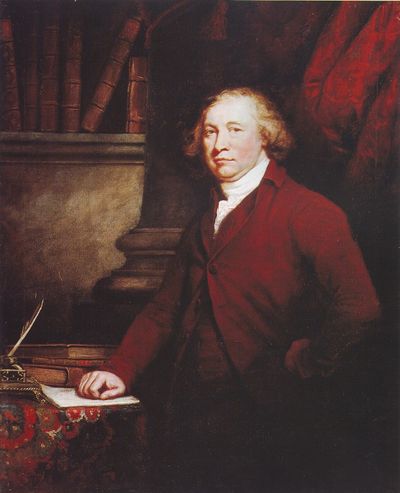
Edmund Burke
Election Day is tomorrow for the United States. Federal and state elections will be held all over the country to determine what leadership will look like, at least until the next elections (the Presidency is not up for votes until 2016).
Politics is often a lamentable business. Regardless of which party and candidates emerge victorious on Wednesday morning, many Americans will cherish the cessation of political television ads and relentless phone campaigns. Like religion, political worldview is often a topic fraught with so much danger of animus and resentment that many people simply opt-out of the conversation or even the process itself.
That temptation is extra appealing in a time when political, religious and social divides seem exceptionally stark. Why bring something up if you know people will disagree? Can’t we just assume the best of each other, act kindly and let everyone to their own thoughts?
The mistake in this thinking is not in its goal–which is admirable–but in its assumption: namely, that choosing not to talk about divisive things will create unity and fraternity. On the contrary, unity of spirit often not only survives explicit disagreement, but actually depends upon it. Disagreement about politics or philosophy, as contentious as it might become, draws attention to a shared social value system in which these conversations are deemed important and given a place of priority within culture. When two people disagree about the best way to do government, they are, at least to a degree, actually demonstrating a shared conviction that political principles matter and that they are worth explicating, implementing, and defending.
The same is true of religion. Religious relativism, the belief that all religions are equally valid in their claims, is actually not as generous as it sounds. Claiming that all religions are true is merely a polite way of saying that all religious are false. The great religions of the world contradict each other on almost every major point of doctrine about God, humanity, the cosmos, beauty and love. If contradictory teachings each have the same validity, then the basic rules of logic tell us that they must each have a validity of zero. And that is exactly what we find when we study the ideological family tree of relativism; we find that its origins arise mostly within atheism, nihilism, and Marxism.
But why do religious people assemble, preach, evangelize and engage the culture? The answer is because religious dialogue, even between two people of completely incompatible religious systems, presupposes the exceptional importance of life’s ultimate questions. As with politics, even passionate disagreement about what God is like or what humanity must do to be saved brings together the participants in a shared unity of values, the (often unspoken) agreement that religion and religious ideas matter, and that truth is genuinely possible, and that the honest and worthwhile life is the one that will take seriously the claims that religious traditions make.
This shared conviction about the importance of transcendent principles–whether they be political or religious (and there is more intersection between the two than many wish to believe)–is frequently absent from the language of progressivism. Progressives often, intentionally or not, reduce the whole of social good to equality. The progressive philosophy seeks to eliminate inequality by eliminating those institutions and social constructs that demarcate groups from the rest of culture. Ideally, humanity would see itself as the only group in which membership matters. Social identities formed on the basis of race, religion, income or even gender are spoken of as instruments of injustice and threats to society’s progress.
The Christian worldview supplies a reason why poverty and social injustice exist, but it’s not a reason desired by contemporary progressives. Christianity teaches that humanity, both individual and collective, is in a permanent state of dysfunction due to spiritual alienation from God. The rich prey on the poor (a reality referred to frequently by the authors of the Bible) because they do not regard God and have no sense of His presence or justice. The powerful assault the vulnerable because it pleases their naturally evil appetite. Only spiritual transformation–of which the institutional church is a vital instrument–offers hope, both for the restitution of the victim and the salvation of the culprit.
But as I said, contemporary progressives loathe this worldview. They see theological language as divisive (since not everyone shares it); a doctrine of the Fall as anti-humanistic; the institution of the church as a mere agent for control over free lives; and the emphasis on spirituality as unscientific. It’s not a problem for citizens to believe this, in the privacy of their own homes (or, if that encroaches on the autonomy of children, it may be a problem), but when talking about other people’s lives and jobs and well-being, religion must be benched. As I said above, what progressives seek is a totally unifying sociopolitic that destroys distinctions and differences rather than calls attention to them.
Conservatism, on the other hand, recognizes that human beings cannot be reduced to biological mechanisms on one hand, or mere pawns of economics on the other. Human culture is, according to conservatism, destined (perhaps even predestined) to carve intra-societal niches in which people joined together by common blood, belief, identity, etc, will gather and build community. In other words, for the conservative, the public square is always occupied by those who identify as members of a community that is much smaller and more exclusive than “the human race.” Whether through family, religion, income, occupation, even gender and race–human beings are hardwired to build society through the dialogue and cooperation of social fixtures that are distinct and sometimes in opposition.
Conservatives believe that the answer to inequality and injustice lies not in a blueprint that deconstructs social identities, but in a more moral and responsible citizenry. Conservatives are unafraid to speak boldly about right and wrong and good and evil because they believe human beings are real moral agents, not merely victims of ignorance or economic oppression. Further, conservatives recognize that religious communities, even the most exclusive and dogmatic ones, are positive social institutions that contribute to the development of important bonds and identities by which a truly pluralistic society operates.
For what this is worth, I do not believe that Christians are obligated by allegiance to Jesus to vote for a certain party or political philosophy. Certainly I would never venture to say that someone is not fully Christian or less of one because of political persuasion. But I do think that for people who profess belief in the Gospel, political philosophy that is not antagonistic towards religious institutions is self-evidently superior to something that subjects said institutions to mere buzzwords like “equality.”
Conservative politics will save neither society nor the individual. It is possible to be thoroughly conservative in politics and yet be disastrously wrong when it comes to the claims of Christ. Yet I cannot but believe that conservatism is the political orientation that takes seriously human beings as morally responsible agents, and resists the urge to reduce the human experience to economics or biology. Though religious communities do indeed create social barriers between the included and the excluded, they are a necessary and vital part of a citizenry that talks seriously about the most significant issues of life. For at least that reason, I am conservative.
Previous Post

October 31, 2014
The Christian Ideas of "The Exorcist"
Next Post
November 5, 2014 What Election '14 Means for Pro-Life
Browse Our Archives
Select a Category abortion bible books Christianity Current events DVD of the Week education Essays Ethics Fun Liberal Christianity life Mailbag Monday media Movies My Essential Movies philosophy Politics pop culture Quotes religion Southern Baptist Convention sports theology Uncategorized video Weekend Roundup
Select a Month October 2015 September 2015 August 2015 July 2015 June 2015 May 2015 April 2015 March 2015 February 2015 January 2015 December 2014 November 2014 October 2014 September 2014 August 2014 July 2014 June 2014 May 2014 April 2014 March 2014 February 2014 November 2013
Follow Us!
TAKE THE
Religious Wisdom Quiz
According to Hebrews, who serves as a copy and shadow of what is in heaven?
Select your answer to see how you score.
The angels The apostles The priests in the earthly sanctuary The prophets
Related posts from Samuel D. James

Russell Moore on Evangelicals and Donald Trump

Going to Church, Skipping Donald Trump
Looking for Abortion Truth in Big Media
I Protested Planned Parenthood
TRENDING AT PATHEOS Evangelical

How the author of the world's best hymn...
I've been working with John Newton for a while now. This makes...

Long before this Lectio Divina, Psalm 130 - the song - started...

What About the Trees? Another Living Parable
After I finished writing the last article about falling leaves as a...

Why Classical Education Is a Conversation, Not a...
Come and Read: Joy in Classical Education When I was a little...

Falling Leaves: A Living Parable on Letting Go
I’ve spent the vast majority of my life in the southeast corner...

Cornell University has received a great deal of negative publicity and intense...
view all Evangelical blogs
Ad-Free & Subscriber Log-In Subscription Support
- About Us
- 2026 Calendar
- Videos
- Podcasts
- Library of World Religions
- Faith In Media Tracker
- Advertise With Us
- Write for Us
- Privacy Policy
- Terms of Service
- Do Not Sell My Data
- Contact Us
- Radiant Digital
- Manage Newsletter Subscriptions
- Unsubscribe From Notifications
- Sitemap
Copyright 2008-2026, Patheos. All rights reserved.
Subscription Support Ad-Free & Subscriber Log-In
Follow Patheos