
BuddhistCatholicContemplativeEvangelicalGeneral ChristianHinduJewishLatter-day SaintMuslimNew VisionsProgressive Christian
Beliefs
- Buddhist
- Catholic
- Contemplative
- Evangelical
- General Christian
- Hindu
- Jewish
- Latter-day Saint
- More Voices
- Muslim
- New Visions
- Pagan
- Progressive Christian
Topics
- Religion News
- Food and Religion
- Sports and Religion
- Religious Art
- Religious Music and Entertainment
- Religious Events
- History and Religion
- Style and Religion
- Politics and Religion
- Women in Religion
- Recreation Outdoors and Religion
- Business Finance and Religion
- Careers Workplace and Religion
- Education and Religion
- Family Parenting and Religion
- Health Fitness and Religion
- Home and Religion
- Relationships and Religion
- Technology and Religion
- Travel and Religion
Columnists
- Buddhist Columnists
- Business Finance and Religion Columnists
- Careers Workplace and Religion Columnists
- Catholic Columnists
- Contemplative Columnists
- Education and Religion Columnists
- Evangelists Columnists
- Family Parenting and Religion Columnists
- General Christian Columnists
- Health Fitness and Religion Columnists
- Hindu Columnists
- History and Religion Columnists
- Home and Religion Columnists
- Jewish Columnists
- More Voices Columnists
- Latter Day Columnists
- Muslim Columnists
- New Visions Columnists
- Nonreligious Columnists
- Pagan Columnists
- Politics and Religion Columnists
- Progressive Columnists
- Recreation Outdoors and Religion Columnists
- Relationships and Religion Columnists
- Religion News Columnists
- Religious Art Columnists
- Religious Events Columnists
- Religious Music and Entertainment Columnists
- Sports and Religion Columnists
- Style and Religion Columnists
- Technology and Religion Columnists
- Travel and Religion Columnists
- Women in Religion Columnists
Resource Library
- 2026 Calendar
- Library of World Religions
- The 100 Most Holy Places on Earth
- Patheos Answers
- Podcasts
- Videos
- Faith Leaders Database
- Anglican Episcopalian
- Bahai
- Baptist
- Buddhism
- Christianity
- Confucianism
- Eastern Orthodoxy
- Hinduism
- Holiness and Pentecostal
- ISKCON
- Islam
- Judaism
- Lutheran
- Methodist
- The Church of Jesus Christ of Latter-day Saints
- New Age
- Paganism
- Presbytarian and Reformed
- Protestantism
- Religion Behind the Scenes
- Roman Catholic
- Scientology
- Shia Islam
- Sikhism
- Sufism
- Sunni Islam
- Taoism
- Zen
- See all religions
Research Tools
 Ad-Free & Subscriber Log-In Subscription Support
Ad-Free & Subscriber Log-In Subscription Support
Follow Patheos 

- Trending:
- Forgiveness
- |
- Marriage
- |
- Consciousness
- |
- Death Penalty
- |
- Election
- |
- Halloween
 Samuel D. James
- Home
- Evangelical
- Keeping Science Fallible
Keeping Science Fallible
Last updated on: September 29, 2014 at 9:48 am by Samuel James
Keeping Science Fallible 2014-09-29T09:48:52-04:00 Samuel James
Patheos Explore the world's faith through different perspectives on religion and spirituality! Patheos has the views of the prevalent religions and spiritualities of the world.
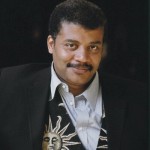
Sean Davis’s inquiry into the accuracy of some of Neil deGrasse Tyson’s recent claims should be a classic case of journalism doing its job on behalf of the public. After all, the usual suspects are all here: A well-respected public figure (Tyson) making assertions of questionable truthfulness; said assertions are widely accepted without question, until a blogger uncovers serious discrepancies that make it almost certain that the assertions are partially or wholly false. This is quite a familiar narrative to anyone who reads news involving politics or religion.
Neither is it surprising that Tyson doubled down in his response to The Federalist’s charges. In his Facebook post of the email exchange, Tyson twice deflects questions about sources by saying his purpose is not to “indict” one particular person or article, “but to cite a broader issue that affects all of American society.” At the very least, this is a poorly framed response, implying that Tyson’s truthfulness should take a backseat to his altruistic intentions. No one could fault Tyson for a  genuinely foggy memory. What’s disappointing is his sturdy refusal to admit his own fallibility. This becomes even more glaring when he addresses the accuracy of his supposed quotation from former President George W. Bush:
[Sean Davis] 3) Tyson regularly tells his audiences about the time that President George W. Bush said, in the week after 9/11, “Our God is the God who named the stars” as a way of dividing people based on religion. Can you please provide me with the original sources of this exact quote from President George W. Bush, including the date on which he said it, the venue, and the full remarks in which the quote appeared?
[Tyson] September 11th2001 affected me deeply, as was true with most people…
I have explicit memory of those words being spoken by the President. I reacted on the spot, making note for possible later reference in my public discourse. Odd that nobody seems to be able to find the quote anywhere — surely every word publicly uttered by a President gets logged.
FYI: There are two kinds of failures of memory. One is remembering that which has never happened and the other is forgetting that which did. In my case, from life experience, I’m vastly more likely to forget an incident than to remember an incident that never happened. So I assure you, the quote is there somewhere. When you find it, tell me. Then I can offer it to others who have taken as much time as you to explore these things.
One of our mantras in science is that the absence of evidence is not the same as evidence of absence.
Tyson should be embarrassed by this arrogant response. On top of appealing to his own memory as sufficient testimony the same way a rogue reporter might defend false reporting by pointing to his own notes, Tyson implies that the fault must lie with the journalists who aren’t “able” to do their job. Then he again extols the capacity of his brain and informs Davis that he and his staff must by necessity be wrong. Later on Tyson commented on the Facebook thread in response to the quotation being found and his statement being shown to be untrue: ” I transposed one disaster with another (both occurring within 18 months of one another) in my assigning his quote. Perhaps that’s a measure of how upset I was in both cases. The mind is surely the next mysterious universe to be plumbed.” Not once does Tyson in any of this exchange actually say he was incorrect or even admit that that’s possible.
It’s difficult to understand why Tyson didn’t simply diffuse the situation via retraction and apology. I agree with The Washington Post’s Jonathan Adler that Tyson’s behavior puts his integrity on the line.
It’s frustrating to note the shortage of real public pressure on Tyson. John Aziz, for example, grants that Tyson should correct the record, but then suspects that close attention on Tyson’s discrepancies is motivated by global warming denial. “[I]t should be said that none of Tyson’s errors amount to methodological or factual errors in published scientific papers,” Aziz writes. This may be true but it’s also completely irrelevant. Sean Davis’s investigation suggests that Tyson may have a considerable history of public fabulisms. Saying false things–and then doubling down on your own brilliance when evidence of your mistake is raised–is an issue that affects the credibility of any person, scientist or no.
Aziz exemplifies here a troubling attitude that some, particularly on the Left, have towards scientific research. The notion that a fudged quotation here or a false statistic there don’t add up to a crediblity problem for an accomplished scientist is valid only if one believes that scientific work is a completely closed realm of self-referential authority. That is, unfortunately, how some scientists have postured their discipline (consider Tyson’s extreme dismissiveness towards those studying philosophy). In a recent cover story for National Review, Charles Cooke noted that scientists seem of all professionals most encouraged to dispense authoritative knowledge on issues well outside their academic training. This bespeaks a change in the way society perceives what “scientist” means. Rather than a fallible observer who utilizes the scientific method to test hypotheses, the word now drums up images of a priest of culture dispensing quasi-religious wisdom to the ignorant masses. “It’s science” has become the new “it’s Gospel.”
But science, like all of mankind’s intellectual disciplines, is fallible. That means that scientists themselves can make mistakes. Neil deGrasse Tyson doesn’t deserve more benefit of the doubt in the face of incriminating evidence because he is smarter than a journalist. Tyson is an accomplished and charismatic public intellectual, but he is still a human being who needs to admit and apologize when he goes on the record with false statements. Big journalism is very good at this principle when the offender is an NFL commissioner, a minister, or a fellow journalist. When a scientist like Tyson is involved, the reporters seem to get bashful. Keeping science accountable and fallible is in the best interest of everyone, not least of all the scientists themselves.
Previous Post
September 25, 2014
Stop Denigrating Philosophy
Next Post

September 29, 2014 Jonathan Merritt Should Apologize to Kevin DeYoung
Browse Our Archives
Select a Category abortion bible books Christianity Current events DVD of the Week education Essays Ethics Fun Liberal Christianity life Mailbag Monday media Movies My Essential Movies philosophy Politics pop culture Quotes religion Southern Baptist Convention sports theology Uncategorized video Weekend Roundup
Select a Month October 2015 September 2015 August 2015 July 2015 June 2015 May 2015 April 2015 March 2015 February 2015 January 2015 December 2014 November 2014 October 2014 September 2014 August 2014 July 2014 June 2014 May 2014 April 2014 March 2014 February 2014 November 2013
Follow Us!
TAKE THE
Religious Wisdom Quiz
What does "Messiah" mean in both Hebrew and Greek?
Select your answer to see how you score.
Sacrifice Beloved Chosen Anointed one
Related posts from Samuel D. James

Loving Our Movies Well In the Golden Age...

Russell Moore on Evangelicals and Donald Trump

Going to Church, Skipping Donald Trump

TRENDING AT PATHEOS Evangelical

The REST of Your Life: A Creative Wrestles...
This week I had a conversation with a good friend from church....

How the author of the world's best hymn...
I've been working with John Newton for a while now. This makes...

Long before this Lectio Divina, Psalm 130 - the song - started...

What About the Trees? Another Living Parable
After I finished writing the last article about falling leaves as a...

Why Classical Education Is a Conversation, Not a...
Come and Read: Joy in Classical Education When I was a little...

Cornell University has received a great deal of negative publicity and intense...
view all Evangelical blogs
Ad-Free & Subscriber Log-In Subscription Support
- About Us
- 2026 Calendar
- Videos
- Podcasts
- Library of World Religions
- Faith In Media Tracker
- Advertise With Us
- Write for Us
- Privacy Policy
- Terms of Service
- Do Not Sell My Data
- Contact Us
- Radiant Digital
- Manage Newsletter Subscriptions
- Unsubscribe From Notifications
- Sitemap
Copyright 2008-2026, Patheos. All rights reserved.
Subscription Support Ad-Free & Subscriber Log-In
Follow Patheos