
BuddhistCatholicContemplativeEvangelicalGeneral ChristianHinduJewishLatter-day SaintMuslimNew VisionsProgressive Christian
Beliefs
- Buddhist
- Catholic
- Contemplative
- Evangelical
- General Christian
- Hindu
- Jewish
- Latter-day Saint
- More Voices
- Muslim
- New Visions
- Pagan
- Progressive Christian
Topics
- Religion News
- Food and Religion
- Sports and Religion
- Religious Art
- Religious Music and Entertainment
- Religious Events
- History and Religion
- Style and Religion
- Politics and Religion
- Women in Religion
- Recreation Outdoors and Religion
- Business Finance and Religion
- Careers Workplace and Religion
- Education and Religion
- Family Parenting and Religion
- Health Fitness and Religion
- Home and Religion
- Relationships and Religion
- Technology and Religion
- Travel and Religion
Columnists
- Buddhist Columnists
- Business Finance and Religion Columnists
- Careers Workplace and Religion Columnists
- Catholic Columnists
- Contemplative Columnists
- Education and Religion Columnists
- Evangelists Columnists
- Family Parenting and Religion Columnists
- General Christian Columnists
- Health Fitness and Religion Columnists
- Hindu Columnists
- History and Religion Columnists
- Home and Religion Columnists
- Jewish Columnists
- More Voices Columnists
- Latter Day Columnists
- Muslim Columnists
- New Visions Columnists
- Nonreligious Columnists
- Pagan Columnists
- Politics and Religion Columnists
- Progressive Columnists
- Recreation Outdoors and Religion Columnists
- Relationships and Religion Columnists
- Religion News Columnists
- Religious Art Columnists
- Religious Events Columnists
- Religious Music and Entertainment Columnists
- Sports and Religion Columnists
- Style and Religion Columnists
- Technology and Religion Columnists
- Travel and Religion Columnists
- Women in Religion Columnists
Resource Library
- 2026 Calendar
- Library of World Religions
- The 100 Most Holy Places on Earth
- Patheos Answers
- Podcasts
- Videos
- Faith Leaders Database
- Anglican Episcopalian
- Bahai
- Baptist
- Buddhism
- Christianity
- Confucianism
- Eastern Orthodoxy
- Hinduism
- Holiness and Pentecostal
- ISKCON
- Islam
- Judaism
- Lutheran
- Methodist
- The Church of Jesus Christ of Latter-day Saints
- New Age
- Paganism
- Presbytarian and Reformed
- Protestantism
- Religion Behind the Scenes
- Roman Catholic
- Scientology
- Shia Islam
- Sikhism
- Sufism
- Sunni Islam
- Taoism
- Zen
- See all religions
Research Tools
 Ad-Free & Subscriber Log-In Subscription Support
Ad-Free & Subscriber Log-In Subscription Support
Follow Patheos 

- Trending:
- Forgiveness
- |
- Marriage
- |
- Consciousness
- |
- Death Penalty
- |
- Election
- |
- Halloween
 Samuel D. James
- Home
- Evangelical
- On Rape Culture
On Rape Culture
Last updated on: June 16, 2014 at 3:14 pm by Samuel James
On Rape Culture 2014-06-16T15:14:08-04:00 Samuel James
Patheos Explore the world's faith through different perspectives on religion and spirituality! Patheos has the views of the prevalent religions and spiritualities of the world.
The Women’s Center at Marshall offers the following definition of “rape culture:”
Rape Culture is an environment in which rape is prevalent and in which sexual violence against women is normalized and excused in the media and popular culture. Rape culture is perpetuated through the use of misogynistic language, the objectification of women’s bodies, and the glamorization of sexual violence, thereby creating a society that disregards women’s rights and safety.
I would summarize that definition like, “Rape culture happens when people (especially men) feel empowered and admired for sexually consuming women as objects rather than persons.”
Based on that explanation, I can see easily where our culture gravitates towards enabling rape. Pornography is still a multi billion dollar industry. Many social models of masculinity emphasize womanizing. All reasonable people could agree that the elimination of such social fixtures would be positive for culture on a whole.
The problem, at least from where I’m sitting, is that “rape culture” has assumed a memetic role in the context of feminist sexology. I don’t feel comfortable when the term comes up mainly because I’m never quite sure what it means. Is it about women being sexually mistreated? Is it about cultural misogyny and sexual commodities? Or is it a stinging indictment of non-feminist sexual ethics?
When people like E.J. Graff say that purity culture is rape culture, where is my opportunity for pushback? Graff’s statement has so completely conflated the question of sexual autonomy with that of sexual safety and health that anyone who doesn’t subscribe to a progressive view of sexuality is left with an impossible choice: Do you want women to be safe or “pure”?
One of the problems with feminism is that it sets up definitions and categories that self-referentially exclude the possibility of dissent. I’ve personally been called a supporter of women’s deaths because I am pro-life. The only way that accusation could be true is if the question of reproductive autonomy is totally conflated with the issue of women’s health and well-being. For many feminists, those are conflated. You cannot be pro-women without being pro-feminism.
When the idea of preventing rape culture is applied to conversations about our cultural consciousness, you see this conflation take place. A straightforward example was some of the reaction to the UC Santa Barbara killer. The shooter’s stunningly hateful and violent rhetoric towards women in the lead up to the shooting invited much response, appropriately so. But a lot of that conversation managed to turn the subject of violence against women inside out, so that non-feminist ideology found itself in the dock. “Traditional masculinity has to die,” said one writer. “If you’re a man, you’re a part of rape culture,” said another. At some point it becomes obvious that the physical violation of a woman is not what is meant by “rape” in “rape culture.” It means something broader, something different, something that isn’t being admitted at first turn.
What we are seeing is rape being used memetically. “Rape culture” has become a flag for any macro-cultural consciousness that doesn’t fully subscribe to feminist theory. It’s a conglomeration of many debatable tenets of feminism rolled into a definitional structure that makes enemies of feminist philosophy enemies of women. I’m not saying that all feminists who talk about the prevalence or tendency towards rape are using it as a mechanism to score against the “patriarchy” (though I think some do). But there’s something wrong here. There’s something just off about the conversation, something no one is really mentioning but that puts the whole discussion in a defensive, rather than proactive, posture.
An example of what’s wrong could be found at Swarthmore College. Swarthmore is a vintage progressive university, certainly not “purity culture” or “patriarchal.” It is a vestige of everything, culturally speaking, feminists expect a fully sexually tolerant environment to be. The only problem: It’s not. The school is currently awash in a serious scandal over ignored reporting of rape and rampant sexual abuse. What created the rape culture at Swarthmore? It certainly wasn’t a lack of gender education or diversity training. Could it be that progressive values are not as good at creating a positive environment for women as feminists think?
That’s another problem with the rape culture meme: It tends to not be so much about rape, just culture. While it certainly would not eliminate the possibility of sexual assault, why haven’t more schools considered single sex dorms? Catholic University president John Garvey made the move for his school in 2011, citing his desire to reduce alcohol abuse and “hook-up culture.” That seems to me a worthy goal. Much research links casual sex to depression and other psychological maladies. Wouldn’t measures like single sex dorms be useful in the fight against rape culture? Feminists don’t think so. Molly Jane Knefel says indicting hook up culture is “ahistorical,” “paternalistic” and is in fact a rehashing of “blame the victim.”
I don’t understand this at all. Why are modern feminists so allergic to any sexual ethic other than “Just do it”? Is the risk of invoking, say, a Judeo-Christian view of marriage and sexuality just too great? Thus the great irony of liberalism presents itself once again: Unwilling to invoke moral norms, yet trying to create societies in which moral norms are (inexplicably) followed. Perhaps that tragic irony expressed itself in this screenshot I took while doing research for this post. Read the headline, then look at the links above it:

It’s interesting to wonder if any males like me were reading up on their feminism, saw clickbait about a stripper, and suddenly got off track. Surely, if nothing else, preventing rape culture can start with digging sex out of the gutter that the sexual revolution has buried it in for a generation.
Previous Post

June 14, 2014
Movie Review: "Edge of Tomorrow"
Next Post
June 17, 2014 Jonathan Merritt Whiffs on Hobby Lobby
Browse Our Archives
Select a Category abortion bible books Christianity Current events DVD of the Week education Essays Ethics Fun Liberal Christianity life Mailbag Monday media Movies My Essential Movies philosophy Politics pop culture Quotes religion Southern Baptist Convention sports theology Uncategorized video Weekend Roundup
Select a Month October 2015 September 2015 August 2015 July 2015 June 2015 May 2015 April 2015 March 2015 February 2015 January 2015 December 2014 November 2014 October 2014 September 2014 August 2014 July 2014 June 2014 May 2014 April 2014 March 2014 February 2014 November 2013
Follow Us!
TAKE THE
Religious Wisdom Quiz
Blessed are the pure in heart, the peacemakers, and the meek. Where was this sermon delivered?
Select your answer to see how you score.
By the sea In the temple On a mountain In a synagogue
Related posts from Samuel D. James

Wanted: Journalists Not Beholden to Planned Parenthood


The Phantom Females of Ashley Madison
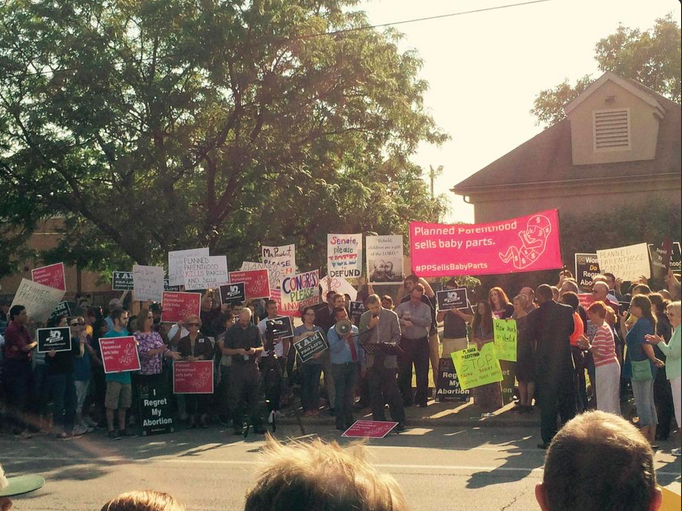
I Protested Planned Parenthood
TRENDING AT PATHEOS Evangelical

How the author of the world's best hymn...
I've been working with John Newton for a while now. This makes...

Long before this Lectio Divina, Psalm 130 - the song - started...

What About the Trees? Another Living Parable
After I finished writing the last article about falling leaves as a...

Why Classical Education Is a Conversation, Not a...
Come and Read: Joy in Classical Education When I was a little...

Falling Leaves: A Living Parable on Letting Go
I’ve spent the vast majority of my life in the southeast corner...

Cornell University has received a great deal of negative publicity and intense...
view all Evangelical blogs
Ad-Free & Subscriber Log-In Subscription Support
- About Us
- 2026 Calendar
- Videos
- Podcasts
- Library of World Religions
- Faith In Media Tracker
- Advertise With Us
- Write for Us
- Privacy Policy
- Terms of Service
- Do Not Sell My Data
- Contact Us
- Radiant Digital
- Manage Newsletter Subscriptions
- Unsubscribe From Notifications
- Sitemap
Copyright 2008-2026, Patheos. All rights reserved.
Subscription Support Ad-Free & Subscriber Log-In
Follow Patheos