
BuddhistCatholicContemplativeEvangelicalGeneral ChristianHinduJewishLatter-day SaintMuslimNew VisionsProgressive Christian
Beliefs
- Buddhist
- Catholic
- Contemplative
- Evangelical
- General Christian
- Hindu
- Jewish
- Latter-day Saint
- More Voices
- Muslim
- New Visions
- Pagan
- Progressive Christian
Topics
- Religion News
- Food and Religion
- Sports and Religion
- Religious Art
- Religious Music and Entertainment
- Religious Events
- History and Religion
- Style and Religion
- Politics and Religion
- Women in Religion
- Recreation Outdoors and Religion
- Business Finance and Religion
- Careers Workplace and Religion
- Education and Religion
- Family Parenting and Religion
- Health Fitness and Religion
- Home and Religion
- Relationships and Religion
- Technology and Religion
- Travel and Religion
Columnists
- Buddhist Columnists
- Business Finance and Religion Columnists
- Careers Workplace and Religion Columnists
- Catholic Columnists
- Contemplative Columnists
- Education and Religion Columnists
- Evangelists Columnists
- Family Parenting and Religion Columnists
- General Christian Columnists
- Health Fitness and Religion Columnists
- Hindu Columnists
- History and Religion Columnists
- Home and Religion Columnists
- Jewish Columnists
- More Voices Columnists
- Latter Day Columnists
- Muslim Columnists
- New Visions Columnists
- Nonreligious Columnists
- Pagan Columnists
- Politics and Religion Columnists
- Progressive Columnists
- Recreation Outdoors and Religion Columnists
- Relationships and Religion Columnists
- Religion News Columnists
- Religious Art Columnists
- Religious Events Columnists
- Religious Music and Entertainment Columnists
- Sports and Religion Columnists
- Style and Religion Columnists
- Technology and Religion Columnists
- Travel and Religion Columnists
- Women in Religion Columnists
Resource Library
- 2026 Calendar
- Library of World Religions
- The 100 Most Holy Places on Earth
- Patheos Answers
- Podcasts
- Videos
- Faith Leaders Database
- Anglican Episcopalian
- Bahai
- Baptist
- Buddhism
- Christianity
- Confucianism
- Eastern Orthodoxy
- Hinduism
- Holiness and Pentecostal
- ISKCON
- Islam
- Judaism
- Lutheran
- Methodist
- The Church of Jesus Christ of Latter-day Saints
- New Age
- Paganism
- Presbytarian and Reformed
- Protestantism
- Religion Behind the Scenes
- Roman Catholic
- Scientology
- Shia Islam
- Sikhism
- Sufism
- Sunni Islam
- Taoism
- Zen
- See all religions
Research Tools
 Ad-Free & Subscriber Log-In Subscription Support
Ad-Free & Subscriber Log-In Subscription Support
Follow Patheos 

- Trending:
- Forgiveness
- |
- Marriage
- |
- Consciousness
- |
- Death Penalty
- |
- Election
- |
- Halloween
 Samuel D. James
- Home
- Evangelical
- Evangelical on the Inside
Evangelical on the Inside
Last updated on: March 23, 2014 at 9:11 pm by Samuel James
Evangelical on the Inside 2014-03-23T21:11:53-04:00 Samuel James
Patheos Explore the world's faith through different perspectives on religion and spirituality! Patheos has the views of the prevalent religions and spiritualities of the world.
I appreciate Wesley J Smith’s insightful article at First Things, in which he encourages Christians to resist despair over changing cultural morality. He quotes Dennis Miller approvingly in admonishing confessional believers to live “from the inside out,” rather than “the outside-in.”
What does he mean? Don’t sweat the general culture’s disapproval. Don’t look “outside” ourselves for personal validation. In short, don’t allow our personal joie de vivre to depend on the outcome of elections, court rulings, media fairness, or what others think, believe, or do.c
This takes discipline. So, focus on those “internal” things that give your life meaning; faith, personal philosophy, family and friends. Take the time to recreate, travel, learn, and relax with hobbies. Do these things and we will be at the cause of our lives, rather than the effect of the cultural environment—to the point that the dysfunctional world we inhabit will lose its ability to disrupt the things we care most about.
This is true. There is not one example in the Bible of believers being commanded to find their joy in “the state of things.” And as Smith points out, the socio-political climate in which the New Testament was written was hardly friendly to Christian sensibilities. To the extent that confessional Christians are able to advance Kingdom work without becoming defined by the favor–or lack thereof–bestowed on them by mainstream society, the more Christ-like we will actually be. 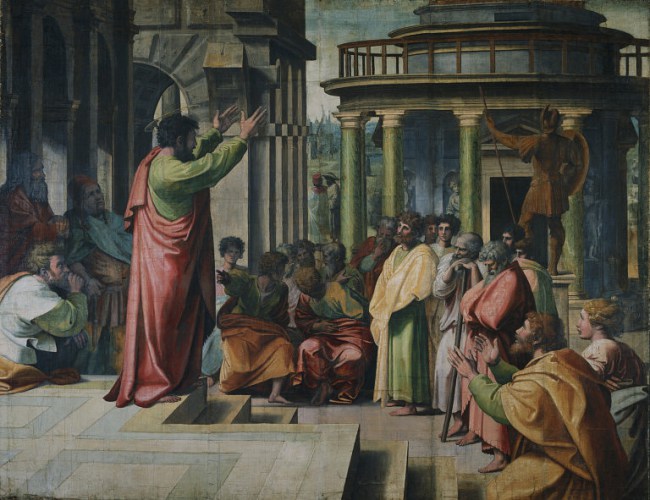
I share this burden with Wesley Smith. I have noted the tendency for hand wringing that many public evangelicals have. As a pastor’s kid who went to Bible college and has lived 25+ years in the very trenches of evangelical culture, I know good and well that you are more likely to attract a crowd with “Take Back America” than with “How to Forgive Like Jesus.” The Emergent Church movement, with which I have numerous serious problems, nevertheless is commendable for its repudiation of a poli-scare evangelicalism. American Christians should absolutely be more concerned with living radically than with the Tea Party.
And yet, I wish Smith would have considered more why this identity confusion exists. In my view, the advent of evangelicalism in America was itself a reaction to the clash between theological modernism, which dismissed the core tenets of the orthodox faith in favor of a social gospel, and fundamentalism, which expressed itself as a incubatory arrogance about Biblical interpretation. Caught between these two unbiblical options, evangelicals sought a coherent narrative of “Christ transforming culture,” a worldview which articulated how the Gospel of Jesus applied not just to theological life but also to vocation, sex, politics, etc.
“The Bible is not exhaustive truth,” said Francis Schaeffer, “but it is True Truth.” In other words, the Bible does not contain every singe piece of truth that can be found, but all truth in the universe is rooted in the transcendent truth claims of the Biblical Gospel. The implications for this articulation are obvious: Rather than a privatized, ritualistic Christianity, evangelicals seek a robustly relevant Gospel-weltanschauung. And the social implications of such a far reaching Gospel arise naturally, not just in proseltyzing, but in social activism, sex ethics, and a Christian view of work.
Unless you understand this foundation of evangelical faith, you won’t be able to speak of the “culture wars” with anything other than a curious disdain. For many evangelicals (I want to say “most,” but won’t), the cultural and political dialogues that we participate in are not motivated by a desire to become a new “moral majority.” It is simply an inability, through our theological commitments, to privatize the Gospel.
I don’t think a privatized faith is what Wesley Smith is recommending. It sounds more like living inside out is an awareness that Gospel transformation is rooted in piety, not policy. The moral tailspin of Western civilization cannot be the preeminent concern of Christian lives. After all, the essence of the Gospel is resurrection life. A preoccupatio with the effects of sin, be it personal or public, can signal a significant misunderstanding of Christ’s atonement.
And yet, I think it is healthy to admit that cultural pressure on confessional Christians has risen, and is rising. And that is a serious development. As Ross Douthat rightly points out, the argument over whether 2014 American Christians can call themselves “persecuted” is really the wrong argument.
I don’t know what religious life in the United States will look like in fifty years if current trends (the decline of religious affiliation, the political weaknesses of the churches, the emergence of a kind of liberal anti-clericalism) accelerate, but I do know that beliefs can be pressured without being persecuted; disfavored without being explicitly discriminated against; challenged without being subjugated. And preparing for that complexity, rather than for a perfectly clarifying, “all priests to jail” moment, seems to me to be the task facing believers now…
I quite agree with Beutler that social pressure on religion is not the same as state pressure, and that the religious response to social change can’t be to invoke the First Amendment and cry “discrimination.” But the issues in play right now are legal and political as well as cultural, and on the policy front liberalism shouldn’t be in the business of scare-quoting “religious freedom” in cases where existing religious liberties are actually being put up for debate.
The point of Wesley Smith’s article was not to deny any of this, or even to discuss the state of Christians and culture.He makes a point to say that his words are “not a call to disengagement.” But it stands to reason that the inside out living which Smith desires to see might be more complex than he realizes. For many Christians, it won’t simply be an issue of investing energy in hobbies rather than social issues, or enjoying family as opposed to articulating a Gospel view of life. The evangelical impulse, which many misunderstand and almost as many unfairly caricature, is towards a holistic life displaying the full truth of divine revelation. Such a life must begin from the inside out, but for better or worse, won’t be able to stay inside for long.
Next Post

April 24, 2014 Christianity and Liberalism: Still Different Religions
Browse Our Archives
Select a Category abortion bible books Christianity Current events DVD of the Week education Essays Ethics Fun Liberal Christianity life Mailbag Monday media Movies My Essential Movies philosophy Politics pop culture Quotes religion Southern Baptist Convention sports theology Uncategorized video Weekend Roundup
Select a Month October 2015 September 2015 August 2015 July 2015 June 2015 May 2015 April 2015 March 2015 February 2015 January 2015 December 2014 November 2014 October 2014 September 2014 August 2014 July 2014 June 2014 May 2014 April 2014 March 2014 February 2014 November 2013
Follow Us!
TAKE THE
Religious Wisdom Quiz
What punishment did God send after David counted the fighting men of Israel?
Select your answer to see how you score.
Defeat in battle Flood Plague Famine
Related posts from Samuel D. James

Russell Moore on Evangelicals and Donald Trump

Going to Church, Skipping Donald Trump


The Myth of "Adult Entertainment"
TRENDING AT PATHEOS Evangelical

The REST of Your Life: A Creative Wrestles...
This week I had a conversation with a good friend from church....

How the author of the world's best hymn...
I've been working with John Newton for a while now. This makes...

Long before this Lectio Divina, Psalm 130 - the song - started...

What About the Trees? Another Living Parable
After I finished writing the last article about falling leaves as a...

Why Classical Education Is a Conversation, Not a...
Come and Read: Joy in Classical Education When I was a little...

Cornell University has received a great deal of negative publicity and intense...
view all Evangelical blogs
Ad-Free & Subscriber Log-In Subscription Support
- About Us
- 2026 Calendar
- Videos
- Podcasts
- Library of World Religions
- Faith In Media Tracker
- Advertise With Us
- Write for Us
- Privacy Policy
- Terms of Service
- Do Not Sell My Data
- Contact Us
- Radiant Digital
- Manage Newsletter Subscriptions
- Unsubscribe From Notifications
- Sitemap
Copyright 2008-2026, Patheos. All rights reserved.
Subscription Support Ad-Free & Subscriber Log-In
Follow Patheos