
BuddhistCatholicContemplativeEvangelicalGeneral ChristianHinduJewishLatter-day SaintMuslimNew VisionsProgressive Christian
Beliefs
- Buddhist
- Catholic
- Contemplative
- Evangelical
- General Christian
- Hindu
- Jewish
- Latter-day Saint
- More Voices
- Muslim
- New Visions
- Pagan
- Progressive Christian
Topics
- Religion News
- Food and Religion
- Sports and Religion
- Religious Art
- Religious Music and Entertainment
- Religious Events
- History and Religion
- Style and Religion
- Politics and Religion
- Women in Religion
- Recreation Outdoors and Religion
- Business Finance and Religion
- Careers Workplace and Religion
- Education and Religion
- Family Parenting and Religion
- Health Fitness and Religion
- Home and Religion
- Relationships and Religion
- Technology and Religion
- Travel and Religion
Columnists
- Buddhist Columnists
- Business Finance and Religion Columnists
- Careers Workplace and Religion Columnists
- Catholic Columnists
- Contemplative Columnists
- Education and Religion Columnists
- Evangelists Columnists
- Family Parenting and Religion Columnists
- General Christian Columnists
- Health Fitness and Religion Columnists
- Hindu Columnists
- History and Religion Columnists
- Home and Religion Columnists
- Jewish Columnists
- More Voices Columnists
- Latter Day Columnists
- Muslim Columnists
- New Visions Columnists
- Nonreligious Columnists
- Pagan Columnists
- Politics and Religion Columnists
- Progressive Columnists
- Recreation Outdoors and Religion Columnists
- Relationships and Religion Columnists
- Religion News Columnists
- Religious Art Columnists
- Religious Events Columnists
- Religious Music and Entertainment Columnists
- Sports and Religion Columnists
- Style and Religion Columnists
- Technology and Religion Columnists
- Travel and Religion Columnists
- Women in Religion Columnists
Resource Library
- 2026 Calendar
- Library of World Religions
- The 100 Most Holy Places on Earth
- Patheos Answers
- Podcasts
- Videos
- Faith Leaders Database
- Anglican Episcopalian
- Bahai
- Baptist
- Buddhism
- Christianity
- Confucianism
- Eastern Orthodoxy
- Hinduism
- Holiness and Pentecostal
- ISKCON
- Islam
- Judaism
- Lutheran
- Methodist
- The Church of Jesus Christ of Latter-day Saints
- New Age
- Paganism
- Presbytarian and Reformed
- Protestantism
- Religion Behind the Scenes
- Roman Catholic
- Scientology
- Shia Islam
- Sikhism
- Sufism
- Sunni Islam
- Taoism
- Zen
- See all religions
Research Tools
 Ad-Free & Subscriber Log-In Subscription Support
Ad-Free & Subscriber Log-In Subscription Support
Follow Patheos 

- Trending:
- Forgiveness
- |
- Marriage
- |
- Consciousness
- |
- Death Penalty
- |
- Election
- |
- Halloween
 Inebriate Me
- Home
- Catholic
- Rethinking the Death Penalty
Rethinking the Death Penalty
Last updated on: February 2, 2015 at 1:22 pm by Pascal-Emmanuel Gobry
Rethinking the Death Penalty 2015-02-02T13:22:49+01:00 Pascal-Emmanuel Gobry
Patheos Explore the world's faith through different perspectives on religion and spirituality! Patheos has the views of the prevalent religions and spiritualities of the world.
I can’t really write a massive post about our Christian duty to conform ourselves to Christ through submission to the Magisterium and not take my own medicine. We are all called to struggle with Church doctrine, to let ourselves be transformed by the renewal of our minds, through the Spirit of sonship.
Hence, the death penalty. Years ago I wrote this post in support of the death penalty, and, I guess, I still think it’s valid. There are no absolute rights; prison, particularly life imprisonment, is spectacularly cruel.
And now, as a Catholic, it’s easy to lawyer your way to where you want. After all, Catholic doctrine has long accepted the death penalty; John Paul II and subsequent Popes made it clear that their stance on the death penalty was not dogma.
But, here’s what the Catechism says (§ 2267):
Assuming that the guilty party’s identity and responsibility have been fully determined, the traditional teaching of the Church does not exclude recourse to the death penalty, if this is the only possible way of effectively defending human lives against the unjust aggressor.
If, however, non-lethal means are sufficient to defend and protect people’s safety from the aggressor, authority will limit itself to such means, as these are more in keeping with the concrete conditions of the common good and more in conformity to the dignity of the human person.
Today, in fact, as a consequence of the possibilities which the state has for effectively preventing crime, by rendering one who has committed an offense incapable of doing harm – without definitely taking away from him the possibility of redeeming himself – the cases in which the execution of the offender is an absolute necessity “are very rare, if not practically nonexistent.”
That doesn’t leave much wiggle room, does it?
In a sense, this is “beside the point”: the Catechism argues on the basis of consequences; which I guess it has to, because Church doctrine allowing the death penalty was also argued on the basis of consequences, which is what the Church does when it wants to commit the apostasies it can. (If we let heretics live, how many poor souls will end up in the flames of Hell!) To me the argument is not about consequences.
But there is also a key phrase here: “the dignity of the human person”. If Christianity really represents, in David Bentley Hart’s phrase, “total humanism”, the belief that each and every human person is of infinite value, then, well, there you go. If each and every human person is of infinite value, there is no value that is commensurable; and civil authority certainly should not kill anyone when there are other available means of protecting the common good.
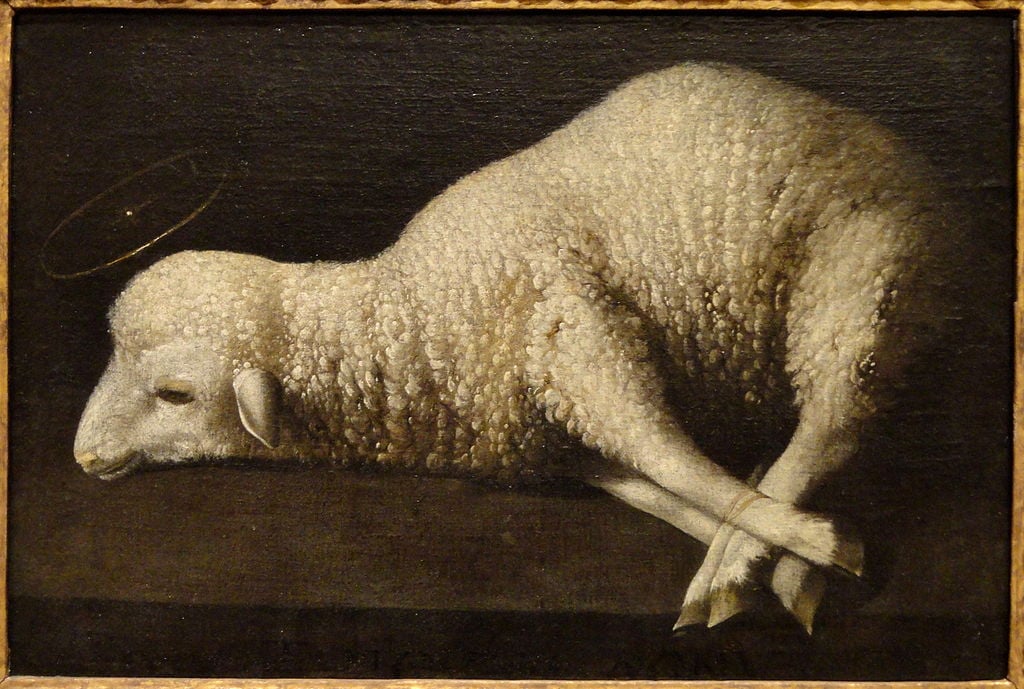
Another way to look at this is through the Girardian critique of scapegoating. All civil punishment, necessary though it is, is always ultimately an instance of scapegoating. Civil authority accomplishes justice by punishing and excluding an individual from society. It is the restoring of social order through sacrifice, and whether this sacrifice is “just” might be a matter of sheer coincidence more often than we can contemplate. We humans, as the parable of the Grand Inquisitor reminds us, spend our time killing Jesus, and our duty as Christians, as apostles of the Kingdom, is to work towards a world where we do that less and less.
Perhaps a first step towards not killing Jesus is not killing anyone at all.
Previous Post

February 2, 2015
Bloody Moralism
Next Post
February 2, 2015 Words of Wisdom on Pope Francis
Browse Our Archives
Select a Category Elsewhere Mary New Distributism Parish of PEG Synod for the Famiy Theology of Women Uncategorized What I'm Reading
Select a Month June 2015 May 2015 April 2015 March 2015 February 2015 January 2015 December 2014 November 2014 October 2014 September 2014 August 2014 July 2014 June 2014 May 2014 April 2014 March 2014
Follow Us!
TAKE THE
Religious Wisdom Quiz
What year did the Great Schism occur, splitting the Eastern and Western churches?
Select your answer to see how you score.
1517 AD 500 AD 1054 AD 325 AD
Related posts from Inebriate Me


A Quick Note About What An Anathema Does...

When All Earthly Hopes Fade, That Old-Time Religion...

TRENDING AT PATHEOS Catholic

Rejecting Doom: Christian Hope And Human Action
Christianity is a religion of hope. We are to have hope and...

It’s What Comes From Within Which Matters
One of the most difficult things for us to understand is why...

Why I Choose the Eucharist Over the Sermon
Choose the Eucharist, Not the Sermon What are we supposed to get...

5 Design Elements Found in Spiritually Rooted Homes
Putting Spirituality Into Home Decor Our homes are more than our living...

Credo: A Story of God Told with the...
About 10 years ago, I began to imagine a personal "Credo" that...

The Anatomy of Divine Revelation in Catholic Thought
The claim that God has made Himself known to human beings is...
view all Catholic blogs
Ad-Free & Subscriber Log-In Subscription Support
- About Us
- 2026 Calendar
- Videos
- Podcasts
- Library of World Religions
- Faith In Media Tracker
- Advertise With Us
- Write for Us
- Privacy Policy
- Terms of Service
- Do Not Sell My Data
- Contact Us
- Radiant Digital
- Manage Newsletter Subscriptions
- Unsubscribe From Notifications
- Sitemap
Copyright 2008-2026, Patheos. All rights reserved.
Subscription Support Ad-Free & Subscriber Log-In
Follow Patheos