
BuddhistCatholicContemplativeEvangelicalGeneral ChristianHinduJewishLatter-day SaintMuslimNew VisionsProgressive Christian
Beliefs
- Buddhist
- Catholic
- Contemplative
- Evangelical
- General Christian
- Hindu
- Jewish
- Latter-day Saint
- More Voices
- Muslim
- New Visions
- Pagan
- Progressive Christian
Topics
- Religion News
- Food and Religion
- Sports and Religion
- Religious Art
- Religious Music and Entertainment
- Religious Events
- History and Religion
- Style and Religion
- Politics and Religion
- Women in Religion
- Recreation Outdoors and Religion
- Business Finance and Religion
- Careers Workplace and Religion
- Education and Religion
- Family Parenting and Religion
- Health Fitness and Religion
- Home and Religion
- Relationships and Religion
- Technology and Religion
- Travel and Religion
Columnists
- Buddhist Columnists
- Business Finance and Religion Columnists
- Careers Workplace and Religion Columnists
- Catholic Columnists
- Contemplative Columnists
- Education and Religion Columnists
- Evangelists Columnists
- Family Parenting and Religion Columnists
- General Christian Columnists
- Health Fitness and Religion Columnists
- Hindu Columnists
- History and Religion Columnists
- Home and Religion Columnists
- Jewish Columnists
- More Voices Columnists
- Latter Day Columnists
- Muslim Columnists
- New Visions Columnists
- Nonreligious Columnists
- Pagan Columnists
- Politics and Religion Columnists
- Progressive Columnists
- Recreation Outdoors and Religion Columnists
- Relationships and Religion Columnists
- Religion News Columnists
- Religious Art Columnists
- Religious Events Columnists
- Religious Music and Entertainment Columnists
- Sports and Religion Columnists
- Style and Religion Columnists
- Technology and Religion Columnists
- Travel and Religion Columnists
- Women in Religion Columnists
Resource Library
- 2026 Calendar
- Library of World Religions
- The 100 Most Holy Places on Earth
- Patheos Answers
- Podcasts
- Videos
- Faith Leaders Database
- Anglican Episcopalian
- Bahai
- Baptist
- Buddhism
- Christianity
- Confucianism
- Eastern Orthodoxy
- Hinduism
- Holiness and Pentecostal
- ISKCON
- Islam
- Judaism
- Lutheran
- Methodist
- The Church of Jesus Christ of Latter-day Saints
- New Age
- Paganism
- Presbytarian and Reformed
- Protestantism
- Religion Behind the Scenes
- Roman Catholic
- Scientology
- Shia Islam
- Sikhism
- Sufism
- Sunni Islam
- Taoism
- Zen
- See all religions
Research Tools
 Ad-Free & Subscriber Log-In Subscription Support
Ad-Free & Subscriber Log-In Subscription Support
Follow Patheos 

- Trending:
- Forgiveness
- |
- Marriage
- |
- Consciousness
- |
- Death Penalty
- |
- Election
- |
- Halloween
 Inebriate Me
- Home
- Catholic
- C.S. Lewis Ad Limina Apostolorum
C.S. Lewis Ad Limina Apostolorum
Last updated on: February 10, 2015 at 9:27 am by Pascal-Emmanuel Gobry
C.S. Lewis Ad Limina Apostolorum 2015-02-10T09:27:27+01:00 Pascal-Emmanuel Gobry
Patheos Explore the world's faith through different perspectives on religion and spirituality! Patheos has the views of the prevalent religions and spiritualities of the world.
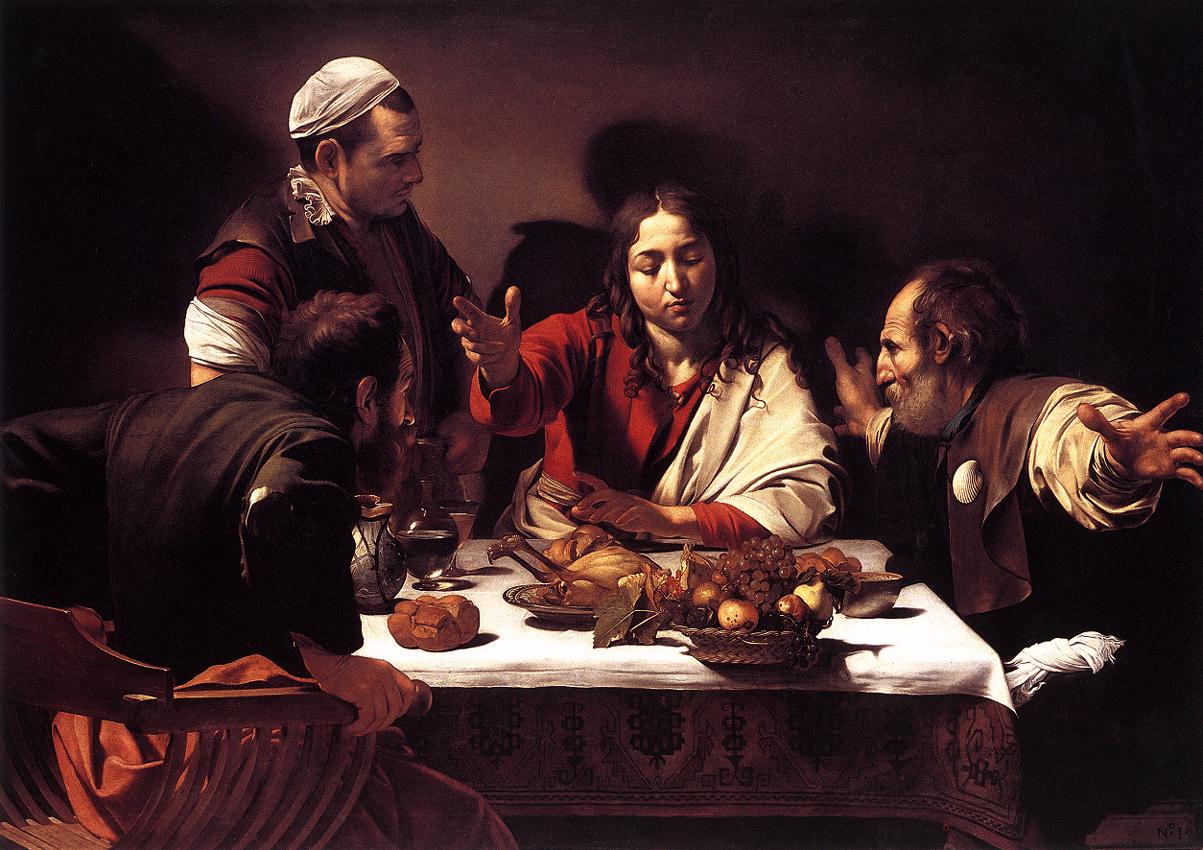
The great writer once gave a stated reason for not embracing the Catholic Church (his good friend J.R.R. Tolkien thought the great man still had a bit of Ulster anti-Catholicism in him) in a quote that has become famous, at least in some circles:
“The real reason why I cannot be in communion with you [Catholics] is not my disagreement with this or that Roman doctrine, but that to accept your Church means, not to accept a given body of doctrine, but to accept in advance any doctrine your Church hereafter produces. It is like being asked to agree not only to what a man has said but also to what he is going to say.”
To which a Catholic could only respond, but that’s the point. (In this case, it’s telling that when googling the phrase I found it on a Protestant apologetics site.)
Famously, the Book of Exodus has the people saying to Moses when he descends from Mount Sinai: “We will do and we will hear.” Rabbinic as well as apostolic tradition have interpreted this strange phrasing as meaning that the people assent to do everything the Lord commands before they even know what that is.
This is also a traditional interpretation of the Fall: why did God put up a tree in the garden to begin with? Why did he forbid Adam from eating the fruit and then let him do it? Tim Keller has this great line, talking about one of his children who was headstrong and was always saying things like “But Dad, I want to obey you; if you would just explain it to me I would do it”; Keller’s comeback was: “If I have to explain everything to you, you’re not obeying me, you’re just agreeing with me.” God the Father wanted Adam to obey, not because he agreed, not because he thought it was a good idea to obey, but simply out of filial love. To, in a word, shed his pride–and it is our constant inability to do so which has left us in our wretched condition of sin.
To say that this is an overriding Biblical theme is almost an understatement. We are never so clever as when we are looking for reasons not to obey; at the drop of a hat, we become master theologians, biblical scholars, ethicists, philosophers, canon lawyers. All of a sudden, we have all the best excuses in the world (Adam’s behavior, again, is instructive here: once he is found out, he blames Eve, he blames the Serpent, he blames God (“The woman you gave me”)–in other words, at that point, literally every single other person that exists, except himself). And God keeps saying: “Why won’t you just obey?”
And, of course, this Biblical theme is supremely set out by the Gospels in Jesus, who comes down to us to give us an example of filial obedience, even unto the shameful death of the Cross, even unto the end of God-forsakenness of Holy Saturday. At Gethsemane, Jesus does not say “You know what? You really are right, it’s really better for your salvation plan that I go to the Cross”; he says “But not my will, but your will.” And the Gospels record this as an example to us.
All of this (as well as the Incarnation) makes necessary what John Henry Newman called “a living voice.” We are all masters when it comes to reading what we want in the Bible, or whatever other dead source. (If you’re a Protestant, I’m sure you can come up with an example of other people who are clearly kidding themselves when they claim to be applying the Bible–but not you, you’re immune.) We need, in the end, a living voice, who can catch up to you, who can cut through our pious self-delusions.
In the Catholic tradition, religious take an actual vow of obedience. They “agree not only to what a man has said but also to what he is going to say.” And our hagiographies record so many examples of great saints whose callings were frustrated by incompetent or callous or downright corrupt hierarchies, but who nonetheless responded with filial obedience, trusting in the Spirit and in Divine Providence.
In the end, Lewis wanted to be able to say “I will hear, and maybe I will do.” He refused to become a Catholic because he understood very well that to do so was to become unable to reserve the right to object–which, of course, in the Bible, is the point of discipleship. He was open to the Word, as long as he kept a veto right.
Now, it should be stressed that neither in the Bible nor in Catholicism is obedience the same thing as blind submission. Grace perfects nature, and God is the unconditioned source of the True, the Good and the Beautiful, so to obey is in the end to become perfected and radiant and joyful, and God’s commands are never capricious or arbitrary. Like any good Father, although God does not negotiate his authority, he nonetheless believes in us and gives us reasons most of the time. He has made us in his image and likeness, endowed with reason and liberty, and so we are called to exercise those faculties; obedience does not erase them, but on the contrary, it educates and therefore enhances them.
No, the key point is idolatry: for what stake, for whose stake, am I doing what I am doing? The Faith gives us only one answer: ad majorem Dei gloriam.
Sin, in the classical understanding, is a dis-order; because of pride, we become ordered not towards our Creator in whose very Being we have our being, towards the source of the unconditioned Good. In this life, then, by grace, we become re-adjusted, re-ordered, not towards ourselves and our own devices, but towards God. This is why obedience is so essential: not, again, because it is blind submission, but because it the necessary condition and the manifestation of a correct ordering of our selves towards that ultimate reality whence all things come and to which all things go. In the Bible, God’s people are never without a living voice: God Himself, or His Angel, or the patriarchs, or the priests, or the prophets. God knows us too well to leave us to our own devices; he is too good of a Father. And so the New Testament records God Himself, in His Incarnate Word, instituting an apostolic college with Peter at its head, to guard the deposit of faith and be this living voice. Or, in any case, that’s what students of the apostles like Ignatius and Irenaeus and Clement thought was going on.
One thing I have tried to touch upon previously is the great spiritual aid that can come from having a robust Catechism. You cannot run. You cannot hide. It is this wonderful living voice that, with the grace of the Spirit, allows us to re-order ourselves, to break our sinful pride, to bear the Cross, to say “I will do and I will hear.”
What we are called to is, in the image of Christ, a total gift of self, a total abandonment. Fearful it is to fall in the hands of the living God. I understand very well why Lewis balked.
Previous Post

February 9, 2015
How To Historicize The Historicizers
Next Post
February 10, 2015 Iris Murdoch and the Death of Philosophy
Browse Our Archives
Select a Category Elsewhere Mary New Distributism Parish of PEG Synod for the Famiy Theology of Women Uncategorized What I'm Reading
Select a Month June 2015 May 2015 April 2015 March 2015 February 2015 January 2015 December 2014 November 2014 October 2014 September 2014 August 2014 July 2014 June 2014 May 2014 April 2014 March 2014
Follow Us!
TAKE THE
Religious Wisdom Quiz
What is the largest Oriental Orthodox church by population?
Select your answer to see how you score.
Syriac Orthodox Coptic Orthodox Armenian Apostolic Ethiopian Orthodox
Related posts from Inebriate Me


A Quick Note About What An Anathema Does...

When All Earthly Hopes Fade, That Old-Time Religion...

TRENDING AT PATHEOS Catholic

Rejecting Doom: Christian Hope And Human Action
Christianity is a religion of hope. We are to have hope and...

It’s What Comes From Within Which Matters
One of the most difficult things for us to understand is why...

Why I Choose the Eucharist Over the Sermon
Choose the Eucharist, Not the Sermon What are we supposed to get...

5 Design Elements Found in Spiritually Rooted Homes
Putting Spirituality Into Home Decor Our homes are more than our living...

Credo: A Story of God Told with the...
About 10 years ago, I began to imagine a personal "Credo" that...

The Anatomy of Divine Revelation in Catholic Thought
The claim that God has made Himself known to human beings is...
view all Catholic blogs
Ad-Free & Subscriber Log-In Subscription Support
- About Us
- 2026 Calendar
- Videos
- Podcasts
- Library of World Religions
- Faith In Media Tracker
- Advertise With Us
- Write for Us
- Privacy Policy
- Terms of Service
- Do Not Sell My Data
- Contact Us
- Radiant Digital
- Manage Newsletter Subscriptions
- Unsubscribe From Notifications
- Sitemap
Copyright 2008-2026, Patheos. All rights reserved.
Subscription Support Ad-Free & Subscriber Log-In
Follow Patheos