
BuddhistCatholicContemplativeEvangelicalGeneral ChristianHinduJewishLatter-day SaintMuslimNew VisionsProgressive Christian
Beliefs
- Buddhist
- Catholic
- Contemplative
- Evangelical
- General Christian
- Hindu
- Jewish
- Latter-day Saint
- More Voices
- Muslim
- New Visions
- Pagan
- Progressive Christian
Topics
- Religion News
- Food and Religion
- Sports and Religion
- Religious Art
- Religious Music and Entertainment
- Religious Events
- History and Religion
- Style and Religion
- Politics and Religion
- Women in Religion
- Recreation Outdoors and Religion
- Business Finance and Religion
- Careers Workplace and Religion
- Education and Religion
- Family Parenting and Religion
- Health Fitness and Religion
- Home and Religion
- Relationships and Religion
- Technology and Religion
- Travel and Religion
Columnists
- Buddhist Columnists
- Business Finance and Religion Columnists
- Careers Workplace and Religion Columnists
- Catholic Columnists
- Contemplative Columnists
- Education and Religion Columnists
- Evangelists Columnists
- Family Parenting and Religion Columnists
- General Christian Columnists
- Health Fitness and Religion Columnists
- Hindu Columnists
- History and Religion Columnists
- Home and Religion Columnists
- Jewish Columnists
- More Voices Columnists
- Latter Day Columnists
- Muslim Columnists
- New Visions Columnists
- Nonreligious Columnists
- Pagan Columnists
- Politics and Religion Columnists
- Progressive Columnists
- Recreation Outdoors and Religion Columnists
- Relationships and Religion Columnists
- Religion News Columnists
- Religious Art Columnists
- Religious Events Columnists
- Religious Music and Entertainment Columnists
- Sports and Religion Columnists
- Style and Religion Columnists
- Technology and Religion Columnists
- Travel and Religion Columnists
- Women in Religion Columnists
Resource Library
- 2026 Calendar
- Library of World Religions
- The 100 Most Holy Places on Earth
- Patheos Answers
- Podcasts
- Videos
- Faith Leaders Database
- Anglican Episcopalian
- Bahai
- Baptist
- Buddhism
- Christianity
- Confucianism
- Eastern Orthodoxy
- Hinduism
- Holiness and Pentecostal
- ISKCON
- Islam
- Judaism
- Lutheran
- Methodist
- The Church of Jesus Christ of Latter-day Saints
- New Age
- Paganism
- Presbytarian and Reformed
- Protestantism
- Religion Behind the Scenes
- Roman Catholic
- Scientology
- Shia Islam
- Sikhism
- Sufism
- Sunni Islam
- Taoism
- Zen
- See all religions
Research Tools
 Ad-Free & Subscriber Log-In Subscription Support
Ad-Free & Subscriber Log-In Subscription Support
Follow Patheos 

- Trending:
- Forgiveness
- |
- Marriage
- |
- Consciousness
- |
- Death Penalty
- |
- Election
- |
- Halloween
 Inebriate Me
- Home
- Catholic
- Preliminary Thoughts On Theological Aesthetics
Preliminary Thoughts On Theological Aesthetics
Last updated on: September 20, 2014 at 6:43 pm by Pascal-Emmanuel Gobry
Preliminary Thoughts On Theological Aesthetics 2014-09-20T18:43:40+01:00 Pascal-Emmanuel Gobry
Patheos Explore the world's faith through different perspectives on religion and spirituality! Patheos has the views of the prevalent religions and spiritualities of the world.
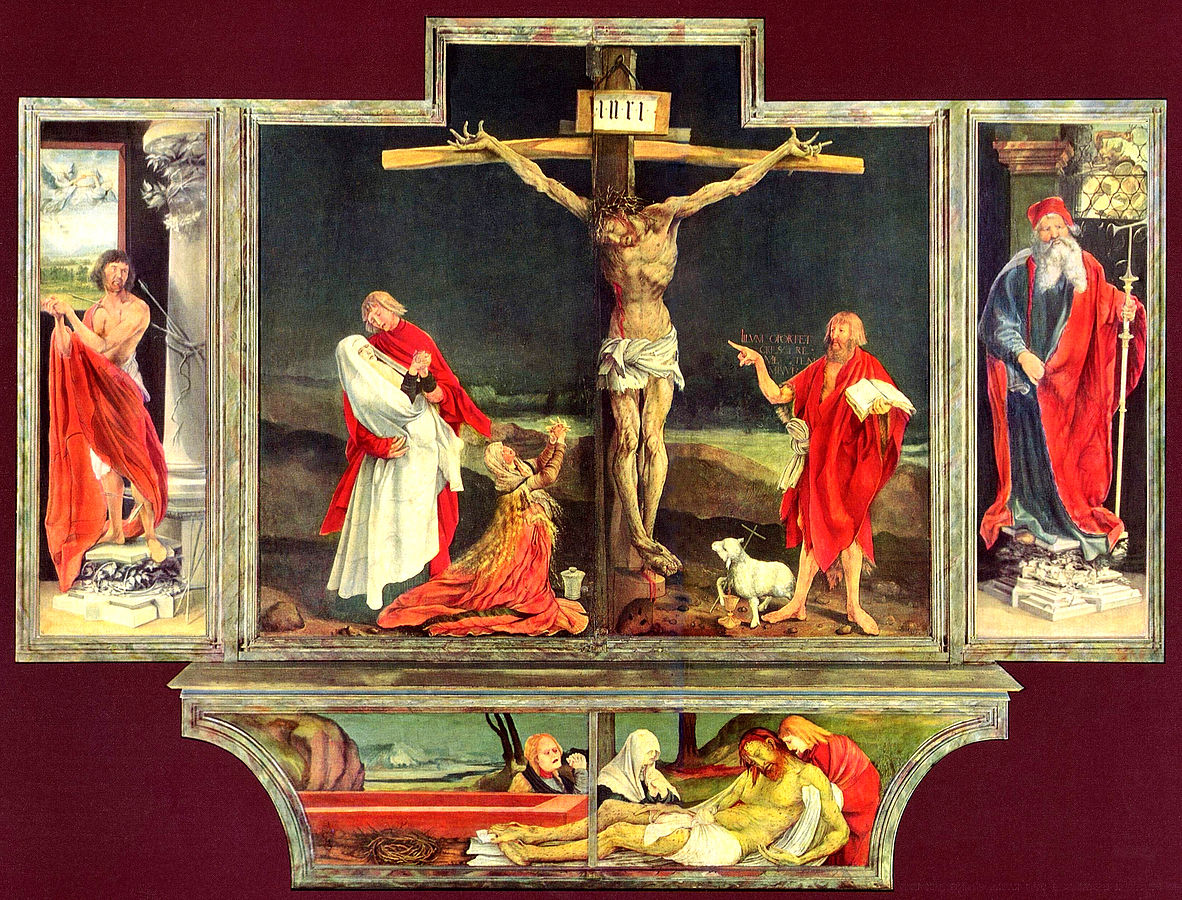
Since I’m on a Balthasarian kick these days, it’s impossible not to talk about the idea of theological aesthetics.
Much of Balthasar’s thought springs from the idea of the Beautiful as the “forgotten transcendental.” Think of the three Great Transcendentals of classical Greek philosophy: the True, the Good and the Beautiful. Both theology and philosophy place great emphasis on the first two and tend to overlook the third. Balthasar’s idea in writing a Theodramatik was precisely to give the Beautiful pride of place in our understanding of God. (In turn, this understanding of God as the Beautiful was important for the Fathers and remains important in Eastern Christianity, so this is part of the broader ressourcement of which Balthasar was such a key figure.)
There’s something very seductive about this idea. But not in the best way. A lot of theology, I fear (am I projecting?), like a lot of thinking, is driven by the drive to say something new; for orthodox theologians, this is made tricky by the necessity not to speculate “too far.” The idea of rereading theology through the lens of the Beautiful, then, is very seductive as a new “spin” to give on theology, without risking heretical speculation.
To this, I might bring in Balthasar’s sparring partner Karl Barth. The simplicity of Evangelical ecclesiology gives theology a very clear role: the Church’s job is simply to preach the Gospel; and Barth is clear: theology’s job is simply to be an aid to preaching. This has the very great virtue of making theology what I think it should be, which is a handmaid. What actually matters is to preach the Gospel, and theology is only there as a tool that makes that easier.
I had a friend in high school whose father was a very accomplished professional jazz guitarist. When he was a kid, my friend asked his father to teach him the guitar. “Sure, I’d love to,” my friend’s father told his son, “but first I want you to learn how to read sheet music, as well as the main chords and the basics of music theory.” Since my friend was a wiseass, he responded: “Well, Paul McCartney never learned any of that, and he seems to be doing fine.” And since my friend’s father was wise, he responded: “Yeah, but you’re not Paul McCartney.”
When St Francis founded his Order, he wanted to ban theology, and the teaching of theology, from the Franciscan family. It was just a distraction from preaching the Gospel and serving the poor. By the grace of God, Francis changed his mind–and if he hadn’t, it’s certain nobody today would know who he was. Francis was Paul McCartney. Most of us, Francis realized, aren’t. And because Francis changed his mind, we have two of the greatest Doctors in history, Anthony of Padua and Bonaventure.
All of Creation is a great big symphony, and we all have our part in the orchestra. Music theory is important, and necessary, and even wondrous–but the point of learning music theory is to make music. The two Great Commandments, and the Great Commission, are about doing things. I do think it is an important (the most important?) test of theology that it “cashes out as” (in one way or another, no matter how indirectly) Kingdom-work.
This was what was in the back of my mind when I added to Balthasar’s call for a “kneeling theology” a call for a “working” theology.
You might say that when it comes to the Transcendentals, I’m on Team Good. And maybe I am. It would be a caricature, but part of me wants to say that of the three Transcendentals, Western Tradition has emphasized the True, Eastern Tradition has emphasized the Beautiful–but the Gospel emphasizes the Good. I might even go as far as to say that the true “forgotten Transcendental” is the Good. Not because we don’t talk about it; we do; a lot. But very often we talk about it on the way to something else.
The Truth and the Beautiful are things we contemplate. But the Good is something we do.
It is about caritas in veritate, not veritas in caritate.
The God that we can derive from metaphysics, the prime mover, the uncaused cause, the Neoplatonist One, is (to me) almost impossible to imagine not sitting there, in the plenitude of his (its? her?) fullness of being and transcendence. This is not the God of the Bible (not that the true God does not have the attributes that metaphysics tells us any God must have; not that the metaphysical approach is wholly worthless). The God of the Bible is the hunter, relentless, never giving up, going beyond every limit to redeem his Creation. The economy of the Trinity is one of movement and action, the Father generating the Son and the Son responding, in the procession of the Spirit. God is actus purus. Creation is action, but moreover, the entire Christian love story, God’s self-revelation in Jesus Christ, is an action, an action that demands re-action.
Even the one with a purely contemplative vocation, in Saint Benedict’s great motto, must work.
How do we prevent theology from becoming a pietism for the intellectual? By calling it back to its vocation as a servant of the work of the Church. And does not a primarily aesthetic theology take a risk of distracting us from that goal?
Nonetheless… Nonetheless nonetheless nonetheless… (I swear, I’m not trying to do a dialectic.)
Is it not also true that a de-emphasizing of the Beautiful is one of the most depressing features of Modernity? Don’t we live in a world starved for beauty? To put the point more sharply, is not the totalitarian phenomenon to be understood at least in part as a reaction against Modernity’s de-aesthetization of the world and an attempt at re-aesthetizing it? And if so, is it not incumbent on the Church to provide a counter-program of re-aesthetization of the world so as to save Modernity from itself? And if the meaning of creaturely life, like the Son’s, is fundamentally eucharistic, and if the Eucharist is the “source and summit of all Christian life”, and if one of the ways the liturgy is the liturgy is to allow us to approach God through the Beautiful, then must not the Beautiful have a central place in our theology?
(Those are rhetorical questions. The answer is yes.)
Furthermore, is not one of our key pitfalls a theology of reciprocity, one where things are done and believed in order that something else may be accomplished? Are we not in need of ceaselessly reminding ourselves that the character of God is one of ontological generosity, unlike us sinful arch-apes who, without grace, only ever do things expecting something else in return? And if so, is not Beauty a great reminder of God’s ontological generosity? Is not the appeal of Beauty precisely that it is its own self-justification, that it serves no other purpose than itself, that it is, in and of itself and by itself, a permanent reminder of God’s permanent generosity, and of the sheer givenness and gratuity of all that exists? And, therefore, are we not then obliged to never regard Beauty as something incidental, as something extra, but on the contrary precisely because of its gratuity as something essential?
As you can tell, I have a lot more reading, and kneeling, and working to do.
Previous Post

September 20, 2014
Thanksgiving As The Meaning Of Life
Next Post
September 21, 2014 #TheologyOfWomen: The Prophetic Vocation
Browse Our Archives
Select a Category Elsewhere Mary New Distributism Parish of PEG Synod for the Famiy Theology of Women Uncategorized What I'm Reading
Select a Month June 2015 May 2015 April 2015 March 2015 February 2015 January 2015 December 2014 November 2014 October 2014 September 2014 August 2014 July 2014 June 2014 May 2014 April 2014 March 2014
Follow Us!
TAKE THE
Religious Wisdom Quiz
"I am the Alpha and the Omega, the ____ and the End,” says the Lord God.
Select your answer to see how you score.
Light Beginning Truth Eternal
Related posts from Inebriate Me


A Quick Note About What An Anathema Does...

When All Earthly Hopes Fade, That Old-Time Religion...

TRENDING AT PATHEOS Catholic

Rejecting Doom: Christian Hope And Human Action
Christianity is a religion of hope. We are to have hope and...

It’s What Comes From Within Which Matters
One of the most difficult things for us to understand is why...

Why I Choose the Eucharist Over the Sermon
Choose the Eucharist, Not the Sermon What are we supposed to get...

5 Design Elements Found in Spiritually Rooted Homes
Putting Spirituality Into Home Decor Our homes are more than our living...

Credo: A Story of God Told with the...
About 10 years ago, I began to imagine a personal "Credo" that...

The Anatomy of Divine Revelation in Catholic Thought
The claim that God has made Himself known to human beings is...
view all Catholic blogs
Ad-Free & Subscriber Log-In Subscription Support
- About Us
- 2026 Calendar
- Videos
- Podcasts
- Library of World Religions
- Faith In Media Tracker
- Advertise With Us
- Write for Us
- Privacy Policy
- Terms of Service
- Do Not Sell My Data
- Contact Us
- Radiant Digital
- Manage Newsletter Subscriptions
- Unsubscribe From Notifications
- Sitemap
Copyright 2008-2026, Patheos. All rights reserved.
Subscription Support Ad-Free & Subscriber Log-In
Follow Patheos