
BuddhistCatholicContemplativeEvangelicalGeneral ChristianHinduJewishLatter-day SaintMuslimNew VisionsProgressive Christian
Beliefs
- Buddhist
- Catholic
- Contemplative
- Evangelical
- General Christian
- Hindu
- Jewish
- Latter-day Saint
- More Voices
- Muslim
- New Visions
- Pagan
- Progressive Christian
Topics
- Religion News
- Food and Religion
- Sports and Religion
- Religious Art
- Religious Music and Entertainment
- Religious Events
- History and Religion
- Style and Religion
- Politics and Religion
- Women in Religion
- Recreation Outdoors and Religion
- Business Finance and Religion
- Careers Workplace and Religion
- Education and Religion
- Family Parenting and Religion
- Health Fitness and Religion
- Home and Religion
- Relationships and Religion
- Technology and Religion
- Travel and Religion
Columnists
- Buddhist Columnists
- Business Finance and Religion Columnists
- Careers Workplace and Religion Columnists
- Catholic Columnists
- Contemplative Columnists
- Education and Religion Columnists
- Evangelists Columnists
- Family Parenting and Religion Columnists
- General Christian Columnists
- Health Fitness and Religion Columnists
- Hindu Columnists
- History and Religion Columnists
- Home and Religion Columnists
- Jewish Columnists
- More Voices Columnists
- Latter Day Columnists
- Muslim Columnists
- New Visions Columnists
- Nonreligious Columnists
- Pagan Columnists
- Politics and Religion Columnists
- Progressive Columnists
- Recreation Outdoors and Religion Columnists
- Relationships and Religion Columnists
- Religion News Columnists
- Religious Art Columnists
- Religious Events Columnists
- Religious Music and Entertainment Columnists
- Sports and Religion Columnists
- Style and Religion Columnists
- Technology and Religion Columnists
- Travel and Religion Columnists
- Women in Religion Columnists
Resource Library
- 2026 Calendar
- Library of World Religions
- The 100 Most Holy Places on Earth
- Patheos Answers
- Podcasts
- Videos
- Faith Leaders Database
- Anglican Episcopalian
- Bahai
- Baptist
- Buddhism
- Christianity
- Confucianism
- Eastern Orthodoxy
- Hinduism
- Holiness and Pentecostal
- ISKCON
- Islam
- Judaism
- Lutheran
- Methodist
- The Church of Jesus Christ of Latter-day Saints
- New Age
- Paganism
- Presbytarian and Reformed
- Protestantism
- Religion Behind the Scenes
- Roman Catholic
- Scientology
- Shia Islam
- Sikhism
- Sufism
- Sunni Islam
- Taoism
- Zen
- See all religions
Research Tools
 Ad-Free & Subscriber Log-In Subscription Support
Ad-Free & Subscriber Log-In Subscription Support
Follow Patheos 

- Trending:
- Forgiveness
- |
- Marriage
- |
- Consciousness
- |
- Death Penalty
- |
- Election
- |
- Halloween
 Inebriate Me
- Home
- Catholic
- Towards A Catholic Economic Anthropology (4) : Further Implications Of Market Co-Creative Service
Towards A Catholic Economic Anthropology (4) : Further Implications Of Market Co-Creative Service
Last updated on: May 9, 2014 at 12:58 pm by Pascal-Emmanuel Gobry
Towards A Catholic Economic Anthropology (4) : Further Implications Of Market Co-Creative Service 2014-05-09T12:58:25+01:00 Pascal-Emmanuel Gobry
Patheos Explore the world's faith through different perspectives on religion and spirituality! Patheos has the views of the prevalent religions and spiritualities of the world.
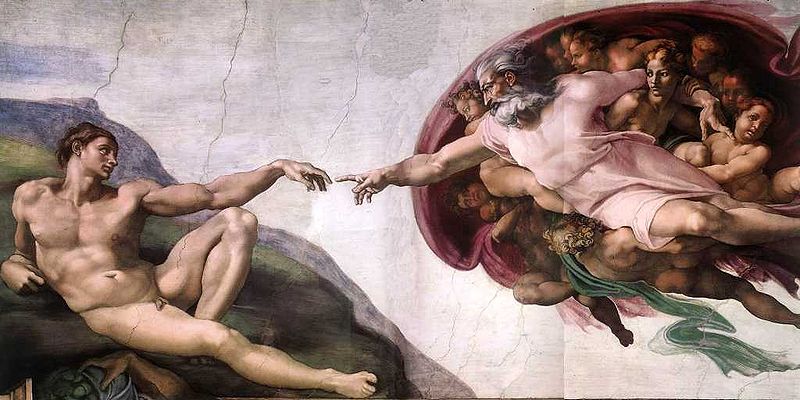
In the previous column, I outlined how I think Catholic theology should look at markets: as avenues for co-creation and service. Here, I want to draw out two implications of that view that I think are very important for having the proper view of markets.
1) Positive sum exchanges.
It is simplistic, but it is worth keeping in mind the lesson from economics 101 : in any economic transaction, both participants are better off, otherwise we wouldn’t have traded. The good or service I buy from you is worth more to me than the money I pay for it, otherwise I wouldn’t have parted from it ; your money is worth more to me than the good or service I sold you, otherwise I wouldn’t have sold it.
Again, this is a simplistic picture, but it gets at a fundamental truth of natural theology : the possibility of positive-sum exchanges. It is possible for exchanges to make all participants better off. It is possible, when we combine our resources, to all leave with more than we brought to the table.
Overlooking the reality of positive-sum interactions is, I believe, the source of the vast majority of errors in economic thinking. It was the fundamental error of Malthusianism : if there is a limited set of resources, then consumption can only reach a certain point, and anybody’s enrichment must come at the expense of somebody else, including future generations. The Magisterium that proclaims the command to “be fruitful and multiply” cannot accept this error. God provides. And the avenue through which He provides is through co-creation. Unlike God, we cannot create ex nihilo ; but we can take what God has given us and make things that are more than the sum of their parts. All art testifies to this profound truth.
The fundamental error of Malthusianism is to believe that the “fuel” of economic creativity is natural resources, which are finite, when in reality this fuel is human creativity which, by God’s grace is, for all practical purposes, infinite. Today, 100-proof Malthusianism still rarely rears its head (although it does so with alarmingly increasing frequence), but most other errors are inspired by the same fundamental error as Malthusianism : that the finality of economic interactions is to distribute existing scarce resources rather than create new ones.
2) God blesses risk-taking.
“Do not be afraid.” This basic attitude is at the heart of the Christian life. The Christian is the beloved child of the Lord of Hosts. “The Lord is my light and my salvation; whom shall I fear?”
This relates to the co-creative call at the heart of our Imago Dei. For in the Biblical view, the very act of divine creation itself is an act of risk-taking. God really does play dice with the Universe. From the beginning, God made the higher creatures free, and this freedom necessarily entails a measure of risk-taking on the part of God. For God created those creatures so that they may know and glorify Him, but in making them free He runs the risk of them rejecting Him, even to the end. The Catholic (and Biblical) worldview has no time for speculations whereby God deliberately damns people simply to manifest His justice or power or some other attributes.
All vocations include this element of risk-taking. To get married, to consecrate oneself to celibacy, to havc children, these are all great risks. To commit oneself to Christ is always to take a leap in the dark—a leap, we trust and know, into the arms of the Savior, but a leap over the abyss nonetheless.
We see this fundamental link between creation and risk-taking—again, a link which in us reflects the attributes of God—very well in the world of artistry. But we see it also in the social realm. A culture of life is necessarily one open to risk-taking. So, then, in the economic realm. A culture of economic creativity is also a culture of economic risk-taking. This cannot be said without caveats, and we will get to them, but it needs to be forcefully asserted, from the start, nonetheless.


Browse Our Archives
Select a Category Elsewhere Mary New Distributism Parish of PEG Synod for the Famiy Theology of Women Uncategorized What I'm Reading
Select a Month June 2015 May 2015 April 2015 March 2015 February 2015 January 2015 December 2014 November 2014 October 2014 September 2014 August 2014 July 2014 June 2014 May 2014 April 2014 March 2014
Follow Us!
TAKE THE
Religious Wisdom Quiz
What were Jesus' followers called?
Select your answer to see how you score.
Prophets Judges Shepherds Disciples
Related posts from Inebriate Me

The Scandal of Wealth vs the Scandal of...
Towards A Catholic Economic Anthropology (3) : Markets...

Towards A Catholic Economic Anthropology (2) : Man...

New Distributism 5 — Towards A Catholic Economic...
TRENDING AT PATHEOS Catholic

Creation, Preservation, and Teleology in Catholic Theology
As I write this, it is very early Monday morning. Like millions...

The Parable Of The Sower And The Word...
One of Christ’s most famous parables is that of the sower who...

Rejecting Doom: Christian Hope And Human Action
Christianity is a religion of hope. We are to have hope and...

Why I Choose the Eucharist Over the Sermon
Choose the Eucharist, Not the Sermon What are we supposed to get...

5 Design Elements Found in Spiritually Rooted Homes
Putting Spirituality Into Home Decor Our homes are more than our living...

Credo: A Story of God Told with the...
About 10 years ago, I began to imagine a personal "Credo" that...
view all Catholic blogs
Ad-Free & Subscriber Log-In Subscription Support
- About Us
- 2026 Calendar
- Videos
- Podcasts
- Library of World Religions
- Faith In Media Tracker
- Advertise With Us
- Write for Us
- Privacy Policy
- Terms of Service
- Do Not Sell My Data
- Contact Us
- Radiant Digital
- Manage Newsletter Subscriptions
- Unsubscribe From Notifications
- Sitemap
Copyright 2008-2026, Patheos. All rights reserved.
Subscription Support Ad-Free & Subscriber Log-In
Follow Patheos