
BuddhistCatholicContemplativeEvangelicalGeneral ChristianHinduJewishLatter-day SaintMuslimNew VisionsProgressive Christian
Beliefs
- Buddhist
- Catholic
- Contemplative
- Evangelical
- General Christian
- Hindu
- Jewish
- Latter-day Saint
- More Voices
- Muslim
- New Visions
- Pagan
- Progressive Christian
Topics
- Religion News
- Food and Religion
- Sports and Religion
- Religious Art
- Religious Music and Entertainment
- Religious Events
- History and Religion
- Style and Religion
- Politics and Religion
- Women in Religion
- Recreation Outdoors and Religion
- Business Finance and Religion
- Careers Workplace and Religion
- Education and Religion
- Family Parenting and Religion
- Health Fitness and Religion
- Home and Religion
- Relationships and Religion
- Technology and Religion
- Travel and Religion
Columnists
- Buddhist Columnists
- Business Finance and Religion Columnists
- Careers Workplace and Religion Columnists
- Catholic Columnists
- Contemplative Columnists
- Education and Religion Columnists
- Evangelists Columnists
- Family Parenting and Religion Columnists
- General Christian Columnists
- Health Fitness and Religion Columnists
- Hindu Columnists
- History and Religion Columnists
- Home and Religion Columnists
- Jewish Columnists
- More Voices Columnists
- Latter Day Columnists
- Muslim Columnists
- New Visions Columnists
- Nonreligious Columnists
- Pagan Columnists
- Politics and Religion Columnists
- Progressive Columnists
- Recreation Outdoors and Religion Columnists
- Relationships and Religion Columnists
- Religion News Columnists
- Religious Art Columnists
- Religious Events Columnists
- Religious Music and Entertainment Columnists
- Sports and Religion Columnists
- Style and Religion Columnists
- Technology and Religion Columnists
- Travel and Religion Columnists
- Women in Religion Columnists
Resource Library
- 2026 Calendar
- Library of World Religions
- The 100 Most Holy Places on Earth
- Patheos Answers
- Podcasts
- Videos
- Faith Leaders Database
- Anglican Episcopalian
- Bahai
- Baptist
- Buddhism
- Christianity
- Confucianism
- Eastern Orthodoxy
- Hinduism
- Holiness and Pentecostal
- ISKCON
- Islam
- Judaism
- Lutheran
- Methodist
- The Church of Jesus Christ of Latter-day Saints
- New Age
- Paganism
- Presbytarian and Reformed
- Protestantism
- Religion Behind the Scenes
- Roman Catholic
- Scientology
- Shia Islam
- Sikhism
- Sufism
- Sunni Islam
- Taoism
- Zen
- See all religions
Research Tools
 Ad-Free & Subscriber Log-In Subscription Support
Ad-Free & Subscriber Log-In Subscription Support
Follow Patheos 

- Trending:
- Forgiveness
- |
- Marriage
- |
- Consciousness
- |
- Death Penalty
- |
- Election
- |
- Halloween
 Inebriate Me
- Home
- Catholic
- Reflecting On The Marian Dogmas (2): What The Marian Dogmas Tell Us About The Church
Reflecting On The Marian Dogmas (2): What The Marian Dogmas Tell Us About The Church
Last updated on: May 29, 2014 at 2:04 pm by Pascal-Emmanuel Gobry
Reflecting On The Marian Dogmas (2): What The Marian Dogmas Tell Us About The Church 2014-05-29T14:04:21+01:00 Pascal-Emmanuel Gobry
Patheos Explore the world's faith through different perspectives on religion and spirituality! Patheos has the views of the prevalent religions and spiritualities of the world.
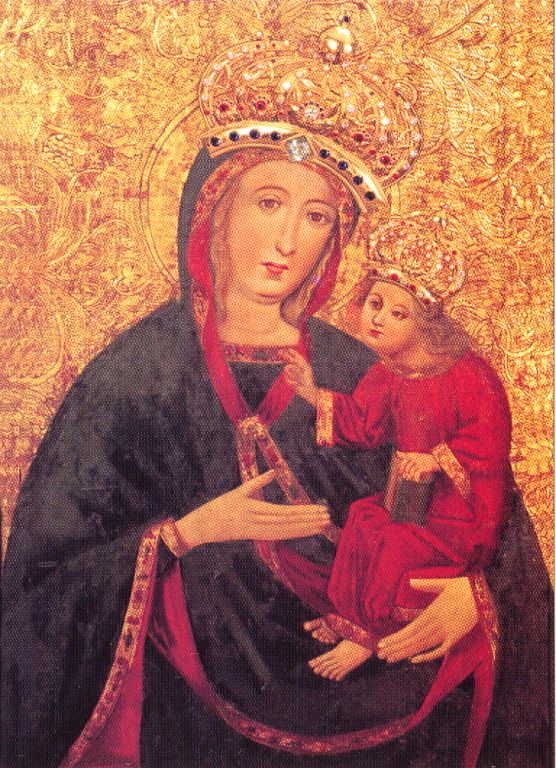
Here’s the first post in this series.
What Mary Tells Us About The Church
In the words of the Orthodox theologian Vladimir Lossky, words that Catholics can very much take as their own, Tradition is “the life of the Spirit within the Church.” The faith is “ever ancient and ever new”; it has been delivered to the apostles “once and for all”, and yet we ceaselessly grow in our understanding of it. The God of Abraham, the God of Isaac, the God of Jacob, is the God of the living. And His Church, which is also His Body, is being led by the Spirit into all truth. The faith never changes, but we grow deeper in our understanding of it, and yes, doctrine does develop.
I think one of the maladies of Christianity and maybe of religion in general is to try to set a “year zero” somewhere (note: technically, there’s no year zero) and inflexibly clinging on to it. This is ultimately, I think, a form of idolatry, since for Christians there must by definition only be one “year zero”, somewhere around 33 A.D. Among some (though by no means all) Eastern Orthodox, the raison d’être of the Church is to set a year zero somewhere around the year 900. For some Traditionalist Catholics, the year zero must be set somewhere in 1955 (or 1655) and, I guess, for some Spirit-of-Vatican-II types, the year zero is 1975. For some Protestants it is 1522 and for others it is a fantasy of c. 100 A.D. And some people set the year zero at the omega point or some other place in the future, in a whiggish view of doctrinal progress where ancient orthodox doctrine “believed everywhere, always and by all” are just outmoded prejudice waiting to be jettisoned and outgrown.
Against all these deficient views, the authentic Tradition of the Catholic Church stands as a sign of contradiction, holding forever on its Earthly pilgrimage the deposit of the faith undefiled, and yet constantly developing it, and deepening it, and broadening it. The Apostles’ Creed is shorter than the Nicene Creed, which is (a lot) shorter than the post-Vatican II Creed of the People of God, but all these creeds proclaim the same faith.
The Marian dogmas make it clear: yes, Mariology has a history, literally. The Marian dogmas underwent long historical development, involving the sensus fidelium and theological development and supernatural guidance–sometimes implicit but sometimes quite explicit. We Catholics do not have to blush at the fact that the Marian dogmas (or, say, doctrines concerning the Papacy) underwent historical development as, after all, did doctrines accepted by all like the Incarnation and the Trinity.
The dogma of the Assumption of Mary was only defined and proclaimed in the 20th century, but it has very ancient roots, grew from the Tradition of the Church, until it was accepted by all.
This is how Tradition, which is the life of the Spirit within the Church, works. The infinitely beautiful seed of orthodoxy was planted on Pentecost, and it is always the same seed, and always the same flower, and some things about it can never change, but it continues to grow and bring forth new fruit.
The Marian dogmas therefore tell us fundamental things about the Church: that, ultimately, it is the Body of Christ, indwelled by His Spirit, and that Tradition is really another word for Incarnation, it is the Gospel of Jesus Christ, the living Word of God. Tradition is not this fixed, static thing, this block of iron–like everything else attached to the God of the living, it is alive, and grows. It really is the life of the Spirit within the Church.
Browse Our Archives
Select a Category Elsewhere Mary New Distributism Parish of PEG Synod for the Famiy Theology of Women Uncategorized What I'm Reading
Select a Month June 2015 May 2015 April 2015 March 2015 February 2015 January 2015 December 2014 November 2014 October 2014 September 2014 August 2014 July 2014 June 2014 May 2014 April 2014 March 2014
Follow Us!
TAKE THE
Religious Wisdom Quiz
What does "Genesis" mean?
Select your answer to see how you score.
Origin or Beginning Wisdom Law Poetry
Related posts from Inebriate Me

Reflecting On The Marian Dogmas (4): What The...
Reflecting On The Marian Dogmas (3): What The...
Reflecting On The Marian Dogmas (1): What The...
TRENDING AT PATHEOS Catholic

The Parable Of The Sower And The Word...
One of Christ’s most famous parables is that of the sower who...

Rejecting Doom: Christian Hope And Human Action
Christianity is a religion of hope. We are to have hope and...

Why I Choose the Eucharist Over the Sermon
Choose the Eucharist, Not the Sermon What are we supposed to get...

5 Design Elements Found in Spiritually Rooted Homes
Putting Spirituality Into Home Decor Our homes are more than our living...

Credo: A Story of God Told with the...
About 10 years ago, I began to imagine a personal "Credo" that...

The Anatomy of Divine Revelation in Catholic Thought
The claim that God has made Himself known to human beings is...
view all Catholic blogs
Ad-Free & Subscriber Log-In Subscription Support
- About Us
- 2026 Calendar
- Videos
- Podcasts
- Library of World Religions
- Faith In Media Tracker
- Advertise With Us
- Write for Us
- Privacy Policy
- Terms of Service
- Do Not Sell My Data
- Contact Us
- Radiant Digital
- Manage Newsletter Subscriptions
- Unsubscribe From Notifications
- Sitemap
Copyright 2008-2026, Patheos. All rights reserved.
Subscription Support Ad-Free & Subscriber Log-In
Follow Patheos