
BuddhistCatholicContemplativeEvangelicalGeneral ChristianHinduJewishLatter-day SaintMuslimNew VisionsProgressive Christian
Beliefs
- Buddhist
- Catholic
- Contemplative
- Evangelical
- General Christian
- Hindu
- Jewish
- Latter-day Saint
- More Voices
- Muslim
- New Visions
- Pagan
- Progressive Christian
Topics
- Religion News
- Food and Religion
- Sports and Religion
- Religious Art
- Religious Music and Entertainment
- Religious Events
- History and Religion
- Style and Religion
- Politics and Religion
- Women in Religion
- Recreation Outdoors and Religion
- Business Finance and Religion
- Careers Workplace and Religion
- Education and Religion
- Family Parenting and Religion
- Health Fitness and Religion
- Home and Religion
- Relationships and Religion
- Technology and Religion
- Travel and Religion
Columnists
- Buddhist Columnists
- Business Finance and Religion Columnists
- Careers Workplace and Religion Columnists
- Catholic Columnists
- Contemplative Columnists
- Education and Religion Columnists
- Evangelists Columnists
- Family Parenting and Religion Columnists
- General Christian Columnists
- Health Fitness and Religion Columnists
- Hindu Columnists
- History and Religion Columnists
- Home and Religion Columnists
- Jewish Columnists
- More Voices Columnists
- Latter Day Columnists
- Muslim Columnists
- New Visions Columnists
- Nonreligious Columnists
- Pagan Columnists
- Politics and Religion Columnists
- Progressive Columnists
- Recreation Outdoors and Religion Columnists
- Relationships and Religion Columnists
- Religion News Columnists
- Religious Art Columnists
- Religious Events Columnists
- Religious Music and Entertainment Columnists
- Sports and Religion Columnists
- Style and Religion Columnists
- Technology and Religion Columnists
- Travel and Religion Columnists
- Women in Religion Columnists
Resource Library
- 2026 Calendar
- Library of World Religions
- The 100 Most Holy Places on Earth
- Patheos Answers
- Podcasts
- Videos
- Faith Leaders Database
- Anglican Episcopalian
- Bahai
- Baptist
- Buddhism
- Christianity
- Confucianism
- Eastern Orthodoxy
- Hinduism
- Holiness and Pentecostal
- ISKCON
- Islam
- Judaism
- Lutheran
- Methodist
- The Church of Jesus Christ of Latter-day Saints
- New Age
- Paganism
- Presbytarian and Reformed
- Protestantism
- Religion Behind the Scenes
- Roman Catholic
- Scientology
- Shia Islam
- Sikhism
- Sufism
- Sunni Islam
- Taoism
- Zen
- See all religions
Research Tools
 Ad-Free & Subscriber Log-In Subscription Support
Ad-Free & Subscriber Log-In Subscription Support
Follow Patheos 

- Trending:
- Forgiveness
- |
- Marriage
- |
- Consciousness
- |
- Death Penalty
- |
- Election
- |
- Halloween
 Inebriate Me
- Home
- Catholic
- Reflecting On The Marian Dogmas (1): What The Marian Dogmas Tell Us About The Bible
Reflecting On The Marian Dogmas (1): What The Marian Dogmas Tell Us About The Bible
Last updated on: May 29, 2014 at 2:02 pm by Pascal-Emmanuel Gobry
Reflecting On The Marian Dogmas (1): What The Marian Dogmas Tell Us About The Bible 2014-05-29T14:02:41+01:00 Pascal-Emmanuel Gobry
Patheos Explore the world's faith through different perspectives on religion and spirituality! Patheos has the views of the prevalent religions and spiritualities of the world.
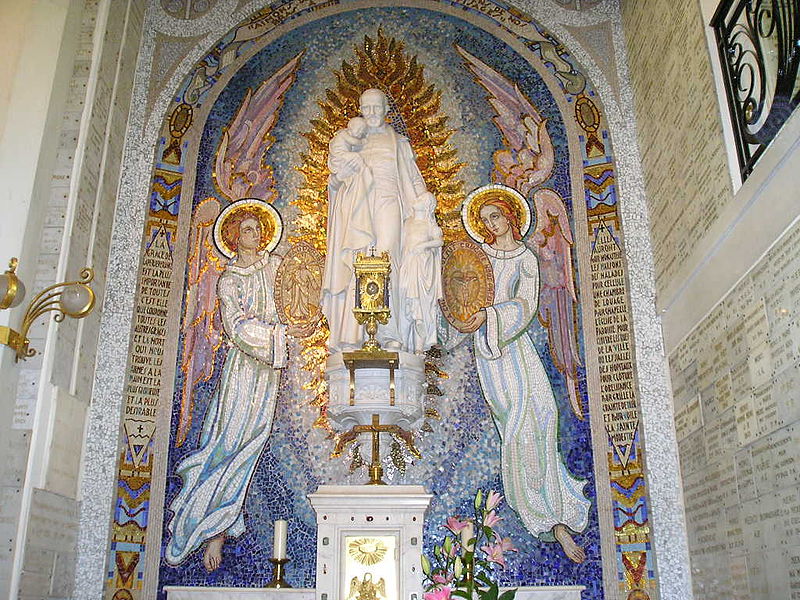
Item 1 in a Four-Part Series.
There’s a trend in post-Vatican II Catholic theology of sort-of ignoring Mary and ignoring the Marian dogmas and the Marian devotions, and sort-of leaving them to the side. Partly this comes from a very good intention of keeping Christ and the kerygma at the center, which is certainly where He should be (of course, the notion that keeping Christ at the center is incompatible with Marian devotion falls away once you realize that Jesus wants us to venerate His blessed Mother). Part of it comes from ecumenical concern (note: you might want to just ignore Mary but Protestants won’t let you 😉 ). And I think part of it also comes from a sort of intellectual condescension that regards Marian piety as essentially unsophisticated and outmoded and sort-of embarrassing even.
I’ve been on that road myself. As a child I grew up in Marian piety. But as an adult, as I rediscovered the centrality of the Cross in my life, I essentially ignored Mary. But Mary won’t ignore me. Every once in a while, I will say the Jesus Prayer as an “arrow” prayer and after I’ve recited the words I find out I’ve been reciting the Miraculous Medal Prayer. The Cross is at the center, indeed–and Mary is at the foot of the Cross.
As I’ve been studying theology more seriously, I’ve come back to Mary and wondered where she “fits in”, and if she does. And doing so has been enlightening to me, so I’m doing these posts to share these reflections as-is, in what is only the beginning of the journey.
This is not intended to be polemical or apologetical. To the contrary, I want to just put a marker on the ground and try to write about how the figure of Mary has helped me make sense of so much of everything else. Mary has been not only a spiritual help for me, but also a theological help, and I believe that she helps shed such a powerful light on everything else we know about theology.
1. What Mary Tells Us About The Bible
I’m going to try to not be polemical here, but it’s impossible to talk about Mary without talking about the Bible, and the controversies surrounding Mary and the Bible since the Protestant Reformation. We do have to address these points.
Catholics talking about Mary often either defend her on the basis of individual scripture passages (for example, veneration of Mary is commanded in Lk 1:48), or appeal to Tradition as distinct from the Bible. But, again, I’m not interested in “defending” the Marian dogmas so much as reflecting on them and, in particular here, to explain how Mary has helped me understand the Bible better.
It is true that what the Catholic Church says about Mary cannot be understood without a particular hermeneutic of the Bible, which is commonly referred to as typology: interpreting events and things in the Bible as types, or symbols, of something else. So when Luke’s angel Gabriel describes Mary as “full of grace,” Luke is explicitly using language that applies to the Holy of Holies of the Temple, and saying that Mary is the Ark of the New Covenant. Now, this is not spelled out in so many words. But that’s the point: the Bible speaks to us as poetry does, through literary reference and allegory and imagery. And it is fundamental to understand this dimension as well–first, even, I would argue.
Catholic Mariology uses Biblical typology over and over again, so that Mary is referred to by the Genesis prophecy of the “seed of the woman” and is the woman of the Apocalypse, and is referred to by the constant Old Testament imagery of Israel’s covenant with God as a marriage, with Israel as a woman who is both virgin and mother, so that Mary is literally at the center of history, she is the link between the Old and the New Covenant. So of course Jesus is speaking to all of us when, from the Cross, he makes Mary the mother of the beloved disciple.
The point here isn’t (just) “typology good, proof-texting bad”, the point is that the Marian dogmas show us what kind of text the Bible is and how we should look at it. So many truths of the faith are evident less from particular texts in the Bible than from the overall logic of the Bible. The Bible tells us stories and weaves themes together, and we have to understand these themes and their totality and how the themes interplay together so that we can glimpse, through a glass darkly, verities about God. Theological truths are not asserted from individual texts, but deduced from the overall logic of the Bible (this is clear, for example, of the Trinity). There is a forward logic, an overall thrust, to the totality of the Bible, which tells us about God more surely than most texts in isolation.
Just to give an example–again, not trying to be polemical–, but I know that accounts of predestination which make no allowance for human free will are erroneous not because of any specific verse, but because it’s the whole Bible that stops making sense. You can find plenty of Bible verses that tell us that God knows everything and rules everything and has foreordained everything–which is definitely true, at least in some sense–, but it’s also true that none of God’s actions in the Bible make sense if God did not create man, in an ontological sense, free. Or, “Is Purgatory in the Bible?” Well, there are some texts you can point to (Matt 12:32, Lk 12:59, 1 Cor 3:15, 2 Macc 12:43–45, Rev 21:27), but what makes the doctrine absolutely secure for me is the overall logic of the Bible: that God is absolutely pure and that His presence is incompatible with sin (in the Old Testament, if you meet God you die, and the classic exegetical reason why is that it’s because of our sinful nature and its incompatibility with God’s presence), that salvation history involves the recreation of a new Heavens and a new Earth and a Heavenly Jerusalem, in which we will all be glorified and partake in the divine nature, and the logical consequence that even as we are justified not according to our merits but those of Christ we must still be purified of what is sinful in us before we can be glorified. The overall story that the Bible tells about Creation, Fall, Covenant, Salvation, Eschaton necessitates (something like) Purgatory.
The Bible is not a law book or a set of doctrines or a treatise or anything like that. It is the Word of God.
Again, the point is not to make an apologetic for various Catholic doctrines, or to have this wishy-washy hermeneutic of Scripture that lets us ignore very clear individual texts, but to point out that, in particular through the Marian dogmas, we can see this whole Biblical richness and understand the Bible better, because the Marian dogmas only make sense within an expansive, typological, literary and poetic and artistic, not legalistic, view of the Bible. Not that no Protestants have or can have this view. And there’s a sort-of mirror Catholic error, which is to say, well, yeah, it’s not in the Bible, but that’s ok, because it’s in Tradition, and the Bible and Tradition are equal sources of the faith–which isn’t false, exactly, but misses how I think we should look at the Bible, which is as the heart of Tradition, rather than as one piece of a jigsaw puzzle. But for me, when I saw how in fact deeply in accord the Marian dogmas are with the overall structure and narrative of the Bible, I could never look at the Bible the same. Because once you see that the Marian dogmas come from types of her that are in the Bible, you realize that this is the way the Bible speaks: through these overarching themes and this overarching poetic logic that are communicated to us through God and man’s artistry, because they express truths that cannot simply be written out. And you see how the Bible is truly the heart of Tradition, how Tradition springs forth from the Bible and envelops it and is nourished by it and how, in turn, Tradition sheds new and powerful light on the Bible.
Previous Post
May 7, 2014
N.T. Wright On Paul
Browse Our Archives
Select a Category Elsewhere Mary New Distributism Parish of PEG Synod for the Famiy Theology of Women Uncategorized What I'm Reading
Select a Month June 2015 May 2015 April 2015 March 2015 February 2015 January 2015 December 2014 November 2014 October 2014 September 2014 August 2014 July 2014 June 2014 May 2014 April 2014 March 2014
Follow Us!
TAKE THE
Religious Wisdom Quiz
Who is credited with predicting Cyrus by name, who would rebuild Jerusalem?
Select your answer to see how you score.
Ezekiel Zechariah Isaiah Jeremiah
Related posts from Inebriate Me

Reflecting On The Marian Dogmas (4): What The...
Reflecting On The Marian Dogmas (3): What The...

Reflecting On The Marian Dogmas (2): What The...
TRENDING AT PATHEOS Catholic

The Parable Of The Sower And The Word...
One of Christ’s most famous parables is that of the sower who...

Rejecting Doom: Christian Hope And Human Action
Christianity is a religion of hope. We are to have hope and...

Why I Choose the Eucharist Over the Sermon
Choose the Eucharist, Not the Sermon What are we supposed to get...

5 Design Elements Found in Spiritually Rooted Homes
Putting Spirituality Into Home Decor Our homes are more than our living...

Credo: A Story of God Told with the...
About 10 years ago, I began to imagine a personal "Credo" that...

The Anatomy of Divine Revelation in Catholic Thought
The claim that God has made Himself known to human beings is...
view all Catholic blogs
Ad-Free & Subscriber Log-In Subscription Support
- About Us
- 2026 Calendar
- Videos
- Podcasts
- Library of World Religions
- Faith In Media Tracker
- Advertise With Us
- Write for Us
- Privacy Policy
- Terms of Service
- Do Not Sell My Data
- Contact Us
- Radiant Digital
- Manage Newsletter Subscriptions
- Unsubscribe From Notifications
- Sitemap
Copyright 2008-2026, Patheos. All rights reserved.
Subscription Support Ad-Free & Subscriber Log-In
Follow Patheos