
BuddhistCatholicContemplativeEvangelicalGeneral ChristianHinduJewishLatter-day SaintMuslimNew VisionsProgressive Christian
Beliefs
- Buddhist
- Catholic
- Contemplative
- Evangelical
- General Christian
- Hindu
- Jewish
- Latter-day Saint
- More Voices
- Muslim
- New Visions
- Pagan
- Progressive Christian
Topics
- Religion News
- Food and Religion
- Sports and Religion
- Religious Art
- Religious Music and Entertainment
- Religious Events
- History and Religion
- Style and Religion
- Politics and Religion
- Women in Religion
- Recreation Outdoors and Religion
- Business Finance and Religion
- Careers Workplace and Religion
- Education and Religion
- Family Parenting and Religion
- Health Fitness and Religion
- Home and Religion
- Relationships and Religion
- Technology and Religion
- Travel and Religion
Columnists
- Buddhist Columnists
- Business Finance and Religion Columnists
- Careers Workplace and Religion Columnists
- Catholic Columnists
- Contemplative Columnists
- Education and Religion Columnists
- Evangelists Columnists
- Family Parenting and Religion Columnists
- General Christian Columnists
- Health Fitness and Religion Columnists
- Hindu Columnists
- History and Religion Columnists
- Home and Religion Columnists
- Jewish Columnists
- More Voices Columnists
- Latter Day Columnists
- Muslim Columnists
- New Visions Columnists
- Nonreligious Columnists
- Pagan Columnists
- Politics and Religion Columnists
- Progressive Columnists
- Recreation Outdoors and Religion Columnists
- Relationships and Religion Columnists
- Religion News Columnists
- Religious Art Columnists
- Religious Events Columnists
- Religious Music and Entertainment Columnists
- Sports and Religion Columnists
- Style and Religion Columnists
- Technology and Religion Columnists
- Travel and Religion Columnists
- Women in Religion Columnists
Resource Library
- 2026 Calendar
- Library of World Religions
- The 100 Most Holy Places on Earth
- Patheos Answers
- Podcasts
- Videos
- Faith Leaders Database
- Anglican Episcopalian
- Bahai
- Baptist
- Buddhism
- Christianity
- Confucianism
- Eastern Orthodoxy
- Hinduism
- Holiness and Pentecostal
- ISKCON
- Islam
- Judaism
- Lutheran
- Methodist
- The Church of Jesus Christ of Latter-day Saints
- New Age
- Paganism
- Presbytarian and Reformed
- Protestantism
- Religion Behind the Scenes
- Roman Catholic
- Scientology
- Shia Islam
- Sikhism
- Sufism
- Sunni Islam
- Taoism
- Zen
- See all religions
Research Tools
 Ad-Free & Subscriber Log-In Subscription Support
Ad-Free & Subscriber Log-In Subscription Support
Follow Patheos 

- Trending:
- Forgiveness
- |
- Marriage
- |
- Consciousness
- |
- Death Penalty
- |
- Election
- |
- Halloween
 Inebriate Me
- Home
- Catholic
- In Defense Of Moral Influence Theory
In Defense Of Moral Influence Theory
Last updated on: May 15, 2014 at 3:11 pm by Pascal-Emmanuel Gobry
In Defense Of Moral Influence Theory 2014-05-15T15:11:15+01:00 Pascal-Emmanuel Gobry
Patheos Explore the world's faith through different perspectives on religion and spirituality! Patheos has the views of the prevalent religions and spiritualities of the world.
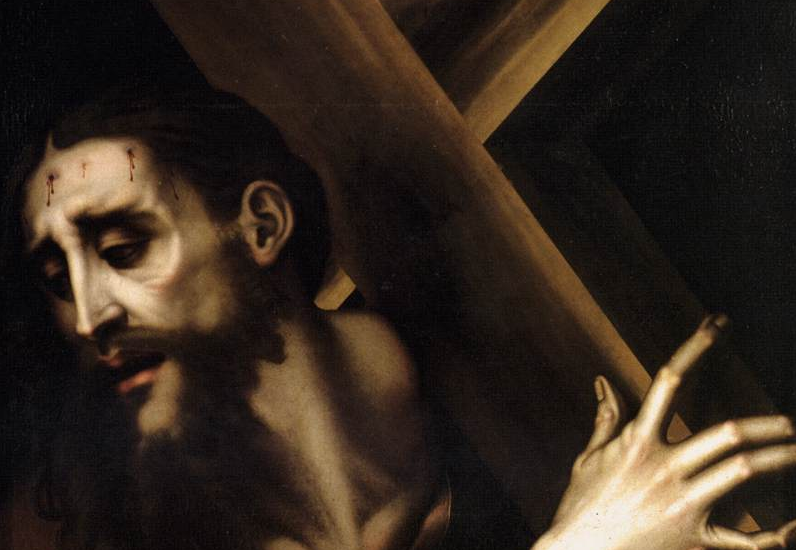
Within Christianity, there are several theories of the meaning of the Cross and Resurrection. I think no single theory can fully account for this great mystery, but that each theory gives us a lens that together paint an impressionistic picture. We hear a lot about penal theories of the atonement, from Calvinistic friends, but this is also a theory that, under some forms, is present within Catholic Tradition. And we hear about Christus Victor, which is very important.
The one that isn’t very much in odor of sanctity (ha ha), as far as I can tell, is Moral Influence: the idea that Jesus went to the Cross to exemplify the meaning of morality and influence men’s morality. Moral Influence, as best as I can tell, is under suspicion in many orthodox and/or traditional circles, because it is seen as essentially trivializing the Cross, as making it have no transcendental meaning, and instead a pure historical meaning. It has been used by some progressive Christians to advance a Jesus whose divinity is obscured (if not denied) and whose Gospel is reduced to a moralistic or political message.
Despite that, and with the all-important caveat that I don’t believe Moral Influence is the full story, I do believe it is part of the story. And here’s why.
That is clearly part of the work of the Cross. It seems to me incontrovertible from the Gospel that, at least in part, the Cross really is intended by Jesus to serve as a moral example. When Jesus says “greater love hath no man than this, that a man lay down his life for his friends,” you can almost hear Him add “…and I’ll show you.” Clearly, when a Christian contemplates his moral duty, he should look first to the Cross. I don’t think you can deny that moral influence is part of the meaning of the Cross. I don’t think anybody would disagree with this, but I do think we sometimes tend to take it for granted when we talk about the Mystery of the Cross, and I don’t think Jesus likes it.
Moral Influence does change the world. As y’all know, I am a Girardian. If we look at the Cross through a Girardian lens, we realize that the moral message of the Cross is not “just” an easy-to-sentimentalize message about brotherly love; it is also a profoundly subversive message that shatters the foundations of all cultures and all human institutions and pretentions. If Girard is right that through the Cross of the spotless Lamb, Jesus exposes the scapegoat dynamic at the heart of all civilization and at work within all human rights, and publicly proclaims to the entire world the vacuity of our scapegoat dynamics, that really is a world-changing message. And I would argue along with Girard that the arc of Western Civilization, this arc of history which does bend in many ways towards justice, down to the present day, can be looked at as our processing, without realizing it, in fits and starts, this immensely subversive message.
The moral example is stronger in the context of Christ’s Divine Sonship.** I might be caricaturing a little bit, but there’s a sense of, well, people give up their lives for truth/their/friends all the time–if Moral Influence is true, then why is the Cross special? And the answer is: because of Who is on the Cross. If I give up my life for you, while subjectively I am giving up a lot, objectively, in the grand scheme of things, I’m not giving up much. For starters, I know I’m going to die at some point anyway, so why not do it with some panache and meaning (this is a way of thinking that is a little alien to the contemporary West, but wouldn’t have been to most of our forerunners). The difference with Christ is, of course, that he is the Word of God, only-begotten of the Father, dwelling with Him in all eternity. For Jesus to die on the Cross means to give up literally everything. It is literally impossible for us to imagine the “delta”, the difference, between the bliss of the Son living in perfect harmony with the Father in the Trinity, and the suffering of the man Jesus on the Cross. What Jesus “gives up” on the Cross is more than we can ever give up, more than we can even imagine. This is the moral example set by the Cross: Jesus doesn’t just say “give everything”, he says “give more than everything.” Jesus didn’t just die, He died on the Cross, after scourging and humiliation. I find this to be a mystery impossible to contemplate too much.
Moral Influence Theory emphasizes the gratuitous nature of Jesus’ sacrifice on the Cross. Y’all know I have a big of a bone to pick with Penal Substitutionary Atonement, and my main problem with it is that–and, as you know, this is another of my hobbyhorses–it portrays Jesus and God’s actions within a framework of necessity. God’s justice has to be satisfied by punishment of sin, so Jesus had to die to provide satisfaction or else God would have had to condemn us all. Moral Influence, on the other hand, is all about the gratuity of Jesus’ love for us. If we keep in mind what I just wrote above about the unimaginable, absolute, despoilment and pain that Jesus experienced on the Cross, being the Son of God and being deprived of everything, then how much greater is this gift if we think that Jesus did it not because He had to, but just because He wanted to. More than that, just to show us what love looks like.
This theme of the gratuitousness and the generosity of God is an important one, one that we can’t look at enough, and it is particularly present through Moral Influence Theory. Again, I don’t believe it’s the whole story. But I think it’s part of the story and we need to look at it more.
Previous Post

May 14, 2014
The Jewish Cardinal (VIDEO)
Next Post

May 16, 2014 Scott Hahn On The Liturgical Character Of The Bible
Browse Our Archives
Select a Category Elsewhere Mary New Distributism Parish of PEG Synod for the Famiy Theology of Women Uncategorized What I'm Reading
Select a Month June 2015 May 2015 April 2015 March 2015 February 2015 January 2015 December 2014 November 2014 October 2014 September 2014 August 2014 July 2014 June 2014 May 2014 April 2014 March 2014
Follow Us!
TAKE THE
Religious Wisdom Quiz
What does "Amen" originally mean?
Select your answer to see how you score.
Praise God Be true Let it happen So be it
Related posts from Inebriate Me


A Quick Note About What An Anathema Does...

When All Earthly Hopes Fade, That Old-Time Religion...

TRENDING AT PATHEOS Catholic

The Parable Of The Sower And The Word...
One of Christ’s most famous parables is that of the sower who...

Rejecting Doom: Christian Hope And Human Action
Christianity is a religion of hope. We are to have hope and...

Why I Choose the Eucharist Over the Sermon
Choose the Eucharist, Not the Sermon What are we supposed to get...

5 Design Elements Found in Spiritually Rooted Homes
Putting Spirituality Into Home Decor Our homes are more than our living...

Credo: A Story of God Told with the...
About 10 years ago, I began to imagine a personal "Credo" that...

The Anatomy of Divine Revelation in Catholic Thought
The claim that God has made Himself known to human beings is...
view all Catholic blogs
Ad-Free & Subscriber Log-In Subscription Support
- About Us
- 2026 Calendar
- Videos
- Podcasts
- Library of World Religions
- Faith In Media Tracker
- Advertise With Us
- Write for Us
- Privacy Policy
- Terms of Service
- Do Not Sell My Data
- Contact Us
- Radiant Digital
- Manage Newsletter Subscriptions
- Unsubscribe From Notifications
- Sitemap
Copyright 2008-2026, Patheos. All rights reserved.
Subscription Support Ad-Free & Subscriber Log-In
Follow Patheos