
BuddhistCatholicContemplativeEvangelicalGeneral ChristianHinduJewishLatter-day SaintMuslimNew VisionsProgressive Christian
Beliefs
- Buddhist
- Catholic
- Contemplative
- Evangelical
- General Christian
- Hindu
- Jewish
- Latter-day Saint
- More Voices
- Muslim
- New Visions
- Pagan
- Progressive Christian
Topics
- Religion News
- Food and Religion
- Sports and Religion
- Religious Art
- Religious Music and Entertainment
- Religious Events
- History and Religion
- Style and Religion
- Politics and Religion
- Women in Religion
- Recreation Outdoors and Religion
- Business Finance and Religion
- Careers Workplace and Religion
- Education and Religion
- Family Parenting and Religion
- Health Fitness and Religion
- Home and Religion
- Relationships and Religion
- Technology and Religion
- Travel and Religion
Columnists
- Buddhist Columnists
- Business Finance and Religion Columnists
- Careers Workplace and Religion Columnists
- Catholic Columnists
- Contemplative Columnists
- Education and Religion Columnists
- Evangelists Columnists
- Family Parenting and Religion Columnists
- General Christian Columnists
- Health Fitness and Religion Columnists
- Hindu Columnists
- History and Religion Columnists
- Home and Religion Columnists
- Jewish Columnists
- More Voices Columnists
- Latter Day Columnists
- Muslim Columnists
- New Visions Columnists
- Nonreligious Columnists
- Pagan Columnists
- Politics and Religion Columnists
- Progressive Columnists
- Recreation Outdoors and Religion Columnists
- Relationships and Religion Columnists
- Religion News Columnists
- Religious Art Columnists
- Religious Events Columnists
- Religious Music and Entertainment Columnists
- Sports and Religion Columnists
- Style and Religion Columnists
- Technology and Religion Columnists
- Travel and Religion Columnists
- Women in Religion Columnists
Resource Library
- 2026 Calendar
- Library of World Religions
- The 100 Most Holy Places on Earth
- Patheos Answers
- Podcasts
- Videos
- Faith Leaders Database
- Anglican Episcopalian
- Bahai
- Baptist
- Buddhism
- Christianity
- Confucianism
- Eastern Orthodoxy
- Hinduism
- Holiness and Pentecostal
- ISKCON
- Islam
- Judaism
- Lutheran
- Methodist
- The Church of Jesus Christ of Latter-day Saints
- New Age
- Paganism
- Presbytarian and Reformed
- Protestantism
- Religion Behind the Scenes
- Roman Catholic
- Scientology
- Shia Islam
- Sikhism
- Sufism
- Sunni Islam
- Taoism
- Zen
- See all religions
Research Tools
 Ad-Free & Subscriber Log-In Subscription Support
Ad-Free & Subscriber Log-In Subscription Support
Follow Patheos 

- Trending:
- Forgiveness
- |
- Marriage
- |
- Consciousness
- |
- Death Penalty
- |
- Election
- |
- Halloween
 Inebriate Me
- Home
- Catholic
- Everything In The Gospels Is About The Mass
Everything In The Gospels Is About The Mass
Last updated on: April 3, 2014 at 9:54 am by Pascal-Emmanuel Gobry
Everything In The Gospels Is About The Mass 2014-04-03T09:54:30+01:00 Pascal-Emmanuel Gobry
Patheos Explore the world's faith through different perspectives on religion and spirituality! Patheos has the views of the prevalent religions and spiritualities of the world.
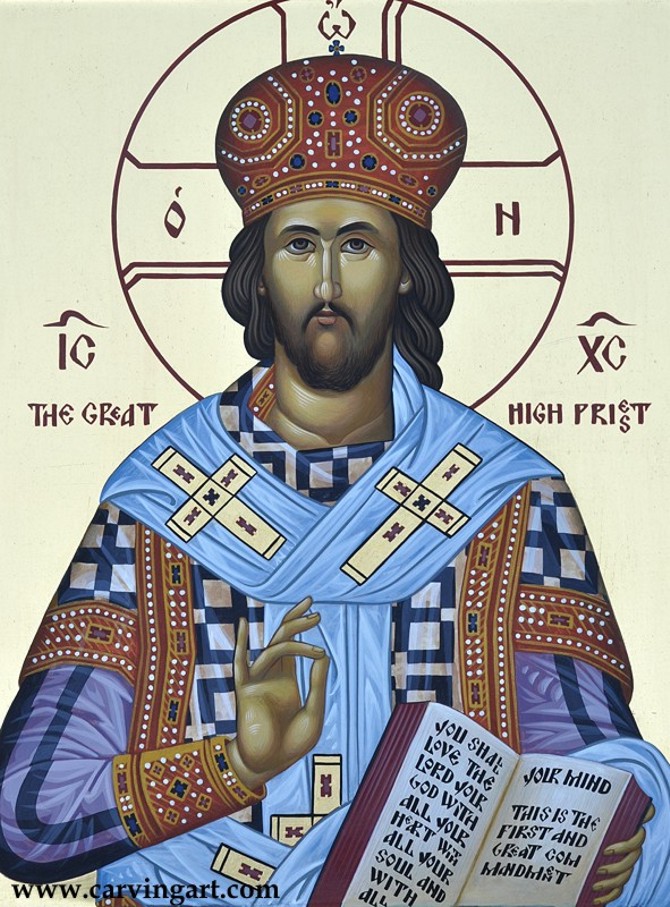
I’m a very very beginning exegete, and the sort of Exegesis 101 rule for the Old Testament that they give you is “Everything in the Old Testament is about Jesus.”
I’d like to propose a new Biblical exegesis 101 rule: everything in the Gospels is about the Mass.
I mean, just off the top of my head:
The Prodigal Son. Everybody knows in the parable of the Prodigal Son you have the father who is the God-figure, and the two wayward sons. But where’s Jesus? He’s the fatten calf. He’s the meal! The party that the Father is throwing is a Mass! That’s why everybody is invited (that’s why you would slaughter the fatten calf). The table is an altar. It points to the Wedding Feast of the Lamb from Revelation, which as we all know is a Mass. (It’s the fact that Tim Keller, a Calvinist, totally misses this dimension in his otherwise outstanding Prodigal Son lecture that got me excited enough to write this post.)
The Wedding at Cana. This one is fairly obvious, but still. Again, we have a wedding feast. Water turns into wine. It’s the beginning of Jesus’ public ministry, which ends with the Passover Meal. Jesus’ public ministry is bookended by the Mass.
The Transfiguration. Two dead giveaways. The first and obvious one is that Jesus is made truly present to the apostles in a new and revealing way. The second one (which too often goes unmentioned) is the communion of saints. Moses and Elijah are there. The Mass is an earthly expression of the communion of saints. During the Mass, the Heavenly Choir of Angels sings God’s glory. The entire communion of saints gathers to witness a (kind of) transfiguration and to be in the presence of Jesus and worship him.

Feeding the Multitude. Pretty obvious, that one. (FOOD => MASS. #HighlyAdvancedExegesis) But still. Jesus feeds his people. With bread. That he (the priest) gives thanks for and blesses, and then a miracle happens to the bread. This event appears in all four Gospels, and in all four Gospels Jesus looks up to Heaven and says a blessing. We have to imagine that it wasn’t a brief or commonplace blessing, but that it was a true liturgical prayer, if all four gospel writers noticed it enough to mention it.
The Healing of the Deaf-Mute Man. I love this story, because it summarizes the entire Gospel. Jesus heals us, and says Ephphatha, be open. Be open! Be open to grace. Be open to the Gospel. (By the way, the grace of God opens us, but then it’s up to us to cooperate with that grace. #CatholicPitches) What else happens? Jesus puts his saliva on the man’s lips and tongue. What an incredible gesture! I can’t ever shake that image. Jesus and the deaf-mute man, face to face. Jesus licking his fingers and putting his saliva on him. Imagine Jesus Christ, the Lord, touching your lips so tenderly. It’s a kiss. In some ways, it’s even more intimate than a kiss. He’s the Word of God! He doesn’t need to mess around with saliva to heal a deaf-mute man. But he wants to! It’s communion. Jesus puts His body on the man’s tongue. That’s what opens him. He receives the Body of Christ.
The Emmaus Pilgrims. This is the most striking one. The story of the Emmaus Pilgrims is one of my favorite from the entire Bible. Are we not all the Emmaus Pilgrims, wandering around, totally clueless, with Jesus walking on our side, and us not noticing Him? That’s the superficial (and true) meaning of that story. The other superficial (and true) meaning of that story is that, yes, Jesus of Nazareth really did bodily rise from the dead–people saw it. But what is the story of the Emmaus Pilgrims? What is its structure, its nature? It’s a Mass! It follows the Order of the Mass. First the Pilgrims hear Scripture, and expository preaching on Scripture. Then they come to a table, for what? The Eucharist! Jesus blesses the bread and the wine, and that’s when their eyes are opened. What just happened? Christ the High Priest performed the sacrament of the Eucharist! You just got ephphatha’d, bro. Put that on a t-shirt and sell it. They “discern[ed] the body” indeed. And why does Jesus disappear? There’s this little magic trick, at the end. Jesus blesses the bread and wine, the pilgrims realize that this strange man is Jesus, and poof! He’s gone. Behold, the magical appearing and disappearing Messiah! Nothing in my left sleeve, nothing in my right sleeve, nothing in the wound in my side… Why does he disappear? The answer is, He doesn’t. He’s still there. As bread and wine. He’s still there! It’s Him! There’s no difference. He was with them on the road, He was with them when He blessed the bread and the wine, He’s there afterwards. Sometimes they see Him, sometimes they don’t, but in every case He is there. The story of the Emmaus Pilgrims is a Mass. It is also the story of the Church. It is fractal. The story of the Mass is the story of the Church is the story of the Mass. The Eschaton itself is a Mass, and the Mass is a piece of the Eschaton. And always, Jesus is present.
Previous Post

April 2, 2014
Some Points About Homophobia And The Church
Next Post
April 3, 2014 New Distributism 4 — Why The Church Needs A Prophetic Economic Voice
Browse Our Archives
Select a Category Elsewhere Mary New Distributism Parish of PEG Synod for the Famiy Theology of Women Uncategorized What I'm Reading
Select a Month June 2015 May 2015 April 2015 March 2015 February 2015 January 2015 December 2014 November 2014 October 2014 September 2014 August 2014 July 2014 June 2014 May 2014 April 2014 March 2014
Follow Us!
TAKE THE
Religious Wisdom Quiz
What was Paul’s profession before becoming an apostle?
Select your answer to see how you score.
Tax Collector Tentmaker Fisherman Carpenter
Related posts from Inebriate Me


A Quick Note About What An Anathema Does...

When All Earthly Hopes Fade, That Old-Time Religion...

TRENDING AT PATHEOS Catholic

Rejecting Doom: Christian Hope And Human Action
Christianity is a religion of hope. We are to have hope and...

It’s What Comes From Within Which Matters
One of the most difficult things for us to understand is why...

Why I Choose the Eucharist Over the Sermon
Choose the Eucharist, Not the Sermon What are we supposed to get...

5 Design Elements Found in Spiritually Rooted Homes
Putting Spirituality Into Home Decor Our homes are more than our living...

Credo: A Story of God Told with the...
About 10 years ago, I began to imagine a personal "Credo" that...

The Anatomy of Divine Revelation in Catholic Thought
The claim that God has made Himself known to human beings is...
view all Catholic blogs
Ad-Free & Subscriber Log-In Subscription Support
- About Us
- 2026 Calendar
- Videos
- Podcasts
- Library of World Religions
- Faith In Media Tracker
- Advertise With Us
- Write for Us
- Privacy Policy
- Terms of Service
- Do Not Sell My Data
- Contact Us
- Radiant Digital
- Manage Newsletter Subscriptions
- Unsubscribe From Notifications
- Sitemap
Copyright 2008-2026, Patheos. All rights reserved.
Subscription Support Ad-Free & Subscriber Log-In
Follow Patheos