
BuddhistCatholicContemplativeEvangelicalGeneral ChristianHinduJewishLatter-day SaintMuslimNew VisionsProgressive Christian
Beliefs
- Buddhist
- Catholic
- Contemplative
- Evangelical
- General Christian
- Hindu
- Jewish
- Latter-day Saint
- More Voices
- Muslim
- New Visions
- Pagan
- Progressive Christian
Topics
- Religion News
- Food and Religion
- Sports and Religion
- Religious Art
- Religious Music and Entertainment
- Religious Events
- History and Religion
- Style and Religion
- Politics and Religion
- Women in Religion
- Recreation Outdoors and Religion
- Business Finance and Religion
- Careers Workplace and Religion
- Education and Religion
- Family Parenting and Religion
- Health Fitness and Religion
- Home and Religion
- Relationships and Religion
- Technology and Religion
- Travel and Religion
Columnists
- Buddhist Columnists
- Business Finance and Religion Columnists
- Careers Workplace and Religion Columnists
- Catholic Columnists
- Contemplative Columnists
- Education and Religion Columnists
- Evangelists Columnists
- Family Parenting and Religion Columnists
- General Christian Columnists
- Health Fitness and Religion Columnists
- Hindu Columnists
- History and Religion Columnists
- Home and Religion Columnists
- Jewish Columnists
- More Voices Columnists
- Latter Day Columnists
- Muslim Columnists
- New Visions Columnists
- Nonreligious Columnists
- Pagan Columnists
- Politics and Religion Columnists
- Progressive Columnists
- Recreation Outdoors and Religion Columnists
- Relationships and Religion Columnists
- Religion News Columnists
- Religious Art Columnists
- Religious Events Columnists
- Religious Music and Entertainment Columnists
- Sports and Religion Columnists
- Style and Religion Columnists
- Technology and Religion Columnists
- Travel and Religion Columnists
- Women in Religion Columnists
Resource Library
- 2026 Calendar
- Library of World Religions
- The 100 Most Holy Places on Earth
- Patheos Answers
- Podcasts
- Videos
- Faith Leaders Database
- Anglican Episcopalian
- Bahai
- Baptist
- Buddhism
- Christianity
- Confucianism
- Eastern Orthodoxy
- Hinduism
- Holiness and Pentecostal
- ISKCON
- Islam
- Judaism
- Lutheran
- Methodist
- The Church of Jesus Christ of Latter-day Saints
- New Age
- Paganism
- Presbytarian and Reformed
- Protestantism
- Religion Behind the Scenes
- Roman Catholic
- Scientology
- Shia Islam
- Sikhism
- Sufism
- Sunni Islam
- Taoism
- Zen
- See all religions
Research Tools
 Ad-Free & Subscriber Log-In Subscription Support
Ad-Free & Subscriber Log-In Subscription Support
Follow Patheos 

- Trending:
- Forgiveness
- |
- Marriage
- |
- Consciousness
- |
- Death Penalty
- |
- Election
- |
- Halloween
 Illuminating Fiction
- Home
- General Christian
- Religious Music and Entertainment
- Illumination: How Can Stories Reveal God to Us?
Illumination: How Can Stories Reveal God to Us?
Last updated on: September 29, 2024 at 10:00 pm by J.H. Moore
Illumination: How Can Stories Reveal God to Us? 2024-09-29T22:00:26+00:00 J.H. Moore
Patheos Explore the world's faith through different perspectives on religion and spirituality! Patheos has the views of the prevalent religions and spiritualities of the world.
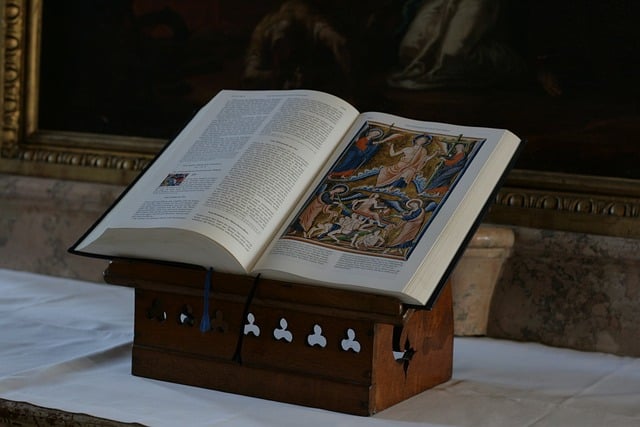
Photo by Boudewijn Huysmans on Unsplash
How do stories reveal God to us? When looking to learn about God, people rarely think about classic science fiction. They don’t often reach for large fantasy books. (What Brandon Sanderson calls Chihuahua killers). Some refuse to step outside of the old King James Version Bible on their church podium. Others allow for Christian non-fiction, the words of a wise friend, worship songs, and maybe, if they are feeling brave, a fellow church member’s prophetic vision. I would argue, however, that even the most secular book can give value to a discerning Christian.
Stories Reveal God in His Love for Them
One of my favorite quotes of all time is a tagline for the Jesus Storybook Bible.
The quote reads: “Every story whispers His name.”
Of course, this quote is specific to this children’s Bible in particular and a general theological stance. It’s a statement about how all scriptures point to the incarnation, death, and resurrection of Jesus. One cannot necessarily apply it more broadly to stories in general. It would become less potent if it were. Many stories don’t reveal anything meaningful about Christ.
Yet, as an author focusing on the secular market with her science fiction and fantasy, this quote gives me comfort. I want to believe my stories reveal God to my readers, even if His name isn’t blatantly preached
Scripture tells us “in Him, all things were created: things in heaven and on Earth, visible and invisible, whether thrones or powers or rulers or authorities. All things have been created through Him and for Him.” (Colossians 1:15-17)
We also read that “God’s invisible attributes, namely His eternal power and divine nature, have been clearly perceived ever since the creation of the world, in the things that have been made.” (Romans 1:19-20)
While these scriptures are first and foremost speaking to the physical world around us, I believe they also say much to the less obvious parts of creation. There are many things that don’t take physical form and still are the result of the creation. For example, all history belongs to God. The basics of family structure. Heroes and villains. Culture, science, theology, and politics. All these things fill out the created world, and also make up an essential part of good storytelling.
We know that God loves stories. There are many instances in scripture of how stories reveal God. He chooses to reveal Himself to us first and foremost through a book. The story of His Son, told over and over. Many instances of Christ’s preaching utilized stories to reveal God in the form of parables. Throughout the Old Testament, God encouraged his chosen people to remember Him through stories, art, and illustrations of His deeds.
Art, in general, is a powerful force in scripture. Be it songs, visual illustrations like the textiles of Jacob’s coat, the carvings on the Ark of the Covenant, or the dance moves of an incredibly joyful (and nearly naked) King David. **It’s so essential, in fact, that the first instance we see of the Holy Spirit descending on a human being was in art. (**Exodus 31:1-3)
God loves stories. Art is one of many ways He chooses to speak to His people.
Stories Reveal God in How He Wired Us for Story
Our creator wired our brains to interact with stories. Did you know that our brain cannot tell between reality and story? On a cognitive level, we can sort out the difference between truth and lies. On a chemical level, it’s all the same to us. This is why you may cry when a character dies before he’s able to see his son one last time. Or get angry when a king’s foolish choice costs a loyal warrior his life.
Our brains release chemicals like cortisol, dopamine, and oxytocin in response to fiction. These hormones stabilize our mood, establish emotions in our bodies, and create responses like empathy, creativity, problem-solving, focus, and more.
Some studies indicate we put ourselves in a character’s position when we are engaged in a well-developed story. We experience the events of the story along with the characters, reinforcing essential neural pathways in our brains as we do. These pathways govern everything from how we experience pleasure, to how we define right and wrong, to how we see the world.
When a detective sorts through a pile of evidence, we put together the puzzle pieces with her. A fictional husband and wife supporting each other through heart-break, can teach us a new way to deal with grief. The scientist horrified to find the technology he created is being used in genocide against a hidden minority shows the value of human life.
Furthermore, memories are held much longer when multiple parts of our brain work together. Engaging emotions allows us to hold on to things that might normally pass us by. The same engagement within the brain’s hemispheres can foster healing and growth.
You may not remember what you ate for breakfast two weeks ago, but a character’s struggle to save a dying friend may arise again into your mind for years. In my own experience, there are books responsible for more emotional healing in me than any number of sessions with a skilled therapist. This doesn’t diminish the value of the therapist, but it does show you the value of a good book.
For a seemingly frivolous thing, stories hold the keys to a powerful set of tools for emotional, spiritual, and even physical health.
Stories Reveal God in How They Impact Humankind
If this alone isn’t enough to impress the importance of story on you, experience can fill in the gaps. You probably have personal examples of stories impacting your life. This is indictive of the human experience at large.
One of the highest indicators for the emotional health of a parent-child bond, for instance, is whether they read books together.
Scientists have found that reading classical books markedly increases a person’s capacity for empathy.
The invention of the printing press, and the ability for books to be more widely available as a result, is factor in the end of the Dark Ages, and the torturous and grotesque executions that were so common.
The Protestant Reformation was horribly bloody, but also led to some of the greatest advancements in theology, science, and human rights in the history of the world. It would never have happened if the scriptures were not translated into the languages of the common man.
A wider distribution of books and the spread of literacy precipitated the rise of the European Scientific and Industrial Enlightenment.
David Brainard’s autobiography has been one of the most cited motivators for Christian missions around the globe.
Many believe Lincoln’s willingness to fight a war and divide a nation to free black Americans as well as with a rise of anti-slavery sympathies is due to Uncle Tom’s Cabin.
In my own life, Pilgrim’s Progress, The Lord of the Rings, the children’s science fiction series Mars Diaries, along with many other books, have built my worldview. My relationship with Christ and with my fellow human beings has been built on a foundation of the written word.
Illuminated Scriptures

Photo by Boudewijn Huysmans on Unsplash Stories reveal God in a similar way that art in illuminated scriptures did.
During the Middle Ages monks spent a large portion of their lives preserving scripture in gorgeous, hand-written tomes in rooms called Scriptoriums. Beautiful illustrations painted in gold and bright colors adorn many of these books. Because of the way these pictures seem to shine, these books have become known as “illuminated texts” or “illuminated scriptures.”
In the English language, when we tell a story to make a point, we often refer to it as an illustration. However, in the language I grew up with, it’s called a “tok piksa” or, literally translated, “a picture of words.”
When I sit down to watch a movie, or when I crack open a book, or when I open my computer to work on my next book, that’s what I see. A picture of words. An illustrated gospel.
No stories will reveal God like the Bible. It is His chosen form of revelation in the world today. Some fictional illustrations connect to scripture very obviously, like Lewis’s Narnia Series. You may have to squint to see Him in others. Others still are a better indication of what life is like without God. If anything they serve to depict how much we need to understand God-given things like objective morality, hope, and purpose.
I will argue that you never waste time when you look for God in a fictional setting. Once you do, you may learn to look at many things differently than you ever have before.
That is what I’d like to do in our time together. I encourage you to hold speculative fiction stories up to the light and see how the stories reveal God in ways no non-fiction book could. I would like to listen and hear them whisper His name.

About J.H. Moore
J.H. Moore grew up in the mountains and jungles of the South Pacific with missionary parents where she saw the gospel changing lives. From a young age, she loved the Word, spending hours in study, reading, and listening to the wisdom around her. Foundational books like The Hiding Place, Narnia, and Pilgrim's Progress grew in her a life-long passion for pursuing Christian biographies, theology, and philosophy. Her home in Papua New Guinea was a world full of adventure and excitement, but at seventeen Moore started a new adventure and moved back to the U.S. Immediately she threw herself into her new mission field, volunteering and later working in ministry with at-risk-teens and foster children. She still craves adventure but finds it in the pages of books as a science fiction author. She found her new ministry between the pages of books. She's authored seven books, The Raventree Society, The Malfunction Trilogy, and more, under various pen names, with more poised for release in the future. Her truest passion is finding ways to get her readers to think more deeply about questions that will lead them to God. She primarily does that through Science Fiction and fantasy. You can find her wrapped in a world of neon lights and neuro-pathways, writing about the collision of technology, theology, and humanity, and inhaling as much knowledge as she can. You can read more about the author here.
Previous Post

December 30, 2024
Remember Who You Are: God in Alita
Next Post

September 16, 2024 Pleasure or Purpose: God in A Brave New World
Recent Comments
""As Christians, we must ask ourselves if our beliefs rest on an outdated worldview, or ..."
Illuminated Fiction: What is Truth?
"A belief is whatever a person chooses to accept as true. The phrase "what is ..."
Illuminated Fiction: What is Truth?
"I think it comes down to a simple question: who or what is your ultimate ..."
Illuminated Fiction: What is Truth?
"Truth is what is so. A belief is whatever a person chooses to accept as ..."
Illuminated Fiction: What is Truth?
Browse Our Archives
Select a Category Art Entertainment Politics Thought Piece Uncategorized
Select a Month December 2024 November 2024 October 2024 September 2024
TAKE THE
Religious Wisdom Quiz
What was Jesus laid in after He was born?
Select your answer to see how you score.
A basket A manger A throne A bed
Related posts from Illuminating Fiction

General Christian
Remember Who You Are: God in Alita

General Christian
A Search for Meaning: God in The Midnight...

General Christian
What's Your Legacy: God in Stray
General Christian
Illuminated Fiction: What is Truth?
TRENDING AT PATHEOS General Christian

Seventy and Five Years Old: God Still Starts...
There is a small detail tucked into Genesis 12 that I skipped...

A Biblical Vision of Success in Christian Life...
The Concern and Quest Recent trends and tendencies I note around me...

Indigenous Peoples’ Day and the Church
Indigenous' Peoples Day or Columbus Day? Depending on where you live...

When Spiritual Growth Looks Like Losing Ground
Four Passive Spiritual Disciplines: An Introduction When I was a college freshman,...

Faith and Finding Your Current Season
“To everything there is a season,” Ecclesiastes tells us, “and a time...

Did Jesus Fear God's Wrath in Gethsemane?
That Time Jesus Was Terrified Before we begin, let me say at...
view all General Christian blogs
Ad-Free & Subscriber Log-In Subscription Support
- About Us
- 2026 Calendar
- Videos
- Podcasts
- Library of World Religions
- Faith In Media Tracker
- Advertise With Us
- Write for Us
- Privacy Policy
- Terms of Service
- Do Not Sell My Data
- Contact Us
- Radiant Digital
- Manage Newsletter Subscriptions
- Unsubscribe From Notifications
- Sitemap
Copyright 2008-2026, Patheos. All rights reserved.
Subscription Support Ad-Free & Subscriber Log-In
Follow Patheos