
BuddhistCatholicContemplativeEvangelicalGeneral ChristianHinduJewishLatter-day SaintMuslimNew VisionsProgressive Christian
Beliefs
- Buddhist
- Catholic
- Contemplative
- Evangelical
- General Christian
- Hindu
- Jewish
- Latter-day Saint
- More Voices
- Muslim
- New Visions
- Pagan
- Progressive Christian
Topics
- Religion News
- Food and Religion
- Sports and Religion
- Religious Art
- Religious Music and Entertainment
- Religious Events
- History and Religion
- Style and Religion
- Politics and Religion
- Women in Religion
- Recreation Outdoors and Religion
- Business Finance and Religion
- Careers Workplace and Religion
- Education and Religion
- Family Parenting and Religion
- Health Fitness and Religion
- Home and Religion
- Relationships and Religion
- Technology and Religion
- Travel and Religion
Columnists
- Buddhist Columnists
- Business Finance and Religion Columnists
- Careers Workplace and Religion Columnists
- Catholic Columnists
- Contemplative Columnists
- Education and Religion Columnists
- Evangelists Columnists
- Family Parenting and Religion Columnists
- General Christian Columnists
- Health Fitness and Religion Columnists
- Hindu Columnists
- History and Religion Columnists
- Home and Religion Columnists
- Jewish Columnists
- More Voices Columnists
- Latter Day Columnists
- Muslim Columnists
- New Visions Columnists
- Nonreligious Columnists
- Pagan Columnists
- Politics and Religion Columnists
- Progressive Columnists
- Recreation Outdoors and Religion Columnists
- Relationships and Religion Columnists
- Religion News Columnists
- Religious Art Columnists
- Religious Events Columnists
- Religious Music and Entertainment Columnists
- Sports and Religion Columnists
- Style and Religion Columnists
- Technology and Religion Columnists
- Travel and Religion Columnists
- Women in Religion Columnists
Resource Library
- 2026 Calendar
- Library of World Religions
- The 100 Most Holy Places on Earth
- Patheos Answers
- Podcasts
- Videos
- Faith Leaders Database
- Anglican Episcopalian
- Bahai
- Baptist
- Buddhism
- Christianity
- Confucianism
- Eastern Orthodoxy
- Hinduism
- Holiness and Pentecostal
- ISKCON
- Islam
- Judaism
- Lutheran
- Methodist
- The Church of Jesus Christ of Latter-day Saints
- New Age
- Paganism
- Presbytarian and Reformed
- Protestantism
- Religion Behind the Scenes
- Roman Catholic
- Scientology
- Shia Islam
- Sikhism
- Sufism
- Sunni Islam
- Taoism
- Zen
- See all religions
Research Tools
 Ad-Free & Subscriber Log-In Subscription Support
Ad-Free & Subscriber Log-In Subscription Support
Follow Patheos 

- Trending:
- Forgiveness
- |
- Marriage
- |
- Consciousness
- |
- Death Penalty
- |
- Election
- |
- Halloween
 Living Tao with Ilchi Lee
- Home
- New Visions
- 9 Tips for Using Information More Mindfully
9 Tips for Using Information More Mindfully
Last updated on: October 15, 2019 at 8:32 am by Ilchi Lee
9 Tips for Using Information More Mindfully 2019-10-15T03:59:07+00:00 Ilchi Lee
Patheos Explore the world's faith through different perspectives on religion and spirituality! Patheos has the views of the prevalent religions and spiritualities of the world.

Sometimes I think about how different the world is today, compared to when I was growing up in South Korea. In those days, TV was only beginning and most people had not even seen a computer, much less had one in their home. Most of our information came from schoolbooks and what our parents and teachers taught us about life, and maybe from an occasional trip to the cinema. We didn’t have to think much about sorting out “good” and “bad” information.
For today’s kids—and for us adults, too—information has become much more complicated. These days, it is easy for all sorts of people to put out lots of information into the world very cheaply. Some of this information may be well-intentioned and helpful, such as information provided by educational or charitable websites, but a lot of the time information is meant to make us want more material stuff that we don’t really need or to reinforce social preconceptions. Or, even worse, the information might be tainted with some worldview that creates hate and conflict in the world.
That’s why we need a new form of education these days, education that helps us distinguish helpful information from harmful information. In others words, we need to become masters of information so that it doesn’t master us. Here are some tips for doing that yourself:
- Consume healthy information. Most people in spiritual circles recognize the importance of positive thinking for creating a positive life. It can be very hard to keep a positive mind, however, if you constantly feed your brain negative information. So, when you accept anything into your brain, whether from movies, TV, the Internet, books, social media, or any other source, ask yourself, “Is this information healthy for me?” Like your body knows what it needs nutritionally, your brain will know if you are feeding it junk food. Seek out information that builds a healthy, happy mindset.
- Take information fasts. Sometimes, no information is the best kind of information. Just as your body needs rest from activity, your mind needs a break from the constant flow of information that surrounds us. Meditation is a great way to learn to quiet the chatter of your own mind, but also seek out quiet places and solitude on a regular basis. This kind of information fast will give you time just to be with yourself, away from the busyness of the world.
- Know your core values. It will be very hard to distinguish negative from positive information if you do not first understand your own core values. Healthy information is that which takes you toward your True Self and leads you to act accordingly. When deciding what information to consume, ask yourself, “Will this help me live the values that I cherish?”
- Understand the difference between judgments and facts. Often, people state their judgments as though they are facts. For example, a person might say, “That restaurant does not have good service.” That is stated as though factual, but it is probably based on that one person’s limited experience. In actuality, most of us have very limited experience of the world, yet we so often form sweeping judgments, as though our experience is limitless. This becomes especially damaging when people form opinions about other types of people based on limited experience, otherwise known as stereotyping. Worse, these judgments are often not even based on direct experience but on the judgments adopted from other people! So, learn to distinguish opinions, both your own and others, from neutral, objective reality.
- View information as a tool of communication, not as truth. The words and images we use to communicate are all just symbols; they are not the real thing. For example, the word frog is not the same as the frog itself, and the image of a rock star has little to do with the actual person. So, when you read about something in the world, you are only reading someone’s attempt to explain it, as they understand it, through words; it is not the same as actual experience of or understanding of that thing. The same is even true of spiritual text; reading or writing about enlightenment is not the same as being enlightened. So, know that information is not the same as real knowledge or understanding.
- Consider the source of information. Knowing the perspectives of the producers of information can help you understand the information you’re presented with better. A person’s point of view naturally affects the topics they choose to share about, as well as their word choices, sources of information, and conclusions. Understanding their perspective can help you see the bigger picture and discern whether the information you see and hear is a personal judgment or an objective fact.
- Be mindful about the information you spread. You’re not just a consumer of information; you are a producer of it, too. You don’t have to have a Facebook page, YouTube channel, or a blog for that to be true. Even the content of your everyday, casual conversations is information. And, just like all other information, it can be tainted by bias, fears, and other forms of negative thinking. Be mindful of the souls of others, as well as your own, by being mindful of how and what you communicate to others.
- Examine your own self-identification. One of the most damaging forms of false information is the information we take in about ourselves. Especially as children, we are prone to take in negative information about ourselves: “You are a bad boy,” “You’ll never amount to anything,” “You’re just a B student.” Statements like these are just another form of judgement, which means they are not truth, and thus are not a good standard for determining self-respect. By the same token, awards and honors we have received are not based on fact either. At most, they are based on a brief contest or the opinions of “experts.” Look for your true identity, your True Self, and you will find value for yourself beyond the world’s limited view.
- Choose information based on love, not fear. The negative and positive impulses of the human mind can be divided up into those based on love and those based on fear. Love gives rise to kindness, service, generosity, cooperation, and the like, while fear gives rise to bigotry, jealousy, greed, selfishness, and so forth. If you look at most information in our world, you will see that it often nudges you in one way or the other, and unfortunately, it is negative much of the time. Advertisement copy, for example, usually nurtures feelings of lack to generate a desire to buy more, while political commentary often stirs up outrage about the world, rather than hope for the future. Movies and TV stories often have a positive, hopeful message, but they too can present a bleak view of the world. Of course, we cannot avoid looking at the difficult things of life, but do your best to absorb and support a hopeful vision for yourself and the future of humanity.
- Think outside of the informational box. Information can limit your thinking, especially if you wrongly view it as the ultimate and final truth about the world. You have amazing powers of imagination and creativity, but you can’t use that power fully if you cannot think beyond the information that is already circulating in the world. Often, the key to solving a problem lies in creating new information and letting go of old information. So, if you want to create or reinvent anything, start by questioning the information you have and then look beyond that for new information.
This era we live in is called “the Information Age,” and like other cultural changes in the past, it will shape the human brain in ways it has not been shaped before. Most people on earth are in contact with a never-ending tidal wave of information, thanks to the Internet and the technologies that keep them constantly connected to it. That will be a great blessing to humanity, or a great curse, depending on how we choose to use it. Applying some simple principles of mindfulness, like those above, can help us make the best of information.
Previous Post

October 1, 2019
Ten Values to Live By for Everyday Enlightenment
Next Post

October 28, 2019 How to Go on an Information Fast
Browse Our Archives
Select a Category Uncategorized
Select a Month November 2021 October 2021 September 2021 August 2021 June 2021 May 2021 April 2021 March 2021 January 2021 December 2020 November 2020 October 2020 September 2020 August 2020 July 2020 June 2020 May 2020 April 2020 March 2020 February 2020 January 2020 December 2019 November 2019 October 2019 September 2019 August 2019 July 2019 June 2019 December 2018 November 2018 October 2018 September 2018 August 2018 July 2018 June 2018 May 2018 April 2018 March 2018 February 2018 January 2018 December 2017 November 2017 October 2017 September 2017 August 2017 July 2017 June 2017 May 2017 April 2017 March 2017 February 2017 January 2017 December 2016 November 2016 October 2016 September 2016 August 2016 July 2016 June 2016 May 2016 April 2016 March 2016
Follow Us!
TAKE THE
Religious Wisdom Quiz
True or False: The armor of God includes the belt of truth and the breastplate of fortitude.
Select your answer to see how you score.
TRUE FALSE
Related posts from Living Tao with Ilchi Lee

Practicing Gratitude—And Why You Should

Healthy Sexuality and Spirituality: How These Energies Come...
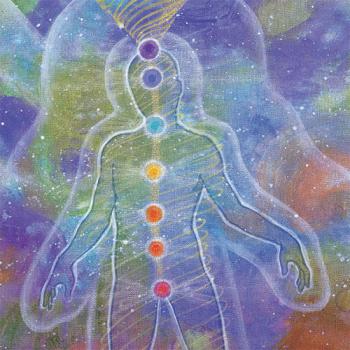
Caring for Your Chakras and What You Can...

Laying the Groundwork for Longevity
TRENDING AT PATHEOS New Visions

Did Prayer Cure His Cancer? Or Was It...
At 4 AM one morning, Joshua W. Brown’s wife awoke to a...

8 Ways a Near-Death Experience Rewires the Soul
Does Consciousness Survive Physical Death? After 50 Years of Research, Dr. Raymond...

Holy Longing: What Our Restlessness Is Telling Us
“One can find so many pains when the rain is falling.” -John...

What this is NOT about. This blog is definitely not about...

Who said the Israelites were God’s chosen? That’s right, they did. Who...

The Spirit World Is the Real World: God...
A Monk’s Wisdom on Body and Spirit I sit with Brother Martin...
view all New Visions blogs
Ad-Free & Subscriber Log-In Subscription Support
- About Us
- 2026 Calendar
- Videos
- Podcasts
- Library of World Religions
- Faith In Media Tracker
- Advertise With Us
- Write for Us
- Privacy Policy
- Terms of Service
- Do Not Sell My Data
- Contact Us
- Radiant Digital
- Manage Newsletter Subscriptions
- Unsubscribe From Notifications
- Sitemap
Copyright 2008-2026, Patheos. All rights reserved.
Subscription Support Ad-Free & Subscriber Log-In
Follow Patheos