
BuddhistCatholicContemplativeEvangelicalGeneral ChristianHinduJewishLatter-day SaintMuslimNew VisionsProgressive Christian
Beliefs
- Buddhist
- Catholic
- Contemplative
- Evangelical
- General Christian
- Hindu
- Jewish
- Latter-day Saint
- More Voices
- Muslim
- New Visions
- Pagan
- Progressive Christian
Topics
- Religion News
- Food and Religion
- Sports and Religion
- Religious Art
- Religious Music and Entertainment
- Religious Events
- History and Religion
- Style and Religion
- Politics and Religion
- Women in Religion
- Recreation Outdoors and Religion
- Business Finance and Religion
- Careers Workplace and Religion
- Education and Religion
- Family Parenting and Religion
- Health Fitness and Religion
- Home and Religion
- Relationships and Religion
- Technology and Religion
- Travel and Religion
Columnists
- Buddhist Columnists
- Business Finance and Religion Columnists
- Careers Workplace and Religion Columnists
- Catholic Columnists
- Contemplative Columnists
- Education and Religion Columnists
- Evangelists Columnists
- Family Parenting and Religion Columnists
- General Christian Columnists
- Health Fitness and Religion Columnists
- Hindu Columnists
- History and Religion Columnists
- Home and Religion Columnists
- Jewish Columnists
- More Voices Columnists
- Latter Day Columnists
- Muslim Columnists
- New Visions Columnists
- Nonreligious Columnists
- Pagan Columnists
- Politics and Religion Columnists
- Progressive Columnists
- Recreation Outdoors and Religion Columnists
- Relationships and Religion Columnists
- Religion News Columnists
- Religious Art Columnists
- Religious Events Columnists
- Religious Music and Entertainment Columnists
- Sports and Religion Columnists
- Style and Religion Columnists
- Technology and Religion Columnists
- Travel and Religion Columnists
- Women in Religion Columnists
Resource Library
- 2026 Calendar
- Library of World Religions
- The 100 Most Holy Places on Earth
- Patheos Answers
- Podcasts
- Videos
- Faith Leaders Database
- Anglican Episcopalian
- Bahai
- Baptist
- Buddhism
- Christianity
- Confucianism
- Eastern Orthodoxy
- Hinduism
- Holiness and Pentecostal
- ISKCON
- Islam
- Judaism
- Lutheran
- Methodist
- The Church of Jesus Christ of Latter-day Saints
- New Age
- Paganism
- Presbytarian and Reformed
- Protestantism
- Religion Behind the Scenes
- Roman Catholic
- Scientology
- Shia Islam
- Sikhism
- Sufism
- Sunni Islam
- Taoism
- Zen
- See all religions
Research Tools
 Ad-Free & Subscriber Log-In Subscription Support
Ad-Free & Subscriber Log-In Subscription Support
Follow Patheos 

- Trending:
- Forgiveness
- |
- Marriage
- |
- Consciousness
- |
- Death Penalty
- |
- Election
- |
- Halloween
 Living Tao with Ilchi Lee
- Home
- New Visions
- Calligraphy as Energy Dance
Calligraphy as Energy Dance
Last updated on: June 13, 2017 at 4:00 pm by Ilchi Lee
Calligraphy as Energy Dance 2017-06-13T16:00:05+00:00 Ilchi Lee
Patheos Explore the world's faith through different perspectives on religion and spirituality! Patheos has the views of the prevalent religions and spiritualities of the world.
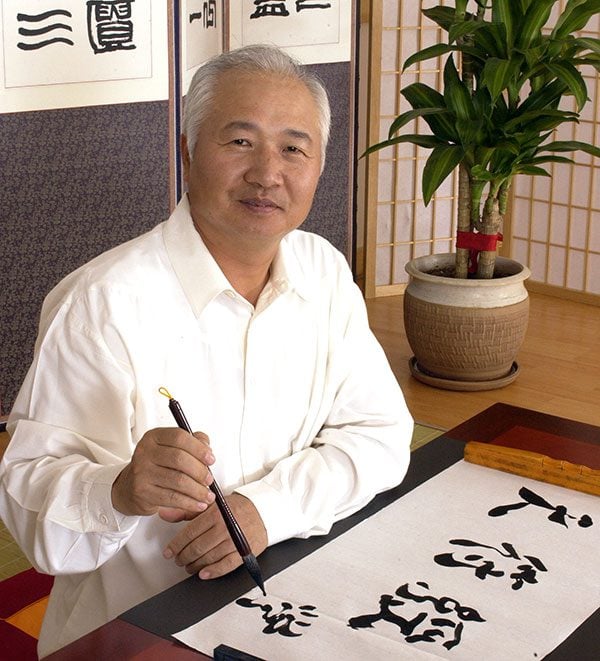
[Photo credit: Best Life Media]
In my lectures, I sometimes demonstrate my calligraphy, creating a brush and ink piece on the spot, or I have some of my calligraphic work on display for participants to see. As with the music I present during lectures, I do not do so because I am a virtuoso or a highly-trained master of technique. Rather, it is about demonstrating the flow of energy. My pieces are not the product of meticulous training, but rather are pieces of art created by following the flow of chunjikiun, or cosmic energy. This kind of exercise can be used as a means to put yourself in the flow and create a feeling of oneness with Tao.
I believe you can do it, too, and you might just create some artwork that is more impressive than you expected. In certain higher-level Brain Education training workshops, I have practitioners writing all the letters of the ChunBuKyung, an ancient text that speaks of the nature of the cosmos. They use traditional Asian calligraphy materials, which consists of a bamboo brush, rice paper, and an ink pot and ink stick. It starts with the preparation of the ink, which is made by slowly swirling the ink stick in a bit of water in a circular motion in the ink pot. This takes a while and practitioners can prepare their minds and connect to energy while doing so. Then, they attempt to create the individual Chinese characters while following the flow of energy through the brush.
You don’t have to invest in these materials, though, if you want to experience this kind of calligraphic energy dance. After all, it can be very intimidating to use a brush to write if you are not used to it, especially using dark black ink on special paper. Instead, you can start with simpler materials, such as crayons first, and then move toward more traditional Asian materials. I don’t recommend Western-style calligraphy nib pens, though, since those pens are very angular and not suited to free-flowing movement (unless you are already very, very good at it). Crayons are an inexpensive possibility, and there are some markers on the market that mimic the feel of a brush. There are some fun brush sets these days that allow you write with a brush in water on special paper, which dries and disappears when you are done. You can also use inexpensive watercolor paint and brushes to begin, too. Here are my suggestions to begin:
- Prepare your materials. Get yourself some crayons or an inexpensive watercolor paint set and some large paper, such as a large newsprint pad. Place your implements, ready to use, on a table with plenty of room to move around. Also, if possible, find some instrumental music to play that is relaxing, yet upbeat.
- Connect energy. Sitting in front of your materials, take a few moments to relax and connect. It’s important to quiet your busy, judgmental mind, so breathe and empty your mind as much as possible. Remember that your goal is to follow energy, not to create technically perfect calligraphy, so just breathe and focus on connection.
- Try a crayon dance. Play the music you have selected. Then, using your crayons or your inexpensive brush, begin to draw on the paper. You are not drawing anything in particular; you’re just translating the feeling of the music onto paper. As the music changes, your motions will change. Try this with different kinds of music.
- Now, try it with just energy. When you start to feel comfortable while moving with the music, try feeling the music of the cosmos. To prepare, try some jigam exercises to help you connect to energy. Just as the music inspired you to move in certain ways, let the energy do the same.
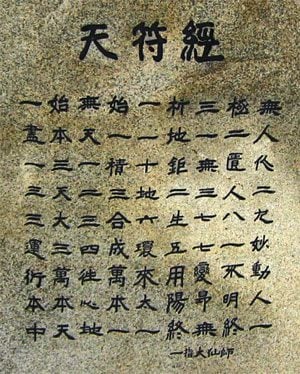
The ChunBuKyung
After a while, you might feel confident enough to try traditional Asian calligraphy implements. I recommend this because there is something special in the way that the traditional papers and brushes feel that will help you connect more deeply to energy. Also, the experience of preparing your own ink from an ink stick is like a deep meditation. Eventually, try some actual Chinese characters, something with meaning that inspires you. If you read something about the ChunBuKyung, you might even be inspired to try that. Writing actual characters like these develops perfect symmetry in the brain because this requires both the left-brain attention to the proper form of the letters and the right-brain flow of inspiration and connection.
Previous Post

May 23, 2017
The Art of Mindful Eating
Next Post

June 13, 2017 What Would Enlightened Education Look Like?
Browse Our Archives
Select a Category Uncategorized
Select a Month November 2021 October 2021 September 2021 August 2021 June 2021 May 2021 April 2021 March 2021 January 2021 December 2020 November 2020 October 2020 September 2020 August 2020 July 2020 June 2020 May 2020 April 2020 March 2020 February 2020 January 2020 December 2019 November 2019 October 2019 September 2019 August 2019 July 2019 June 2019 December 2018 November 2018 October 2018 September 2018 August 2018 July 2018 June 2018 May 2018 April 2018 March 2018 February 2018 January 2018 December 2017 November 2017 October 2017 September 2017 August 2017 July 2017 June 2017 May 2017 April 2017 March 2017 February 2017 January 2017 December 2016 November 2016 October 2016 September 2016 August 2016 July 2016 June 2016 May 2016 April 2016 March 2016
Follow Us!
TAKE THE
Religious Wisdom Quiz
What book contains the shortest chapter in the Bible?
Select your answer to see how you score.
Obadiah Proverbs Psalms Haggai
Related posts from Living Tao with Ilchi Lee

Five Elements Nature Meditation: Metal for Strength and...

Overcoming Brain Blocks to Greater Abundance
Letting Go of the Old to Make Room...
How to Regain Your Center After Emotional Upset
TRENDING AT PATHEOS New Visions

Did Prayer Cure His Cancer? Or Was It...
At 4 AM one morning, Joshua W. Brown’s wife awoke to a...

8 Ways a Near-Death Experience Rewires the Soul
Does Consciousness Survive Physical Death? After 50 Years of Research, Dr. Raymond...

Holy Longing: What Our Restlessness Is Telling Us
“One can find so many pains when the rain is falling.” -John...

What this is NOT about. This blog is definitely not about...

Who said the Israelites were God’s chosen? That’s right, they did. Who...

The Spirit World Is the Real World: God...
A Monk’s Wisdom on Body and Spirit I sit with Brother Martin...
view all New Visions blogs
Ad-Free & Subscriber Log-In Subscription Support
- About Us
- 2026 Calendar
- Videos
- Podcasts
- Library of World Religions
- Faith In Media Tracker
- Advertise With Us
- Write for Us
- Privacy Policy
- Terms of Service
- Do Not Sell My Data
- Contact Us
- Radiant Digital
- Manage Newsletter Subscriptions
- Unsubscribe From Notifications
- Sitemap
Copyright 2008-2026, Patheos. All rights reserved.
Subscription Support Ad-Free & Subscriber Log-In
Follow Patheos