
BuddhistCatholicContemplativeEvangelicalGeneral ChristianHinduJewishLatter-day SaintMuslimNew VisionsProgressive Christian
Beliefs
- Buddhist
- Catholic
- Contemplative
- Evangelical
- General Christian
- Hindu
- Jewish
- Latter-day Saint
- More Voices
- Muslim
- New Visions
- Pagan
- Progressive Christian
Topics
- Religion News
- Food and Religion
- Sports and Religion
- Religious Art
- Religious Music and Entertainment
- Religious Events
- History and Religion
- Style and Religion
- Politics and Religion
- Women in Religion
- Recreation Outdoors and Religion
- Business Finance and Religion
- Careers Workplace and Religion
- Education and Religion
- Family Parenting and Religion
- Health Fitness and Religion
- Home and Religion
- Relationships and Religion
- Technology and Religion
- Travel and Religion
Columnists
- Buddhist Columnists
- Business Finance and Religion Columnists
- Careers Workplace and Religion Columnists
- Catholic Columnists
- Contemplative Columnists
- Education and Religion Columnists
- Evangelists Columnists
- Family Parenting and Religion Columnists
- General Christian Columnists
- Health Fitness and Religion Columnists
- Hindu Columnists
- History and Religion Columnists
- Home and Religion Columnists
- Jewish Columnists
- More Voices Columnists
- Latter Day Columnists
- Muslim Columnists
- New Visions Columnists
- Nonreligious Columnists
- Pagan Columnists
- Politics and Religion Columnists
- Progressive Columnists
- Recreation Outdoors and Religion Columnists
- Relationships and Religion Columnists
- Religion News Columnists
- Religious Art Columnists
- Religious Events Columnists
- Religious Music and Entertainment Columnists
- Sports and Religion Columnists
- Style and Religion Columnists
- Technology and Religion Columnists
- Travel and Religion Columnists
- Women in Religion Columnists
Resource Library
- 2026 Calendar
- Library of World Religions
- The 100 Most Holy Places on Earth
- Patheos Answers
- Podcasts
- Videos
- Faith Leaders Database
- Anglican Episcopalian
- Bahai
- Baptist
- Buddhism
- Christianity
- Confucianism
- Eastern Orthodoxy
- Hinduism
- Holiness and Pentecostal
- ISKCON
- Islam
- Judaism
- Lutheran
- Methodist
- The Church of Jesus Christ of Latter-day Saints
- New Age
- Paganism
- Presbytarian and Reformed
- Protestantism
- Religion Behind the Scenes
- Roman Catholic
- Scientology
- Shia Islam
- Sikhism
- Sufism
- Sunni Islam
- Taoism
- Zen
- See all religions
Research Tools
 Ad-Free & Subscriber Log-In Subscription Support
Ad-Free & Subscriber Log-In Subscription Support
Follow Patheos 

- Trending:
- Forgiveness
- |
- Marriage
- |
- Consciousness
- |
- Death Penalty
- |
- Election
- |
- Halloween

- Home
- Evangelical
- Relationships and Religion
- The Prodigal Son: Two Rebels, One Grace
The Prodigal Son: Two Rebels, One Grace
Last updated on: August 6, 2026 at 4:08 pm by Beverly R. Green
The Prodigal Son: Two Rebels, One Grace 2026-08-06T16:08:02-04:00 Beverly R. Green
Patheos Explore the world's faith through different perspectives on religion and spirituality! Patheos has the views of the prevalent religions and spiritualities of the world.
| Image created for Patheos.
Luke 15:11-27
“There was a man who had two sons. The younger one said to his father, ‘Father, give me my share of the estate.’ So he divided his property between them.
I Chase Sunsets series note:
This is “The Art of the Parables” series. To read part two, click here.
“Not long after that, the younger son got together all he had, set off for a distant country and there squandered his wealth in wild living. After he had spent everything, there was a severe famine in that whole country, and he began to be in need. So he went and hired himself out to a citizen of that country, who sent him to his fields to feed pigs. He longed to fill his stomach with the pods that the pigs were eating, but no one gave him anything.
“When he came to his senses, he said, ‘How many of my father’s hired servants have food to spare, and here I am starving to death! I will set out and go back to my father and say to him: Father, I have sinned against heaven and against you. I am no longer worthy to be called your son; make me like one of your hired servants.’ So he got up and went to his father.
“But while he was still a long way off, his father saw him and was filled with compassion for him; he ran to his son, threw his arms around him and kissed him.
“The son said to him, ‘Father, I have sinned against heaven and against you. I am no longer worthy to be called your son.’
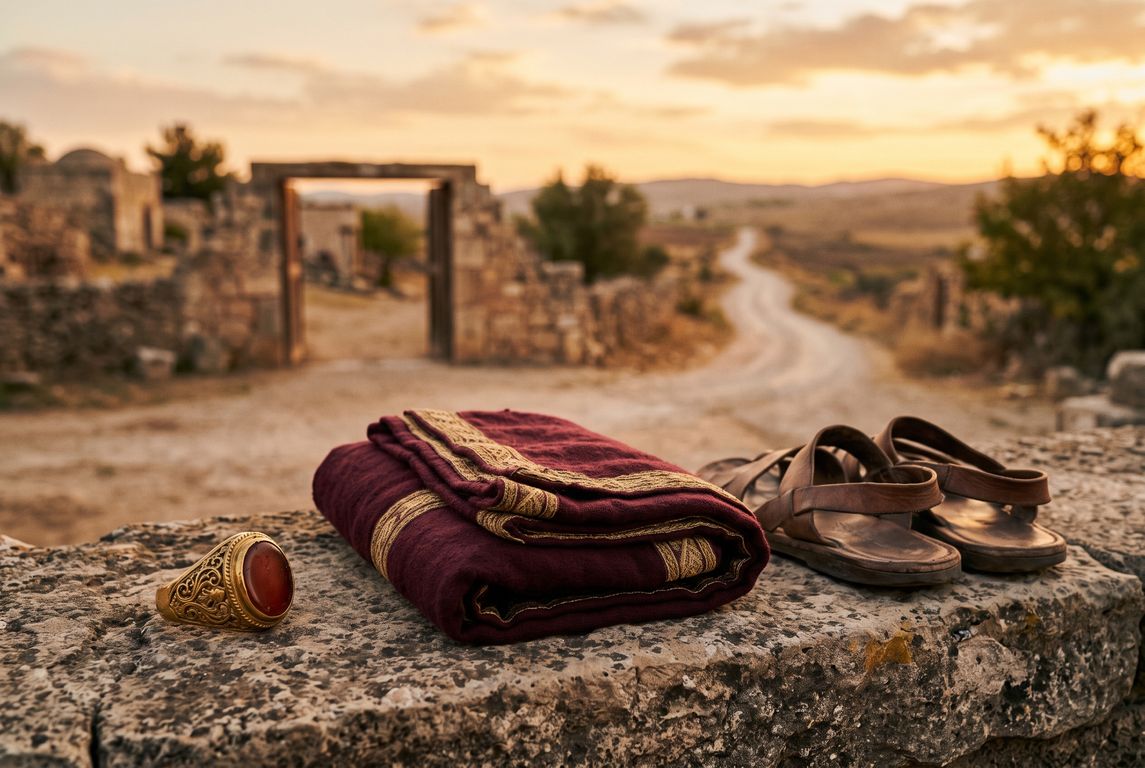
“But the father said to his servants, ‘Quick! Bring the best robe and put it on him. Put a ring on his finger and sandals on his feet. Bring the fattened calf and kill it. Let’s have a feast and celebrate. For this son of mine was dead and is alive again; he was lost and is found.’ So they began to celebrate.
“Meanwhile, the older son was in the field. When he came near the house, he heard music and dancing. So he called one of the servants and asked him what was going on. ‘Your brother has come,’ he replied, ‘and your father has killed the fattened calf because he has him back safe and sound.’
“The older brother became angry and refused to go in. So his father went out and pleaded with him. But he answered his father, ‘Look! All these years I’ve been slaving for you and never disobeyed your orders. Yet you never gave me even a young goat so I could celebrate with my friends. But when this son of yours who has squandered your property with prostitutes comes home, you kill the fattened calf for him!”
“‘My son,’ the father said, ‘you are always with me, and everything I have is yours. But we had to celebrate and be glad, because this brother of yours was dead and is alive again; he was lost and is found.'”
Regardless of what you’ve heard, this is not the tale of a good son and a bad son. It is about a son who was “honestly” rebellious and a son who was “hypocritically” rebellious.
- Prodigal primarily means being recklessly wasteful, extravagant, or spending money and resources without thinking about the future.
The Characters
- The Younger Son (The Rebel): He represents the “sinners” and Gentiles. He values the father’s money more than the father himself, demanding independence and seeking fulfillment through reckless, worldly living.
- The Father (The Merciful God): He represents God’s unconditional love. Breaking all cultural norms of dignity, he allows his son to make mistakes, watches for his return, and actively runs to offer restoration.
- The Older Son (The Legalist): He represents the Pharisees and religious authorities. While physically present, he is emotionally and spiritually distant from his father. He views his relationship with his father as a performance-based transaction.
Historical & Cultural Context
- Demanding the Inheritance: In ancient Jewish law, asking for an inheritance while the father was still alive and healthy was the cultural equivalent of saying, “Father, I wish you were dead.”
- Feeding the Pigs: After spending all his money, the younger son takes a job feeding swine. For a Jewish audience, pigs were strictly unclean animals (Leviticus 11:7). This detail shows that he had reached the absolute lowest point of spiritual and physical degradation.
- The Run of the Father: In the ancient Near East, an elderly patriarch would never run, as it required him to lift his robes and expose his ankles, which was considered deeply humiliating. The father intentionally shames himself to shield his returning son from the community’s scorn and the traditional Kezazah ceremony.
Kenneth Bailey, author of The Cross & the Prodigal, explains that “if a Jewish son lost his inheritance among Gentiles, and then returned home, the community would perform a ceremony, called the kezazah. They would break a large pot in front of him and yell, “You are now cut off from your people!’ The community would totally reject him.
“So, why did the father run? He probably ran in order to get to his son before he entered the village. The father runs — and shames himself — in an effort to get to his son before the community gets to him, so that his son does not experience the shame and humiliation of their taunting and rejection. The village would have followed the running father, would have witnessed what took place at the edge of the village between father and son. After this emotional reuniting of the prodigal son with his father, it was clear that there would be no kezazah ceremony; there would be no rejecting this son — despite what he had done. The son repented and returned to the father. The father took on the full shame that should have fallen upon his son, and clearly showed the entire community that his son was welcome back home.
“The amazing application for our own lives is crystal clear. Our heavenly Father has taken our shame through his Son, Jesus, who willingly endured the cross on our behalf. He took our sins’ shame so that we would not have to. As a result, we can be forgiven, restored — accepted. We do not have to fear going home to our Father and confessing our sins, no matter what we have done, or how many times we have done it (remember, Jesus taught his followers to forgive 70 times seven).
“In the parable, only the father could restore the son to full sonship in the family. In our case, we are sinners, and there is nothing that we can do to restore our lost relationship with the Holy God of the Universe. He calls us and waits — a single repentant step in his direction, and he is off and running to welcome us back.”
- The Robe, Ring, and Sandals: These were not just gifts; they were symbols of full restoration. The robe as a symbol of wealth and of covering, the ring as a symbol of family [signet], and the sandals which, on the barefoot son, symbolized [freedom to] walk wherever he wanted. Servants worked barefoot–sons of privilege walked in sandals.
The Older Brother
The Brother’s Reaction: That’s great for the younger brother, but what about the older brother? The older brother is hardworking and responsible, having stayed home to serve his father faithfully. However, he seems to view his obedience as transactional, an unofficial bargain or an unwritten contract. His angry words include slavery and orders. He was obviously not interested in serving his father out of love.
The older brother’s story serves as a cautionary tale about losing sight of grace. His story teaches us the dangers of self-righteousness, conditional obedience, and entitlement, while revealing a Father who loves both his wandering and his rule-keeping children equally.
Why is the older brother so angry? Because he did his part and dear old dad honored his wayward brother instead. However, the older brother was equally guilty of desiring the wealth that his father could give him more than the love and honor he should feel as his son. His service was a way to manipulate his father.
The Father’s Response: “Everything I have is yours. But we had to celebrate and be glad, because this brother of yours was dead and is alive again; he was lost and is found.” His words teach us the dangers of self-righteousness, conditional obedience, and entitlement, while revealing a Father who loves both his wandering and his rule-keeping children equally.
We don’t stop loving our children just because they do something wrong, even something terrible. What mother or father has not, at one time or another, been angry or disappointed at a son or daughter? What mother or father did not, at some point in time, disappoint his or her own mother or father? We make mistakes, but we are loved; we learn (and sometimes those lessons are harder than others) but we are loved; we repent (hopefully) and we are restored, and realize we have always been loved. That’s the way a good parent’s love works, and God is our Abba Father.
That is what the father wanted his older son to understand. “We’re all back together! Let’s celebrate the love of family!”
The lesson can be summed up in a word:
Grace
The parable ends on a cliffhanger. We never find out if the older brother joins the party. Jesus intentionally left it open as a direct invitation to the Pharisees and to us, to examine our own hearts and look to God, the Father, for forgiveness and restoration after our prodigal times.
Every Prodigal Son or Daughter Needs Grace
Ephesians 2:8–9
For by grace you have been saved through faith. And this is not your own doing; it is the gift of God, not a result of works, so that no one may boast. For we are his workmanship, created in Christ Jesus for good works, which God prepared beforehand, that we should walk in them.
Romans 5:20–21
Now the law came in to increase the trespass, but where sin increased, grace abounded all the more, so that, as sin reigned in death, grace also might reign through righteousness leading to eternal life through Jesus Christ our Lord.
Hebrews 4:15–16
For we do not have a high priest who is unable to sympathize with our weaknesses, but one who in every respect has been tempted as we are, yet without sin. Let us then with confidence draw near to the throne of grace, that we may receive mercy and find grace to help in time of need.
John 1:16–17
For from his fullness we have all received, grace upon grace. For the law was given through Moses; grace and truth came through Jesus Christ
James 4:6
But he gives more grace. Therefore it says, “God opposes the proud but gives grace to the humble.”
Read Part 4: The Lost Sheep and the Lost Coin: Three Ways to Be Lost
God bless You!
General Christian
Education and Religion
Previous Post

June 11, 2026
The Good Samaritan: When Your Enemy Is the Hero
Next Post

June 24, 2026 The Lost Sheep and the Lost Coin: Three Ways to Be Lost
Browse Our Archives
Select a Category Uncategorized
Select a Month October 2026 September 2026 August 2026 July 2026 June 2026 May 2026 April 2026 March 2026 February 2026 January 2026 December 2025 November 2025 October 2025 September 2025 August 2025 July 2025 June 2025 May 2025 April 2025 March 2025 February 2025 January 2025 December 2024 November 2024 October 2024 September 2024 August 2024 July 2024 June 2024 May 2024 April 2024 March 2024 February 2024 January 2024 December 2023 November 2023 October 2023 September 2023 August 2023 July 2023 June 2023 May 2023
Follow Us!
TAKE THE
Religious Wisdom Quiz
Who said, "The stone the builders rejected has become the cornerstone"?
Select your answer to see how you score.
Isaiah Paul Jesus David
Related posts from I Chase Sunsets


The Saturday Evening Musings of a "Mean Teacher"

The Former Rain, the Latter Rain, and the...

Jehovah Nissi: The Meaning of "The Lord Is...
TRENDING AT PATHEOS Evangelical

The Problem with False Prophets
Miller’s Station UMC| 10/18/26| Anchor Verse: Jeremiah 23: 1, 9-23 I...

Emotion in Early Christianity by Andrew Crislip
Andrew Crislip’s Emotion in Early Christianity examines an often overlooked dimension of...

16 Spiritual Touchstones for a More Grounded Life
After decades of spiritual study, here are 16 principles I try...

Catholic Evangelization: Sharing Your Faith Every Day
Welcome back to the Graceful Awakening mini-series called, “From Faith to Mission.” ...

The Pillar of the Boatmen: the Ancient Monument...
The Pillar of the Boatmen is a Romano-Gaulish sculpture that dates from...

In one sense walking into Westminster Abbey is like walking down the...
view all Evangelical blogs
Ad-Free & Subscriber Log-In Subscription Support
- About Us
- 2026 Calendar
- Videos
- Podcasts
- Library of World Religions
- Faith In Media Tracker
- Advertise With Us
- Write for Us
- Privacy Policy
- Terms of Service
- Do Not Sell My Data
- Contact Us
- Radiant Digital
- Manage Newsletter Subscriptions
- Unsubscribe From Notifications
- Sitemap
Copyright 2008-2026, Patheos. All rights reserved.
Subscription Support Ad-Free & Subscriber Log-In
Follow Patheos