
BuddhistCatholicContemplativeEvangelicalGeneral ChristianHinduJewishLatter-day SaintMuslimNew VisionsProgressive Christian
Beliefs
- Buddhist
- Catholic
- Contemplative
- Evangelical
- General Christian
- Hindu
- Jewish
- Latter-day Saint
- More Voices
- Muslim
- New Visions
- Pagan
- Progressive Christian
Topics
- Religion News
- Food and Religion
- Sports and Religion
- Religious Art
- Religious Music and Entertainment
- Religious Events
- History and Religion
- Style and Religion
- Politics and Religion
- Women in Religion
- Recreation Outdoors and Religion
- Business Finance and Religion
- Careers Workplace and Religion
- Education and Religion
- Family Parenting and Religion
- Health Fitness and Religion
- Home and Religion
- Relationships and Religion
- Technology and Religion
- Travel and Religion
Columnists
- Buddhist Columnists
- Business Finance and Religion Columnists
- Careers Workplace and Religion Columnists
- Catholic Columnists
- Contemplative Columnists
- Education and Religion Columnists
- Evangelists Columnists
- Family Parenting and Religion Columnists
- General Christian Columnists
- Health Fitness and Religion Columnists
- Hindu Columnists
- History and Religion Columnists
- Home and Religion Columnists
- Jewish Columnists
- More Voices Columnists
- Latter Day Columnists
- Muslim Columnists
- New Visions Columnists
- Nonreligious Columnists
- Pagan Columnists
- Politics and Religion Columnists
- Progressive Columnists
- Recreation Outdoors and Religion Columnists
- Relationships and Religion Columnists
- Religion News Columnists
- Religious Art Columnists
- Religious Events Columnists
- Religious Music and Entertainment Columnists
- Sports and Religion Columnists
- Style and Religion Columnists
- Technology and Religion Columnists
- Travel and Religion Columnists
- Women in Religion Columnists
Resource Library
- 2026 Calendar
- Library of World Religions
- The 100 Most Holy Places on Earth
- Patheos Answers
- Podcasts
- Videos
- Faith Leaders Database
- Anglican Episcopalian
- Bahai
- Baptist
- Buddhism
- Christianity
- Confucianism
- Eastern Orthodoxy
- Hinduism
- Holiness and Pentecostal
- ISKCON
- Islam
- Judaism
- Lutheran
- Methodist
- The Church of Jesus Christ of Latter-day Saints
- New Age
- Paganism
- Presbytarian and Reformed
- Protestantism
- Religion Behind the Scenes
- Roman Catholic
- Scientology
- Shia Islam
- Sikhism
- Sufism
- Sunni Islam
- Taoism
- Zen
- See all religions
Research Tools
 Ad-Free & Subscriber Log-In Subscription Support
Ad-Free & Subscriber Log-In Subscription Support
Follow Patheos 

- Trending:
- Forgiveness
- |
- Marriage
- |
- Consciousness
- |
- Death Penalty
- |
- Election
- |
- Halloween

- Home
- Evangelical
- Home and Religion
- Why Foster Parenting Is Hard—and Still Worth It
Why Foster Parenting Is Hard—and Still Worth It
Last updated on: May 8, 2026 at 4:53 pm by Ellen Fannon
Why Foster Parenting Is Hard—and Still Worth It 2026-05-08T16:53:48-04:00 Ellen Fannon
Patheos Explore the world's faith through different perspectives on religion and spirituality! Patheos has the views of the prevalent religions and spiritualities of the world.
May is National Foster Care Month

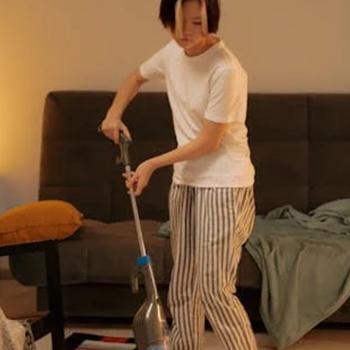
I tried to have a quiet time with the Lord every day. | Image courtesy of Pexels.
In honor of National Foster Care Month, I’d like to share some honest realities about foster care. But first, to lighten the mood, here’s an excerpt from my book, “Other People’s Children,” which reflects on some of my humorous experiences as a foster mom.
I tried to have quiet time with the Lord every day. I really did. But the devil just knew when those times were, and if he couldn’t manage to make the phone ring, he stirred up the kids. It could be totally peaceful for an entire hour, but the minute I sat down to read a devotion or pray, the tranquility would be shattered. But I was the adult Sunday school teacher, for Heaven’s sake. I was supposed to lead by example. So, by golly, I was going to have my quiet time with the Lord if it killed me!
Sitting on my bed, prayer guide in hand, I closed my eyes. I tried to clear my mind of the world surrounding me—the pile of laundry waiting to be folded, the cupcakes I’d promised to bake for Donovan’s class party, our dog that smelled bad and desperately needed a bath, Gabriella’s fingernails I’d promised to paint “later,” the package I needed to drop off at the post office, and oh yes, my paying job. I took several deep breaths. Mustn’t fall asleep, mustn’t fall asleep. But, oh, how good a short nap sounded. No! No! No! Down on your knees! That will keep you awake and in the proper attitude of prayer! I eased from the comfortable bed onto the hard floor, ignoring the creaking sounds from my knees. I would worry about how to get up off the floor later.
And then it started.
“I’m telling!” Heavy footsteps clomped down the hall. Angry fists pounded on the closed door. An indignant voice reported, “Miss Robin! Donovan said I was stupid!”
“She started it!” Donovan yelled. “She keeps bothering me while I’m trying to play my Wii!”
“I didn’t bother you!”
“You did so!”
I tried to force down my mounting frustration.
“Miss Robin!”
“What?” I snapped. Well, that didn’t come out as patiently as I would have liked.
“Donovan called me stupid!”
“You two duke it out!” I ordered. “I’m busy!”
“But Mom—”
“Don’t care! Don’t care! Go away!” Doggone it, I’m trying to be holy here!
“Miss Robin, Donovan just pushed me!”
“Did not, liar!”
Please, please, just go play in the traffic or something! Then the reality of my horrible, unmotherly thoughts caused a tidal wave of guilt to flood my soul. Oh, dear God, You know I really didn’t mean that. Forgive me, Lord. Nevertheless, I was reminded that Jesus had the freedom to get up early and go by Himself to a private place to pray. Sure, easy for Him! He didn’t have kids! Sure, He said, “Let the little children come to me,” but after He blessed them, he gave them back to their parents! Shoot, I couldn’t even go to the bathroom alone most of the time.
“Miss Robin, Donovan stuck his tongue out at me!”
“Gabriella, please try not to be so sensitive.” Children are a blessing from the Lord, children are a blessing from the Lord, children are a bless—
“Mom, Gabriella is trying to touch me with her dirty hands!”
Hauling myself up off the floor, I charged to the door and opened it, glaring at both kids. They immediately started pointing fingers at each other.
“Now I’ve got a headache because of Donovan,” announced Gabriella, looking pitiful.
“Yeah, well, I got a bigger headache,” Donovan challenged.
No way! I have the mother of all headaches! I have a headache the size of Montana! And now I’m not on a proper spiritual plane!
I temporarily abandoned my mission. “Come on, let’s go fix a snack.”
Momentarily forgetting the feud, the two ran in the direction of the kitchen.
Casting my eyes upward, I vowed, “I’ll do better tomorrow, Lord.” Then, realizing my limitations, “At least, I’ll try.”
What do you think of when you hear the words “Foster Parent”?
When you hear the words “foster parents,” what comes to mind? When you pick up a book or watch a TV show or movie with foster parents, how are foster parents usually portrayed? Foster parents are often portrayed negatively as abusive, uncaring, or “just in it for the money.”
Yet the vast majority of foster parents are simply people with a genuine love for children and the desire to make a difference in a child’s life. My husband and I were foster parents for ten years, and over that time, we had more than 40 children in our home.
Every 120 seconds, a child in the U.S. enters foster care. Currently, there are almost half a million children in foster care in the U.S. Sadly, the number of children in the U.S. foster care system has increased over the past several years, largely due to an increase in substance abuse by parents. To compound this problem, as the number of American children in foster care increases, there is a concurrent shortfall in the number of foster homes to accommodate them.
Why are kids in foster care?
Foster care is a temporary living situation for children whose parents cannot care for them and whose needs have come to the attention of child welfare agency staff. Often, these children have been removed from their parents because they are in an unsafe environment, abused or neglected, or their parents are unable to care for them. The child care agency must seek temporary custody of the child through the court system.
Foster care is meant to be temporary, with the goal of reunification, until a parent can provide a safe environment. This may mean getting off drugs, getting out of an abusive relationship, receiving help with parenting and other life skills, or getting a job.
Sometimes, when the parents can’t or won’t complete their case plan goals for reunification, their parental rights are terminated. Then, foster care continues until a relative or adoptive family agrees to raise the child.
What is a foster parent?
Foster parents are relatives or nonrelative adults who step up to care for children whose parents are unable to care for them. They provide a stable, loving, and safe environment while also helping prepare children for a permanent placement, either through a return to parents or adoption. Foster parents must be licensed by the state.
How long do children remain in foster care?
How long children stay in foster care depends on their family situation and what options are available in their communities. We have had children in our home for as short as one overnight and as long as three years.
What happens when kids leave foster care?
About half of the children who leave foster care return to their parents or a previous caregiver. The hope is that the issues that brought them into the child welfare system have been corrected. Unfortunately, that is not always the case. Each year, more than 50,000 children who can’t return to their parents are adopted, most often by the relative or foster parent with whom they have been living while in foster care.
Kids who are teenagers when they first enter foster care often face particular challenges. If they aren’t returned to their parents or adopted by the time they become adults, they may struggle emotionally, educationally, and financially. About 20,000 children “age out” of foster care each year. These young adults often don’t have the skills and the support they need to live as adults. These young adults are more likely to become homeless and jobless than others their age. They may struggle to form relationships and are more likely to be incarcerated and to have children before they have sufficient resources to care for them.
Sobering statistics of children in foster care
There are 3.3 million reports of violence against children that result in foster care placements every year.
61% of the children who are removed from their homes are removed because of neglect, although a legal petition for removal may include multiple reasons. (The Adoption and Foster Care Analysis and Reporting System (AFCARS))
About 1 in 4 children who are currently in the foster care system are waiting to be adopted. (AFCARS)
45% of all placements are in non-relative foster family homes. (AFCARS)
6% of the children who are in foster care have a case plan goal that has not yet been established. (AFCARS). When children come into foster care, they are supposed to have a case plan goal, which includes what the parents are required to do to regain custody, special needs of the children, such as school issues, medical issues, or specific problems foster parents should be aware of, as well as an established visitation schedule with their biological families. However, once a child goes into foster care, it may take several days or longer for a caseworker to be assigned and a case plan developed.
African-American/Black children are over-represented in the foster care system, accounting for 24% of total placements. (AFCARS). African-American/Black children are less likely to be adopted (18% of total adoptions). (AFCARS)
Only 50% of children who age out of foster care will be employed by the age of 24.
20% of them will become homeless after the age of 18. (Foster Club)
Fewer than 3% of children who age out of foster care will go on to earn a college degree. (Foster Club)
71% of young women who age out of the foster care system will become pregnant by the age of 21. (Foster Club)
25% of the kids in foster care will experience PTSD. (Foster Club)
These foster care statistics show there is a long way to go in supporting families who are considered to be at a high risk.
Why is there a shortage in the number of foster homes to accommodate the increasing number of children in foster care?
The United States foster care system has a higher turnover rate than most fast-food industries. Of the estimated 200,000 licensed foster homes, 30 to 50 percent drop out each year. With 500,000 children in foster care, there is a critical shortage of homes. Why are foster parents leaving?
-
- Foster parents have obligations, but not rights.
- Criminalizing Foster Parents – Yes, sadly, child abuse does happen at the hands of foster parents, but statistically, that number is low – approximately 1.5%. Foster parents are constantly scrutinized, and even a simple incident can become a foster parent’s nightmare. An accident, an accusation, or an unintentional mistake can leave foster parents facing potentially serious consequences, including being arrested or losing their livelihood. Sadly, 1 in 4 foster parents will be accused of abuse at some point. After fostering for eight years, we were turned into the child abuse hotline twice within three months. Once for a child with a diaper rash and once for a hair being found in the same child’s diaper. The most frustrating part of being accused is that anyone can call the child abuse hotline—and remain anonymous. So foster parents can’t even defend themselves against their accusers.
- Being a foster parent can be the toughest job you will ever have. Foster children often come with serious issues. They may lie and steal. They may be destructive. They may have other behavior problems and learning difficulties. Our first foster child had to repeat kindergarten because he had been in 4 different schools when we got him in March. They may suffer from a variety of physical and mental illnesses. We had one child in our home who had severe behavioral problems, who we could not keep due to the safety of the other children in our home. He was kicked out of two daycares within three days. My husband had to take off work to stay home with him. Yet it took the Department of Children and Families THREE WEEKS to move him. Calls to our social worker went unanswered and unreturned.
- Foster parents quickly learn that a nurturing love is often not enough.
- Many of America’s child welfare systems are badly broken — and there simply is not enough support or help for foster parents. Job burnout is high among social workers due to underpay and overwork. Children are often returned to unstable homes, sometimes after being removed multiple times. We had children in our care who were repeatedly in and out of foster care.
- When it comes to making decisions for foster children, the child welfare systems frequently disregard input from the foster parents concerning the children they have lived with, loved, cared for, and know better than anyone else. Foster parents have no legal standing in the say-so of what happens to their children. We have seen children “fall through the cracks” from inadequate investigation, inadequate supervision of biological parents, and poor communication on the part of the social worker, guardian ad litem, and child welfare attorney. Sometimes we were the child’s only advocate, and our input was ignored.
- Foster parents seldom have closure. It is rare to find out what happened to children after they have left your care.
So, why become a foster parent?
Okay, now that I’ve depressed you and scared you away from ever becoming a foster parent, let me share with you why my husband and I became foster parents and why we continued to be foster parents for ten years, despite all the obstacles.
Our call to help children in need came when we were missionaries in a third-world country. In many third-world countries, there are no social services for children, and many children end up on the streets like stray animals. Our organization ministered to street boys by providing a house, caretakers, schooling, medical care, and the love of Jesus.
When we returned to the States, we realized that we couldn’t save all the children, but perhaps we could make a difference in the lives of a few. So we looked into becoming foster parents.
How does one become a foster parent?
To become licensed foster parents, we had to complete 30 hours of training, undergo background checks and home inspections, obtain letters of reference from friends, family, employers, and neighbors, and be in good physical health, which required doctors’ references. We also had to show that we could support our family without relying on the foster care stipend. Many people are under the mistaken impression that foster parents make money from the stipends paid for fostering. If anything, they are lucky to break even. Foster care stipends don’t cover the full costs of most daycares, and out-of-pocket expenses include school fees, field trips, extracurricular activities, birthday and Christmas presents, and babysitting. If the child gets sick, foster parents may have to take unpaid time from work and lose income.
So why, with all the difficulties of being foster parents, did we continue to do foster care?
We continued to do foster care despite the difficulties because that’s what we felt God calling us to do. There was (and is) a tremendous need for foster homes, and we were highly sought after for placements. For the most part, the individual case workers were wonderful, just overworked. And, of course, the main reason we continued as foster parents was that we loved the children and wanted to make a difference in their lives for as long as we had them. Despite the challenges, this was one of the most rewarding jobs I have ever done.
Foster care really is a mission field
Have you considered going on a mission trip, but your job, family, or other life commitments prevent you from going? If so, consider becoming a foster parent. There are ample opportunities for you to reach the “least of these” in your own backyard. Maybe you’re retired and want to remain active while doing something positive. There are no age limits to becoming foster parents. Foster parenting is a mighty way to be a part of a community that works tirelessly to provide children and youth with a greater future.
What if you still would like to be involved, but don’t feel you can commit to being a foster parent?
How about volunteering to babysit or provide respite care for foster parents when they need a break? There is a desperate need for people willing to give a few hours to babysit foster children while their foster parents have other commitments or need a night out.
How about serving as a mentor at church or school for foster children who need exposure to positive role models?
How about becoming a guardian ad litem to serve as a child’s legal advocate in court?
How about simply providing support for foster families by doing chores, running errands, or sending notes of encouragement? One of the more thoughtful ways I was encouraged was when a group of church ladies put together a Mother’s Day basket filled with goodies for foster mothers.
Consider mentoring or providing skill training for biological parents who are struggling to regain custody of their children. Many times, biological parents were themselves victims of abuse, neglect, or dysfunctional environments, and don’t know what a stable, loving home should look like. You can help break that cycle.
Finally, pray for foster families as they strive to meet the needs of hurting children.
General Christian
Home and Religion
Family, Parenting and Religion

About Ellen L. Fannon
Ellen Fannon is an award-winning author, a retired veterinarian, a former missionary, and a church pianist/organist. She and her retired Air Force pilot-turned-pastor husband have fostered more than forty children and have two adopted sons. Ellen has published eight novels, and her stories have appeared in One Christian Voice, Chicken Soup for the Soul, Divine Moments, and Guideposts; her devotions have appeared in Open Windows, Guideposts God’s Creatures, and The Secret Place. Please visit Ellen’s website, Good for a Laugh, and sign up to follow her weekly blog at ellenfannonauthor.com You can read more about the author here.
Previous Post

June 16, 2025
When Spying Is a Spiritual Gift—and My Husband Has It
Next Post

July 13, 2026 I Thought I’d Be Holier by Now
Browse Our Archives
Select a Category Uncategorized
Select a Month July 2026 May 2026 June 2025 April 2025 December 2024 November 2024 October 2024 September 2024 August 2024 July 2024 June 2024 February 2024 January 2024 December 2023 November 2023 October 2023 September 2023 August 2023 July 2023 January 2023
Follow Us!
TAKE THE
Religious Wisdom Quiz
Which Psalm contains "Create in me a clean heart, O God"?
Select your answer to see how you score.
Psalm 70 Psalm 51 Psalm 33 Psalm 110
Books by This Author Books by Ellen Fannon
Related posts from Humor Break

I Thought I’d Be Holier by Now

When Spying Is a Spiritual Gift—and My Husband...
The Proverbs 31 Wife vs. My Wrinkled Reality

Fruitcake: From Biblical Delicacy to Christmas Doorstop
TRENDING AT PATHEOS Evangelical

'Super Scam Me' Exposes AI Jon Bon Jovi...
Leslie Pickett believed she was in a relationship with Jon Bon Jovi....

The Brazilian Remake of Kendricks' 'Flywheel' Opens in...
“Flywheel,” the story that launched the Kendrick Brothers’ filmmaking career is getting...

The Dangers of Gradual Accommodation (Winking at Sin)
Recently, the “law of gradualness” resurfaced during the opening of a weeklong,...

The Iron Gates and the Lion of the...
Yesterday, I didn't finish my report about, well, yesterday. So I'll...

The Image: On the Horror of Capitalism and...
The Image Then went the Pharisees, and took counsel how they might...

We are approaching the date of our new American national holiday: October...
view all Evangelical blogs
Ad-Free & Subscriber Log-In Subscription Support
- About Us
- 2026 Calendar
- Videos
- Podcasts
- Library of World Religions
- Faith In Media Tracker
- Advertise With Us
- Write for Us
- Privacy Policy
- Terms of Service
- Do Not Sell My Data
- Contact Us
- Radiant Digital
- Manage Newsletter Subscriptions
- Unsubscribe From Notifications
- Sitemap
Copyright 2008-2026, Patheos. All rights reserved.
Subscription Support Ad-Free & Subscriber Log-In
Follow Patheos