
BuddhistCatholicContemplativeEvangelicalGeneral ChristianHinduJewishLatter-day SaintMuslimNew VisionsProgressive Christian
Beliefs
- Buddhist
- Catholic
- Contemplative
- Evangelical
- General Christian
- Hindu
- Jewish
- Latter-day Saint
- More Voices
- Muslim
- New Visions
- Pagan
- Progressive Christian
Topics
- Religion News
- Food and Religion
- Sports and Religion
- Religious Art
- Religious Music and Entertainment
- Religious Events
- History and Religion
- Style and Religion
- Politics and Religion
- Women in Religion
- Recreation Outdoors and Religion
- Business Finance and Religion
- Careers Workplace and Religion
- Education and Religion
- Family Parenting and Religion
- Health Fitness and Religion
- Home and Religion
- Relationships and Religion
- Technology and Religion
- Travel and Religion
Columnists
- Buddhist Columnists
- Business Finance and Religion Columnists
- Careers Workplace and Religion Columnists
- Catholic Columnists
- Contemplative Columnists
- Education and Religion Columnists
- Evangelists Columnists
- Family Parenting and Religion Columnists
- General Christian Columnists
- Health Fitness and Religion Columnists
- Hindu Columnists
- History and Religion Columnists
- Home and Religion Columnists
- Jewish Columnists
- More Voices Columnists
- Latter Day Columnists
- Muslim Columnists
- New Visions Columnists
- Nonreligious Columnists
- Pagan Columnists
- Politics and Religion Columnists
- Progressive Columnists
- Recreation Outdoors and Religion Columnists
- Relationships and Religion Columnists
- Religion News Columnists
- Religious Art Columnists
- Religious Events Columnists
- Religious Music and Entertainment Columnists
- Sports and Religion Columnists
- Style and Religion Columnists
- Technology and Religion Columnists
- Travel and Religion Columnists
- Women in Religion Columnists
Resource Library
- 2026 Calendar
- Library of World Religions
- The 100 Most Holy Places on Earth
- Patheos Answers
- Podcasts
- Videos
- Faith Leaders Database
- Anglican Episcopalian
- Bahai
- Baptist
- Buddhism
- Christianity
- Confucianism
- Eastern Orthodoxy
- Hinduism
- Holiness and Pentecostal
- ISKCON
- Islam
- Judaism
- Lutheran
- Methodist
- The Church of Jesus Christ of Latter-day Saints
- New Age
- Paganism
- Presbytarian and Reformed
- Protestantism
- Religion Behind the Scenes
- Roman Catholic
- Scientology
- Shia Islam
- Sikhism
- Sufism
- Sunni Islam
- Taoism
- Zen
- See all religions
Research Tools
 Ad-Free & Subscriber Log-In Subscription Support
Ad-Free & Subscriber Log-In Subscription Support
Follow Patheos 

- Trending:
- Forgiveness
- |
- Marriage
- |
- Consciousness
- |
- Death Penalty
- |
- Election
- |
- Halloween
 Human Encounter
- Home
- Contemplative
- Health, Fitness and Religion
- It’s a Pleasure to Encounter You
It’s a Pleasure to Encounter You
Last updated on: September 3, 2022 at 6:59 pm by Tom Head
It’s a Pleasure to Encounter You 2022-09-03T18:59:28-05:00 Tom Head
Patheos Explore the world's faith through different perspectives on religion and spirituality! Patheos has the views of the prevalent religions and spiritualities of the world.
I’m grateful to be part of the Patheos family of bloggers, and I’d like to introduce myself by talking a little bit about why I decided to call this blog Human Encounter.
On the surface it’s kind of an odd name—sounds like a fetish dating site for extraterrestrials. But I chose it on purpose, and for mostly theological reasons.
Encountering Encounter
Let’s start with the noun.
“Encounter” is a powerful word in my own Catholic tradition. Pope Francis has been talking in recent years about the centrality of encounter to our lives of faith, and—before that—five major events in recent Latino Catholic history were called the Encuentros.
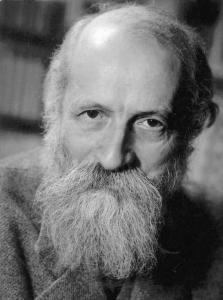
Martin Buber. Photo: David B. Keidan / Harvard. Public domain.
But it’s a Jewish theologian, Martin Buber, whose name comes to mind when I think about encounter. Paul Mendes-Flohr wrote an excellent piece on Buber’s dialectic theology, for the Australian Broadcasting Corporation’s Religion and Ethics Newsweekly, that gets to the heart of why the word encounter is so important to me in the context of chaplaincy. Summarizing Buber’s philosophy, Mendes-Flohr writes in part:
“To meet the Thou of the other, one must be present to the other and also allow the other to meet one as a Thou. Thus the encounter is dialogical and enjoys an existential mutuality … But it is only by crossing ‘the narrow ridge’ of dialogue that humans may overcome their mutual isolation and break through the protective shell hiding their authentic selves.”
For me, this is what chaplaincy is. Chaplains can (and do) argue all the time about what the specifics of the field are, but it’s mainly a ministry of presence. Whatever context we work in and whatever approach we use, the first thing we do is show up with our full, attentive selves.
Only Human
Now let’s talk about the adjective.
Almost anybody can become a chaplain. I was very careful to call myself a “chaplain resident” in most contexts where I operate, because I’m not board-certified yet, but then I learned that (a) very few chaplains here in Mississippi are board-certified, and (b) some communities, like the mostly unhoused folks I serve, need actual designated chaplains.
This is not going to be a space where I try to proselytize. Some chaplains work more like missionaries than others, but most mainstream chaplaincy organizations follow the same basic principles as Brandeis University’s Chaplaincy Innovation Lab: collaborative, inclusive, respectful, and evidence-based. Some of us do missionary work too, but that’s separate from what we do as chaplains.
As you’ll learn over the course of this blog, there are also a lot of professions and activities that routinely involve spiritual care work, sometimes very competent spiritual care work, but aren’t called chaplaincy. A lot of bartenders are de facto chaplains. A lot of pastors and psychologists are de facto chaplains. Family elders often play the role of family chaplain. All of us who have the skill set to provide a ministry of presence are doing chaplaincy in everything but name.
It’s good to meet y’all. I’m grateful to have this platform to talk to you and—hopefully—to do a little listening, too.
Previous Post

January 28, 2023
We’re All Snowflakes, and That’s OK
Next Post

September 5, 2022 The Hands We Build With
Browse Our Archives
Select a Category Uncategorized
Select a Month January 2023 October 2022 September 2022
Follow Us!
TAKE THE
Religious Wisdom Quiz
Which Christian denomination is most associated with the Reformation led by Martin Luther?
Select your answer to see how you score.
Orthodox Lutheran Anglican Catholic
Related posts from Human Encounter

We’re All Snowflakes, and That’s OK

7 Surprises Inside the Vatican’s Secret Archives
Are You Worshipping God or Pinhead?

Alex Jones and the Theology of Bad Faith
TRENDING AT PATHEOS Contemplative

Handy Contemplative Practices for Political Spaces
A Spiritually Grounded Presence In order to bring a spiritually grounded presence...

Halloween: The Holiday of Loving Your Neighbor
All Hallows Eve Is Halloween the least Christian holiday in America, or...

Can Love Be Saved? Some Thoughts on the...
Happy Valentine's Day! I recently published a post on Patreon called Can...

"This Loving, Uniting Embrace": the Holy Ordinary
Today's guest post is by Mark Longhurst, author of The Holy Ordinary:...

How Are We Called to Live?: More About...
How Are We Called to Live? Many of us struggle with discerning...

A Spiritual Practice of Reading: Join Us Online
A Spiritual Practice of Reading A healthy spiritual practice of reading is...
view all Contemplative blogs
Ad-Free & Subscriber Log-In Subscription Support
- About Us
- 2026 Calendar
- Videos
- Podcasts
- Library of World Religions
- Faith In Media Tracker
- Advertise With Us
- Write for Us
- Privacy Policy
- Terms of Service
- Do Not Sell My Data
- Contact Us
- Radiant Digital
- Manage Newsletter Subscriptions
- Unsubscribe From Notifications
- Sitemap
Copyright 2008-2026, Patheos. All rights reserved.
Subscription Support Ad-Free & Subscriber Log-In
Follow Patheos