
BuddhistCatholicContemplativeEvangelicalGeneral ChristianHinduJewishLatter-day SaintMuslimNew VisionsProgressive Christian
Beliefs
- Buddhist
- Catholic
- Contemplative
- Evangelical
- General Christian
- Hindu
- Jewish
- Latter-day Saint
- More Voices
- Muslim
- New Visions
- Pagan
- Progressive Christian
Topics
- Religion News
- Food and Religion
- Sports and Religion
- Religious Art
- Religious Music and Entertainment
- Religious Events
- History and Religion
- Style and Religion
- Politics and Religion
- Women in Religion
- Recreation Outdoors and Religion
- Business Finance and Religion
- Careers Workplace and Religion
- Education and Religion
- Family Parenting and Religion
- Health Fitness and Religion
- Home and Religion
- Relationships and Religion
- Technology and Religion
- Travel and Religion
Columnists
- Buddhist Columnists
- Business Finance and Religion Columnists
- Careers Workplace and Religion Columnists
- Catholic Columnists
- Contemplative Columnists
- Education and Religion Columnists
- Evangelists Columnists
- Family Parenting and Religion Columnists
- General Christian Columnists
- Health Fitness and Religion Columnists
- Hindu Columnists
- History and Religion Columnists
- Home and Religion Columnists
- Jewish Columnists
- More Voices Columnists
- Latter Day Columnists
- Muslim Columnists
- New Visions Columnists
- Nonreligious Columnists
- Pagan Columnists
- Politics and Religion Columnists
- Progressive Columnists
- Recreation Outdoors and Religion Columnists
- Relationships and Religion Columnists
- Religion News Columnists
- Religious Art Columnists
- Religious Events Columnists
- Religious Music and Entertainment Columnists
- Sports and Religion Columnists
- Style and Religion Columnists
- Technology and Religion Columnists
- Travel and Religion Columnists
- Women in Religion Columnists
Resource Library
- 2026 Calendar
- Library of World Religions
- The 100 Most Holy Places on Earth
- Patheos Answers
- Podcasts
- Videos
- Faith Leaders Database
- Anglican Episcopalian
- Bahai
- Baptist
- Buddhism
- Christianity
- Confucianism
- Eastern Orthodoxy
- Hinduism
- Holiness and Pentecostal
- ISKCON
- Islam
- Judaism
- Lutheran
- Methodist
- The Church of Jesus Christ of Latter-day Saints
- New Age
- Paganism
- Presbytarian and Reformed
- Protestantism
- Religion Behind the Scenes
- Roman Catholic
- Scientology
- Shia Islam
- Sikhism
- Sufism
- Sunni Islam
- Taoism
- Zen
- See all religions
Research Tools
 Ad-Free & Subscriber Log-In Subscription Support
Ad-Free & Subscriber Log-In Subscription Support
Follow Patheos 

- Trending:
- Forgiveness
- |
- Marriage
- |
- Consciousness
- |
- Death Penalty
- |
- Election
- |
- Halloween
 Human Encounter
- Home
- Contemplative
- Health, Fitness and Religion
- How People Change
How People Change
Last updated on: September 12, 2022 at 2:48 pm by Tom Head
How People Change 2022-09-12T14:48:15-05:00 Tom Head
Patheos Explore the world's faith through different perspectives on religion and spirituality! Patheos has the views of the prevalent religions and spiritualities of the world.
Harvard Business Review’s Herminia Ibarra wrote a fascinating overview of how people make sustainable career changes, breaking it down into three steps: separation, liminality, and reintegration. Collectively, she calls this three-step process the cycle of transition. The article is well worth reading, as is her other work on this subject.
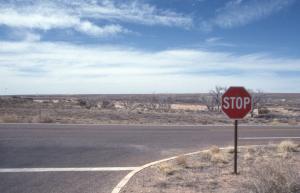
Photo: © Nam-ho Park / cc-by.
The changes we make in our internal lives often follow similar patterns.
Separation
Whether we’re talking about the Hebrews in the Sinai desert, Jesus in the desert of Judah, Muhammad at Hira, or the Buddha at Bodh Gaya, almost every major story of religious awakening begins with some period of withdrawal from the person’s former life. This withdrawal marks the end of a new way of living and the beginning of a new one.
This is generally not a very exciting process to watch, which is why in movies it’s generally reduced to a training montage.
In spiritual life, this also does not often take the form of a literal separation. During Lent or Ramadan, for example, we separate ourselves from only some aspects of our lives in order to seek transformation. It also tends to be a cyclical, ongoing process towards something rather than a definitive change with a clear, measurable goal.
Liminality
When you separate from your old patterns, you free yourself up for new ones. So for example during Yom Kippur, Lent, or Ramadan, we might have our fasting and abstinence practices but we also take on a more rigorous prayer schedule. Ibarra describes this as a phase in which one might experiment, and there is always room for experimentation within your religious life—visiting other congregations, taking a short class on a religious subject you’ve never examined closely before, or just making new friends. Or you might take on a directed liminality where you orient yourself around connecting to a specific community or practice.
Reintegration
Once you’ve separated yourself from your ordinary habits and dipped your toes into new ones, you can settle into a new routine that incorporates these changes.
This is not necessarily rewarded by our novelty-driven culture! The objective by some metrics is to avoid getting into a routine at all, to stay in that liminality phase and keep separating and experimenting for the rest of your days. I don’t mean to disparage that approach, but there are disadvantages to it that need to be acknowledged and seldom are. Self-acceptance, for one thing, becomes harder without stability and routine. A sense of being rejected and alienated may follow. It is very hard to keep doing new, exciting things that you’re glad you did; there is a place for contentment and sustainable habits, for “settling,” for making a nest out of your life even as you direct yourself towards ongoing change.
It is also important not to be too hard on yourself if you settle back into your old ways. There’s a reason the religious holidays I’ve mentioned here provide an opportunity for a new cycle of transition every year, and it’s not just so that we can keep climbing higher and higher; it’s so that we can keep trying again and again, and not give up on ourselves in the meantime.
Previous Post

September 5, 2022
The Hands We Build With
Next Post

September 12, 2022 The Spirituality of Doomscrolling
Browse Our Archives
Select a Category Uncategorized
Select a Month January 2023 October 2022 September 2022
Follow Us!
TAKE THE
Religious Wisdom Quiz
Who lived in Ur of the Chaldeans before God called him?
Select your answer to see how you score.
Lot Isaac Jacob Abram
Related posts from Human Encounter
We’re All Snowflakes, and That’s OK
7 Surprises Inside the Vatican’s Secret Archives
Are You Worshipping God or Pinhead?

Alex Jones and the Theology of Bad Faith
TRENDING AT PATHEOS Contemplative

Handy Contemplative Practices for Political Spaces
A Spiritually Grounded Presence In order to bring a spiritually grounded presence...

Halloween: The Holiday of Loving Your Neighbor
All Hallows Eve Is Halloween the least Christian holiday in America, or...

Can Love Be Saved? Some Thoughts on the...
Happy Valentine's Day! I recently published a post on Patreon called Can...

"This Loving, Uniting Embrace": the Holy Ordinary
Today's guest post is by Mark Longhurst, author of The Holy Ordinary:...

How Are We Called to Live?: More About...
How Are We Called to Live? Many of us struggle with discerning...

A Spiritual Practice of Reading: Join Us Online
A Spiritual Practice of Reading A healthy spiritual practice of reading is...
view all Contemplative blogs
Ad-Free & Subscriber Log-In Subscription Support
- About Us
- 2026 Calendar
- Videos
- Podcasts
- Library of World Religions
- Faith In Media Tracker
- Advertise With Us
- Write for Us
- Privacy Policy
- Terms of Service
- Do Not Sell My Data
- Contact Us
- Radiant Digital
- Manage Newsletter Subscriptions
- Unsubscribe From Notifications
- Sitemap
Copyright 2008-2026, Patheos. All rights reserved.
Subscription Support Ad-Free & Subscriber Log-In
Follow Patheos