
BuddhistCatholicContemplativeEvangelicalGeneral ChristianHinduJewishLatter-day SaintMuslimNew VisionsProgressive Christian
Beliefs
- Buddhist
- Catholic
- Contemplative
- Evangelical
- General Christian
- Hindu
- Jewish
- Latter-day Saint
- More Voices
- Muslim
- New Visions
- Pagan
- Progressive Christian
Topics
- Religion News
- Food and Religion
- Sports and Religion
- Religious Art
- Religious Music and Entertainment
- Religious Events
- History and Religion
- Style and Religion
- Politics and Religion
- Women in Religion
- Recreation Outdoors and Religion
- Business Finance and Religion
- Careers Workplace and Religion
- Education and Religion
- Family Parenting and Religion
- Health Fitness and Religion
- Home and Religion
- Relationships and Religion
- Technology and Religion
- Travel and Religion
Columnists
- Buddhist Columnists
- Business Finance and Religion Columnists
- Careers Workplace and Religion Columnists
- Catholic Columnists
- Contemplative Columnists
- Education and Religion Columnists
- Evangelists Columnists
- Family Parenting and Religion Columnists
- General Christian Columnists
- Health Fitness and Religion Columnists
- Hindu Columnists
- History and Religion Columnists
- Home and Religion Columnists
- Jewish Columnists
- More Voices Columnists
- Latter Day Columnists
- Muslim Columnists
- New Visions Columnists
- Nonreligious Columnists
- Pagan Columnists
- Politics and Religion Columnists
- Progressive Columnists
- Recreation Outdoors and Religion Columnists
- Relationships and Religion Columnists
- Religion News Columnists
- Religious Art Columnists
- Religious Events Columnists
- Religious Music and Entertainment Columnists
- Sports and Religion Columnists
- Style and Religion Columnists
- Technology and Religion Columnists
- Travel and Religion Columnists
- Women in Religion Columnists
Resource Library
- 2026 Calendar
- Library of World Religions
- The 100 Most Holy Places on Earth
- Patheos Answers
- Podcasts
- Videos
- Faith Leaders Database
- Anglican Episcopalian
- Bahai
- Baptist
- Buddhism
- Christianity
- Confucianism
- Eastern Orthodoxy
- Hinduism
- Holiness and Pentecostal
- ISKCON
- Islam
- Judaism
- Lutheran
- Methodist
- The Church of Jesus Christ of Latter-day Saints
- New Age
- Paganism
- Presbytarian and Reformed
- Protestantism
- Religion Behind the Scenes
- Roman Catholic
- Scientology
- Shia Islam
- Sikhism
- Sufism
- Sunni Islam
- Taoism
- Zen
- See all religions
Research Tools
 Ad-Free & Subscriber Log-In Subscription Support
Ad-Free & Subscriber Log-In Subscription Support
Follow Patheos 

- Trending:
- Forgiveness
- |
- Marriage
- |
- Consciousness
- |
- Death Penalty
- |
- Election
- |
- Halloween
 Home Waters
- Home
- Latter-day Saint
- On the Spiritual Joy of Academic Work
On the Spiritual Joy of Academic Work
Last updated on: August 30, 2015 at 8:28 am by georgehandley
On the Spiritual Joy of Academic Work 2015-08-30T08:28:16-06:00 georgehandley
Patheos Explore the world's faith through different perspectives on religion and spirituality! Patheos has the views of the prevalent religions and spiritualities of the world.
(Adapted from comments I shared recently with the College of Humanities at BYU)
Grading, I am convinced, is a circle in hell. And maybe an even deeper circle in hell is dealing with student complaints and anxieties about grades. But as much as we professors like to moralize about this, we all know that we have helped create the problem by being part of a system that treats students like rats in a maze, chasing the elusive cheese. To try to direct my students’ anxieties away from their GPA, I ask them to work not for a particular final grade but for a particular kind of letter they imagine I might write about them at the end of the semester. I have always fantasized about the Bennington College model of only writing letters instead of assigning grades because you can say so much more about a student that way. The truth is, many “A” students would get inferior letters to some of my “B” students. There is so much more to a student’s contributions to a class than what they are able to get right on a test. Passion and discipline are what set apart the best students, not raw ability. And my mission, as I see it, is to help my students discover that passion and appreciation for the privilege of an education before it is too late.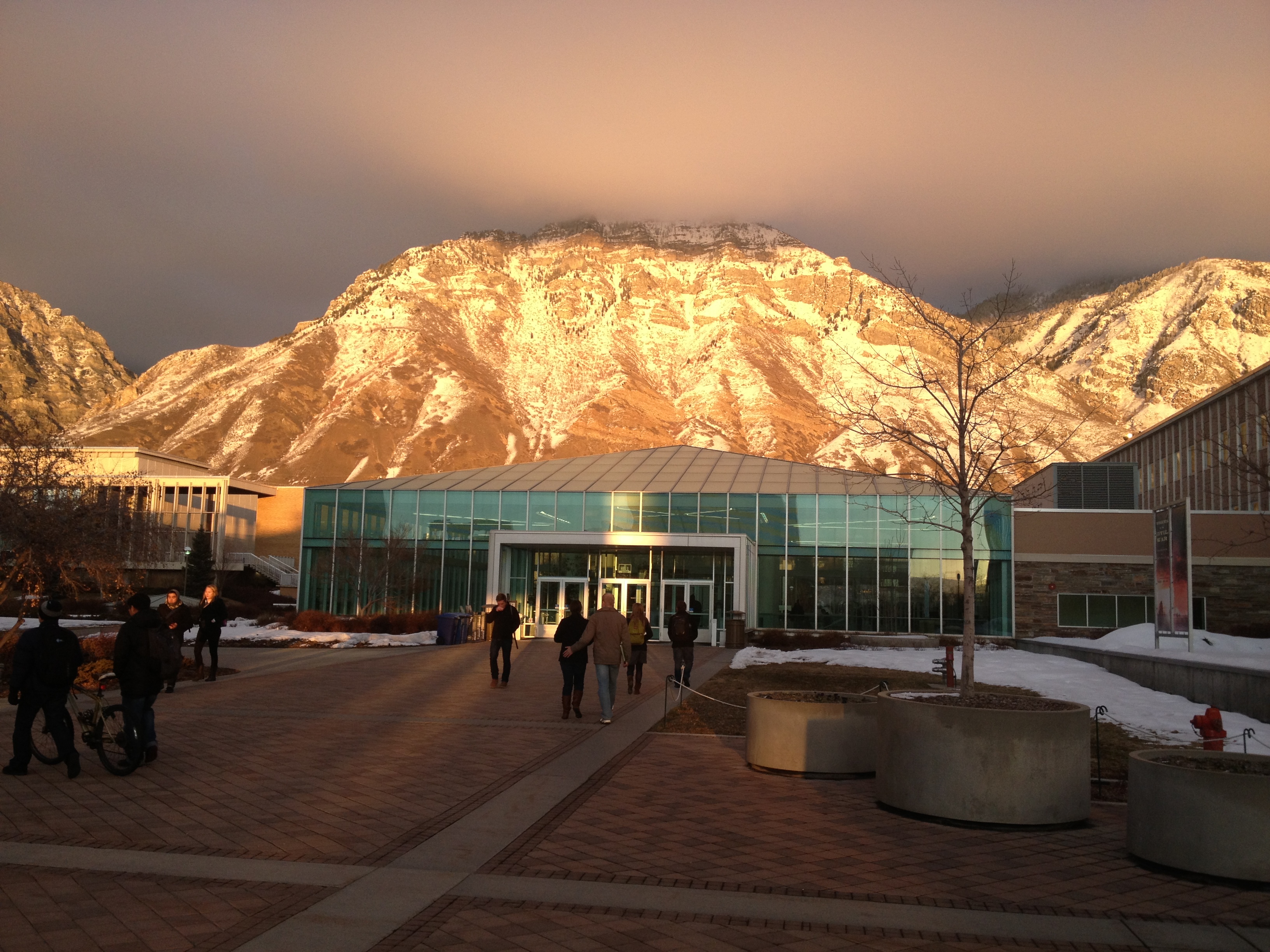
I feel for them, of course. Let’s face it. Professors like me chose the profession because we were high achievers in such a system. We were among the most willing lab rats. Dangle the possibility of a reward in front of me, and I just start salivating. I am a superior breed of Pavlov’s.
And we faculty just as easily stress about rewards and punishments and complain about the rules and overseers that constrain us rather than focusing on the privilege of being educators. The reality is that we are paid to read and write, think and wonder, and teach and travel. And at Brigham Young University, I look at our beautiful facilities, the generosity of research support, our remarkable students, and at all of my truly exceptional colleagues, not to mention the staggeringly beautiful mountains, rivers, and lakes that surround me, and I can scarcely find room for complaint. I could write volumes about the quality relationships I enjoy on campus with my colleagues and the very good kind of people they are. And the students, well, I feel I won the lottery. I often wonder if I would have enjoyed academia this much for this long if I hadn’t been here. I am not saying the BYU life is without blemish or that faculty have no right to point out where we need to improve. I only wish to acknowledge how easy it is to forget my privileges.
So we faculty feel stress, and under that stress, instead of returning to the most effective and important powers of renewal available to us from God, we tell ourselves narratives about unfeeling and condescending bureaucrats and dogmatic churchy types who are breathing down our necks and making our lives miserable, demanding that we publish or perish, that we be a superlative life-changing teachers, and, while we are at it, that we be kind and gracious and giving and longsuffering and fully consecrated at all times. Not to mention that we should be grateful for BYU-produced software. And finally there is that minor matter of our personal and family lives that are expected to be without blemish, and always above average.
It is a tall order to teach at such a place, with such high expectations. For some faculty, there is the temptation to work frantically at the cost of our health and happiness, only to find that the institution or their colleagues don’t value them as much as they had hoped. Others expend most of their energy keeping up appearances even as their foundations are starting to crack. Still others just give up and stop working hard at being their best and they become obstructionists to the progress of the institution, our students, and our colleagues. These choices have all attracted me at various stages of my career. Although they might relieve some anxieties in the short term, however, they only feed an addiction to cynicism, bitterness, and resentment.
My oldest brother was a brilliant intellect, a young man possessed of an unusual passion for science, for serious music, and for literature and the arts. He was shy, hard to reach, and somewhat nervous and reclusive, but he could hold his own with any adult in serious conversation. He arrived at BYU in the fall of 1978 to begin his freshman year. He came home that winter severely depressed, with what was called back then a “nervous breakdown.” He returned to college at the University of Utah, and although he never returned to church, he managed a few more years of college thanks in part to one wonderful professor who truly befriended him there before he finally succumbed to his depression and took his life in his senior year. His professor, Gale Dick, reached out to us after his death. He was in great sorrow too because he had not realized how depressed my brother was. He was drawn to my brother because of his exceptional abilities. I think of my brother every day. I sometimes think I see his face when I see a student’s eyes light up with discovery or when I meet a student of exceptional talent and ability who doesn’t yet know how remarkable they are. I see him too in the faces of those who seem lost in darkness or who already know how to think but not yet how to believe or live. There are far too many such students. And there are many reasons to struggle at that age, in this time. I now have three children in college, two of them here at BYU, so I feel even more intensely both the nature of their struggles and the blessing of a caring and consecrated mentor.
I am eager to get more serious about thinking with my colleagues at BYU about how to provide a better classroom experience and general intellectual and spiritual atmosphere for our students to thrive and to find their role in the kingdom. We need to be better at teaching believers to think and thinkers to believe. Research at BYU done by Alan Wilkins already points to three factors that make the greatest difference in truly transforming our students lives: 1) students need to know who we are 2) they need to know that we know who they are and 3) they need to feel the passion we have for our subject and why it is important to us. In other words, in order to provide an education that is both intellectually stimulating and spiritually inspiring, professors needs to open up their hearts so that students can see who we authentically are. We need to have a relationship with them that goes beyond the formal contract of assignments and grades. We cannot hide behind the façade of expertise and authority and expect to transform their lives unless we are willing to make ourselves vulnerable and unless we are willing to get to know them better as well. And our students need us to express genuine passion for learning. We don’t have to be the people who have all the answers, but we do have to be possessed of love—love for life, for them, and for ideas.
I have recently assumed new responsibility over faculty development and rank and status in the College of Humanities, and for now, my thought is pretty simple: until we faculty tap the resources of love and joy within us, we will not have the greater capacity and fulfillment in our work that we desire. I believe that each faculty has been called to this work and to this place. I know I wasn’t attracted to BYU for a profession nor for a vacation, but for my vocation. Divinely fired love and passion for what we do in the library, in the classroom, and in our various communities is the only force strong enough to override our fear of failure, our stress, our pride, and the temptation to become cynical and resentful. I don’t think higher achievements will come, at least not the most meaningful ones, by creating more incentives and applying more pressure on faculty. I believe faculty will lift themselves higher when they rediscover real love for what they do.
Love, as we are taught in the scriptures, is a gift that is given to those who ask, not to those too distracted to recognize what they lack. Blessed are the poor in spirit, we are told. Thinking about my brother helps me in my darker moments. He reminds me that I don’t need to be a better scholar or a better teacher or a better citizen because it will get me recognition or because it will help me avoid shame or punishment. I want to excel for his sake, in his memory. At the risk of making too fine or too cute a point of it, it is another Older Brother’s face we must learn to see in the face of our students, in the faces of our colleagues, and whom we honor with our excellence. By keeping Him in our thoughts and in our hearts, I believe our work will begin to feel more like a sacred privilege than a secular duty and a much greater source of joy.
Previous Post

August 13, 2015
The Quest for Renewal and the Religious Life
Next Post
October 4, 2015 Led by Revelation
Browse Our Archives
Select a Category Uncategorized
Select a Month May 2016 March 2016 February 2016 December 2015 November 2015 October 2015 August 2015 July 2015 June 2015 March 2015 January 2015 December 2014 November 2014 October 2014 September 2014 August 2014 July 2014 June 2014 May 2014 April 2014 March 2014 February 2014 January 2014 December 2013 November 2013 October 2013 September 2013 August 2013 July 2013 June 2013 May 2013 April 2013 March 2013 February 2013 January 2013 December 2012 November 2012 October 2012 September 2012 August 2012 July 2012 June 2012 May 2012 April 2012 March 2012
Follow Us!
TAKE THE
Religious Wisdom Quiz
What book comes directly after Lamentations?
Select your answer to see how you score.
Hosea Jeremiah Ezekiel Daniel
Related posts from Home Waters


Literature and the Art of Friendship


TRENDING AT PATHEOS Latter-day Saint

Did Prayer Cure His Cancer? Or Was It...
At 4 AM one morning, Joshua W. Brown’s wife awoke to a...

8 Ways a Near-Death Experience Rewires the Soul
Does Consciousness Survive Physical Death? After 50 Years of Research, Dr. Raymond...

Holy Longing: What Our Restlessness Is Telling Us
“One can find so many pains when the rain is falling.” -John...

What this is NOT about. This blog is definitely not about...

Who said the Israelites were God’s chosen? That’s right, they did. Who...

The Spirit World Is the Real World: God...
A Monk’s Wisdom on Body and Spirit I sit with Brother Martin...
view all Latter-day Saint blogs
Ad-Free & Subscriber Log-In Subscription Support
- About Us
- 2026 Calendar
- Videos
- Podcasts
- Library of World Religions
- Faith In Media Tracker
- Advertise With Us
- Write for Us
- Privacy Policy
- Terms of Service
- Do Not Sell My Data
- Contact Us
- Radiant Digital
- Manage Newsletter Subscriptions
- Unsubscribe From Notifications
- Sitemap
Copyright 2008-2026, Patheos. All rights reserved.
Subscription Support Ad-Free & Subscriber Log-In
Follow Patheos