
BuddhistCatholicContemplativeEvangelicalGeneral ChristianHinduJewishLatter-day SaintMuslimNew VisionsProgressive Christian
Beliefs
- Buddhist
- Catholic
- Contemplative
- Evangelical
- General Christian
- Hindu
- Jewish
- Latter-day Saint
- More Voices
- Muslim
- New Visions
- Pagan
- Progressive Christian
Topics
- Religion News
- Food and Religion
- Sports and Religion
- Religious Art
- Religious Music and Entertainment
- Religious Events
- History and Religion
- Style and Religion
- Politics and Religion
- Women in Religion
- Recreation Outdoors and Religion
- Business Finance and Religion
- Careers Workplace and Religion
- Education and Religion
- Family Parenting and Religion
- Health Fitness and Religion
- Home and Religion
- Relationships and Religion
- Technology and Religion
- Travel and Religion
Columnists
- Buddhist Columnists
- Business Finance and Religion Columnists
- Careers Workplace and Religion Columnists
- Catholic Columnists
- Contemplative Columnists
- Education and Religion Columnists
- Evangelists Columnists
- Family Parenting and Religion Columnists
- General Christian Columnists
- Health Fitness and Religion Columnists
- Hindu Columnists
- History and Religion Columnists
- Home and Religion Columnists
- Jewish Columnists
- More Voices Columnists
- Latter Day Columnists
- Muslim Columnists
- New Visions Columnists
- Nonreligious Columnists
- Pagan Columnists
- Politics and Religion Columnists
- Progressive Columnists
- Recreation Outdoors and Religion Columnists
- Relationships and Religion Columnists
- Religion News Columnists
- Religious Art Columnists
- Religious Events Columnists
- Religious Music and Entertainment Columnists
- Sports and Religion Columnists
- Style and Religion Columnists
- Technology and Religion Columnists
- Travel and Religion Columnists
- Women in Religion Columnists
Resource Library
- 2026 Calendar
- Library of World Religions
- The 100 Most Holy Places on Earth
- Patheos Answers
- Podcasts
- Videos
- Faith Leaders Database
- Anglican Episcopalian
- Bahai
- Baptist
- Buddhism
- Christianity
- Confucianism
- Eastern Orthodoxy
- Hinduism
- Holiness and Pentecostal
- ISKCON
- Islam
- Judaism
- Lutheran
- Methodist
- The Church of Jesus Christ of Latter-day Saints
- New Age
- Paganism
- Presbytarian and Reformed
- Protestantism
- Religion Behind the Scenes
- Roman Catholic
- Scientology
- Shia Islam
- Sikhism
- Sufism
- Sunni Islam
- Taoism
- Zen
- See all religions
Research Tools
 Ad-Free & Subscriber Log-In Subscription Support
Ad-Free & Subscriber Log-In Subscription Support
Follow Patheos 

- Trending:
- Forgiveness
- |
- Marriage
- |
- Consciousness
- |
- Death Penalty
- |
- Election
- |
- Halloween
 Home Waters
- Home
- Latter-day Saint
- Why Working For Conservation Is Good For Democracy
Why Working For Conservation Is Good For Democracy
Last updated on: December 10, 2013 at 9:22 pm by georgehandley
Why Working For Conservation Is Good For Democracy 2013-12-10T21:22:43-07:00 georgehandley
Patheos Explore the world's faith through different perspectives on religion and spirituality! Patheos has the views of the prevalent religions and spiritualities of the world.
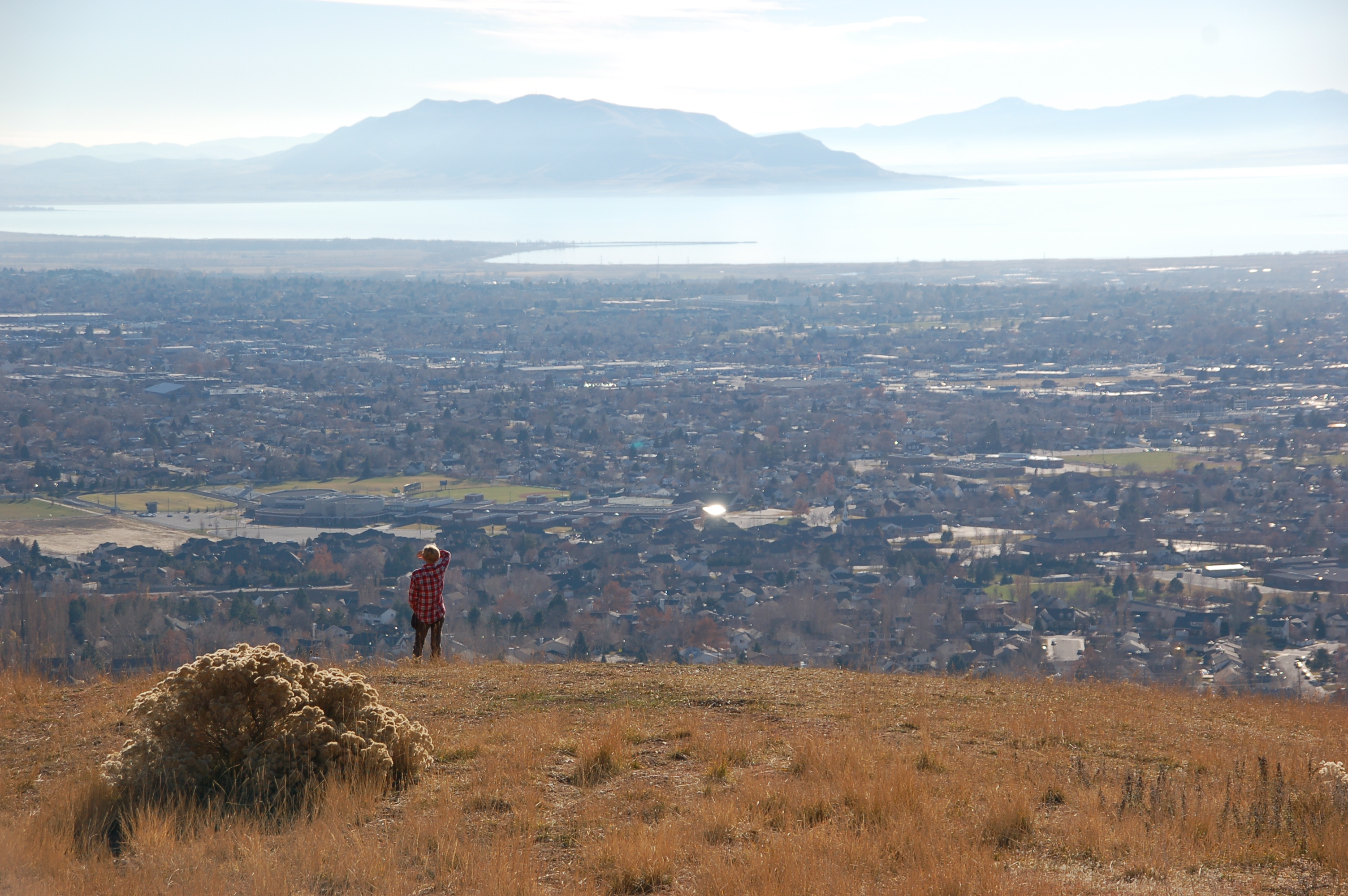 Today it was my immense honor to receive the Nature Conservancy of Utah’s Conservation Partner of the Year award. I am posting here the remarks I gave at a meeting of the board held at the University of Utah.
****
I admire the work of the Nature Conservancy as an effective model for environmental change. I know there are those who prefer a more combative approach not just by disposition but because they see the environmental crisis in perhaps more urgent relief. I have no strong disagreement with such people nor any disagreement about the urgency of our situation. I admire the courage of those who are willing to engage in civil disobedience or who protest tirelessly the latest and most egregious acts of those with disproportionate power who seem to believe they can act with impunity. Willful destruction of the environment deserves and needs strong opposition.
But the environmental crisis is not merely a battle between the powerful and the powerless. It is also, just as often, a battle for the hearts and minds of good people who live with good intentions but who lack sufficient knowledge or understanding to act right. For that reason, it requires a cultural change that is commensurate with the scale of the problem. For example, we know that only 10% of Americans deny that climate change is real or human-caused. Another 15% are doubtful. So approximately 3/4 of the nation are either alarmed, very concerned or at least cautiously concerned about climate change. A significant majority, in other words, is in a position to make a difference because they are open to more information, more empowerment, and more direction about how to act and vote differently. Environmental problems have become so alarming because of neglect, and the neglect is largely due to the ways that the historical and cultural rifts in society have absorbed the vast majority of our attention and energy. So while we hold each other in a wrestling hold, the world around us degrades. We need to move away from an atomized individualism and move toward a collective ethics, a way of understanding our interdependency, but in the meantime our culture has become increasingly tribal and divided.
Among the most obvious rifts is that between Republicans and Democrats, two parties who used to know how to act together in passing environmental legislation such as the Wilderness Act, the Clean Air Act and the creation of the EPA. But there is also the rift between science and religion, the profound distrust that has emerged that has allowed otherwise reasonable scientists to falsely use science to deny the legitimate claims of religion and otherwise reasonable religionists to find poorly conceived religious grounds for rejecting the findings of science. Not to mention the profound distrust that has deep historical roots between global religious and political cultures, between Christians and Muslims or between East and West and the continuing tensions shaped by the Cold War. On our own local scale, we can see our challenge is often one of finding common ground between Democrats and Republicans, between urban and rural communities, between Mormons and non-Mormons and/or former Mormons, and between universities and government and business, the proverbial town and gown divide. These are cases where worldviews are formed in a dialectical relationship to one another, where a strange kind of co-dependency has developed that makes them need and depend on an image of each other’s craziness in order to fan the flames of cultural and political war. And it is a battle that is defined a priori on a refusal to compromise. Let’s face it. A hard-core no-truth-exists-outside-of-the-Bible creationist is the best thing that ever happened to a hard-core no-truth-exists-outside-of-science evolutionist. Neither side, for example, is interested in the vast majority of Americans, let alone the most important intellectuals, who have carved out a thoughtful terrain of common ground between religion and science. That’s because such thought would make their campaigns unnecessary and their very identities superfluous. The same problem is true on environmental tensions in this state over wilderness preservation, climate change and air pollution legislation, and development. We all know that this is not a balanced conflict here in Utah. The most extreme views have the loudest voices in the media and Utah is far from a bipartisan state. So it is understandable that these positions of mutual resistance have become hardened, habitual, and uncompromising.
As an environmental problem, climate change is unprecedented for its complexity and especially for its scale, and it therefore requires a cultural change on the same scale. I don’t mean to diminish the significance of local environmental problems in saying this. Air pollution is perhaps the most urgent problem we face in the short term here, not the mention the endangerment of our watersheds, the endangerment of many of our wildlands and vulnerable species. I don’t need to convince this audience, however, that a comprehensive approach to climate change mitigation that aggressively pursues clean and renewable energy, that weans us of our dependence of fossil fuels, and that sponsors more public transportation, more walkable communities, and more efficient and sustainable uses of energy does a world of good for our air, water, and wild country. Not to mention what it would do for our sense of community and of shared responsibilities. Climate change mitigation means finding solutions that do not, indeed cannot, demand that we adopt the same worldview. It is a fool’s errand to believe that we can fight climate change by fighting cultural wars that seek to convince others of the wrongness of their worldview or seek to overthrow those worldviews altogether. Conservatives and liberals, Christians and Hindus, atheists and Evangelicals, all of us must look to our own values and traditions and recover those principles best calculated to motivate lifestyles and practices that will enable us to walk gently and sustainably on this earth. This is what happens when we start paying more attention to the challenge of living up to our own ideals instead of focusing on the failures of our enemies. If we imagine that climate change is a symptom of a fractured and broken community, then the quiet and steady work of building, healing, and restoring communities, of forging partnerships on an unprecedented scale, becomes the most significant work we can do.
I can only say that in my sixteen years of living here as an adult, I am more optimistic than ever than such partnerships are possible. Sixteen years ago, I remember reading an article in the paper about a conflict in Page, AZ where a pro-Lake Powell rally was taking place. The paper bothered to mention that the leader of this rally was an LDS bishop, but it didn’t bother to mention that the group they were fighting, the Glen Canyon Institute, was founded and led by an equally devout Mormon. I knew then, as I know now, that the silent and sometimes silenced portion of our state that is LDS and concerned about environmental issues needed to gain a stronger voice. I won’t pretend to know what percentage of the state this represents. But I do know that it is stronger today and more prevalent than it was in the late 90s. While Mormon environmentalists might still feel like double minorities, they are, I would strongly argue, nurtured by the very marrow of the LDS faith. In my work, I haven’t had to invent any new doctrines or twist any scriptural meanings. I haven’t had to assume positions outside of the mainstream of LDS belief, even if at times what I have said has caused some people to wonder. But I will say that the wonder doesn’t come from conservative Mormons alone. My environmentalist friends sometimes look at what I do with a sense of surprise, as if I am somehow by definition a heretic in their definition of what a Mormon is. This is almost more disappointing than the occasional Mormon conservative who doubts the legitimacy of what I say. The truth is, although I have never attempted to speak on behalf of BYU or the church, I have always felt that I am a valued employee of BYU, an institution that has unstintingly provided me the research support and the administrative encouragement to pursue my work unencumbered. We have also been immensely fortunate at BYU to enjoy the support of administrators and the Nature Conservancy for the Environmental Ethics Initiative.
In all this time, I have seen an awakening of understanding about the legitimacy and need for a Mormon environmental ethic that has been warmly embraced by all but a very small minority. I hold my students and the young people of this state especially in the highest regard. So many young LDS want to be faithful to the traditions of their parents and to their pioneer ancestors and they have come to believe that embracing a commitment to proactive stewardship of the creation is a vital and important way to show profound gratitude for the gifts of the Creator and for their unique inheritance. They are sometimes met with doses of suspicion from different sides of the cultural divide, but they persist in faith, acting on sound and moral principle, and with integrity, and their examples are beginning to turn hearts and change minds. An undergraduate at the U recently wrote in response to the new website produced by the LDS church. She said that she had often felt ostracized as an environmentalist among her LDS friends, afraid to speak up about her concerns, as much as she felt not altogether herself as a Mormon among her environmentalist friends at the U, afraid to announce her faith. How it was ever uncomfortable to be an environmentalist in Mormonism or a Mormon at the University of Utah in the first place is beyond me. But now, she says, she feels she has much needed permission to more fully integrate these vital components of her self. It was this kind of integration I sought for the many parts of my life that more narrow and perhaps tribal interests could easily have pulled apart when I wrote my environmental memoir, Home Waters.
This change is due to the work of many, many people. Who can deny the towering figure of Terry Tempest Williams in awakening us to the spiritual dimensions of the environmental crisis? And what of Bill Smart, the former editor of the Deseret News and co-editor with Terry and with Gibbs Smith, of the indispensable collection, New Genesis: A Mormon Reader on Land and Community, a book that deserved and still deserves far more attention than it ever received? And the work of so many scientists at our various universities who have had the courage to speak in the civic sphere and the work of many of our environmental organizations in this state like Heal Utah, Utah Moms for Clean Air, Utah Physicians for a Healthy Environment, LDS Earth Stewardship, SUWA, Utah Interfaith Power and Light, the Utah Rivers Council, and many others, all of whom to varying degrees of success have taken the necessary time not just to protest but to forge partnerships across religious and political divides in this state. And the indispensable willingness of the LDS church to engage in interfaith dialogue, and the work of such LDS leaders as Bishop David Burton and now Elder Marcus Nash who have sought to highlight and help the church model its stewardship principles. In my view, no one has modeled this community-building effort better than The Nature Conservancy of Utah, an organization that under the incomparable leadership of Dave Livermore quietly and persistently builds dialogue and partnerships that, like the resources of energy we need, are renewable and sustainable, built to outlast the balkanizations of our time. For this reason, I will always consider this award as one of the greatest honors of my life.
Previous Post

November 28, 2013
Grateful To Be An “Unworthy Creature”
Next Post
December 23, 2013 Giving
Browse Our Archives
Select a Category Uncategorized
Select a Month May 2016 March 2016 February 2016 December 2015 November 2015 October 2015 August 2015 July 2015 June 2015 March 2015 January 2015 December 2014 November 2014 October 2014 September 2014 August 2014 July 2014 June 2014 May 2014 April 2014 March 2014 February 2014 January 2014 December 2013 November 2013 October 2013 September 2013 August 2013 July 2013 June 2013 May 2013 April 2013 March 2013 February 2013 January 2013 December 2012 November 2012 October 2012 September 2012 August 2012 July 2012 June 2012 May 2012 April 2012 March 2012
Follow Us!
TAKE THE
Religious Wisdom Quiz
What does the name "Jesus" mean?
Select your answer to see how you score.
The Lord saves God is with us Prince of peace Teacher
Related posts from Home Waters


Literature and the Art of Friendship


TRENDING AT PATHEOS Latter-day Saint

Did Prayer Cure His Cancer? Or Was It...
At 4 AM one morning, Joshua W. Brown’s wife awoke to a...

8 Ways a Near-Death Experience Rewires the Soul
Does Consciousness Survive Physical Death? After 50 Years of Research, Dr. Raymond...

Holy Longing: What Our Restlessness Is Telling Us
“One can find so many pains when the rain is falling.” -John...

What this is NOT about. This blog is definitely not about...

Who said the Israelites were God’s chosen? That’s right, they did. Who...

The Spirit World Is the Real World: God...
A Monk’s Wisdom on Body and Spirit I sit with Brother Martin...
view all Latter-day Saint blogs
Ad-Free & Subscriber Log-In Subscription Support
- About Us
- 2026 Calendar
- Videos
- Podcasts
- Library of World Religions
- Faith In Media Tracker
- Advertise With Us
- Write for Us
- Privacy Policy
- Terms of Service
- Do Not Sell My Data
- Contact Us
- Radiant Digital
- Manage Newsletter Subscriptions
- Unsubscribe From Notifications
- Sitemap
Copyright 2008-2026, Patheos. All rights reserved.
Subscription Support Ad-Free & Subscriber Log-In
Follow Patheos