
BuddhistCatholicContemplativeEvangelicalGeneral ChristianHinduJewishLatter-day SaintMuslimNew VisionsProgressive Christian
Beliefs
- Buddhist
- Catholic
- Contemplative
- Evangelical
- General Christian
- Hindu
- Jewish
- Latter-day Saint
- More Voices
- Muslim
- New Visions
- Pagan
- Progressive Christian
Topics
- Religion News
- Food and Religion
- Sports and Religion
- Religious Art
- Religious Music and Entertainment
- Religious Events
- History and Religion
- Style and Religion
- Politics and Religion
- Women in Religion
- Recreation Outdoors and Religion
- Business Finance and Religion
- Careers Workplace and Religion
- Education and Religion
- Family Parenting and Religion
- Health Fitness and Religion
- Home and Religion
- Relationships and Religion
- Technology and Religion
- Travel and Religion
Columnists
- Buddhist Columnists
- Business Finance and Religion Columnists
- Careers Workplace and Religion Columnists
- Catholic Columnists
- Contemplative Columnists
- Education and Religion Columnists
- Evangelists Columnists
- Family Parenting and Religion Columnists
- General Christian Columnists
- Health Fitness and Religion Columnists
- Hindu Columnists
- History and Religion Columnists
- Home and Religion Columnists
- Jewish Columnists
- More Voices Columnists
- Latter Day Columnists
- Muslim Columnists
- New Visions Columnists
- Nonreligious Columnists
- Pagan Columnists
- Politics and Religion Columnists
- Progressive Columnists
- Recreation Outdoors and Religion Columnists
- Relationships and Religion Columnists
- Religion News Columnists
- Religious Art Columnists
- Religious Events Columnists
- Religious Music and Entertainment Columnists
- Sports and Religion Columnists
- Style and Religion Columnists
- Technology and Religion Columnists
- Travel and Religion Columnists
- Women in Religion Columnists
Resource Library
- 2026 Calendar
- Library of World Religions
- The 100 Most Holy Places on Earth
- Patheos Answers
- Podcasts
- Videos
- Faith Leaders Database
- Anglican Episcopalian
- Bahai
- Baptist
- Buddhism
- Christianity
- Confucianism
- Eastern Orthodoxy
- Hinduism
- Holiness and Pentecostal
- ISKCON
- Islam
- Judaism
- Lutheran
- Methodist
- The Church of Jesus Christ of Latter-day Saints
- New Age
- Paganism
- Presbytarian and Reformed
- Protestantism
- Religion Behind the Scenes
- Roman Catholic
- Scientology
- Shia Islam
- Sikhism
- Sufism
- Sunni Islam
- Taoism
- Zen
- See all religions
Research Tools
 Ad-Free & Subscriber Log-In Subscription Support
Ad-Free & Subscriber Log-In Subscription Support
Follow Patheos 

- Trending:
- Forgiveness
- |
- Marriage
- |
- Consciousness
- |
- Death Penalty
- |
- Election
- |
- Halloween
 Home Waters
- Home
- Latter-day Saint
- A Mormon Sense of Place, as Seen by a Non-Mormon
A Mormon Sense of Place, as Seen by a Non-Mormon
Last updated on: August 11, 2013 at 9:37 pm by georgehandley
A Mormon Sense of Place, as Seen by a Non-Mormon 2013-08-11T21:37:49-06:00 georgehandley
Patheos Explore the world's faith through different perspectives on religion and spirituality! Patheos has the views of the prevalent religions and spiritualities of the world.
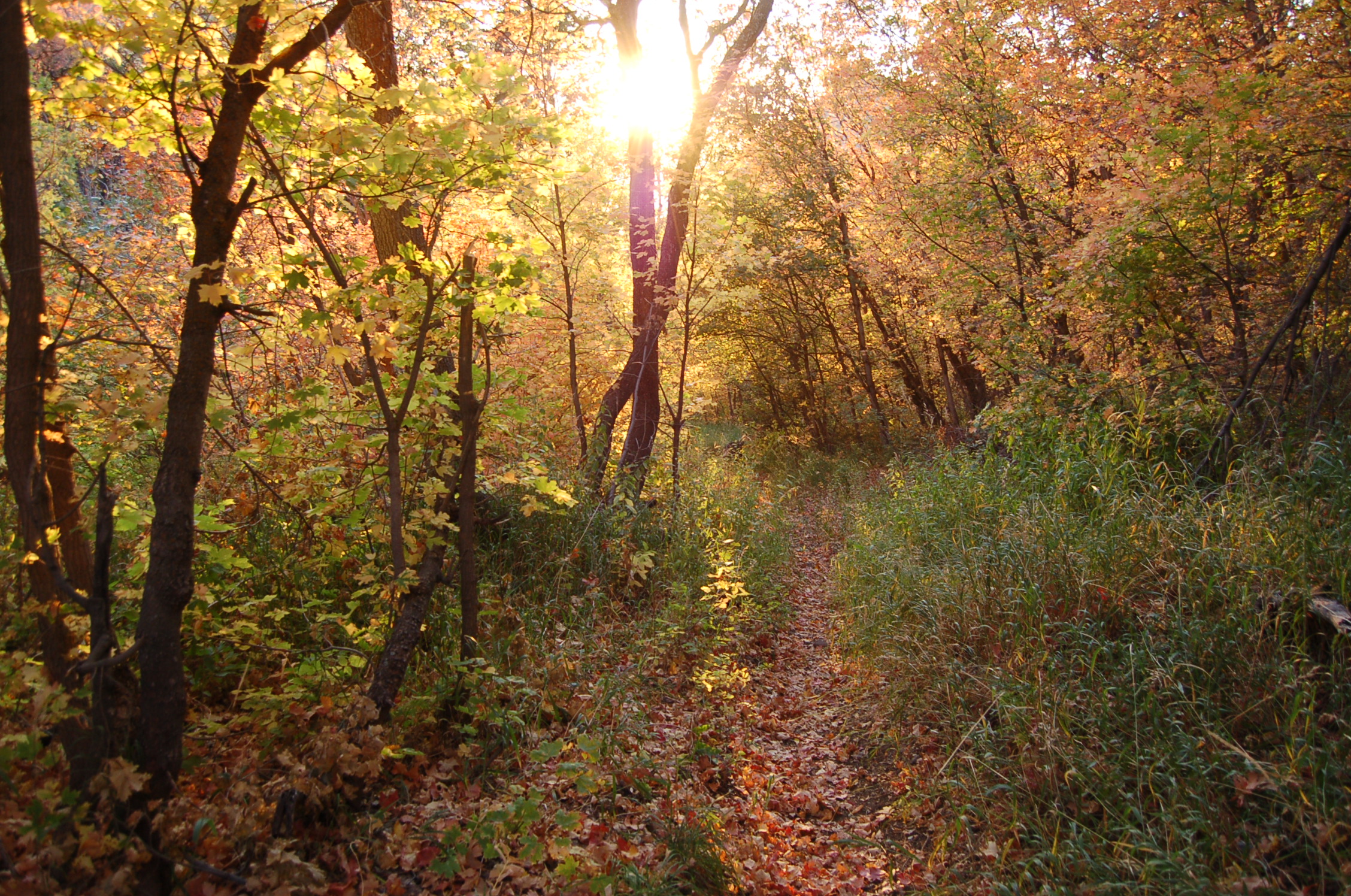 Mark Twain was perhaps the first of outside visitors to Mormon Utah, arriving with pen in hand, eager to give account of the strangeness and oddity of Mormon community life. For a Mormon writer like myself who was born in Utah but raised and educated on both coasts, I can sympathize with the difficulty of penetrating such peculiar communities that are seemingly out of sync with mainstream America. Living as I do in a city that is the third largest in the state of Utah and yet close to 90% LDS, I recognize that this is not a typical American experience. But it is also true that probably no group of people makes more fun of Provo than Mormons themselves. Indeed, Utah often feels divided by the equivalent of a Mormon family feud, split by our own ambivalence about ourselves.
But most of the time, I feel that Utah’s unusual sense of place is worthy of wonder and I welcome the chance for those outside the community to see it as I do, because in my eyes it seems so marvelous. Of course at times I feel the frustrations that come with living in a place of exceptional homogeneity and with these frustrations comes the temptation to see Mormon communities, embedded as they are in the landscape and within their own cultural language, as one might see animals in a zoo—as admirable, perhaps, but also as exotic types, fenced off from the lived reality of the writer and, for that matter, the rest of America. But ultimately as a Mormon Utahan, it is often hard to feel inspired by reading accounts of life in Utah, in the small towns as well as in the cities. This is not because I am immune to criticism but because it is tiring to read yet another account written by someone who has not lived intimately and lovingly among the communities about which they write and who can’t quite hide their condescension. I think of Marc Reisner’s account of Mormon environmental shortcomings in Cadillac Desert, for example. I was more sympathetic to his criticisms of Mormon zeal for environmental engineering before I read his summary that Mormons had “banished themselves” to Utah. Or Bill McKibben’s account of Mormon settlement of small towns in Utah, in his otherwise excellent book The End of Nature, as a merely self-imposed test to see what we could make of the desert. It was as if they had never spoken to a Mormon or read anything at all about Mormon history. Until recently the best exception to this rule was Stephen Trimble’s book, Bargaining for Eden, a labor of love and devotion to a state he loves, enough that he would spend years getting to know the humanity and complexity of the culture that seemingly has control of the state’s environment.
Former Senator Bill Bradley once said, about racial tensions in our country, that if we didn’t have a friend of a different race, we were part of the problem. In Utah, the divisions run deep–especially over religion, the environment, partisan affiliation, sexual orientation, and even university affiliation. So I would submit that if religiously active and especially politically conservative Mormons don’t have a friend who sees the world differently, then they are only helping to create the divisions that have beset this state. Likewise, how many progressives in Utah, especially those without a religious orientation, are not just friendly towards but friends with said Mormon conservatives?
I have always been an idealist when it comes to literature. I believe we look to literature to offer us insight into our lives that we otherwise cannot gain and to therefore help us to imagine a broader and more profound meaning of community. New and outside perspectives are therefore vital. But great literature does more than criticize. A more exceptional achievement of art is to see the profound and common humanity not despite but because of the cultural particulars of a place. Indeed this is what characterizes the great literature that has emerged from many of the nation’s most unusual places.
What has inspired these thoughts is Liz Stephens’s memoir, The Days Are Gods, which, in my judgment, is pitch perfect. She understands the strangeness of her pursuit of her own (and the persistence of our particularly American) Western mythology—a deep-seated feeling that she must uproot herself from the fast pace of life in Los Angeles and launch her own proverbial return to the land where she can live simply, where animals and open space are abundant, and where people live rooted lives of simple and shared values. She thematizes the odd relationship this then gives her to the small Mormon community of Wellsville in Cache Valley where she spends three years. She is not afraid to pose the needed questions about this community—about its homogeneity and its seeming superficial awareness of the pain experienced by those of sexual or ethnic difference in their midst, for example—but her own awareness and sensitivity to difference is not her trump card used against these people. For one, she knows them because she has invested every effort to establish relationships with them. She writes: “I do not think the locals are cute and a charming part of the scenery. I think they carry within them something magic, as do, it turns out, people everywhere who have stayed still in one place long enough to accrue this grace: a deep sense of place that I wish I could beg, barter, or steal off of them” (122). She admires their relationship to the land and to animals, their extraordinary intimacy and trust, the wandering, playing children for whom everyone bears responsibility, and their simple pleasures, values that she also understands that places like Los Angeles, for all their multicultural understanding, have long since lost or never had. And she wants these values for herself and her husband, and their Utah-born daughter, and she is willing to work for them, most notably in her determination to understand the community and its history, in her search for her own genealogical story that stems from agricultural life in Oklahoma, and ultimately in her loving tribute to the land and the people that is her memoir. Her writing is a measure of her capacity for wonder in the face of each miraculous day, and this wonder does not exclude, as it often does for writers less patient with Utah’s culture, the human faces that make up her exceptional environment.
But neither places nor people are stone monuments; they are more like slow moving rivers of change. For this reason, the book stands as a bittersweet memorial to the work it takes to have a sense of place. I say bittersweet because she sees the town changing before her eyes, becoming less rooted and less rural every day. The book serves as a warning for me that our own Mormon self-ambivalence might fail to appreciate what we have before it is gone for good. How many more big box stores and restaurant chains will we welcome here before we have lost our own relationship to place? How much more consumerism can we indulge in before it is all gone? Stephens’s book is also bittersweet because we discover that ultimately she must leave the town and the state, a poignant reminder that a sense of place in America today may have to become portable, a way of moving from one place to the next in an increasingly and perhaps irrevocably mobile world. At the very least, a sense of place must be forged with the kind of work she did to belong in Utah no matter where we find ourselves.
For this reader, there is the additional sadness of my home state of Utah losing an outstanding voice. Stephens writes with a light touch, with humor and self-deprecation, and with prose that falls as gently as snow in the still air. The Days Are Gods is a lovely book, worthy of the extraordinary place that inspired it. For Utah’s sake, I selfishly hope for Stephens’s prodigal return.[1]
[1] A shorter version of this review will appear in Western American Literature.
Previous Post

August 4, 2013
Love and Losses
Next Post
August 15, 2013 An Appeal To Those Concerned But Not Yet Alarmed By Climate Change
Browse Our Archives
Select a Category Uncategorized
Select a Month May 2016 March 2016 February 2016 December 2015 November 2015 October 2015 August 2015 July 2015 June 2015 March 2015 January 2015 December 2014 November 2014 October 2014 September 2014 August 2014 July 2014 June 2014 May 2014 April 2014 March 2014 February 2014 January 2014 December 2013 November 2013 October 2013 September 2013 August 2013 July 2013 June 2013 May 2013 April 2013 March 2013 February 2013 January 2013 December 2012 November 2012 October 2012 September 2012 August 2012 July 2012 June 2012 May 2012 April 2012 March 2012
Follow Us!
TAKE THE
Religious Wisdom Quiz
What natural event accompanied God's descent on Sinai?
Select your answer to see how you score.
Earthquake Thunder and lightning Drought Windstorm
Related posts from Home Waters


Literature and the Art of Friendship


TRENDING AT PATHEOS Latter-day Saint

Did Prayer Cure His Cancer? Or Was It...
At 4 AM one morning, Joshua W. Brown’s wife awoke to a...

8 Ways a Near-Death Experience Rewires the Soul
Does Consciousness Survive Physical Death? After 50 Years of Research, Dr. Raymond...

Holy Longing: What Our Restlessness Is Telling Us
“One can find so many pains when the rain is falling.” -John...

What this is NOT about. This blog is definitely not about...

Who said the Israelites were God’s chosen? That’s right, they did. Who...

The Spirit World Is the Real World: God...
A Monk’s Wisdom on Body and Spirit I sit with Brother Martin...
view all Latter-day Saint blogs
Ad-Free & Subscriber Log-In Subscription Support
- About Us
- 2026 Calendar
- Videos
- Podcasts
- Library of World Religions
- Faith In Media Tracker
- Advertise With Us
- Write for Us
- Privacy Policy
- Terms of Service
- Do Not Sell My Data
- Contact Us
- Radiant Digital
- Manage Newsletter Subscriptions
- Unsubscribe From Notifications
- Sitemap
Copyright 2008-2026, Patheos. All rights reserved.
Subscription Support Ad-Free & Subscriber Log-In
Follow Patheos