
BuddhistCatholicContemplativeEvangelicalGeneral ChristianHinduJewishLatter-day SaintMuslimNew VisionsProgressive Christian
Beliefs
- Buddhist
- Catholic
- Contemplative
- Evangelical
- General Christian
- Hindu
- Jewish
- Latter-day Saint
- More Voices
- Muslim
- New Visions
- Pagan
- Progressive Christian
Topics
- Religion News
- Food and Religion
- Sports and Religion
- Religious Art
- Religious Music and Entertainment
- Religious Events
- History and Religion
- Style and Religion
- Politics and Religion
- Women in Religion
- Recreation Outdoors and Religion
- Business Finance and Religion
- Careers Workplace and Religion
- Education and Religion
- Family Parenting and Religion
- Health Fitness and Religion
- Home and Religion
- Relationships and Religion
- Technology and Religion
- Travel and Religion
Columnists
- Buddhist Columnists
- Business Finance and Religion Columnists
- Careers Workplace and Religion Columnists
- Catholic Columnists
- Contemplative Columnists
- Education and Religion Columnists
- Evangelists Columnists
- Family Parenting and Religion Columnists
- General Christian Columnists
- Health Fitness and Religion Columnists
- Hindu Columnists
- History and Religion Columnists
- Home and Religion Columnists
- Jewish Columnists
- More Voices Columnists
- Latter Day Columnists
- Muslim Columnists
- New Visions Columnists
- Nonreligious Columnists
- Pagan Columnists
- Politics and Religion Columnists
- Progressive Columnists
- Recreation Outdoors and Religion Columnists
- Relationships and Religion Columnists
- Religion News Columnists
- Religious Art Columnists
- Religious Events Columnists
- Religious Music and Entertainment Columnists
- Sports and Religion Columnists
- Style and Religion Columnists
- Technology and Religion Columnists
- Travel and Religion Columnists
- Women in Religion Columnists
Resource Library
- 2026 Calendar
- Library of World Religions
- The 100 Most Holy Places on Earth
- Patheos Answers
- Podcasts
- Videos
- Faith Leaders Database
- Anglican Episcopalian
- Bahai
- Baptist
- Buddhism
- Christianity
- Confucianism
- Eastern Orthodoxy
- Hinduism
- Holiness and Pentecostal
- ISKCON
- Islam
- Judaism
- Lutheran
- Methodist
- The Church of Jesus Christ of Latter-day Saints
- New Age
- Paganism
- Presbytarian and Reformed
- Protestantism
- Religion Behind the Scenes
- Roman Catholic
- Scientology
- Shia Islam
- Sikhism
- Sufism
- Sunni Islam
- Taoism
- Zen
- See all religions
Research Tools
 Ad-Free & Subscriber Log-In Subscription Support
Ad-Free & Subscriber Log-In Subscription Support
Follow Patheos 

- Trending:
- Forgiveness
- |
- Marriage
- |
- Consciousness
- |
- Death Penalty
- |
- Election
- |
- Halloween
 Home Waters
- Home
- Latter-day Saint
- Smoking, Pollution, and Other Sins
Smoking, Pollution, and Other Sins
Last updated on: February 28, 2013 at 10:20 am by georgehandley
Smoking, Pollution, and Other Sins 2013-02-28T10:20:37-07:00 georgehandley
Patheos Explore the world's faith through different perspectives on religion and spirituality! Patheos has the views of the prevalent religions and spiritualities of the world.
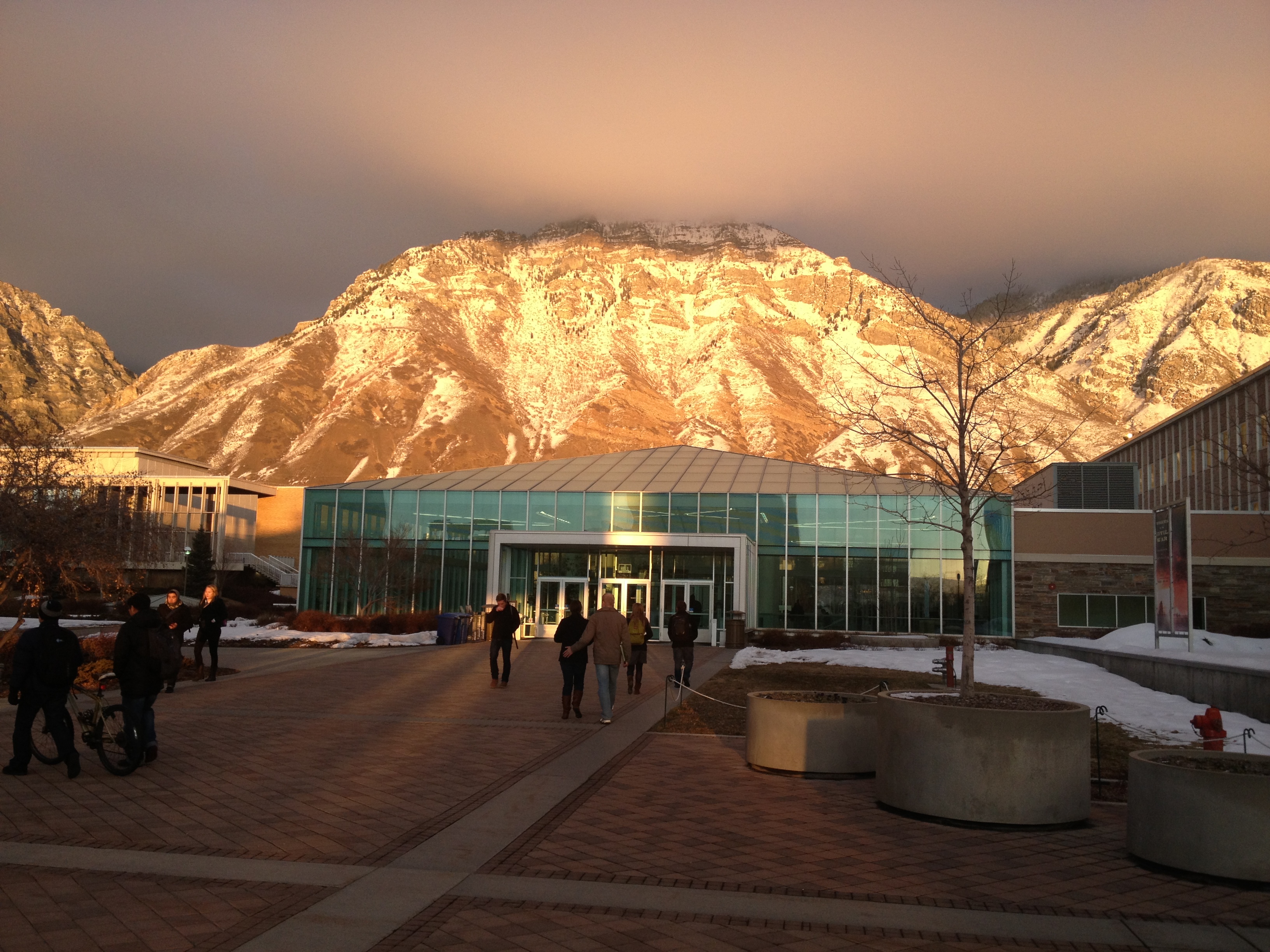 The Utah State Legislature is contemplating a bill that would outlaw smoking within a car when a child is present. The bill seems to bring into direct conflict two of the most cherished principles of this conservative group of politicians: 1) choices about our own bodies matter because they impact others, especially our children and 2) government should respect freedom of choice. This isn’t the first time we have seen these battles in the state legislature. They have debated similar laws concerning texting and driving, seat belts, and other measures. I won’t pretend to know how this debate will ultimately settle, nor do I have a particularly strong opinion on the bill.
What interests me is the way in which this debate is happening in the midst of a public health problem which is reaching catastrophic proportions. I am talking about our air pollution in Utah, which, according to research, over the course of breathing it for a lifetime makes the same difference as being a lifetime smoker. For some reason this legislature can identify and debate the merits of an adult willfully choosing to pollute the air inside of a car (one legislator used the rather inflammatory description of “gas chambers on wheels”) but cannot identify and debate the merits of adults willfully choosing to pollute the air we breathe outside, everyday.
To be fair, it is understandable. There are some forms of harm that are easier to measure in terms of individual impact than others, but that is precisely the problem. We can’t identify individual culprits because they are problems created structurally. Air pollution and climate change both happen to be so collective and ubiquitous that finding the proverbial smoking gun is challenging, to say the least. But they also happen to be two of the most significant threats to our health and long-term sustainability. Rob Nixon, in his brilliant book Slow Violence and the Environmentalism of the Poor, uses pollution, climate change, toxic waste, land mines and other environmental disasters to argue that our modern and globalized world has created forms of violence that move much more slowly but in many cases more pervasively and insidiously to be able to affect the health and well-being of much greater numbers of lives. And Devra Davis’s When Smoke Ran Like Water details our American history of pollution to show how slow we have been to respond to the direct impacts of pollution on the health of children, pregnant mothers, the elderly and everyone else if given enough exposure. Our obsession with individual ethics may cause us to miss the bigger picture. This is not an argument to forgo individual accountability–quite the contrary; it is extend it.
There seem to be two reasons for our slow responses. Davis’s book, along with Naomi Oreskes and Erik Conway’s important Merchants of Doubt: How a Handful of Scientists Obscured the Truth on Issues from Tobacco Smoke to Global Warming, show that efforts to raise awareness about health risks due to pollution, tobacco, and climate change have all been slowed down by aggressive misinformation campaigns that have sought to spread controversies rather than spread reliable information. I think too many of our legislators in Utah and elsewhere in this country are sucking on the teat of such misinformation campaigns, sponsored by think tanks and such organizations as American Legislative Exchange Council. (You can access their own website here and read some criticism here.) Every time the legislature expresses doubts about climate change, they say almost exactly the same things in different chambers and hearings, echoing the same rhetoric year after year, suggesting that they are just reading off of the list of talking points produced by the Heartland Institute.
There is a second and perhaps even more worrisome problem, however. Collective ethics simply are harder to come by. We are a society that has been bitten so hard by the bug of self-made individualism that we have lost our capacity to recognize or concern ourselves with structural and collective problems that are more dangerous precisely because they are not individually created. I think such ethics are embedded in scripture, but we have lost the ability to hear them articulated. Evil, as Marilynne Robinson argues in When I Was a Child I Read Books, is not localized or personalized in the Old Testament. It is instead something societal and must be addressed as a community. The Bible, she says, “yields… an attention to mingled lives and erring generations that grounds sacred meaning very solidly in this human world” (70).
But that is in direct contradistinction to the calls of self-reliance and individual accountability that are so central to our American political ideology. From the end of World War II and through the Cold War, we became increasingly convinced that there were no limits at all to American progress and that, if left alone to our own creativity and freedom, we could make the perfect society. And the end of the Cold War only convinced us that this confidence in our limitless capacities was justified. So it is no wonder that news of unwelcome byproducts of our success in the form of public health crises and climate change would be seen with such suspicion and even hostility.
But we weren’t always so balkanized and atomized in our self-understanding as a nation. We believed for the better part of the twentieth century in constructing something known as the Good Society and we passed legislation in a bipartisan fashion on such issues as wilderness preservation, air and water quality, and pollution. We seem to be retreating from this vision with little or no willingness to address the collective and structural problems that plague our society more and more with each increase in our population levels. Understandably in this complex and large society, we have grown distrustful of the collective as just another manifestation of the bureaucratic, faceless, and impersonal. Who would want to turn our ethics over to such mechanisms? This is an understandable problem. But what I find shocking is that this distrust runs so deep that it has infiltrated the local political ethos, a place where you would hope we could work for solutions pragmatically, face-to-face, arm-in-arm, where government really could stand a chance to be for the people. Everything we see happening at the state level is poisoned by the toxic ideological battles between Republicans and Democrats at the national level, so much so that we cannot see pollution for what it is: our own exhaust blowing right back into our own faces. Sure, it might be harder to identify individual culprits—harder than identifying the smoking parent in the front seat—but that’s only because we are looking for individuals to blame, individuals who are different from the one we see in the mirror every morning. I don’t want blame. I want forgiveness, and I want to work with others who want the same.
Previous Post

February 24, 2013
Stewardship and Citizenship at the City Level: Part II
Next Post
March 8, 2013 Interview with Generation Anthropocene
Browse Our Archives
Select a Category Uncategorized
Select a Month May 2016 March 2016 February 2016 December 2015 November 2015 October 2015 August 2015 July 2015 June 2015 March 2015 January 2015 December 2014 November 2014 October 2014 September 2014 August 2014 July 2014 June 2014 May 2014 April 2014 March 2014 February 2014 January 2014 December 2013 November 2013 October 2013 September 2013 August 2013 July 2013 June 2013 May 2013 April 2013 March 2013 February 2013 January 2013 December 2012 November 2012 October 2012 September 2012 August 2012 July 2012 June 2012 May 2012 April 2012 March 2012
Follow Us!
TAKE THE
Religious Wisdom Quiz
Who wrote two letters known for emphasizing "truth" and "love"?
Select your answer to see how you score.
Peter Paul John James
Related posts from Home Waters


Literature and the Art of Friendship


TRENDING AT PATHEOS Latter-day Saint

Did Prayer Cure His Cancer? Or Was It...
At 4 AM one morning, Joshua W. Brown’s wife awoke to a...

8 Ways a Near-Death Experience Rewires the Soul
Does Consciousness Survive Physical Death? After 50 Years of Research, Dr. Raymond...

Holy Longing: What Our Restlessness Is Telling Us
“One can find so many pains when the rain is falling.” -John...

What this is NOT about. This blog is definitely not about...

Who said the Israelites were God’s chosen? That’s right, they did. Who...

The Spirit World Is the Real World: God...
A Monk’s Wisdom on Body and Spirit I sit with Brother Martin...
view all Latter-day Saint blogs
Ad-Free & Subscriber Log-In Subscription Support
- About Us
- 2026 Calendar
- Videos
- Podcasts
- Library of World Religions
- Faith In Media Tracker
- Advertise With Us
- Write for Us
- Privacy Policy
- Terms of Service
- Do Not Sell My Data
- Contact Us
- Radiant Digital
- Manage Newsletter Subscriptions
- Unsubscribe From Notifications
- Sitemap
Copyright 2008-2026, Patheos. All rights reserved.
Subscription Support Ad-Free & Subscriber Log-In
Follow Patheos