
BuddhistCatholicContemplativeEvangelicalGeneral ChristianHinduJewishLatter-day SaintMuslimNew VisionsProgressive Christian
Beliefs
- Buddhist
- Catholic
- Contemplative
- Evangelical
- General Christian
- Hindu
- Jewish
- Latter-day Saint
- More Voices
- Muslim
- New Visions
- Pagan
- Progressive Christian
Topics
- Religion News
- Food and Religion
- Sports and Religion
- Religious Art
- Religious Music and Entertainment
- Religious Events
- History and Religion
- Style and Religion
- Politics and Religion
- Women in Religion
- Recreation Outdoors and Religion
- Business Finance and Religion
- Careers Workplace and Religion
- Education and Religion
- Family Parenting and Religion
- Health Fitness and Religion
- Home and Religion
- Relationships and Religion
- Technology and Religion
- Travel and Religion
Columnists
- Buddhist Columnists
- Business Finance and Religion Columnists
- Careers Workplace and Religion Columnists
- Catholic Columnists
- Contemplative Columnists
- Education and Religion Columnists
- Evangelists Columnists
- Family Parenting and Religion Columnists
- General Christian Columnists
- Health Fitness and Religion Columnists
- Hindu Columnists
- History and Religion Columnists
- Home and Religion Columnists
- Jewish Columnists
- More Voices Columnists
- Latter Day Columnists
- Muslim Columnists
- New Visions Columnists
- Nonreligious Columnists
- Pagan Columnists
- Politics and Religion Columnists
- Progressive Columnists
- Recreation Outdoors and Religion Columnists
- Relationships and Religion Columnists
- Religion News Columnists
- Religious Art Columnists
- Religious Events Columnists
- Religious Music and Entertainment Columnists
- Sports and Religion Columnists
- Style and Religion Columnists
- Technology and Religion Columnists
- Travel and Religion Columnists
- Women in Religion Columnists
Resource Library
- 2026 Calendar
- Library of World Religions
- The 100 Most Holy Places on Earth
- Patheos Answers
- Podcasts
- Videos
- Faith Leaders Database
- Anglican Episcopalian
- Bahai
- Baptist
- Buddhism
- Christianity
- Confucianism
- Eastern Orthodoxy
- Hinduism
- Holiness and Pentecostal
- ISKCON
- Islam
- Judaism
- Lutheran
- Methodist
- The Church of Jesus Christ of Latter-day Saints
- New Age
- Paganism
- Presbytarian and Reformed
- Protestantism
- Religion Behind the Scenes
- Roman Catholic
- Scientology
- Shia Islam
- Sikhism
- Sufism
- Sunni Islam
- Taoism
- Zen
- See all religions
Research Tools
 Ad-Free & Subscriber Log-In Subscription Support
Follow Patheos 

- Trending:
- Advent
- |
- Forgiveness
- |
- Thanksgiving
- |
- Election
- |
- Seasonal Holidays
- |
- Marriage
 Home Waters
- Home
- Latter-day Saint
- Conservation, Restoration, and Sustainability: A Call to Stewardship
Conservation, Restoration, and Sustainability: A Call to Stewardship
Last updated on: October 31, 2012 at 1:19 pm by georgehandley
Conservation, Restoration, and Sustainability: A Call to Stewardship 2012-10-31T13:19:22-06:00 georgehandley
Patheos Explore the world's faith through different perspectives on religion and spirituality! Patheos has the views of the prevalent religions and spiritualities of the world.
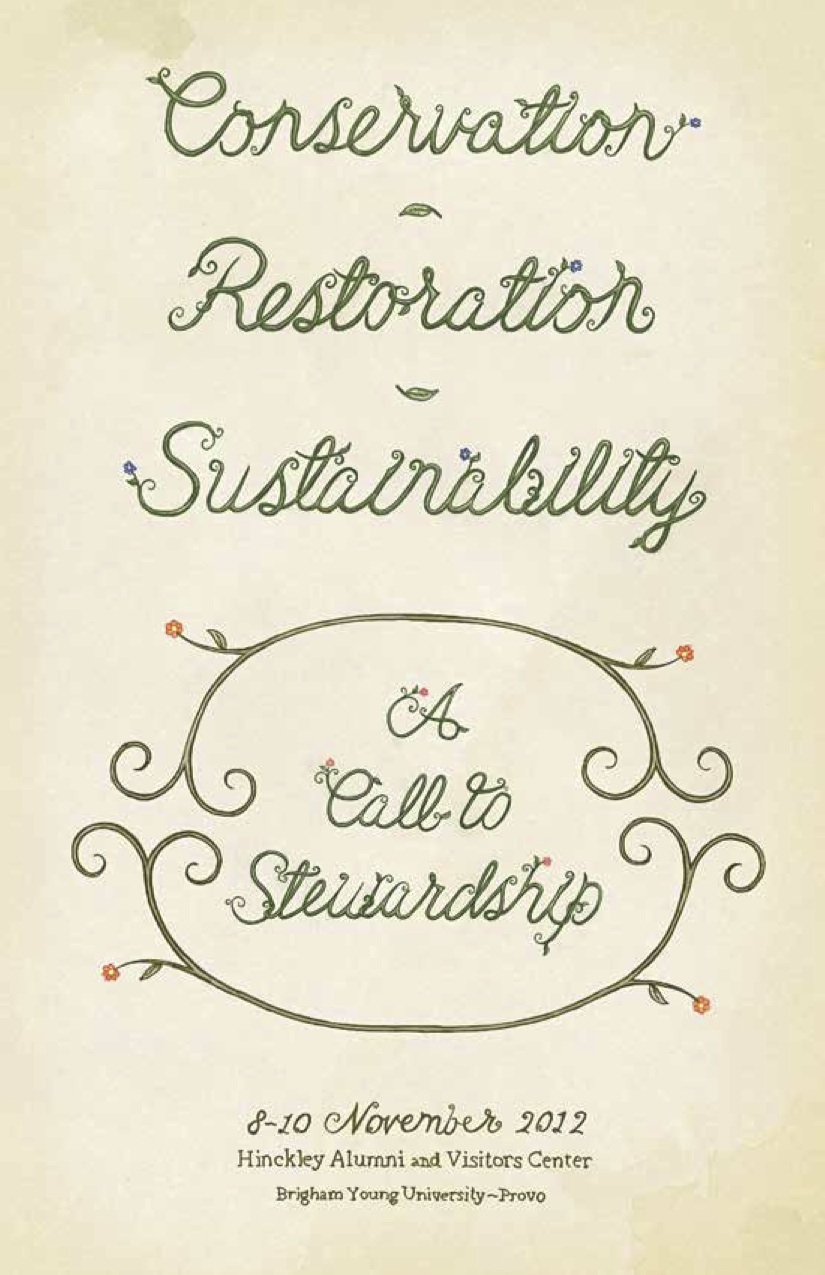 This is the title of an upcoming symposium on November 8-10, free and open to the public at the Hinckley Center on campus at Brigham Young University. This symposium is devoted to exploring the interdisciplinary dimensions of environmental stewardship in literature and the arts, law, philosophy, science, and religion. We feature papers that critique, develop, and enhance conceptions of stewardship that are grounded in current scientific and cultural understanding of environmental problems. We will hear explorations of such problems as climate change, species extinction, human/animal relationships, food production, land and water use, air quality, and other environmental and resource problems of national and international consequence. We have called for presentations that also develop the underlying moral, ethical, cultural, or theological dimensions of such problems. In other words, we hope the papers will provide guidelines for solutions and the justifications and methods for motivating conservation, restoration, and the goal of long-term sustainability. The papers also reflect various religious, philosophical, and cultural perspectives. Confirmed keynote speakers include Margaret Palmer (Director of the National Socio-Environmental Synthesis Center and University of Maryland), Jonathan Foley (Institute on the Environment at the University of the Minnesota), and J. Baird Callicott (University of North Texas and co-editor of the Encyclopedia of Environmental Ethics and Philosophy). This symposium will address questions about:
Stewardship: What are the advantages and limitations of the idea of stewardship? To which texts, stories, cosmologies, and artistic traditions can we turn for inspiration? What are the underlying values and moral limits of environmental laws? What obstacles and opportunities are there for science to interface effectively with religion, public policy, and culture to promote better stewardship?
Conservation: What are the fundamental principles of conservation biology? What are the crises of conservation we face? How can we translate conservation biology and other relevant sciences more effectively into the languages of culture and religion, into human values?
Restoration: What are the challenges of ecological restoration? How do we know when restoration is necessary? What successes can we point to? With the need of ecological restoration in mind, what kind of economy is a moral and efficacious one? What is religion’s relevance to restoration?
Sustainability: What are the fundamental principles of sustainability? What are the principles of intergenerational as well as intra-generational fairness? How can we meet the needs of present and future populations? What are the limits of resources we face and what role might faith, innovation, or modesty play in living within them?
I will be sure to offer some reflections on the conference. In the meantime, you can find the entire program at:
http://kennedy.byu.edu/outreach/eei_content/EEIconference-program_8-9-10nov12.pdf
Previous Post

October 28, 2012
Faith and the Origins of Prejudice: A Sunday Sermon
Next Post
November 4, 2012 A Podcast of a Recent Interview
Browse Our Archives
Select a Category Uncategorized
Select a Month May 2016 March 2016 February 2016 December 2015 November 2015 October 2015 August 2015 July 2015 June 2015 March 2015 January 2015 December 2014 November 2014 October 2014 September 2014 August 2014 July 2014 June 2014 May 2014 April 2014 March 2014 February 2014 January 2014 December 2013 November 2013 October 2013 September 2013 August 2013 July 2013 June 2013 May 2013 April 2013 March 2013 February 2013 January 2013 December 2012 November 2012 October 2012 September 2012 August 2012 July 2012 June 2012 May 2012 April 2012 March 2012
Follow Us!
TAKE THE
Religious Wisdom Quiz
Who is credited with writing much of Proverbs?
Select your answer to see how you score.
Hezekiah David Agur Solomon
Related posts from Home Waters


Literature and the Art of Friendship


TRENDING AT PATHEOS Latter-day Saint

Did Prayer Cure His Cancer? Or Was It...
At 4 AM one morning, Joshua W. Brown’s wife awoke to a...

8 Ways a Near-Death Experience Rewires the Soul
Does Consciousness Survive Physical Death? After 50 Years of Research, Dr. Raymond...

Holy Longing: What Our Restlessness Is Telling Us
“One can find so many pains when the rain is falling.” -John...

What this is NOT about. This blog is definitely not about...

Who said the Israelites were God’s chosen? That’s right, they did. Who...

The Spirit World Is the Real World: God...
A Monk’s Wisdom on Body and Spirit I sit with Brother Martin...
view all Latter-day Saint blogs
Ad-Free & Subscriber Log-In Subscription Support
- About Us
- 2026 Calendar
- Videos
- Podcasts
- Library of World Religions
- Faith In Media Tracker
- Advertise With Us
- Write for Us
- Privacy Policy
- Terms of Service
- Do Not Sell My Data
- Contact Us
- Radiant Digital
- Manage Newsletter Subscriptions
- Unsubscribe From Notifications
- Sitemap
Copyright 2008-2026, Patheos. All rights reserved.
Subscription Support Ad-Free & Subscriber Log-In
Follow Patheos